
Mando Festival 2026 – Goa's Song-and-Dance Heritage
मांडो
When is the Mando Festival in Goa held?
The Mando Festival is usually held over two evenings in December, though the exact dates are announced each year by the organisers rather than fixed to a calendar. It is a competitive showcase of the mando – Goa’s slow, dignified Konkani song-and-dance form – along with the livelier dulpod and dekhni, most notably staged by the Goa Cultural and Social Centre in Panjim.
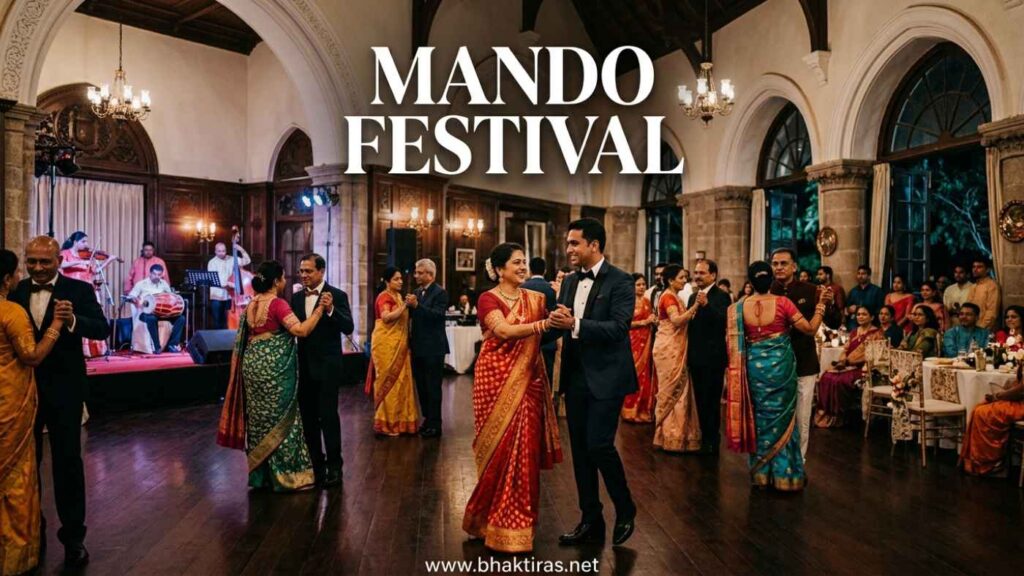
The Mando Festival is Goa’s yearly celebration of the mando, a slow and dignified verse-and-dance form that carries the state’s Konkani lyrics on a melody shaped by four centuries of Portuguese contact. Couples in formal dress – the woman in a bazu or torneao gown, the man in a dark suit – move in measured steps, waving fans and handkerchiefs as they sing of love, loss and social life. Rather than a religious observance, the festival is a competitive showcase of Goa’s shared Hindu-Catholic musical heritage, usually held over two evenings in December.
Mando Festival: When It Is Held
The Mando Festival does not fall on a fixed calendar or lunar date; it is scheduled each year by the organising body and has historically been staged in the November-to-January window, most often in December.
| Year | Typical timing | Where | Notes |
|---|---|---|---|
| 2024 | December (two evenings) | Panjim, Goa | State-level competitive edition |
| 2025-26 | Announced yearly (approx. December) | Panjim / Goa | Dates released by the organisers before each edition |
| Recurring | Usually Nov-Jan window | Goa | Has moved between months across editions |
Because the event depends on venue and organiser scheduling rather than an astronomical date, always check the current-year announcement from the Goa Cultural and Social Centre or the Directorate of Art and Culture before planning to attend.
Why the Mando Festival Matters
The Mando Festival keeps alive a music form that is unique to Goa and expresses its layered, syncretic identity.
A living Konkani art form
The mando emerged in Goa in the 19th century among Konkani-speaking communities. The festival is one of the few settings where these songs are still performed live and judged, helping pass the repertoire, diction and choreography to a new generation of singers and musicians.
Goa's syncretic identity
The mando fuses Konkani words and Indian sentiment with harmony and instrumentation influenced by Portuguese and Western music. Because it is embraced across Hindu and Catholic communities, the festival has become a cultural symbol of Goa’s shared heritage rather than any single faith.
Preserving lyric and dance
Each mando carries specific poetry, tune and paired dance movements. By staging structured competitions, the festival documents authentic versions and discourages the form from fading into recordings alone.
A Cultural, Not Religious, Festival
The Mando Festival honours an art form rather than a deity; there is no worship or ritual offering at its centre.
The Mando itself
The festival celebrates the mando as a musical and poetic tradition. Its themes are largely secular – romance, longing, marriage, satire and social commentary – so the focus is on the song and the couples who perform it, not on a god or shrine.
How the Festival Unfolds
The Mando Festival runs as a staged competition over one or two evenings, with groups performing in sequence before an audience and judges.
- Registration and grouping. Choirs, cultural associations and village groups enter and rehearse their chosen mandos, dulpods and dekhnis in the weeks before the event.
- Traditional dress. Performers arrive costumed – women in the bazu or torneao gown with a shawl and jewellery, men in dark formal suits – setting the dignified tone of the mando.
- The mando. Each group opens with the slow mando, couples facing one another and moving in gentle, gliding steps while singing the Konkani verses.
- Fans and handkerchiefs. Women wave folding fans and men flourish white handkerchiefs, the signature gestures that punctuate the mando’s rhythm.
- The dulpod. The pace lifts into the dulpod, a faster, lighter dance-song that follows the mando and lets the performers show livelier footwork.
- The dekhni. Many groups close with the dekhni, a Konkani song-dance with a distinctly Indian melodic flavour, rounding out the trio of forms.
- Judging and awards. A panel scores groups on voice, diction, music, choreography and costume, and prizes are presented across the categories at the close of the festival.
Where and How It Is Staged
The Mando Festival is centred on Goa and its Konkani communities, with related celebrations of Goan music in the wider diaspora.
Panjim and central Goa
The best-known state-level Mando Festival is organised by the Goa Cultural and Social Centre and held in Panjim, drawing groups from across the state to compete over two evenings.
Village and parish groups
Many entrants come from village associations and church or community choirs across Goa’s talukas, where the mando is rehearsed and preserved through the year.
The Goan diaspora
Goan communities in Mumbai, the Gulf and further afield keep the mando alive at their own cultural gatherings, so the tradition surfaces well beyond the festival stage itself.
Attending the Mando Festival: Do's and Don'ts
A few simple courtesies help you enjoy the evening and respect the performers.
Do
- Check the current-year dates and venue in advance, since they change each edition.
- Arrive on time – performances begin promptly, often around early evening.
- Watch quietly during the slow mando and applaud between items.
- Learn a little about the mando beforehand to appreciate the poetry and paired dance.
- Support the singers and cultural associations who keep the form going.
Avoid
- Do not treat it as a religious event or expect ritual worship – it is a cultural showcase.
- Avoid talking or using bright phone screens during the quiet mando passages.
- Do not photograph with flash while couples are performing.
- Avoid assuming all Goan music is the same – the mando, dulpod and dekhni are distinct.
- Do not rely on last year’s dates; confirm the schedule from the organisers.
Frequently Asked Questions
When is the Mando Festival held?
The Mando Festival is usually held over two evenings in December, but it has no fixed calendar or lunar date. The organisers, most notably the Goa Cultural and Social Centre, announce the exact days ahead of each edition, so the timing should be treated as approximate and confirmed each year.
What is the mando?
The mando is a slow, dignified Goan song-and-dance form sung in Konkani with a melody influenced by Portuguese and Western music. Couples in traditional dress perform it in measured steps, waving fans and handkerchiefs, usually singing of love, longing and social life.
Is the Mando Festival a religious festival?
No, the Mando Festival is a cultural celebration rather than a religious one. It showcases a musical and poetic tradition shared across Goa’s Hindu and Catholic communities, with no deity, worship or ritual offering at its centre.
Where is the Mando Festival held?
The best-known state-level Mando Festival is held in Panjim, Goa, and organised by the Goa Cultural and Social Centre. Groups from villages, parishes and cultural associations across the state come together to compete over the festival evenings.
What is performed at the Mando Festival?
Groups at the Mando Festival perform three linked Konkani forms: the slow mando, the faster and lighter dulpod, and the dekhni, a song-dance with a more Indian melodic flavour. Performers are judged on voice, diction, music, choreography and costume.
What do performers wear at the Mando Festival?
At the Mando Festival women wear the bazu or torneao – a formal Goan gown – with a shawl and jewellery, while men wear dark formal suits. The costume, along with folding fans and white handkerchiefs, is part of the dignified character of the mando.
Why is the Mando Festival important?
The Mando Festival is important because it preserves a music form unique to Goa and central to its syncretic Hindu-Catholic identity. By staging live competitions it keeps the repertoire, poetry and paired dance alive and passes them to younger singers and musicians.
Who can attend the Mando Festival?
The Mando Festival is generally free and open to the public, welcoming anyone who wants to hear the mando performed live. Because dates and venue change each year, it is best to confirm the current schedule with the organisers before attending.
The Mando Festival is a chance to hear Goa’s own voice – unhurried, elegant and unmistakably Konkani. If you can attend an edition, go and let the fans and handkerchiefs sway you.