
Ahoi Ashtami 2026 – A Mother's Fast for Her Children
अहोई अष्टमी
When is Ahoi Ashtami in 2026?
Ahoi Ashtami falls on Sunday, 1 November 2026. It is observed on Kartik Krishna Ashtami, the eighth day of the waning moon, roughly eight days before Diwali and eight days after Karva Chauth. Mothers across North India keep a waterless fast all day and worship Ahoi Mata for the long life and wellbeing of their children.
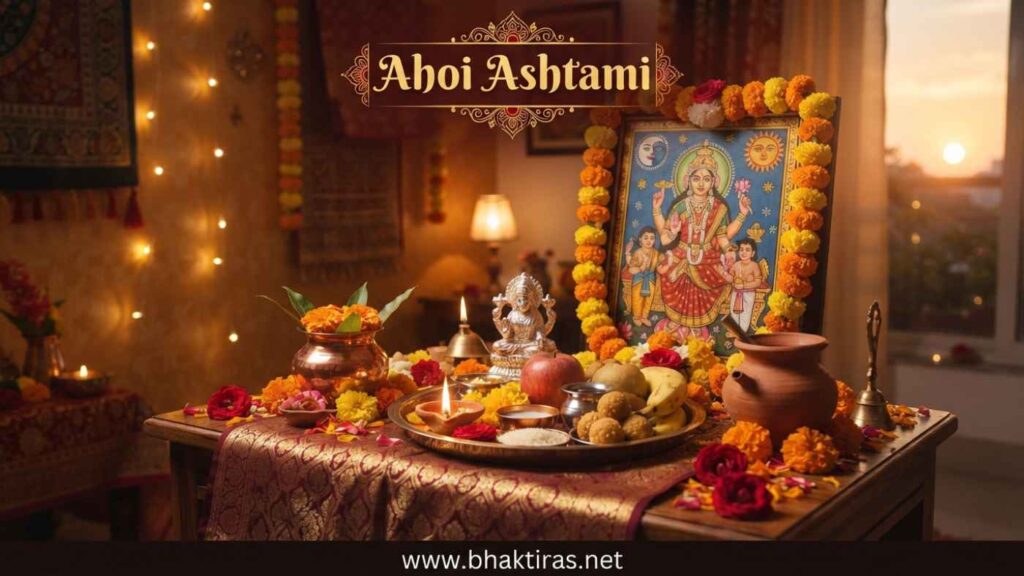
Ahoi Ashtami is a mothers’ festival kept mainly across North India – Uttar Pradesh, Rajasthan, Punjab, Haryana and Madhya Pradesh. Falling on Kartik Krishna Ashtami, about a week before Diwali and eight days after Karva Chauth, it centres on a day-long waterless fast that mothers observe for the health and long life of their children. Ahoi Mata, a form of the Mother Goddess, is worshipped through her image drawn with seven children, and the fast is broken after the stars appear in the evening sky.
Ahoi Ashtami 2026-2028: Dates & Calendar
In 2026 Ahoi Ashtami is on Sunday, 1 November. The date shifts each year because it follows the Hindu lunar calendar rather than the fixed Gregorian one.
| Year | Date | Day | Notes |
|---|---|---|---|
| 2026 | 1 November | Sunday | Next occurrence |
| 2027 | 23 October | Saturday | Kartik Krishna Ashtami |
| 2028 | 11 October | Wednesday | Kartik Krishna Ashtami |
The evening puja is timed to the appearance of the stars, so the exact muhurat varies by city each year – check a local panchang for your town on the day.
Why Ahoi Ashtami Is Celebrated
Ahoi Ashtami is kept by mothers as a prayer for the safety, health and long life of their children, traditionally sons. The fast is an act of maternal devotion offered to Ahoi Mata.
A mother's vow
The heart of the day is the vrat itself – a difficult waterless fast held from dawn until the stars are seen. Mothers take it on willingly, treating their own hardship as a shield for their children’s wellbeing.
The legend of Ahoi Mata
A well-known folk tale tells of a woman who accidentally harmed a cub while digging, and whose own children then suffered misfortune. Her sincere repentance and worship of the goddess restored her family, and the festival grew from that story of forgiveness and protection.
Placed in the Kartik season
Coming eight days after Karva Chauth and about a week before Diwali, Ahoi Ashtami sits in a stretch of autumn festivals focused on family, marriage and light. It carries the same spirit of prayer for loved ones into the mother-child bond.
Deities & Figures Worshipped
The festival is dedicated to Ahoi Mata, a form of the Mother Goddess honoured as a protector of children.
Ahoi Mata
Ahoi Mata is worshipped as the divine mother who guards the lives of children. Her image is drawn or hung on a wall, usually shown with seven children around her, and offerings are made to her during the evening puja.
Syahu (silver locket)
Many families keep a small silver locket called syahu on a red thread, adding a bead each year. It is worshipped alongside Ahoi Mata and passed down as a symbol of the vow’s continuity across generations.
Key Rituals, Step by Step
The day moves from an early start and a strict fast to an evening puja and the breaking of the fast after starlight.
- Rise early and resolve the fast. Mothers wake before dawn, bathe, and take a sankalp (vow) to keep the waterless fast through the day for their children.
- Prepare Ahoi Mata’s image. The goddess is drawn on a wall with her seven children, or a printed picture or the syahu locket is set up at the puja spot.
- Keep the fast through the day. No food or water is taken. Many families avoid using sharp or digging tools during the day, echoing the legend.
- Set up the evening puja. Towards dusk, a kalash of water, roli, rice, milk and offerings are arranged before the image of Ahoi Mata.
- Offer the puja and hear the katha. The family gathers as the mother worships the goddess and the Ahoi Ashtami vrat katha (the legend) is read or recited.
- Worship the syahu. Where the silver locket is kept, it is honoured and a new bead may be added to mark the year.
- Sight the stars. The mother looks for the stars in the evening sky and offers arghya; in some families the fast is instead broken after seeing the moon.
- Break the fast. After the sighting she takes water and food, often blessed by elders, completing the vrat.
Special Foods of Ahoi Ashtami
Because the day itself is a strict fast, the food centres on the meal that breaks it after starlight and on sweets shared with the family.
Puri and halwa
A simple, satisfying plate of hot puris with sooji (semolina) halwa is a common way to break the fast once the stars are seen.
Pua and gujiya
Sweet fried pua and stuffed gujiya are prepared in many homes, both for the offering to Ahoi Mata and to share afterwards.
Kheer and seasonal fruit
Rice kheer and fruit such as singhara (water chestnut) and pomegranate are offered and eaten, lighter foods suited to ending a long fast.
Regional Names & Variations
Ahoi Ashtami is chiefly a North Indian observance, and its calendar placement and small customs vary by region.
Uttar Pradesh & Rajasthan
The festival is at its most widespread here, with the wall drawing of Ahoi Mata and her seven children, the syahu locket and the star-sighting all commonly kept.
Punjab & Haryana
Mothers observe the same waterless fast for their children, and in some families the fast is broken after sighting the moon rather than the stars.
Braj region (Mathura)
In and around Mathura the day is linked with a holy dip at Radha Kunda, and pilgrims gather there on the night of Ahoi Ashtami.
Ahoi Ashtami Do's and Don'ts
A few simple points help keep the vrat sincere and calm.
Do
- Take the sankalp early and keep the fast with a settled mind
- Prepare or set up Ahoi Mata’s image with her seven children
- Read or listen to the Ahoi Ashtami vrat katha at the puja
- Wait for the stars (or moon, per family custom) before breaking the fast
- Break the fast gently with water and light, warm food
Avoid
- Do not eat or drink once the fast has begun
- Avoid using sharp or digging tools during the day, following the legend
- Do not rush the evening puja before the stars appear
- Avoid anger and quarrels, which go against the spirit of the vow
- Do not force the fast if unwell – health comes first
Frequently Asked Questions
When is Ahoi Ashtami in 2026?
Ahoi Ashtami in 2026 is on Sunday, 1 November. It falls on Kartik Krishna Ashtami, roughly eight days before Diwali and eight days after Karva Chauth. Mothers keep a day-long waterless fast and worship Ahoi Mata in the evening.
When is Ahoi Ashtami in 2027 and 2028?
Ahoi Ashtami is on Saturday, 23 October in 2027 and on Wednesday, 11 October in 2028. The date changes each year because the festival follows the Hindu lunar calendar and is set on Kartik Krishna Ashtami.
Why is Ahoi Ashtami celebrated?
Ahoi Ashtami is celebrated so that mothers can pray for the health and long life of their children, traditionally sons. Mothers keep a strict fast and worship Ahoi Mata, a form of the Mother Goddess honoured as a protector of children, offering their own hardship as a prayer for their family.
Which goddess is worshipped on Ahoi Ashtami?
Ahoi Mata is worshipped on Ahoi Ashtami. She is a form of the Mother Goddess, shown in the puja image with seven children around her, and is honoured as the divine protector of children’s wellbeing.
How is the Ahoi Ashtami fast broken?
The Ahoi Ashtami fast is broken in the evening after the mother sights the stars and offers arghya. In many families of Punjab and Haryana the fast is instead broken after seeing the moon. The fast is then ended with water and food, often blessed by elders.
What is the syahu on Ahoi Ashtami?
Syahu is a small silver locket that many families keep on a red thread for Ahoi Ashtami. A bead is often added each year, and it is worshipped alongside Ahoi Mata as a symbol of the vow being carried on across generations.
How is Ahoi Ashtami related to Karva Chauth?
Ahoi Ashtami comes eight days after Karva Chauth and shares its form of a day-long waterless fast. Where Karva Chauth is a wife’s fast for her husband, Ahoi Ashtami is a mother’s fast for her children.
Where is Ahoi Ashtami celebrated?
Ahoi Ashtami is celebrated chiefly across North India, including Uttar Pradesh, Rajasthan, Punjab, Haryana and Madhya Pradesh. In the Braj region around Mathura the day is also linked with a holy dip at Radha Kunda.
May Ahoi Mata keep your children safe and blessed – Ahoi Ashtami ki hardik shubhkamnayein.