
Karva Chauth 2026 – The Married Woman's Fast for Her Husband
करवा चौथ
When is Karva Chauth in 2026?
Karva Chauth falls on Thursday, 29 October 2026. It is a one-day fast kept by married Hindu women, mostly across North and West India, for the long life and wellbeing of their husbands. The women observe a waterless fast from sunrise and break it only after they have sighted the moon in the evening.
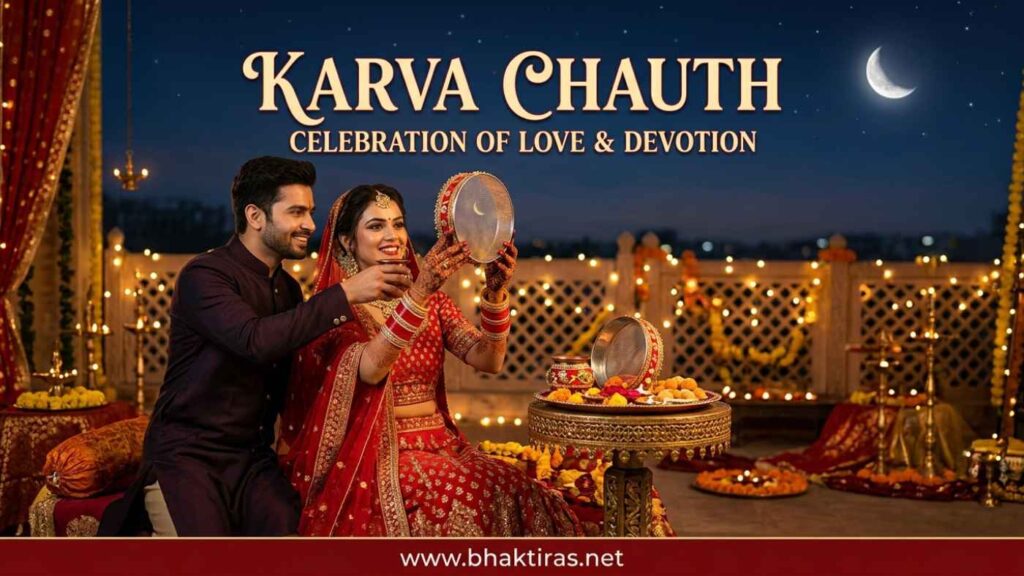
Karva Chauth is a one-day festival in which married Hindu women keep a strict, waterless fast for the long life and wellbeing of their husbands. It falls on Kartik Krishna Chaturthi, the fourth day of the waning moon in the month of Kartik, roughly nine days before Diwali. The day is best known across Punjab, Haryana, Uttar Pradesh, Rajasthan and Madhya Pradesh. Women dress in bridal finery, gather to hear the Karva Chauth katha, worship Gauri and a clay pot called karva, and break the fast only after sighting the moon.
Karva Chauth 2026-2028: Dates & Calendar
The next Karva Chauth is on 29 October 2026. Because it follows the Hindu lunar calendar, the date shifts each year against the Gregorian one, usually falling in October.
| Year | Date | Day | Notes |
|---|---|---|---|
| 2026 | 29 October | Thursday | Next occurrence |
| 2027 | 18 October | Monday | Kartik Krishna Chaturthi |
| 2028 | 8 October | Sunday | Kartik Krishna Chaturthi |
The fast runs from before sunrise until the moon is seen, so the exact end depends on your city’s moonrise. Check a local panchang on the day rather than relying on a fixed time.
Why Karva Chauth Is Celebrated
Karva Chauth is kept for the long life, health and prosperity of one’s husband, and over time it has also become a day that celebrates married love and companionship.
A prayer for the husband's long life
At its core the fast is an act of devotion by a wife for her husband’s wellbeing. The waterless vow, held from dawn to moonrise, is offered as a sincere prayer that he lives a long and healthy life.
The story of Veeravati
The most repeated katha tells of Queen Veeravati, whose brothers tricked her into breaking her fast early by mimicking the moon with a mirror and a lamp. Her husband fell gravely ill, and only when she completed the fast properly the following year was he restored. The tale is a reminder to keep the vow patiently and in full.
Bond between women
Karva Chauth also strengthens ties among women. The mother-in-law prepares Sargi for her daughter-in-law, and friends and relatives gather in the afternoon to hear the katha together, passing the karva pot around as they listen.
Deities & Figures Worshipped
Karva Chauth centres on Goddess Gauri, a form of Parvati, along with Shiva, Ganesha and the Moon, who is honoured at the end of the fast.
Gauri (Parvati)
Women worship Gauri, the benevolent form of Parvati, as the ideal wife and giver of marital happiness. In many homes a small clay image of Gauri is made and offered vermilion, bangles and sweets.
Shiva & Ganesha
Shiva, Parvati’s husband, is invoked alongside her as the model of a devoted couple, and Ganesha is remembered first as the remover of obstacles so the vrat is completed without hindrance.
The Moon (Chandra)
The Moon is the last figure honoured. A woman views the moon through a sieve, offers it water (arghya), then turns the same sieve to look at her husband’s face before drinking water and eating for the first time that day.
Key Rituals, Step by Step
The day moves from a pre-dawn meal through an afternoon gathering to the evening moon sighting.
- Sargi before dawn. The mother-in-law gives her daughter-in-law a pre-sunrise meal of fruit, sweets, mathri and dry fruits, eaten before the fast begins.
- Sankalp and the fast. After Sargi the woman takes a vow to keep a nirjala (waterless) fast, without food or water, until she has seen the moon.
- Dressing and mehndi. Women bathe and dress in bridal colours, often red, wearing their wedding jewellery and applying mehndi and bindi.
- Afternoon gathering. Women meet in the afternoon, place the karva (clay pot), Gauri and puja items on a thali, and sit in a circle.
- Hearing the katha. An elder narrates the Karva Chauth vrat katha; the women pass and exchange their karvas at set points during the reading (the baya feri).
- Gauri and Karva puja. Gauri is worshipped with vermilion, sweets and offerings, and the water-filled karva is set aside for the moon offering.
- Moon sighting. After the moon rises, the woman views it through a sieve, offers arghya (water) to the moon, and recites her prayer for her husband.
- Breaking the fast. She then looks at her husband’s face through the same sieve, and he offers her the first sip of water and a bite of food, ending the fast.
Special Foods of Karva Chauth
The food falls into two parts: the pre-dawn Sargi that sustains the fasting woman, and the festive meal shared once the fast is broken.
Sargi platter
The Sargi given by the mother-in-law usually includes fresh and dry fruits, mathri, sevaiyan (sweet vermicelli) and a few sweets, chosen to keep the woman comfortable through a long waterless day.
Feni & sevaiyan
Feni, a fine wheat vermicelli cooked in milk, and sweet sevaiyan are common in Punjabi and North Indian homes, both at Sargi and after the fast.
Mathri
Flaky, mildly spiced fried crackers that store well and are eaten at Sargi and offered to guests during the afternoon gathering.
The evening meal
Once the fast is broken the family shares a full dinner, often featuring paneer or rich vegetable dishes, puris and a sweet such as halwa or kheer.
Regional Names & Variations
The core fast is shared, but the customs and emphasis differ across the north and west.
Punjab & Haryana
The Sargi and baya (gifts from the mother-in-law) are central here, and the community reading of the katha with karvas exchanged in a circle is elaborate.
Uttar Pradesh
Women make a clay Gauri image and worship her carefully; the moon sighting through a sieve followed by seeing the husband’s face is observed closely.
Rajasthan & Madhya Pradesh
The vrat is kept with much the same rituals, with local sweets and songs; painted karvas and decorative thalis are common.
Karva Chauth Do's and Don'ts
A few simple points help the day go smoothly and safely.
Do
- Eat a nourishing Sargi before sunrise
- Keep the vow with a calm, positive mind
- Prepare the puja thali and karva in advance
- Listen to the full katha before the moon offering
- Offer arghya to the moon before breaking the fast
Avoid
- Do not break the fast before sighting the moon
- Do not skip Sargi and start the day dehydrated
- Avoid heavy exertion during the waterless hours
- Do not use harsh or hurtful words during the vrat
- Do not force the fast if unwell or advised otherwise by a doctor
Frequently Asked Questions
When is Karva Chauth in 2026?
Karva Chauth in 2026 is on Thursday, 29 October. It falls on Kartik Krishna Chaturthi, the fourth day of the waning moon in the month of Kartik, about nine days before Diwali.
When is Karva Chauth in 2027 and 2028?
Karva Chauth is on Monday, 18 October 2027 and on Sunday, 8 October 2028. The date changes every year because it follows the Hindu lunar calendar, though it usually falls in October.
Why is Karva Chauth celebrated?
Karva Chauth is celebrated so that married women may pray for the long life, health and wellbeing of their husbands. Over time it has also become a day that honours married love, with fasting, worship of Gauri and a shared telling of the vrat katha.
Which god is worshipped on Karva Chauth?
Goddess Gauri, a form of Parvati, is the main deity of Karva Chauth, worshipped as the ideal wife. Shiva and Ganesha are invoked alongside her, and the Moon is honoured at the end of the fast when water is offered to it.
What is Sargi in Karva Chauth?
Sargi is the pre-dawn meal eaten before the Karva Chauth fast begins. It is traditionally given by the mother-in-law to her daughter-in-law and usually includes fruit, dry fruits, sweets, mathri and sevaiyan to sustain her through the waterless day.
How do women break the Karva Chauth fast?
Women break the Karva Chauth fast after sighting the moon in the evening. They view the moon through a sieve, offer it water, then look at their husband’s face through the same sieve, after which the husband gives the first sip of water and a bite of food.
Is the Karva Chauth fast without water?
Yes, the traditional Karva Chauth fast is nirjala, meaning without food or water, kept from before sunrise until the moon is seen. Because it is a long waterless fast, women eat a nourishing Sargi beforehand, and anyone who is unwell or pregnant should follow medical advice.
Why is the moon seen through a sieve on Karva Chauth?
On Karva Chauth women look at the moon and then their husband through a sieve as part of the fast-breaking ritual. The custom links the offering to the Moon with the sight of the husband, marking the moment the vow is completed and the fast can be broken.
May your bond stay strong and your prayers be answered – a blessed Karva Chauth to you and your family.