
Hartalika Teej 2026 – The Strictest Fast for a Happy Marriage
हरतालिका तीज
When is Hartalika Teej in 2026?
Hartalika Teej is on Monday, 14 September 2026. It falls on Bhadrapada Shukla Tritiya, the third day of the waxing moon in the month of Bhadrapada, just two days before Ganesh Chaturthi. Married and unmarried women keep a strict waterless (nirjala) fast through the day and night and worship hand-made clay idols of Shiva and Parvati.
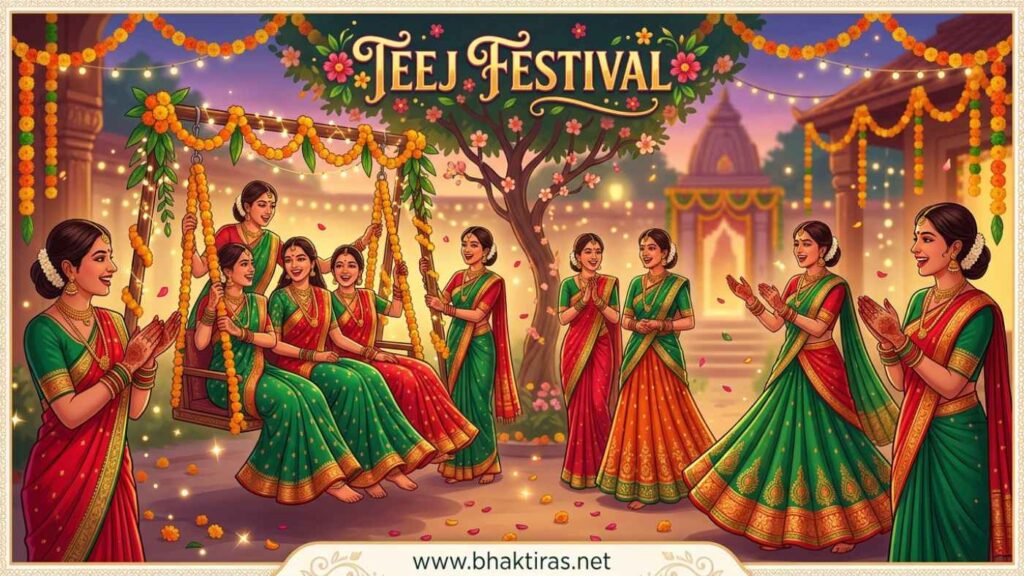
Hartalika Teej is the most demanding of the three Teej fasts, kept mainly by women across North and West India and Nepal for a happy marriage and a devoted husband. It falls on Bhadrapada Shukla Tritiya, two days before Ganesh Chaturthi, and in 2026 lands on Monday, 14 September. Women fast without food or even water for a full day and night, then worship small idols of Shiva and Parvati shaped by hand from river sand and clay, staying awake to honour the goddess who won Shiva through her own penance.
Hartalika Teej 2026-2028: Dates & Calendar
The next Hartalika Teej is on Monday, 14 September 2026. The date shifts each year because it follows the Hindu lunar calendar rather than the fixed Gregorian one.
| Year | Date | Day | Notes |
|---|---|---|---|
| 2026 | 14 September | Monday | Next occurrence |
| 2027 | 3 September | Friday | Bhadrapada Shukla Tritiya |
| 2028 | 22 August | Tuesday | Falls earlier as the lunar month shifts |
The fast begins at sunrise and is traditionally broken the next morning after the pre-dawn puja, so many women treat it as a full day-and-night observance rather than a single daytime fast.
Why Hartalika Teej Is Celebrated
Hartalika Teej marks Parvati winning Shiva as her husband through fierce penance, and women keep the fast to seek a happy, lasting marriage and their husband’s long life.
The meaning of the name
The word Hartalika joins harat (to abduct) and aalika (a female friend). According to the story, Parvati’s friends carried her away into the forest so that she would not be married off against her wishes, giving her the freedom to win Shiva through her own devotion.
Parvati's penance
To marry Shiva, Parvati is said to have undertaken years of severe austerity, fasting and worshipping a Shiva Linga she made herself from sand. Pleased by her resolve, Shiva finally accepted her. The one-day nirjala fast recreates that devotion in miniature.
A prayer for marriage and family
Married women keep the fast for their husband’s wellbeing and a harmonious marriage, while unmarried women observe it wishing for a good and understanding husband. In this sense it sits alongside Karva Chauth as a vow of marital love.
Deities & Figures Worshipped
Hartalika Teej honours the divine couple Shiva and Parvati, with Parvati as the central figure whose devotion the day celebrates.
Parvati
Parvati, worshipped here as the ideal devoted wife, is the heart of the festival. Women pray to her for marital happiness, remembering how she earned Shiva through patience and penance rather than by any arrangement.
Shiva
Shiva is worshipped beside Parvati as the husband she chose and won. A small Shiva Linga is usually part of the hand-made clay set, echoing the linga Parvati is said to have fashioned from sand.
Ganesha
As with most Hindu pujas, Ganesha is invoked at the start for an obstacle-free worship. His presence also links Hartalika Teej to Ganesh Chaturthi, which follows just two days later.
Key Rituals, Step by Step
The observance runs from a pre-dawn start through an all-night vigil, built around the strict fast and the worship of clay idols.
- Sargi and an early start. Some women eat a light meal before sunrise; from sunrise the strict nirjala fast begins, without food or water.
- Bath and adornment. Women bathe, dress in green or red, and wear the full sixteen adornments (solah shringar) including bangles, bindi and often mehndi.
- Making the idols. Small idols of Shiva and Parvati, along with a Shiva Linga, are shaped by hand from river sand and clay, a custom central to this Teej.
- Setting up the puja. The idols are placed on a decorated platform with flowers, bel leaves, fruit and sweets, often under a canopy of leaves.
- The main puja. Ganesha is invoked first, then Shiva and Parvati are worshipped with sixteen offerings (shodashopachar) and the reading of the Hartalika vrat katha.
- The night vigil. Women stay awake through the night, singing devotional songs and keeping a lamp lit, recalling Parvati’s own long penance.
- Breaking the fast. The fast is broken the next morning after the final puja, traditionally by first offering water and food to the deities and elders.
Special Foods of Hartalika Teej
Because the fast itself is waterless, food centres on what is eaten before and after, and on sweets offered to the deities.
Ghewar
This honeycomb-like disc soaked in syrup is the signature Teej sweet in Rajasthan and Uttar Pradesh, often gifted between families in the run-up to the fast.
Coconut and dry-fruit sweets
Coconut ladoo, kaju and other dry-fruit sweets are commonly prepared as offerings (bhog) for Shiva and Parvati and shared afterwards.
Fruit and milk
As the fast is broken, women usually begin with water, then fruit and milk-based foods before a full meal, easing back gently after a full day without water.
Sattvic festive meal
The pre-fast and post-fast meals are typically sattvic and vegetarian, without onion or garlic, in keeping with the day’s devotional character.
Regional Names & Variations
Hartalika Teej is kept most seriously across the Hindi belt, western India and Nepal, with local differences in emphasis.
Uttar Pradesh & Bihar
One of the biggest fasts of the year here, marked by the strict nirjala vrat, sand idols and night-long singing. Women often return to their parents’ homes to observe it together.
Rajasthan
Closely tied to the earlier Hariyali Teej celebrations, with ghewar, swings and green attire. Hartalika is kept as the stricter, more austere of the season’s Teej fasts.
Maharashtra & Gujarat
Observed by many women as Hartalika, with clay Shiva-Parvati worship, coming just before the grand Ganesh Chaturthi festivities in these states.
Nepal
Teej is a major public festival, with women in bright red saris gathering to dance, sing and fast. Hartalika Teej is a recognised holiday and a large social occasion for women.
Hartalika Teej Do's and Don'ts
A few customs are widely followed to keep the fast sincere and the vow unbroken.
Do
- Take a light meal before sunrise if you cannot manage a fully waterless fast.
- Bathe, wear clean festive clothes and the traditional shringar before the puja.
- Invoke Ganesha first, then worship Shiva and Parvati with the vrat katha.
- Stay awake for the night vigil with devotional songs if you can.
- Break the fast gently the next morning after offering to the deities first.
Avoid
- Do not sleep during the day of the fast, as the tradition asks for wakeful devotion.
- Do not consume food or water during the nirjala vrat once it has begun (unless health requires it).
- Avoid anger, harsh words and quarrels, which are seen as breaking the spirit of the vow.
- Do not use tamasic foods like onion, garlic, meat or alcohol around the fast.
- Do not begin the fast without checking with a doctor first if you are pregnant, unwell or diabetic.
Frequently Asked Questions
When is Hartalika Teej in 2026?
Hartalika Teej is on Monday, 14 September 2026. It falls on Bhadrapada Shukla Tritiya, two days before Ganesh Chaturthi, and is observed with a strict day-and-night fast for marital happiness.
When is Hartalika Teej in 2027 and 2028?
Hartalika Teej is on Friday, 3 September 2027 and on Tuesday, 22 August 2028. The date changes each year because the festival follows the lunar tithi Bhadrapada Shukla Tritiya rather than a fixed calendar date.
Why is Hartalika Teej celebrated?
Hartalika Teej celebrates Parvati winning Shiva as her husband through severe penance. Women keep the fast to pray for marital happiness, a devoted husband and their spouse’s long life, following Parvati’s example of devotion.
What does the name Hartalika mean?
The name Hartalika combines harat (abduction) and aalika (female friend). It refers to the story in which Parvati’s friends carried her into the forest so she could win Shiva through her own penance rather than be married elsewhere.
What is the Hartalika Teej fast?
The Hartalika Teej fast is a nirjala vrat, meaning women take neither food nor water for a full day and night. It is considered the strictest of the three Teej fasts and is broken only the next morning after the puja.
Who is worshipped on Hartalika Teej?
Shiva and Parvati are worshipped on Hartalika Teej, with Parvati as the central figure. Women make small idols of the couple, along with a Shiva Linga, from sand and clay and worship them through the night.
Can unmarried girls keep the Hartalika Teej fast?
Yes, unmarried girls keep the Hartalika Teej fast to pray for a good and understanding husband. Married women observe it for the wellbeing of their husbands and a harmonious married life.
How is the Hartalika Teej fast broken?
The Hartalika Teej fast is broken the next morning after the final puja. Women first offer water and food to the deities, then usually begin with water and fruit before a full meal, easing back after a full day without water.
May Shiva and Parvati bless your home with love and harmony this Hartalika Teej. Teej ki hardik shubhkamnayein.