
Hariyali Teej 2026 – The Green Monsoon Festival for Married Women
हरियाली तीज
When is Hariyali Teej in 2026?
Hariyali Teej falls on Saturday, 15 August 2026. It is observed on the third day (Tritiya) of the bright fortnight of Shravan, the peak of the monsoon. Married women dress in green, apply henna and often keep a fast dedicated to Goddess Parvati for a happy married life and their husband’s wellbeing.
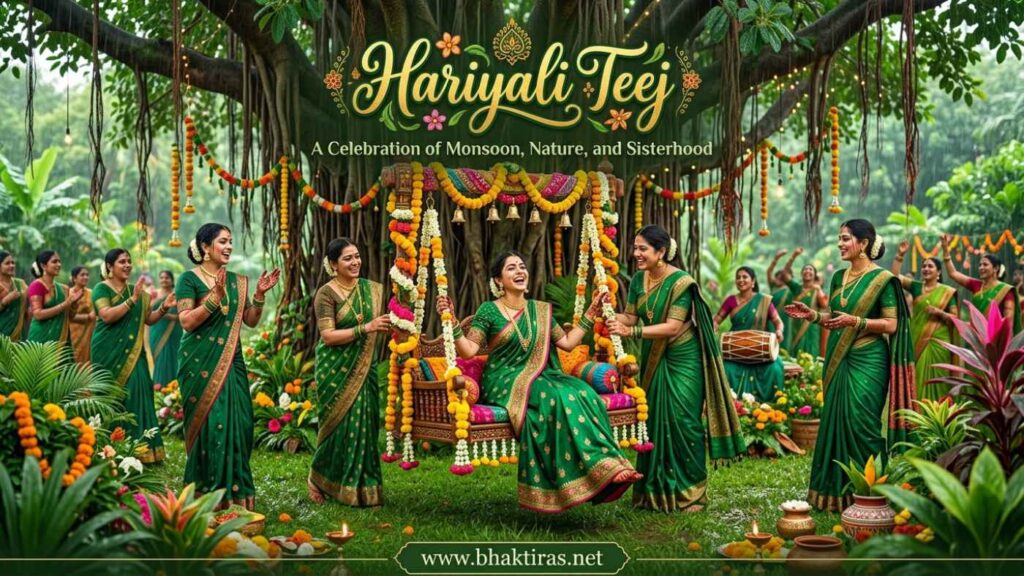
Hariyali Teej is the monsoon Teej, kept on the third day of the bright half of Shravan when the countryside has turned green after the first rains. The name comes from that greenery: women wear green saris and bangles, decorate their hands with henna and hang swings from trees for the day. Dedicated to Goddess Parvati, the festival marks her reunion with Shiva after a long penance, and married women fast and pray for a lasting, happy marriage. It is celebrated most warmly across Rajasthan, Uttar Pradesh, Bihar and Haryana.
Hariyali Teej 2026-2028: Dates & Calendar
Hariyali Teej 2026 falls on Saturday, 15 August. Because it follows the Hindu lunar calendar, the date shifts each year against the Gregorian one, landing between late July and mid-August.
| Year | Date | Day | Notes |
|---|---|---|---|
| 2026 | 15 August | Saturday | Next occurrence |
| 2027 | 4 August | Wednesday | Shravan Shukla Tritiya |
| 2028 | 24 July | Monday | Shravan Shukla Tritiya |
Hariyali Teej opens the trio of monsoon Teej festivals. It is followed about a fortnight later by Kajari Teej, and then by Hartalika Teej in the month of Bhadrapada.
Why Hariyali Teej Is Celebrated
Hariyali Teej celebrates the reunion of Goddess Parvati with Lord Shiva. It honours Parvati’s devotion and is kept by women who pray for marital happiness and their husband’s long life.
Parvati's long penance
The story tells that Parvati undertook years of severe austerity, over many births, to win Shiva as her husband. Shiva finally accepted her on the Tritiya of Shravan. Women recall this steadfastness as they fast and pray on the day.
A festival of the monsoon
Hariyali Teej arrives when the rains have greened the fields, so it also carries a note of renewal and fertility. The swings hung from trees, the green clothes and the henna all belong to this fresh, rain-washed season.
Blessing for married life
Married women observe the fast for the wellbeing and long life of their husbands, while unmarried girls keep it in the hope of a good partner. Parvati is seen as the ideal of a devoted wife, and her blessing is sought for a harmonious home.
Deities & Figures Worshipped
Hariyali Teej is dedicated to Goddess Parvati, worshipped together with Lord Shiva as the divine couple.
Parvati
Parvati, the consort of Shiva, is the central figure of the day. Women worship her as Teej Mata and offer her green bangles, sindoor, henna and sixteen items of adornment (solah shringar), praying for the same enduring bond she shares with Shiva.
Shiva
Shiva is worshipped alongside Parvati as the ideal husband. The festival marks the moment he accepted her devotion, and images or idols of the couple are decorated and taken in procession in some towns.
Key Rituals, Step by Step
The day mixes a solemn fast and puja with the lighter joys of henna, green finery and swings.
- Sinjara and preparation. On the eve, married daughters receive gifts of clothes, bangles, sweets and henna from their parents’ home, a custom known as sinjara or sindhara.
- Green attire and shringar. Women bathe, dress in green saris and glass bangles and complete the solah shringar, the sixteen traditional adornments.
- Applying henna. Hands and feet are decorated with mehndi, with a deep colour taken as a sign of a loving marriage.
- The fast. Many women keep a nirjala or partial fast through the day, taking neither food nor water until the evening worship is done.
- Worship of Parvati and Shiva. A clay image or idol of the couple is set up, bathed and offered flowers, fruit, sweets and green bangles, and the Teej Vrat Katha is read or heard.
- Swings under the trees. Decorated swings are hung from branches and women take turns swinging while singing folk songs about the season and about Parvati.
- Breaking the fast. After the moon or the evening puja, the fast is broken with festive food shared among family and neighbours.
Special Foods of Hariyali Teej
Sweets made with flour, ghee and jaggery mark the day, eaten after the fast is broken.
Ghewar
A disc-shaped sweet of fried batter soaked in sugar syrup, often topped with rabri. Ghewar is the signature Teej sweet in Rajasthan and is exchanged as a gift during the festival.
Malpua and kheer
Soft, syrup-dipped malpua and rice kheer are common festive sweets prepared for family and guests once the vrat ends.
Gujiya and sattu treats
Sweet gujiya stuffed with khoya and dry fruit, along with sattu-based snacks, feature in Uttar Pradesh and Bihar homes during the monsoon Teej.
Regional Names & Variations
The green Teej is kept across the northern plains, with its own colour in each state.
Rajasthan
Rajasthan holds the grandest celebrations. In Jaipur a royal procession carries the idol of Teej Mata through the old city over two days, drawing large crowds; the festival is also called Sinjara or Sindhara Teej here.
Uttar Pradesh
In UP, women return to their parents’ homes for the festival, receive sinjara gifts and gather to sing Teej songs on swings hung in courtyards and gardens.
Bihar
Bihar observes it as a monsoon women’s festival, with fasting for the husband’s long life and community singing, closely linked to the later Teej and Chhath observances of the season.
Haryana
Haryana marks Teej as a state festival welcoming the monsoon, with fairs, swings, folk dances and the giving of gifts to married daughters.
Hariyali Teej Do's and Don'ts
A few simple customs shape how the day is kept.
Do
- Wear green clothes and bangles, the colour of the season.
- Apply henna and complete the traditional shringar.
- Read or listen to the Teej Vrat Katha during the puja.
- Offer green bangles, sindoor and sweets to Parvati.
- Share sinjara gifts and sweets with married daughters and family.
Avoid
- Do not break a nirjala fast before the evening worship.
- Avoid wearing black or white, seen as inauspicious for the day.
- Do not skip the Vrat Katha, which is central to the observance.
- Avoid quarrels and harsh words on this festival of harmony.
- Do not force the fast if you are unwell, pregnant or advised against it; a partial vrat is accepted.
Frequently Asked Questions
When is Hariyali Teej in 2026?
Hariyali Teej is on Saturday, 15 August 2026. It is observed on Shravan Shukla Tritiya, the third day of the bright fortnight of the Shravan month, at the height of the monsoon.
When is Hariyali Teej in 2027 and 2028?
Hariyali Teej falls on Wednesday, 4 August 2027 and on Monday, 24 July 2028. The date changes each year because it follows the Hindu lunar calendar, generally landing between late July and mid-August.
Why is Hariyali Teej celebrated?
Hariyali Teej celebrates the reunion of Goddess Parvati with Lord Shiva after her long penance to win him as her husband. Married women observe it to pray for a happy marriage and their husband’s long life, while unmarried girls seek a good partner.
Which god is worshipped on Hariyali Teej?
Goddess Parvati is the main deity of Hariyali Teej, worshipped together with Lord Shiva as the divine couple. Women offer her green bangles, sindoor, henna and the sixteen adornments known as solah shringar.
Why is it called Hariyali Teej?
It is called Hariyali Teej because it falls when the monsoon has turned the land green, and hariyali means greenery. Women wear green clothes and bangles and hang swings from freshly leafed trees to mark the season.
Do women fast on Hariyali Teej?
Yes, many women keep a fast on Hariyali Teej for a happy married life and their husband’s wellbeing. Some observe a nirjala fast without food or water until the evening puja, while others keep a partial fast; it is broken after the worship.
What is the difference between Hariyali Teej and Hartalika Teej?
Hariyali Teej is the monsoon Teej on Shravan Shukla Tritiya, while Hartalika Teej comes about a month later on Bhadrapada Shukla Tritiya. Both honour Parvati and Shiva, but Hartalika Teej is known for a stricter nirjala fast and is widely kept in UP, Bihar and Maharashtra.
How is Hariyali Teej celebrated in Jaipur?
In Jaipur, Hariyali Teej features a royal procession that carries the idol of Teej Mata through the old city over two days. The event draws large crowds and is one of Rajasthan’s best-known monsoon celebrations, alongside fasting, henna and swings in homes.
May the green of Shravan bring lasting joy to your home this Hariyali Teej.