
Pohela Boishakh 2027 – Bengali New Year
পহেলা বৈশাখ
When is Pohela Boishakh in 2027?
Pohela Boishakh falls on Thursday, 15 April 2027 in West Bengal, marking the first day of the Bengali month of Boishakh and the start of the Bengali New Year (Nobo Borsho). It is a solar new year, so the date barely shifts, staying on 14 or 15 April each year. Bangladesh observes the day on 14 April.
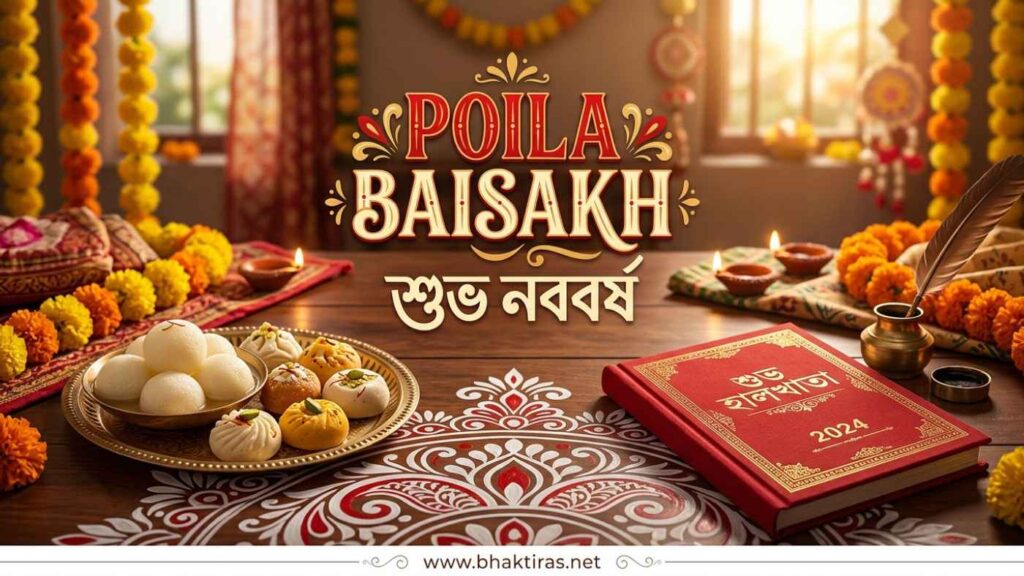
Pohela Boishakh is the Bengali New Year, the first day of Boishakh and a fresh start observed across West Bengal, Tripura, the Barak valley of Assam and Bangladesh. Falling on 15 April in 2027, it blends a merchant ritual with a wider cultural celebration: shopkeepers open new account books after a Ganesha-Lakshmi puja, families wear new clothes, and towns fill with music, alpana and fairs. It is both a Hindu observance and a shared Bengali identity that crosses religion and borders.
Pohela Boishakh 2026-2028: Dates & Calendar
The next Pohela Boishakh is on Thursday, 15 April 2027. Because it follows the solar Bengali calendar rather than the moon, the date stays fixed to mid-April and shifts by only a day between years.
| Year | Date (West Bengal) | Day | Notes |
|---|---|---|---|
| 2026 | 15 April | Wednesday | Bangladesh on 14 April |
| 2027 | 15 April | Thursday | Next occurrence |
| 2028 | 14 April | Friday | Bangladesh also 14 April |
The one-day difference between West Bengal and Bangladesh comes from a calendar reform Bangladesh adopted to fix the new year on 14 April, while West Bengal keeps the traditional astronomical reckoning that can land on 14 or 15 April.
Why Pohela Boishakh Is Celebrated
Pohela Boishakh is celebrated as the Bengali New Year, a day for closing the old year’s debts and beginning afresh in trade, home and community life.
A fresh business year
For traders the day is a hard reset. Old ledgers are closed and new ones opened in the Haal Khata ritual, dues are settled, and customers are welcomed with sweets. The idea is to enter Boishakh with clean books and goodwill.
New beginnings at home
Families clean and decorate their homes, wear new clothes and greet one another with Shubho Nobo Borsho. It is a day for visiting relatives, sharing meals and setting hopes for the year ahead.
A shared Bengali identity
Beyond religion, Pohela Boishakh binds Bengalis across West Bengal, Tripura and Bangladesh through a common language, music and cuisine. In Bangladesh the day is a major secular festival marked by the Mangal Shobhajatra, a heritage-listed procession.
Deities & Figures Worshipped
Traders and shopkeepers honour Ganesha and Lakshmi at the Haal Khata ceremony, seeking a prosperous and obstacle-free year.
Lakshmi
Lakshmi, goddess of wealth and fortune, is worshipped as new account books are opened so the coming year brings steady income and good business.
Ganesha
Ganesha, the remover of obstacles, is invoked first at the Haal Khata puja to bless the new ledger and clear the path for the year’s ventures.
Key Rituals, Step by Step
The day mixes a merchant ceremony with morning processions, music and fairs. Here is how it typically unfolds.
- Morning cleansing. Homes and shops are cleaned and doorways decorated with alpana, the white rice-paste rangoli patterns drawn to welcome the new year.
- New clothes. People dress in fresh outfits, women often in white saris with red borders, men in kurta-pyjama, to symbolise a clean start.
- Haal Khata. Shopkeepers perform a Ganesha-Lakshmi puja and open brand-new account books, inviting customers to settle old dues and share sweets.
- Prabhat Pheri and processions. Cultural groups take out early-morning processions with song; in Bangladesh the large Mangal Shobhajatra parade winds through the streets.
- Music and culture. Rabindra Sangeet and Bengali folk songs fill homes, clubs and open-air stages through the day.
- Boishakhi Mela. Families visit fairs stocked with handicrafts, toys, food stalls and folk performances.
- Feasting. Households sit down to a festive spread built around fish, rice and Bengali sweets, then exchange new-year greetings with neighbours.
Special Foods of Pohela Boishakh
The table is unmistakably Bengali, leaning on rice, hilsa and sweets.
Panta bhat with ilish
Fermented, water-soaked rice (panta bhat) served with fried ilish (hilsa) fish, green chillies and onion is the emblematic breakfast of the day, especially in Bangladesh.
Bengali sweets
Sandesh and rosogolla top the sweet list, offered to guests and exchanged between homes as a token of a sweet year ahead.
Mishti and festive fare
Alongside the classic sweets, households prepare a range of mishti and rich rice-and-fish dishes for the family feast.
Regional Names & Variations
The same day is kept a little differently on either side of the border and among the Bengali diaspora.
West Bengal & Tripura
Observed as Nobo Borsho on 15 April, centred on the Haal Khata merchant ritual, home pujas, new clothes and cultural evenings of Rabindra Sangeet.
Bangladesh
A major secular national festival on 14 April, headlined by the Mangal Shobhajatra procession in Dhaka, a UNESCO-listed intangible heritage, along with fairs and open-air concerts.
Assam (Barak valley) & diaspora
Bengali communities in the Barak valley and abroad mark the day with community pujas, cultural programmes and shared meals to keep the new-year tradition alive.
Pohela Boishakh Do's and Don'ts
A few simple customs help you honour the spirit of the day.
Do
- Greet people with Shubho Nobo Borsho
- Wear new or clean clothes to mark the fresh start
- Settle old dues and open the year with clear accounts
- Draw alpana at your doorway and welcome guests with sweets
- Share panta bhat, mishti and a family meal
Avoid
- Do not carry unresolved quarrels or old grudges into the new year
- Do not treat it as a purely religious day; it is a shared cultural celebration
- Do not skip inviting customers or neighbours to share sweets
- Do not assume the same date everywhere; West Bengal and Bangladesh differ by a day
- Do not fabricate or over-formalise rituals; keep it warm and simple
Frequently Asked Questions
When is Pohela Boishakh in 2027?
Pohela Boishakh in 2027 falls on Thursday, 15 April in West Bengal. It is the first day of the Bengali month of Boishakh and the start of the Bengali New Year, Nobo Borsho.
When is Pohela Boishakh in 2026 and 2028?
Pohela Boishakh is on 15 April 2026 (a Wednesday) and on 14 April 2028 (a Friday) in West Bengal. As a solar new year it stays fixed to mid-April, moving by only a day between years.
Why do West Bengal and Bangladesh observe it on different dates?
West Bengal and Bangladesh can differ by a day because Bangladesh adopted a calendar reform that fixes the new year on 14 April, while West Bengal follows the traditional astronomical reckoning, which may land on 14 or 15 April.
What is Haal Khata?
Haal Khata is the Pohela Boishakh ritual in which shopkeepers and businesses open fresh account books after a Ganesha-Lakshmi puja. Customers are invited to clear old dues and are welcomed with sweets, symbolising a clean and prosperous start to the year.
Which gods are worshipped on Pohela Boishakh?
Traders worship Ganesha and Lakshmi on Pohela Boishakh during the Haal Khata ceremony. Ganesha is invoked to remove obstacles and Lakshmi to bless the new account books with wealth and good fortune.
What foods are eaten on Pohela Boishakh?
The signature dish is panta bhat, water-soaked fermented rice, served with fried ilish (hilsa) fish, especially in Bangladesh. Bengali sweets such as sandesh and rosogolla and other mishti are shared with family and guests.
What is Mangal Shobhajatra?
Mangal Shobhajatra is the large new-year procession held in Bangladesh, particularly in Dhaka, on Pohela Boishakh. It is inscribed on UNESCO’s list of intangible cultural heritage and features colourful masks, floats and folk motifs.
Is Pohela Boishakh a religious or a secular festival?
Pohela Boishakh is both. For Bengali Hindu traders it carries a religious Ganesha-Lakshmi puja through Haal Khata, but overall it is a shared cultural new year celebrated by Bengalis of all faiths across West Bengal, Tripura and Bangladesh.
However you keep the day, may your ledgers be clear and your year sweet – Shubho Nobo Borsho.