
Sajibu Nongma Panba (Meitei Cheiraoba) 2027 – Manipuri New Year
সজিবু নোংমা পান্বা
When is Sajibu Nongma Panba (Cheiraoba) in 2027?
Sajibu Nongma Panba, the Meitei New Year, falls around 7 April 2027. Also called Cheiraoba, it marks the first day of the Meitei lunar month of Sajibu (near Chaitra). Families clean the home, cook a festive meal offered first to the household deities, then climb a nearby hill in the afternoon to aspire to greater heights in the coming year. The exact date follows the Meitei lunar calendar and may shift by a day.
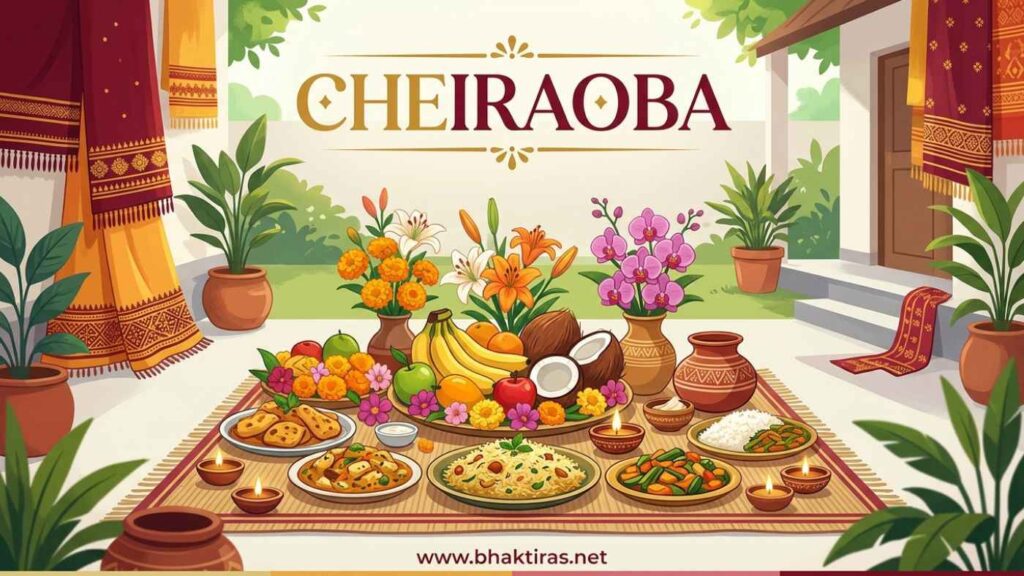
Sajibu Nongma Panba, widely known as Cheiraoba, is the traditional New Year of the Meitei people of Manipur. It opens the first day of Sajibu, the first month of the Meitei lunar calendar, falling close to Chaitra in early April. The day blends a thorough home cleaning, an offering of food and fruit to the household deities, a shared family feast, and a distinctive afternoon walk up a nearby hill – a gesture of hope that the year ahead lifts the family higher.
Sajibu Nongma Panba 2026-2028: Dates & Calendar
The next Cheiraoba falls around 7 April 2027. The festival moves each year because it follows the Meitei lunar calendar, opening on the first day of the month of Sajibu.
| Year | Date (approx) | Day | Notes |
|---|---|---|---|
| 2026 | 19-20 March | Thursday-Friday | First day of Sajibu |
| 2027 | 7 April | Wednesday | Next occurrence |
| 2028 | 27 March | Monday | First day of Sajibu |
Because it is fixed to the Meitei lunar month rather than a solar date, Cheiraoba can land anywhere from mid-March to early April, roughly aligning with Gudi Padwa and Chaitra Pratipada elsewhere in India.
Why Sajibu Nongma Panba Is Celebrated
Sajibu Nongma Panba is celebrated as the Meitei New Year, a day of renewal, family togetherness and gratitude to the deities who guard the home.
A fresh start
The first day of Sajibu is treated as a clean slate. Homes are scrubbed and tidied, old clutter is cleared, and the year is welcomed with a settled, orderly household.
Honouring the household deities
Before anyone eats, the family sets aside a portion of the cooked feast and fruit for Sanamahi and Leimarel, the household and hearth deities, and for Sidaba Mapu, the supreme being – a way of thanking them and inviting their protection.
Rising higher
In the afternoon, families climb a nearby hill. The custom carries a simple wish: that each year lifts them to greater heights in life, health and fortune.
Keeping community bonds
Cheiraoba is a homecoming day. Relatives visit, elders are greeted, and small gifts or shares of the feast are exchanged, renewing ties across the community.
Deities & Figures Honoured
Sajibu Nongma Panba centres on the Meitei household and ancestral deities rather than a single temple god. Offerings are made at the home altar and the main gate.
Sanamahi
Lainingthou Sanamahi is the guardian deity of the home in Meitei tradition, associated with the southwest corner of the house. The first share of the feast is offered to him.
Leimarel Sidabi
Leimarel is the mother deity of the earth and the household hearth. She is honoured alongside Sanamahi as the family gives thanks for a secure home.
Sidaba Mapu
Sidaba Mapu is revered as the supreme, eternal being in Meitei-Sanamahi belief. The New Year prayers acknowledge him as the source of life and continuity.
Key Rituals, Step by Step
The day moves from cleaning and cooking in the morning to offerings, feasting and the hill climb in the afternoon.
- Clean and decorate the home. Families sweep and wash the house from the days before, clearing old items and setting fresh decorations so the New Year begins in a tidy space.
- Prepare the feast. An elaborate spread is cooked, often featuring a wide variety of vegetables, fish dishes and sweets particular to Manipuri kitchens.
- Offer to the deities. A portion of cooked food and fruit is placed at the home altar and at the main gate for Sanamahi, Leimarel and Sidaba Mapu before anyone begins eating.
- Share the family meal. Once the offering is made, the whole family sits together for the New Year feast, the social heart of the day.
- Greet elders and visit kin. Younger members pay respects to elders, and households exchange visits and shares of food with neighbours and relatives.
- Climb the hill. In the afternoon people walk up a nearby hill or high point, a symbolic act carrying the wish to rise higher in the year ahead.
- Return home at dusk. The day closes with the family back home, the New Year formally begun on a note of hope and togetherness.
Special Foods of Cheiraoba
The Cheiraoba table is one of the most elaborate of the Meitei year, drawing on Manipur’s distinctive vegetables, fermented fish and black rice.
Chak-hao kheer
A dessert made from chak-hao, Manipur’s aromatic black rice, simmered with milk and sugar until deep purple. It is a signature sweet of festive Meitei meals.
Eromba
A robust mash of boiled vegetables blended with ngari (fermented fish) and chilli. Earthy and pungent, it anchors the savoury side of the feast.
Manipuri vegetable dishes
A wide range of seasonal vegetable preparations, often light and herb-forward, fill out the New Year spread alongside the heavier dishes.
Kabok
A snack of puffed or roasted rice, sometimes bound with jaggery, offered and eaten as part of the celebration.
How Manipur Celebrates
Sajibu Nongma Panba is a Manipur festival, and its customs stay close to the home and the local landscape.
The home feast
The centre of the day is the family kitchen and altar. Every household cooks its own elaborate meal, offers the first share to the deities, and gathers to eat together.
The hill climb
Across Manipur, families head to a nearby hill in the afternoon. Popular high points draw crowds, and the walk itself is treated as the day’s most meaningful outing.
Temple and shrine visits
Many also visit local shrines and Sanamahi worship spaces to offer prayers, tying the private home ritual to the wider community’s observance.
Sajibu Nongma Panba Do's and Don'ts
A few simple customs help the day stay respectful and true to Meitei tradition.
Do
- Clean and tidy the home fully before the day begins.
- Offer the first share of food and fruit to the deities before eating.
- Greet elders and pay your respects early in the day.
- Join the afternoon hill climb with family if you can.
- Share food with neighbours and visiting relatives.
Avoid
- Do not begin eating before the offering is made.
- Do not treat the day as ordinary – keep it free of quarrels and harsh words.
- Do not skip the home cleaning; a tidy house is central to the renewal.
- Do not force a mainstream deity ritual over the household Sanamahi tradition.
- Do not assume a fixed date – confirm the lunar reckoning each year.
Frequently Asked Questions
When is Sajibu Nongma Panba (Cheiraoba) in 2027?
Sajibu Nongma Panba, the Meitei New Year, falls around 7 April 2027. It opens the first lunar day of the month of Sajibu in the Meitei calendar. The exact date follows the lunar reckoning and may shift by a day.
When is Sajibu Nongma Panba in 2026 and 2028?
Sajibu Nongma Panba falls around 19-20 March in 2026 and around 27 March in 2028. Both dates are approximate because the festival is tied to the first day of the Meitei lunar month of Sajibu rather than a fixed solar date.
Why is Sajibu Nongma Panba celebrated?
Sajibu Nongma Panba is celebrated as the Meitei New Year, a day of renewal and family. Households clean the home, offer a feast to the deities and climb a nearby hill in the belief that it lifts them to greater heights in the year to come.
What is the meaning of Cheiraoba?
Cheiraoba is the common Meitei name for the New Year day, Sajibu Nongma Panba. It marks the turning of the Meitei lunar year and is observed with home offerings, feasting and the customary hill climb across Manipur.
Which deities are honoured on Cheiraoba?
On Cheiraoba the Meitei honour their household and hearth deities, Sanamahi and Leimarel, and Sidaba Mapu, the supreme being. The first portion of the cooked feast and fruit is offered to them at the home altar and main gate before the family eats.
Why do people climb a hill on Sajibu Nongma Panba?
Climbing a nearby hill in the afternoon is the signature custom of Sajibu Nongma Panba. It expresses a simple hope: that the family will rise to greater heights in life and fortune during the coming year.
What foods are eaten on Cheiraoba?
The Cheiraoba feast features chak-hao kheer made from Manipuri black rice, eromba (a mash of vegetables and fermented fish), an array of seasonal vegetable dishes and kabok. It is one of the most elaborate home-cooked meals of the Meitei year.
Where is Sajibu Nongma Panba celebrated?
Sajibu Nongma Panba is celebrated mainly in Manipur by the Meitei community, and by Manipuri families elsewhere. Observance stays centred on the home feast, deity offerings and the afternoon hill climb.
May the New Year of Sajibu lift your home to greater heights. Happy Cheiraoba to all who celebrate.