
Lohri 2027 – Punjab’s Bonfire Harvest Festival
लोहड़ी
When is Lohri in 2027?
Lohri falls on Wednesday, 13 January 2027. It is a Punjabi harvest and bonfire festival marked on the evening before Makar Sankranti, celebrating the end of peak winter, the ripening of the rabi crop and the turn towards longer days. Families gather round a communal fire, toss in til, gur, rewri and popcorn, and sing to the beat of the dhol.
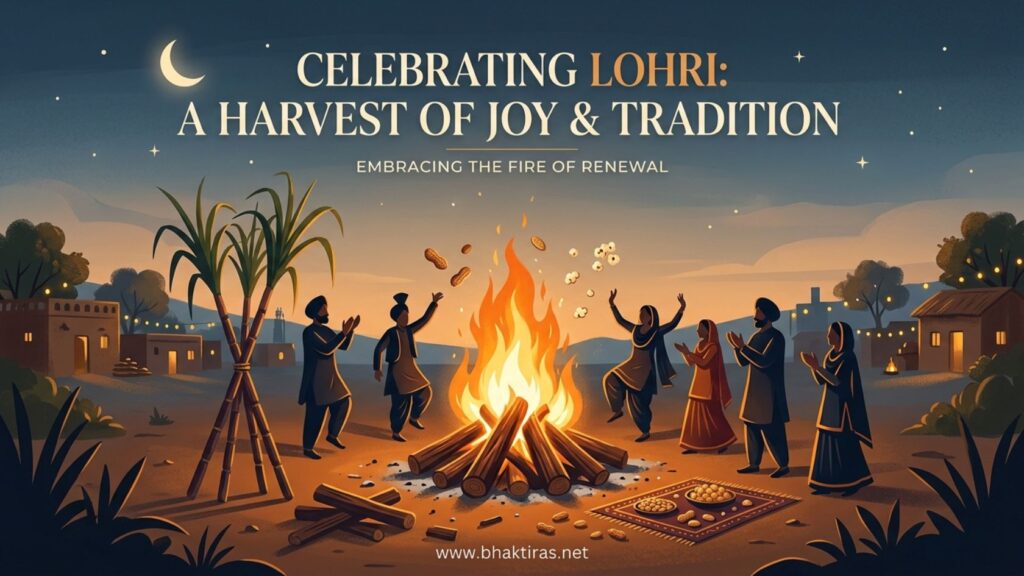
Lohri is the Punjabi mid-winter festival of the harvest fire, celebrated across Punjab, Haryana, Delhi and Himachal on 13 January, the eve of Makar Sankranti. As dusk falls, neighbours build a bonfire in the courtyard or street, walk around it offering til, gur, popcorn and rewri to the flames, and mark the close of the coldest weeks with dhol, bhangra and gidda. It is a thanksgiving for the ripening rabi crop, above all sugarcane, and a welcome to the lengthening days that follow the winter solstice.
Lohri 2026-2028: Dates & Calendar
Lohri is essentially fixed to 13 January each year, unlike most Hindu festivals that shift with the moon. The next Lohri is Wednesday, 13 January 2027.
| Year | Date | Day | Notes |
|---|---|---|---|
| 2026 | 13 January | Tuesday | Passed – eve of Makar Sankranti |
| 2027 | 13 January | Wednesday | Next occurrence |
| 2028 | 13 January | Thursday | Eve of Makar Sankranti |
The bonfire is lit at dusk, and Makar Sankranti (called Maghi in Punjab) follows the next morning, when many take a ritual bath and eat khichdi.
Why Lohri Is Celebrated
Lohri is celebrated as a harvest thanksgiving and a marker of the winter solstice turn, when the sun begins its northward journey and days grow longer.
End of peak winter
The bonfire marks the coldest stretch of the year giving way to warmth. Punjabis treat Lohri as the point when the bitter January cold has crested and the days start to lengthen again.
Harvest of the rabi crop
Lohri is a farmer’s thanksgiving. Sugarcane, freshly cut and pressed into gur and jaggery, is at its sweetest now, and the winter wheat is maturing in the fields. Offering til and gur to the fire is a gesture of gratitude for the yield.
The song of Dulla Bhatti
Children go door to door singing the ballad of Dulla Bhatti, a folk hero of Mughal-era Punjab remembered for rescuing girls from traffickers and arranging their marriages. His story of protecting the poor is woven into almost every Lohri song.
A first Lohri to remember
The first Lohri after a wedding or the birth of a child is celebrated with special joy. The new bride or the newborn sits at the centre of the gathering, and sweets and gifts are shared widely with the extended family.
Deities & Figures Worshipped
Lohri centres on Agni, the fire, who receives the offerings tossed into the bonfire; the folk hero Dulla Bhatti is honoured in song.
Agni (the fire)
The bonfire itself is the sacred centre of Lohri. As people circle it, they offer sesame, jaggery, popcorn and peanuts to the flames, thanking the fire for warmth through winter and for carrying their prayers upward.
Dulla Bhatti
A Punjabi Robin Hood figure from the sixteenth century, Dulla Bhatti rebelled against Mughal authority and rescued young women from being sold. Lohri songs retell how he gave the girls dowries and married them off with honour.
Key Rituals, Step by Step
Lohri runs from afternoon collections to a late-evening bonfire and feast. Here is how the day usually unfolds.
- Collecting Lohri. Through the day, especially children go from house to house singing Lohri songs, and are given rewri, gajak, peanuts, popcorn, gur or a little money for the evening gathering.
- Building the bonfire. Wood, cow-dung cakes and dried branches are stacked in a courtyard, field or street corner to be lit at dusk when the whole neighbourhood assembles.
- Lighting at dusk. The fire is set alight as darkness falls, marking the true start of the celebration and drawing families out into the cold winter night.
- Offering to the flames. People circle the bonfire and throw in handfuls of til, gur, rewri, popcorn and peanuts, chanting Aadar aye dilather jaye – may honour come and poverty leave.
- Singing and dancing. The dhol strikes up and men break into bhangra while women dance the gidda, with the Dulla Bhatti song sung again and again around the fire.
- Honouring the newest members. Where a family has a new bride or a newborn, they are seated with pride and given special sweets and blessings from everyone present.
- Sharing the feast. Once the fire settles, the gathering shares the winter meal – sarson da saag with makki di roti, kheer, and more of the sweets collected during the day.
- Into Maghi. Celebrations carry into the night, and the next morning is Makar Sankranti, Maghi in Punjab, closing the festival.
Special Foods of Lohri
Lohri food is built around sesame, jaggery and the winter harvest – sweet, warming and shared generously.
Rewri & gajak
Brittle sweets of sesame and jaggery are the signature treats of Lohri. Rewri are small sugar-coated discs, while gajak is a crisp slab of til and gur – both handed out freely and tossed into the fire.
Moongphali & popcorn
Roasted peanuts (moongphali) and freshly popped corn are eaten by the handful around the bonfire and offered to the flames along with the sweets.
Til & gur
Sesame seeds and jaggery are both eaten and offered to the fire. They are considered warming foods, suited to the deep-winter timing and central to the day’s rituals.
Sarson da saag with makki di roti
The classic Punjabi winter meal – mustard-greens curry served with cornflour flatbread and a knob of white butter – is the heart of the Lohri dinner.
Kheer
A creamy rice pudding, often made with jaggery or sugarcane, rounds off the meal and echoes the sugarcane harvest the festival celebrates.
Where Lohri Is Celebrated
Lohri is a Punjabi festival at heart, but its bonfires now burn well beyond the fields where it began.
Rural Punjab
In the villages, Lohri stays closest to its farming roots. Whole hamlets share one large fire in the fields, songs run late into the night, and the harvest of sugarcane and wheat is front of mind.
Cities & Haryana
In Ludhiana, Amritsar, Chandigarh and across Haryana, smaller bonfires spring up in housing colonies and courtyards, with dhol players and community dinners keeping the tradition alive in urban settings.
Delhi & Jammu
Delhi’s large Punjabi community and the Dogra regions of Jammu both keep Lohri warmly, with rooftop and courtyard fires, rewri and gajak, and the same round-the-fire songs.
The diaspora
Punjabi families in Canada, the United Kingdom and elsewhere hold Lohri in community halls and gurdwaras, lighting fires where the weather allows and passing the festival to a new generation abroad.
Lohri Do’s and Don’ts
A few simple customs and safety points keep Lohri joyful and respectful.
Do
- Build the bonfire in a clear, open space away from buildings and dry material.
- Offer til, gur, rewri and popcorn to the fire as a gesture of thanks.
- Share sweets and food generously with neighbours and visitors.
- Include and honour new brides and newborns in the family’s celebration.
- Learn and join in the Dulla Bhatti song and the round-the-fire dances.
Avoid
- Do not leave the bonfire unattended or let children play too close to the flames.
- Avoid lighting fires in cramped balconies or near overhead wires.
- Do not waste food – give away what you have collected rather than let it spoil.
- Avoid loud celebrations that disturb neighbours late into the night.
- Do not forget to fully douse the embers before everyone heads indoors.
Frequently Asked Questions
When is Lohri in 2027?
Lohri in 2027 falls on Wednesday, 13 January. It is celebrated on the evening before Makar Sankranti, marking the end of peak winter and the harvest of the rabi crop in Punjab.
When is Lohri in 2026 and 2028?
Lohri was on Tuesday, 13 January 2026, and will be on Thursday, 13 January 2028. The date is essentially fixed to 13 January every year because Lohri follows the solar calendar rather than the moon.
Why is Lohri celebrated?
Lohri is celebrated as a harvest thanksgiving and a marker of the winter solstice turn. It honours the ripening rabi crop, especially sugarcane, gives thanks to the fire for warmth through winter, and welcomes the lengthening days that follow.
Which god is worshipped on Lohri?
Lohri centres on Agni, the fire, who receives offerings of til, gur, rewri and popcorn tossed into the bonfire. The Punjabi folk hero Dulla Bhatti, remembered for rescuing girls, is also honoured in the festival’s songs.
What is the Dulla Bhatti story?
Dulla Bhatti was a sixteenth-century Punjabi hero, often called a Robin Hood of Punjab, who rebelled against Mughal rule and rescued young women from being sold. Lohri songs retell how he arranged the girls’ marriages with dignity, and his ballad is sung round the bonfire.
What foods are eaten on Lohri?
Lohri foods centre on sesame and jaggery – rewri, gajak, til and gur – along with roasted peanuts, popcorn and kheer. The evening meal is typically sarson da saag with makki di roti, the classic Punjabi winter dish.
What is the difference between Lohri and Makar Sankranti?
Lohri is the Punjabi bonfire festival held on the evening of 13 January, while Makar Sankranti (called Maghi in Punjab) is the solar festival the following morning, 14 January. Lohri closes peak winter; Sankranti marks the sun’s turn northward.
Why is a baby’s first Lohri special?
A newborn’s or a new bride’s first Lohri is celebrated with extra joy because it welcomes the newest member into the family and community. The child or bride is seated at the centre of the gathering, and sweets and gifts are shared widely.
However you gather round the fire this year, may honour come and hardship leave – Happy Lohri!