
ॐ
Ramappa Temple
Shiva (Ramalingeswara) · Kakatiya · Telangana
॥ ॐ नमः शिवाय ॥
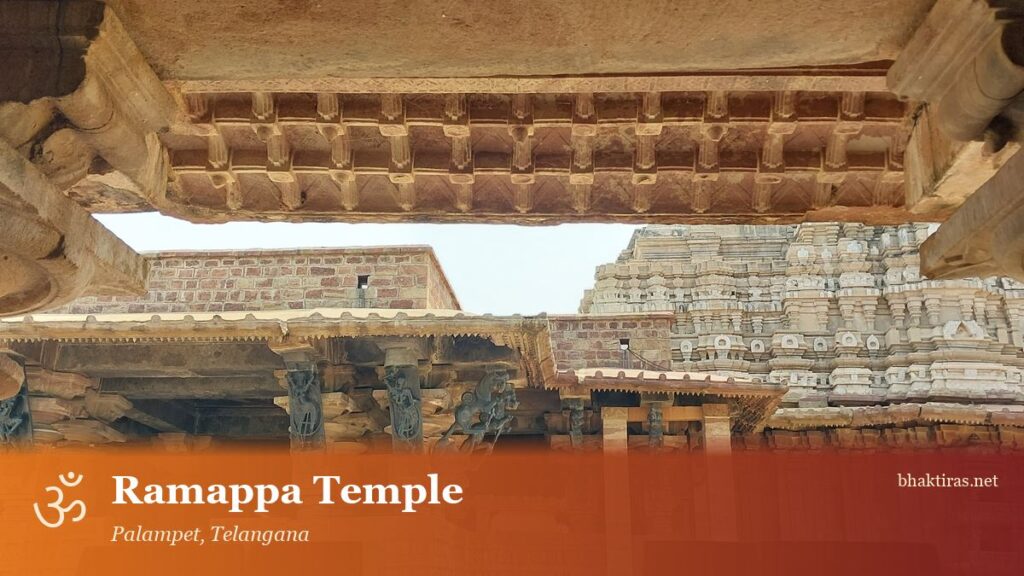
Beside Ramappa lake in Palampet, this 13th-century Shiva sanctuary carries a distinction shared by no other Indian temple — it bears the name of its sculptor rather than its deity or royal patron. Consecrated around 1213 CE under the Kakatiya ruler Ganapati Deva, the Ramalingeswara temple is the only one in India named after its artisan, Ramappa, and earned UNESCO World Heritage status in 2021.
The temple that took its sculptor’s name
Most Indian shrines honour the god enshrined within or the king who funded them. The sanctuary at Palampet broke that pattern: local memory and inscriptional tradition tie the structure so closely to its master carver that the temple is remembered as Ramappa, while the presiding Shiva lingam is worshipped as Ramalingeswara.
Commissioned by Recharla Rudra, a general serving Ganapati Deva, the temple rises on a star-shaped raised platform of reddish sandstone. The plan, the pillared mandapa and the deeply undercut brackets all point to a single guiding sculptor whose name outlasted the dynasty that paid for the work.
Floating bricks and a cushioned foundation
The temple’s tower is built from an unusually light brick that, by repute, floats on water — a low-density material that reduced load on the superstructure and helped the shikhara survive centuries of weather and tremors. Engineers still cite it as an early answer to the problem of building tall in soft ground.
Below the structure lies a sandbox foundation: a pit packed with sand, lime and other fill that cushions the building against earthquakes by letting it settle and shift rather than crack. The combination of feather-light brick above and a flexible base below is a large part of why the monument earned its 2021 World Heritage listing.
Madanikas, Nataraja brackets and the great Nandi
The glory of the temple is its sculpture. Black granite madanika figures — dancers, musicians and women at their toilette — project from the corners of the outer roof as bracket figures, each poised in mid-movement with jewellery and drapery rendered to a mirror polish.
A guardian Nandi, carved alert and watchful, faces the sanctum from the mandapa, and Nataraja panels trace the postures of classical dance across the ceilings and pillars. Recharla Rudra’s inscription records the dedication, anchoring the monument firmly in the Kakatiya age.
How to reach Ramappa Temple
- By road: Palampet lies roughly 65–70 km from Warangal and about 15 km from Mulugu; buses and taxis run from Warangal and Hanamkonda, with the final stretch on district roads past Ramappa lake.
- By train: The nearest major railhead is Warangal, well connected to Hyderabad, Vijayawada and beyond; complete the journey by road taxi or bus.
- By air: Hyderabad’s Rajiv Gandhi International Airport, about 210 km away, is the closest airport, from where road transport reaches Palampet in roughly four to five hours.
Frequently Asked Questions
Why is Ramappa Temple named after a sculptor?
It is the only major Indian temple known by its artisan rather than its deity or patron. The carver Ramappa’s work was so admired that the building took his name, while the Shiva lingam inside is worshipped as Ramalingeswara.
When was Ramappa Temple built and by whom?
It was consecrated around 1213 CE during the reign of the Kakatiya king Ganapati Deva, built under his general Recharla Rudra at Palampet.
Is Ramappa Temple a UNESCO World Heritage Site?
Yes. It was inscribed on the UNESCO World Heritage List in 2021 for its engineering and sculptural achievement.
What are the famous floating bricks of Ramappa?
The tower uses a very lightweight brick said to float on water. Its low density eased the load on the structure and helped the shikhara endure for centuries.
Which deity is worshipped at Ramappa Temple?
Lord Shiva, in the form of the Ramalingeswara lingam, is the presiding deity.
What is the best time to visit Ramappa Temple?
The cooler months from October to February are most comfortable, and Maha Shivaratri draws the largest gatherings of devotees.
॥ हर हर महादेव ॥ • Bhaktiras.net Temple Guide
| Deity | Shiva (Ramalingeswara) |
| Significance | UNESCO World Heritage Site (2021); only Indian temple named after its sculptor |
| Built | c. 1213 CE, Kakatiya dynasty |
| Patron | General Recharla Rudra under Ganapati Deva |
| Special | Lightweight floating bricks and sandbox earthquake-cushioning foundation |
| Main Festival | Maha Shivaratri |
Related Temples
Explore more sacred temples connected by deity and region.
 ShivaAlampur Nava Brahma Temples & Jogulamba📍 Telangana
 ShivaThousand Pillar Temple, Hanamkonda📍 Telangana
 Shiva108 Shiva Temple, Kalna (Nava Kailash)📍 West Bengal
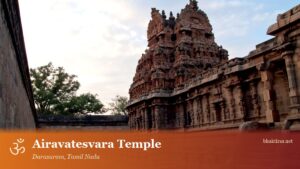 ShivaAiravatesvara Temple, Darasuram📍 Tamil Nadu
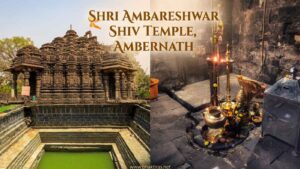 ShivaAmbarnath Shiv Temple (Ambreshwar)📍 Maharashtra
 ShivaArunachaleswarar Temple, Thiruvannamalai📍 Tamil Nadu