
Gaja Lakshmi
गज लक्ष्मी
Gaja Lakshmi is the form of Goddess Lakshmi flanked by two elephants who bathe her with water, symbolising royal power, sovereignty and animal wealth. One of the Ashta Lakshmi, she is the iconic figure who rose from the churning of the cosmic ocean.
Who Is Gaja Lakshmi?
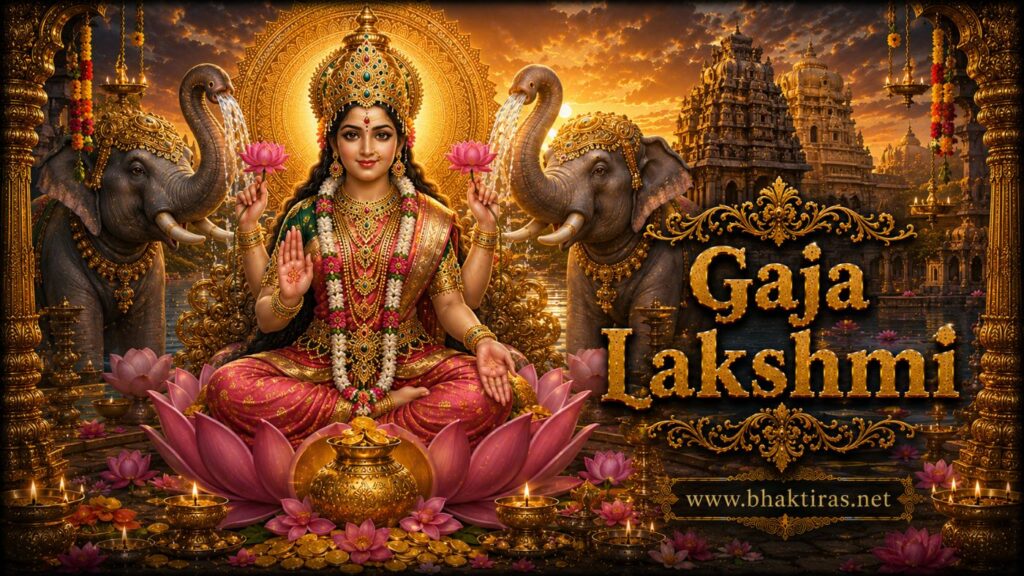
Gaja Lakshmi is the most recognisable image of the goddess – Lakshmi seated on a lotus while two elephants raise their trunks to pour water over her. The word gaja means elephant, and these great beasts carry the meaning of the form: royal power, majesty and the wealth of a well-ordered kingdom.
She is the aspect said to have emerged during the Samudra Manthan, the churning of the milk ocean, rising fully formed to choose Vishnu as her Lord. That origin makes her the classic Lakshmi of temple sculpture and coinage across the land.
Where other forms give grain or gold, Gaja Lakshmi gives standing and strength – the fortune of rulers, the power to lead, and the animal wealth of cattle and elephants that once measured a family’s rank.
Form and Symbols
Gaja Lakshmi is depicted seated on a lotus, serene and crowned, with an elephant on either side.
The Two Elephants
A pair of elephants raise pots or trunks to bathe her with water. They stand for royal power and the ceremonial anointing of a monarch, and their strength marks her as the giver of sovereignty and command.
The Lotus
She sits upon and holds the lotus, the seat shared by all the Lakshmi forms. Here it lifts her above the water even as the elephants pour it, showing majesty that remains pure and unshaken.
The Kalasha
The pots of water carried by the elephants, and the kalasha in her own hand, signal ceremonial abundance – the full vessel of a prosperous, well-governed realm.
The Wealth Gaja Lakshmi Bestows
Gaja Lakshmi grants the wealth of power and position – authority, high standing, and the animal riches of cattle, horses and elephants that once defined a great house. Her blessing is the fortune of kings and leaders: the ability to govern well, to command respect, and to hold a position of influence with dignity. Devotees pray to her for advancement, for leadership without arrogance, and for the strength to carry responsibility. She is also invoked for the prosperity of a whole community, since royal wealth in the old sense meant the wellbeing of an entire realm, not one person alone.
Worship, Mantra and Offerings
Friday is her day, and she is worshipped with special devotion during Diwali and the Gaja Lakshmi Vratam observed in the month around the autumn festival. Devotees recite the Ashta Lakshmi Stotram before her image, which appears above doorways and in temples across the land. Offerings include red and pink lotus, coins, elephant figurines, and sweets made with milk. Many draw her likeness in rangoli at the threshold during Diwali so that her royal grace enters the home first, blessing the household with dignity and abundance.
Significance and Lore
Risen from the Ocean
During the Samudra Manthan, when gods and demons churned the milk ocean for the nectar of immortality, Gaja Lakshmi arose upon a lotus. Elephants poured sacred water over her in welcome, and she chose Vishnu as her consort. This moment gave the form its enduring image and made her the emblem of fortune won through great effort.
The Emblem of Sovereignty
Because elephants were the mounts of kings and the measure of an army’s might, Gaja Lakshmi became the goddess stamped on old coins and carved above palace gates. Her lore ties prosperity to good rule, teaching that true power is a blessing to be used for the welfare of all, not for pride.
Frequently Asked Questions
Who is Gaja Lakshmi?
Gaja Lakshmi is the form of Goddess Lakshmi flanked by two elephants who bathe her with water. She symbolises royal power, sovereignty and animal wealth and is one of the eight Ashta Lakshmi.
Why is Gaja Lakshmi shown with elephants?
The elephants represent royal power and the ceremonial anointing of kings. Their strength marks her as the giver of sovereignty, high standing and the animal wealth of cattle, horses and elephants.
How is Gaja Lakshmi connected to the Samudra Manthan?
She is the form said to have risen on a lotus during the churning of the cosmic ocean, with elephants pouring water over her, choosing Vishnu as her Lord. This is her most iconic origin.
What does Gaja Lakshmi bless her devotees with?
She grants power, position and the prosperity of leadership – authority, respect and the wellbeing of a whole community. She is invoked for advancement and for the strength to carry responsibility well.
How is Gaja Lakshmi worshipped?
She is worshipped on Fridays and especially during Diwali and the Gaja Lakshmi Vratam. Devotees recite the Ashta Lakshmi Stotram and offer lotus, coins and milk sweets, often drawing her image in rangoli at the door.
Gaja Lakshmi is the iconic ocean-born form, carved above temple doors and drawn in Diwali rangoli.