
Apas – The Water Vasu
आपः
Apas is the Vasu who embodies water, the life-giving and purifying element of the natural world. Vedic hymns address the waters as motherly, healing powers, and Apas holds this element among the eight Ashta Vasus.
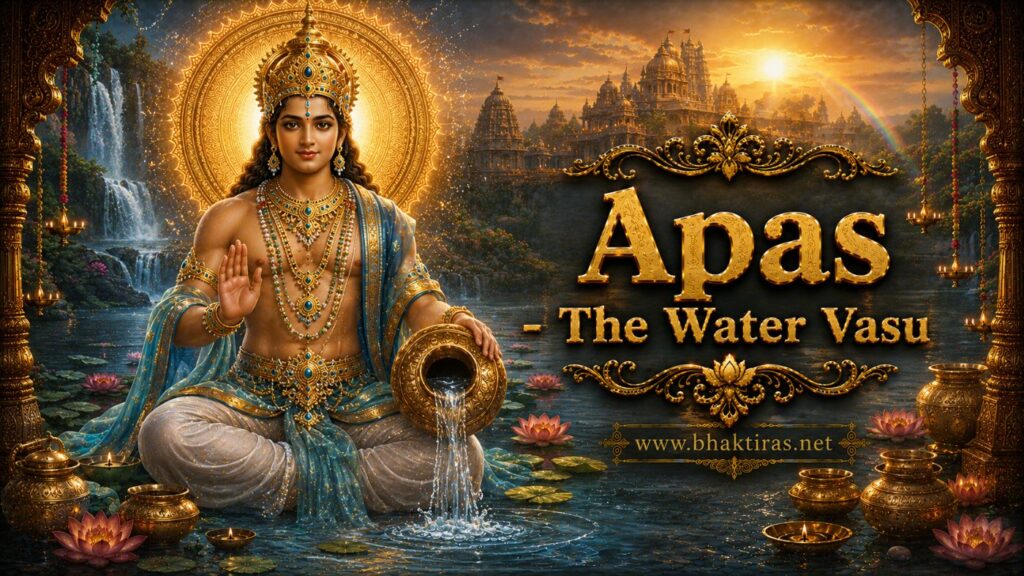
Who Is Apas?
Apas is the Vasu who carries water within the group of eight elemental deities. The word apas is itself the Vedic term for the waters, and in the hymns it is often used in the plural, as though water were a gathering of many sisters rather than a single thing. As a Vasu, Apas gives a face and a personality to this most essential element, the rain that falls, the rivers that flow and the moisture that lets seeds sprout.
Among all the elements, water holds a special place in Vedic thought because it both sustains and cleanses. The Rig Veda addresses the waters directly, calling them mothers who heal and who wash away impurity of body and mind alike. Apas gathers all of that reverence into one guardian figure.
He is not a distant abstraction but a present help, invoked whenever water is needed for drinking, growing food or performing a rite. To honour Apas is to acknowledge that nothing lives without water.
Element and Symbolism
Water in Vedic imagery is far more than a physical substance; it is a symbol of life, renewal and inner cleansing.
Source of Life
Every living thing depends on water, so Apas stands for the very possibility of life, from the smallest sprout to the flowing river that feeds a whole region.
Purifier
The waters are asked in the hymns to wash away wrongdoing and illness, making Apas a symbol of both physical and spiritual cleansing before any sacred act.
Motherly Care
Vedic verses call the waters mothers and healers, so Apas carries a gentle, nourishing quality rather than a fierce or warlike one.
Apas Among the Eight Vasus
Apas is one of the Ashta Vasus, the eight deities who each hold a single element of nature. Where Anala keeps fire and Anila keeps wind, Apas keeps water, so the group together forms a complete picture of the physical world. Placed beside earth, fire, air and sky, water is the flowing, adaptable member of the family, and its presence balances the heat of fire and the dryness of wind. Understanding Apas is easiest when seen this way, as one voice in a chorus of eight that together sing the natural order.
Vedic Worship and Relevance
Apas is honoured whenever water is used in ritual, and in Vedic practice that is very often. Water is sprinkled to purify the altar, offered as libation and drunk to seal a rite. The waters are praised in dedicated hymns of the Rig Veda, and the simple salutation Om Adbhyo Namah offers reverence to them. For anyone today, remembering Apas can be as ordinary as pausing in gratitude before a drink of clean water or by the bank of a river. In a world where fresh water is under strain, the old Vedic reverence for Apas reads almost like an early plea to protect the waters we too easily take for granted.
Lore and Significance
The Healing Waters
One of the best loved passages of the Rig Veda calls upon the waters as mothers who bring healing and long life, asking them to grant medicine for the body and to carry away all that is harmful. In this hymn Apas is not asked for wealth or victory but simply for health and cleansing, a reminder of how basic and how precious water is.
Part of the Cursed Eight
As one of the eight Vasus, Apas shares in the great story of the group. When the Vasus took the cow of the sage Vasishtha and were cursed to be born as mortals, Apas was among the seven who had only helped and so left the human world soon after birth, freed by the goddess Ganga while the ringleader Dyaus remained to live on as Bhishma.
Frequently Asked Questions
What element does Apas represent?
Apas represents water, the life-giving and purifying element. Among the eight Ashta Vasus he is the one who holds water under his care.
Is Apas the same as Varuna?
No. Varuna is the great god of the cosmic waters and moral order, while Apas is the Vasu who personifies water itself. They are related in theme but are distinct figures in the tradition.
What does the name Apas mean?
Apas is simply the Vedic word for the waters, often used in the plural, which is why the hymns speak of the waters as many motherly powers rather than a single deity.
How is Apas worshipped?
Apas is honoured whenever water is used in ritual and through the hymns to the waters in the Rig Veda. A common salutation is Om Adbhyo Namah, offered in reverence to the waters.
Why are the waters called mothers in the Vedas?
Because water nourishes and cleanses all life, the Vedic hymns address the waters as mothers and healers, casting Apas as a gentle, nurturing power rather than a fierce one.
Apas reminds us that clean water is a sacred gift worth honouring and protecting.