
World Tribal Day 2026 – Honouring the World's Indigenous Peoples
विश्व आदिवासी दिवस
When is World Tribal Day in 2026?
World Tribal Day – the International Day of the World’s Indigenous Peoples – falls on Sunday, 9 August 2026. The United Nations has marked this date every year since 1994 to recognise the rights, cultures and contributions of indigenous and tribal communities. In India it is celebrated widely across the tribal belts of Jharkhand, Chhattisgarh, Odisha and the Northeast.
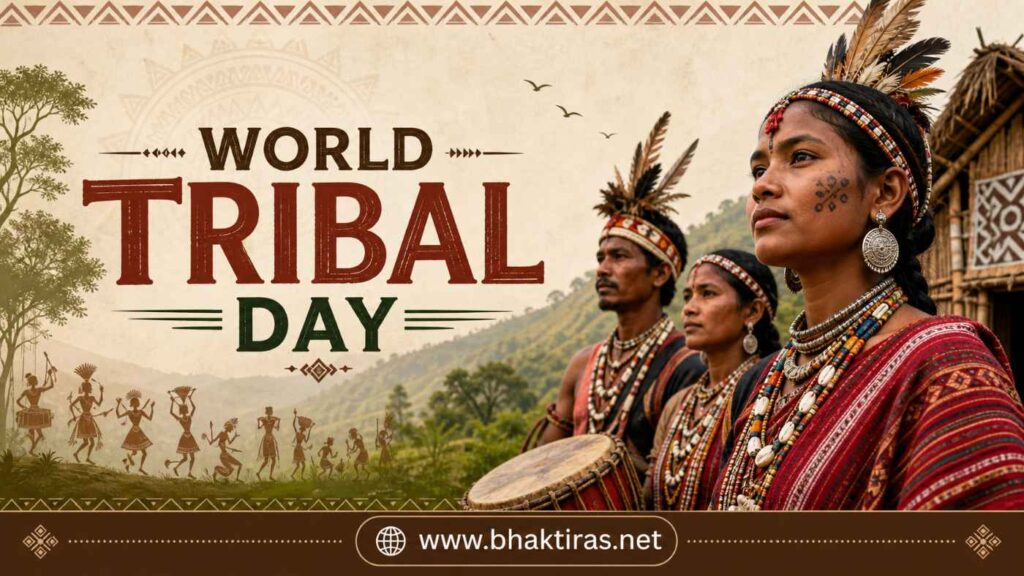
World Tribal Day, known formally as the International Day of the World’s Indigenous Peoples, is observed on 9 August each year. The United Nations set the date in 1994 to draw attention to the rights, languages and living cultures of indigenous communities and to the pressures they face over land, forest and identity. India, home to hundreds of Scheduled Tribes, keeps the day with cultural programmes, tribal dance and music, craft exhibitions and seminars, particularly in Jharkhand, Chhattisgarh, Odisha and the Northeastern states.
World Tribal Day 2026-2028: Dates & Calendar
The next World Tribal Day is Sunday, 9 August 2026. The date is fixed on the Gregorian calendar, so it never shifts – only the weekday changes from year to year.
| Year | Date | Day | Notes |
|---|---|---|---|
| 2026 | 9 August | Sunday | Next occurrence |
| 2027 | 9 August | Monday | Same fixed date |
| 2028 | 9 August | Wednesday | Same fixed date |
The date commemorates 9 August 1982, when the UN Working Group on Indigenous Populations held its first meeting in Geneva.
Why World Tribal Day Is Observed
World Tribal Day is observed to protect the rights and celebrate the cultures of indigenous and tribal peoples, whose ways of life carry knowledge that the wider world often overlooks.
A United Nations origin
The UN General Assembly proclaimed the day in December 1994, choosing 9 August to mark the first meeting of the Working Group on Indigenous Populations back in 1982. Each year the UN sets a theme, from language preservation to climate resilience, giving governments and communities a shared focus.
Indigenous rights
The day puts a spotlight on land, forest and self-determination rights that many communities are still fighting to secure. It draws on the 2007 UN Declaration on the Rights of Indigenous Peoples, which affirms their claim to territory, culture and a say in decisions that affect them.
Living tribal heritage
In India the day becomes a celebration of Adivasi identity – the languages, oral epics, dances, weaving and forest wisdom carried by communities such as the Santhal, Gond, Bhil, Munda and the many peoples of the Northeast. It is a reminder that this heritage is present and evolving, not a museum piece.
How the Day Is Observed
World Tribal Day is a civic and cultural occasion rather than a religious one, and communities mark it in a handful of familiar ways.
- Opening cultural programmes. Schools, colleges and tribal welfare departments host events that begin with folk performances and a welcome to community elders.
- Tribal dance and music. Groups perform traditional forms such as the Santhal and Ho dances of the eastern belt, Gond and Bhil dances of central India, and the drum-and-hornbill traditions of the Northeast.
- Art and craft exhibitions. Stalls display handloom textiles, bamboo and cane work, Sohrai and Warli wall painting, tribal jewellery and forest produce, often with artisans selling directly.
- Seminars and talks. Speakers and activists discuss land and forest rights, the Forest Rights Act, mother-tongue education and the survival of endangered tribal languages.
- Honouring community leaders. Elders, freedom fighters’ descendants and grassroots workers are felicitated for keeping traditions and campaigns alive.
- Processions and rallies. In tribal-majority districts, communities take out colourful marches carrying flags, traditional weapons and instruments through town centres.
- Food and community meals. Shared meals of regional tribal cuisine round off the day, bringing families and neighbouring villages together.
Foods Shared on the Day
Community gatherings on World Tribal Day often feature regional tribal cooking, built around millets, forest greens, rice and locally brewed drinks.
Millet dishes
Ragi, jowar and other millets appear as porridge, flatbreads and dumplings. Long central to tribal diets, these grains are hardy, nutritious and grown without heavy irrigation.
Forest greens & tubers
Seasonal leafy greens, wild mushrooms, bamboo shoot and yam-like tubers gathered from the forest are cooked simply with minimal spice, reflecting a cuisine tied closely to the land.
Handia and mahua drinks
Handia, a mildly fermented rice drink, and preparations from the mahua flower are traditional to many eastern and central communities and often shared at social gatherings.
Northeastern specialities
Smoked meats, fermented bamboo shoot, rice-based dishes and leaf-wrapped preparations feature at gatherings among the tribes of Nagaland, Manipur, Mizoram and the surrounding hills.
How It's Marked Across India
The observance takes on a local flavour wherever tribal communities are concentrated.
Jharkhand
As a state with a large Adivasi population, Jharkhand sees some of the biggest gatherings, with Santhal, Munda, Ho and Oraon communities holding dances, rallies and cultural fairs in Ranchi and district towns.
Chhattisgarh & Odisha
Gond, Baiga and other communities across the central-eastern belt hold folk performances, craft markets and seminars on forest rights, often supported by tribal welfare departments.
The Northeast
In Nagaland, Manipur, Mizoram, Meghalaya and the neighbouring states, the day blends with the strong living traditions of the hill tribes, marked by music, dance and community feasts.
Central & western India
Bhil, Warli and other communities in Madhya Pradesh, Maharashtra, Rajasthan and Gujarat observe the day with painting exhibitions, folk dance and gatherings that spotlight their distinct art forms.
World Tribal Day Do's and Don'ts
A short guide to marking the day with respect and genuine engagement.
Do
- Learn the name and history of the tribal communities in your own region.
- Attend a local cultural programme, exhibition or seminar if one is held nearby.
- Buy directly from tribal artisans to support their craft and livelihoods.
- Listen to indigenous voices and their own account of their needs and rights.
- Share accurate information about the day and its UN origins.
Avoid
- Don’t treat tribal culture as a costume or a photo prop.
- Don’t reduce hundreds of distinct communities to a single stereotype.
- Don’t speak over indigenous people about their own concerns.
- Don’t confuse the day with a purely religious festival – it is a rights and heritage observance.
- Don’t limit your interest to a single day of the year.
Frequently Asked Questions
When is World Tribal Day in 2026?
World Tribal Day is on Sunday, 9 August 2026. Also called the International Day of the World’s Indigenous Peoples, it falls on the same fixed date every year and is observed by the United Nations and across India’s tribal regions.
When is World Tribal Day in 2027 and 2028?
World Tribal Day falls on Monday, 9 August 2027 and Wednesday, 9 August 2028. The date is fixed at 9 August on the Gregorian calendar, so only the weekday changes from year to year.
Why is World Tribal Day celebrated?
World Tribal Day is celebrated to raise awareness of the rights, cultures and contributions of the world’s indigenous and tribal peoples. The United Nations chose 9 August, the date of the first meeting of its Working Group on Indigenous Populations in 1982, and has marked the day annually since 1994.
What is the difference between World Tribal Day and International Day of the World's Indigenous Peoples?
There is no difference – they are two names for the same observance on 9 August. “International Day of the World’s Indigenous Peoples” is the official UN title, while “World Tribal Day” is the name commonly used in India, especially in Adivasi communities.
How is World Tribal Day observed in India?
In India, World Tribal Day is observed with tribal dance and music, art and craft exhibitions, processions and seminars on land, forest and language rights. Celebrations are largest in Jharkhand, Chhattisgarh, Odisha and the Northeastern states, where tribal communities are most concentrated.
Is World Tribal Day a religious festival?
No, World Tribal Day is not a religious festival. It is a global civic observance created by the United Nations to recognise the rights and heritage of indigenous peoples, and in India it celebrates the culture and identity of Adivasi communities rather than any deity or faith.
Who are the indigenous peoples of India?
India’s indigenous communities are officially recognised as Scheduled Tribes, often called Adivasi. They number in the hundreds and include groups such as the Santhal, Gond, Bhil, Munda, Oraon and the many distinct tribes of the Northeast, each with its own language, art and traditions.
When did World Tribal Day start?
The United Nations General Assembly proclaimed the International Day of the World’s Indigenous Peoples in December 1994, and it has been observed on 9 August every year since. The date honours the first meeting of the UN Working Group on Indigenous Populations, held in 1982.
This World Tribal Day, take a moment to listen to and learn from the indigenous communities who have kept the land, its languages and its stories alive – Johar.