
Virpur Jalaram Jayanti 2026 – The Saint of Selfless Service
જલારામ જયંતી
When is Jalaram Jayanti in 2026 and where is it observed?
Jalaram Jayanti falls on Monday, 16 November 2026, marking the birth anniversary of Sant Jalaram Bapa (1799-1881). It is observed on Kartik Sud 7, the seventh day of the bright fortnight of Kartik, about a week after Diwali. The largest gathering is at Virpur in Rajkot district, Gujarat, where lakhs of devotees queue for darshan and free prasad.
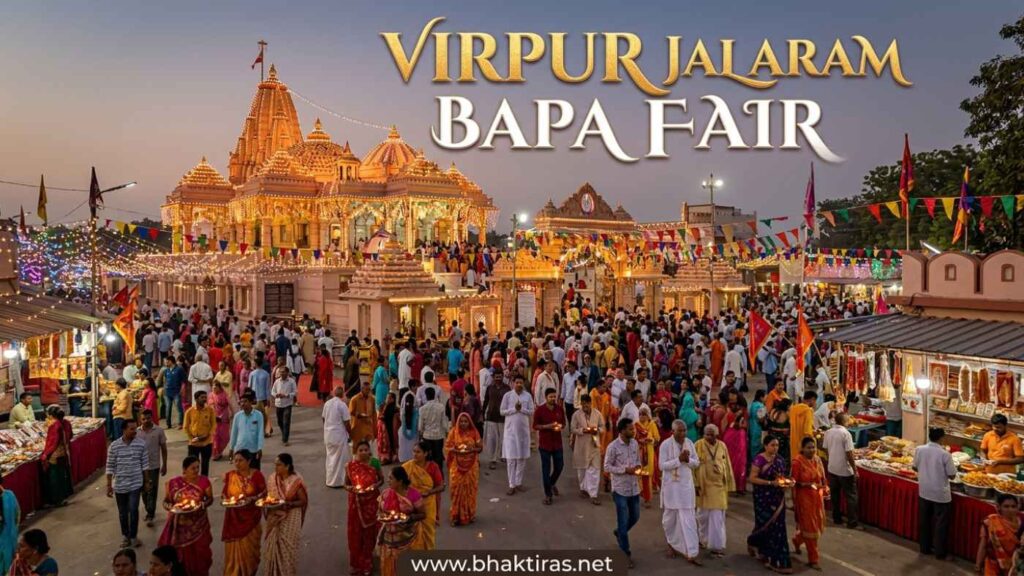
Jalaram Jayanti honours Sant Jalaram Bapa, the nineteenth-century Gujarati saint whose life was given over to feeding whoever arrived hungry at his door. Born at Virpur in 1799, he opened a sadavrat, a free community kitchen, that has run without pause ever since. The main observance falls on Kartik Sud 7, roughly a week after Diwali, and draws enormous crowds to Virpur for darshan, bhajan and the shared meal of khichdi and ganthiya that carries his name.
Jalaram Jayanti 2026-2028: Dates & Calendar
The next Jalaram Jayanti is on 16 November 2026. The date shifts each year because it follows the Hindu lunar calendar, always landing on Kartik Sud 7 (Shukla Saptami of Kartik month), a week after Diwali.
| Year | Date | Day | Tithi |
|---|---|---|---|
| 2025 | 29 October | Wednesday | Kartik Sud 7 |
| 2026 | 16 November | Monday | Kartik Sud 7 (next) |
| 2027 | 5 November | Friday | Kartik Sud 7 |
| 2028 | 24 October | Tuesday | Kartik Sud 7 |
The 2028 date is close to the tithi and may adjust by a day once the final panchang is published; confirm nearer the time.
Why Jalaram Jayanti Is Celebrated
Jalaram Jayanti celebrates the birth of Sant Jalaram Bapa, remembered for a lifetime of feeding the poor and for a temple that refuses money yet never stops serving food.
Jalaram Bapa was a devotee of Rama who read seva, service, as the truest form of worship. Instead of retreating into ritual, he and his wife Virbai turned their home into a kitchen open to sadhus, travellers and the destitute alike. The day of his birth has become a moment to honour that example of giving without expecting anything back.
A saint of service
Jalaram Bapa (1799-1881) built his reputation not on miracles alone but on unbroken hospitality. His guru Bhojal Ram blessed him to start a sadavrat, and from then on no one who came hungry to Virpur was turned away. Jalaram Jayanti keeps that ethic of annadan, the gift of food, at the centre of the celebration.
The no-donation vow
Since 9 February 2000 the Virpur temple has declined all offerings of money, gold or gifts. A notice at the entrance politely asks visitors not to donate. The trust runs on its own resources so that giving flows outward to those in need rather than inward to the shrine, a rare stance that has made Virpur famous.
The eternal sadavrat
The free kitchen Jalaram Bapa began has fed people continuously for well over a century and a half. On Jayanti the scale swells to lakhs of meals, but the principle is the same on an ordinary Tuesday: anyone may sit and eat. This living annadan, not a single building, is treated as his real legacy.
Devotion to Rama
Jalaram Bapa worshipped Rama, Sita, Lakshman and Hanuman, whose images stand in the Virpur shrine. His faith was simple and practical: chant the name, serve the guest, keep nothing for oneself. The greeting Jai Jalaram heard across Gujarat carries that blend of Rama-bhakti and open-handed service.
The Figure Honoured & His Relics
Jalaram Jayanti centres on Sant Jalaram Bapa himself, a saint rather than a deity, alongside the Rama-family images he worshipped and the two relics kept at Virpur.
Sant Jalaram Bapa
The saint of Virpur, born 1799, who devoted his life to feeding the hungry and to the name of Rama. Devotees revere him as a living example of nishkam seva, selfless service, and greet one another with Jai Jalaram.
Rama, Sita, Lakshman & Hanuman
The Virpur shrine houses the images of Rama, Sita, Lakshman and Hanuman that Jalaram Bapa worshipped daily. His bhakti of Rama sat alongside, and drove, his work of service.
The jhol and danda
A cloth bag (jhol) and a staff (danda), said to have been left by a saint who came to test the couple’s hospitality, are displayed in a glass case at Virpur. Pilgrims file past them with folded hands as tangible links to Jalaram Bapa’s story.
How Jalaram Jayanti Is Observed, Step by Step
The day mixes personal devotion with the communal act of eating together. At Virpur it unfolds roughly like this from dawn.
- Early darshan. Devotees rise before sunrise and join long queues for the first glimpse of the Rama images and the relics; many walk the final stretch to Virpur on foot.
- Abhishek and shringar. The shrine is cleaned, the deities are bathed and dressed, and fresh garlands and lamps are offered as the priests begin the morning worship.
- Bhajan and kirtan. Groups sing devotional songs in praise of Jalaram Bapa and Rama through the day; Jai Jalaram echoes across the temple grounds.
- Mahaprasad and annadan. The free kitchen serves khichdi, ganthiya and other prasad to everyone who comes, the beating heart of the celebration and a direct continuation of the sadavrat.
- Procession. In Virpur and at many Jalaram temples worldwide a shobha yatra winds through the streets with images, flags and singing to mark the Jayanti.
- Reciting and giving. Families read from the Ramayana or Jalaram texts at home and, in his spirit, cook extra food to share with neighbours and the needy rather than offering money at the shrine.
Special Foods of Jalaram Jayanti
Food is not a side note here; the shared meal is the observance. The Virpur prasad is famous in its own right.
Khichdi
The simple rice-and-lentil khichdi served free at Virpur is the signature dish of Jalaram Jayanti. Cooked in vast quantities and given to all, it embodies the plain, nourishing generosity Jalaram Bapa stood for.
Ganthiya
Soft gram-flour ganthiya, a Kathiawadi farsan, is handed out alongside the khichdi. The pairing of khichdi and ganthiya has become almost synonymous with the Virpur prasad.
Boondi and sweets
Boondi and other simple sweets are distributed as prasad, adding a touch of festivity to the meal without any grandeur.
The free bhandara
Beyond any single dish, the open community meal, the bhandara, is what devotees carry home. Jalaram temples across India and abroad hold free food-serving on this day in keeping with his sadavrat.
Where Jalaram Jayanti Is Celebrated
The devotion began at Virpur but has travelled with the Gujarati diaspora to temples on several continents.
Virpur, Rajkot
The original temple in Virpur, about 55 km from Rajkot, is the focal point. On Jayanti the small town swells with lakhs of pilgrims, and the roads from Rajkot and Junagadh fill with buses and walking groups.
Across Gujarat
Rajkot, Ahmedabad, Surat, Vadodara and dozens of other towns have Jalaram mandirs that hold bhajan, processions and free meals, so devotees who cannot reach Virpur can still take part.
The global diaspora
Jalaram temples in the United Kingdom, Kenya, the United States and elsewhere mark the day with satsang, kirtan and community feeding, keeping the tradition alive for Gujaratis settled abroad.
Jalaram Jayanti Do's and Don'ts
A few simple points help you honour the day, and the Virpur temple’s wishes, with respect.
Do
- Do arrive early and be patient in the darshan queues, which are very long on Jayanti.
- Do accept and finish the prasad; eating together is the whole point of the day.
- Do carry Jalaram Bapa’s spirit home by cooking extra food and sharing it with someone in need.
- Do dress modestly and keep decorum inside the shrine.
- Do greet others warmly with Jai Jalaram.
Avoid
- Do not try to donate money, gold or gifts at Virpur; the temple has declined all offerings since 2000, so respect the notice and simply take darshan.
- Do not waste the prasad served to you.
- Do not push or jump the queue, however large the crowd.
- Do not treat the visit as sightseeing alone; it is a place of seva and prayer.
- Do not photograph inside restricted areas or against temple instructions.
Frequently Asked Questions
When is Jalaram Jayanti in 2026?
Jalaram Jayanti in 2026 falls on Monday, 16 November. It is observed on Kartik Sud 7, the seventh day of the bright fortnight of Kartik, which comes about a week after Diwali.
When is Jalaram Jayanti in 2027 and 2028?
Jalaram Jayanti is on Friday, 5 November 2027 and around Tuesday, 24 October 2028. The date moves each year because it follows the Hindu lunar calendar, staying on Kartik Sud 7; the 2028 date should be confirmed nearer the time from a panchang.
Who was Sant Jalaram Bapa?
Sant Jalaram Bapa (1799-1881) was a Gujarati saint from Virpur and a devotee of Rama. With his wife Virbai he ran a sadavrat, a free kitchen open to all, and is revered for a lifetime of selfless service to the poor and needy.
Why does the Virpur Jalaram temple refuse donations?
The Virpur temple has declined all donations of money, gold and gifts since 9 February 2000. The trust chose to remain self-sufficient so that giving flows outward to those in need, continuing Jalaram Bapa’s example of service, and a notice at the entrance asks visitors not to donate.
What food is served at Virpur on Jalaram Jayanti?
Khichdi and ganthiya are the signature prasad served free at Virpur, often with boondi and simple sweets. The open community meal, or bhandara, is the heart of the celebration and continues the sadavrat that Jalaram Bapa began.
What are the jhol and danda at Virpur?
The jhol (a cloth bag) and danda (a staff) are relics displayed in a glass case at the Virpur temple. According to tradition they were left by a saint who came to test the hospitality of Jalaram Bapa and Virbai, and devotees venerate them during darshan.
Where is the Virpur Jalaram temple located?
The Virpur Jalaram temple is in Virpur, a town in Rajkot district of Gujarat, about 55 km from Rajkot city. It is the original shrine of Jalaram Bapa and the main site of the Jalaram Jayanti fair, though Jalaram temples worldwide also mark the day.
How is Jalaram Jayanti celebrated?
Jalaram Jayanti is celebrated with early-morning darshan, bhajan and kirtan, a shobha yatra procession and, above all, the free serving of khichdi and ganthiya to everyone who comes. Many devotees also cook and share food at home in the spirit of Jalaram Bapa’s selfless service.
May the example of Virpur inspire a little more giving in each of us. Jai Jalaram.