
Tokhu Emong 2026 – The Lotha Naga Harvest Festival
When is Tokhu Emong in 2026?
Tokhu Emong is expected to begin on 7 November 2026 (approximate). It is the post-harvest festival of the Lotha Naga community of Wokha district in Nagaland, marking a week or so of rest, thanksgiving and feasting once the year’s crops are safely stored. The date is fixed by community consensus rather than a lunar calendar, so confirm the exact schedule with local Lotha bodies closer to the day.
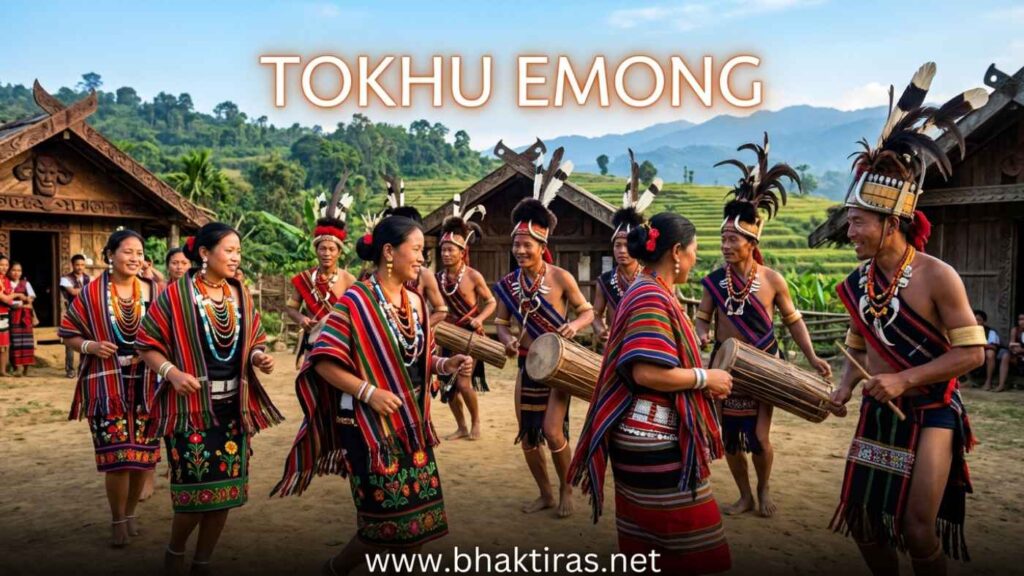
Tokhu Emong is the great post-harvest festival of the Lotha Naga people of Wokha district in Nagaland. The name comes from the Lotha words tokhu, meaning a feast, and emong, a halt or pause – together, a time to down tools once the last of the paddy is in the granary. Over roughly a week in early November, villages give thanks for the harvest, share meat and rice beer, exchange gifts, mend quarrels and welcome the coming year with folk songs and dances.
Tokhu Emong 2026-2028: Dates & Calendar
Tokhu Emong is generally observed from 7 November each year, running for about nine days. Because the start was fixed by Lotha elders for the sake of unity rather than set by the moon, the date stays broadly constant – but always check the local schedule, as the exact days can shift.
| Year | Start date (approx.) | Day | Notes |
|---|---|---|---|
| 2025 | 7 November | Friday | Nine-day observance |
| 2026 | 7 November (approx.) | Saturday | Next occurrence |
| 2027 | 7 November (approx.) | Sunday | Nine-day observance |
The main day of feasting falls on the fixed date, with the surrounding days given over to preparation, community gatherings and the winding-down of the year’s work. In recent years the Tokhu Emong Bird Count and a small literary festival have grown up alongside the traditional celebrations in Wokha.
Why Tokhu Emong Is Celebrated
Tokhu Emong is celebrated as a thanksgiving for a completed harvest – a communal pause to enjoy the fruit of a year’s farming, settle differences and strengthen the bonds of the Lotha Naga community.
Thanksgiving for the harvest
The festival lands when the granaries are full and the fields are quiet. Families give thanks for what the land has yielded and share the surplus, so that the whole village – not only the fortunate farmer – tastes the good of the year.
A sanctioned rest
The word emong marks a deliberate halt. After months of clearing, planting and reaping, Tokhu Emong is the community’s agreed permission to stop, eat well and recover before the next farming cycle begins.
Mending and reconciliation
It is customary to clear old debts, settle disputes and renew friendships during the festival. Quarrels are talked out and gifts exchanged, so the community enters the new year with fewer grudges than it carried into the old one.
Carrying the culture forward
Folk songs, dances and the wearing of traditional Lotha shawls keep older customs visible for the young. For many Lotha families the festival is the clearest annual expression of who they are as a people.
What Is Honoured at Tokhu Emong
Tokhu Emong is a community and harvest festival rather than a temple festival, so it centres on thanksgiving, kinship and the land rather than the worship of a particular deity.
The harvest and the land
The focus is gratitude for a safely gathered crop. Feasts of meat, rice and rice beer are shared in a spirit of thanksgiving for what the fields have given through the year.
Community and ancestors
Tokhu Emong honours the ties of village, clan and family. Reconciling disputes, hosting neighbours and remembering shared custom are as central to the festival as any single act of worship.
Key Rituals, Step by Step
The festival unfolds over several days, moving from preparation to feasting to farewell. The order below reflects how a typical Tokhu Emong is observed in Wokha.
- Finishing the harvest. Before the festival, families make sure the last of the paddy and other crops are threshed and stored, so the celebration begins with the year’s work genuinely done.
- Preparing the feast. Homes brew rice beer and set aside meat and rice for the days ahead. Cleaning the house and readying the traditional shawls are part of the getting-ready.
- Gathering the community. On the appointed day villagers come together, many in woven Lotha shawls whose patterns carry meaning about status and achievement.
- Feasting and sharing. Households host one another with generous plates of meat, rice and rice beer. Sharing food widely, rather than eating only within the family, is the point.
- Exchanging gifts. Neighbours and kin give and receive gifts as a sign of goodwill and continued friendship into the new year.
- Settling disputes. Old quarrels and outstanding debts are talked through and resolved, so grievances are not carried forward.
- Songs and dances. Folk songs and group dances fill the evenings, with older performers passing traditional tunes and steps on to the young.
- Closing and looking ahead. As the festival winds down, the community turns its thoughts to rest and to the farming year to come.
Special Foods of Tokhu Emong
Food is at the centre of Tokhu Emong – it is, after all, a feast. The table leans on the year’s harvest and on the smoked and fermented staples of Naga home cooking.
Rice
Rice from the fresh harvest is the base of nearly every plate, eaten alongside the meat and greens that make up a festival meal.
Meat dishes
Pork, along with other local meats, is prepared for the feasts – often smoked or slow-cooked with bamboo shoot and chilli in the Naga style. Sharing meat generously is a mark of the festival’s hospitality.
Rice beer
Home-brewed rice beer is served through the celebration and shared among guests. It is a customary part of Lotha feasting and hospitality during Tokhu Emong.
Seasonal vegetables and greens
Local vegetables, herbs and fermented sides round out the meals, using what the season and the recent harvest provide.
Tokhu Emong Do's and Don'ts
A few simple courtesies help visitors and neighbours share in the spirit of the festival.
Do
- Do give thanks for the harvest and share food generously with neighbours and guests.
- Do use the festival to settle disputes and renew friendships.
- Do wear or respect the traditional Lotha shawl and its patterns.
- Do join the folk songs and dances if you are welcomed to.
- Do check local Wokha announcements for the exact dates each year.
Avoid
- Do not treat it as a purely private meal – the point is to share widely.
- Do not carry old quarrels through the festival unresolved.
- Do not assume the date is fixed to a lunar calendar; it is set by the community.
- Do not photograph people or ceremonies without asking first.
- Do not overlook the elders whose customs and songs the festival preserves.
Frequently Asked Questions
When is Tokhu Emong in 2026?
Tokhu Emong is expected to begin on 7 November 2026 (approximate) and run for about nine days. It is the post-harvest festival of the Lotha Naga community of Wokha district, Nagaland. As the date is fixed by community consensus rather than a lunar calendar, confirm the exact schedule with local Lotha bodies nearer the time.
When is Tokhu Emong in 2025 and 2027?
Tokhu Emong is generally observed from 7 November each year, so it fell around 7 November 2025 and is expected around 7 November 2027, each time running for roughly nine days. These dates are approximate; the community may confirm slightly different days locally in Wokha.
What does Tokhu Emong mean?
Tokhu Emong comes from the Lotha Naga words tokhu, meaning a feast of eating and drinking, and emong, meaning a halt or pause at the appointed time. Together the name describes a sanctioned break from work to feast and give thanks once the harvest is safely stored.
Who celebrates Tokhu Emong?
Tokhu Emong is celebrated by the Lotha Naga community, who are concentrated in Wokha district of Nagaland. It is their principal post-harvest festival and one of the clearest annual expressions of Lotha identity and custom.
Why is Tokhu Emong celebrated?
Tokhu Emong is celebrated as a thanksgiving for a completed harvest and as a communal pause for rest. Beyond feasting, it is a time to exchange gifts, settle disputes and renew friendships, so the community enters the new farming year with its bonds refreshed.
How is Tokhu Emong celebrated?
Tokhu Emong is celebrated with feasts of meat, rice and rice beer, the exchange of gifts, and folk songs and dances performed in traditional Lotha shawls. Families host one another, old quarrels are settled, and in recent years a Tokhu Emong Bird Count and a literary festival have grown up around the celebrations in Wokha.
Is Tokhu Emong the same as Sukkot?
No. Tokhu Emong is the indigenous post-harvest festival of the Lotha Naga, distinct in origin from the Jewish festival of Sukkot. Some Christian Lothas draw a comparison between the two as harvest thanksgivings, but Tokhu Emong is its own Lotha Naga tradition.
What foods are eaten during Tokhu Emong?
Tokhu Emong meals centre on rice from the fresh harvest, meat such as pork often cooked with bamboo shoot and chilli, home-brewed rice beer, and seasonal vegetables and greens. Sharing food generously with neighbours and guests is central to the festival’s hospitality.
May your granaries be full and your quarrels few – a warm Tokhu Emong to the Lotha Naga community of Wokha.