
Ramdevra Mela 2026 – Baba Ramdev's Great Runicha Fair
रामदेवरा मेला
When is the Ramdevra Mela in 2026?
The Ramdevra Mela runs from 12 to 21 September 2026, from Bhadrapada Shukla Dwitiya to Ekadashi. It is the annual fair at the samadhi temple of Baba Ramdev (Ramdev Pir) in Ramdevra village, Jaisalmer district, Rajasthan, and peaks on his samadhi day around 20 September.
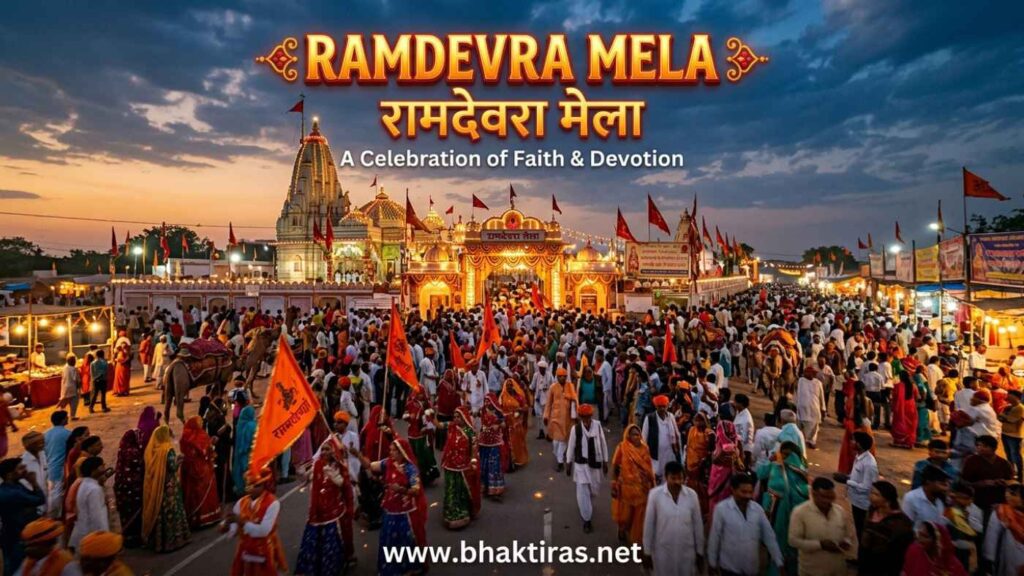
The Ramdevra Mela is Rajasthan’s largest folk pilgrimage, gathering lakhs of devotees each monsoon at the samadhi temple of Baba Ramdev in Ramdevra (Runicha), about 12 km north of Pokhran in Jaisalmer district. Held over roughly ten days from Bhadrapada Shukla Dwitiya to Ekadashi, it honours a fourteenth-century saint revered by Hindus as Ramdev Pir and by Muslims as Ramshah Pir. Pilgrims walk hundreds of kilometres carrying flags and lamps to reach his shrine.
Ramdevra Mela 2026-2028: Dates & Calendar
The next Ramdevra Mela begins on 12 September 2026. Because it follows the Hindu lunar month of Bhadrapada, the fair shifts by a few days each year against the Gregorian calendar.
| Year | Fair dates | Samadhi day | Notes |
|---|---|---|---|
| 2026 | 12-21 September | 20 September | Next occurrence; opens on Ramdev Jayanti (Dwitiya) |
| 2027 | 1-10 September | 9 September | Bhadrapada Shukla Dwitiya to Ekadashi |
| 2028 | 23 August-2 September | 1 September | Earlier in the season as the lunar month falls back |
The opening day (Dwitiya) marks Ramdev Jayanti, the saint’s birth, while the tenth day (Dashami) is his samadhi day, the busiest of the fair. Ekadashi brings the concluding rites before the crowds disperse.
Why the Ramdevra Mela Is Celebrated
The fair marks the samadhi of Baba Ramdev, a fourteenth-century Tanwar Rajput saint who preached the equality of all people and served the poor and marginalised.
Baba Ramdev lived roughly between 1352 and 1385 CE in the Pokhran region and took living samadhi at Ramdevra on Bhadrapada Shukla Ekadashi at the age of 33. Followers across many castes and communities accepted him as a spiritual teacher who refused the social barriers of his time, feeding and healing those whom others turned away.
A saint of the downtrodden
Baba Ramdev built his following by championing the poor, the sick and communities pushed to the margins. His teaching that no person is higher or lower by birth made his shrine a place where devotees of every background stand together in the same darshan queue.
Shared by Hindus and Muslims
Hindus honour him as Ramdev Pir and Muslims as Ramshah Pir. The temple complex is said to hold the tombs of five pirs who travelled from Mecca to test his powers and stayed as his devotees, and the fair draws worshippers of both faiths.
An avatar of Krishna
Many devotees regard Baba Ramdev as an incarnation of Krishna, and his story carries the miracles associated with that belief. His samadhi is treated as a living presence rather than a memorial, which is why pilgrims travel so far to seek his blessing.
Deities & Figures Worshipped
Worship centres on Baba Ramdev himself, represented by his samadhi, his footprints and the emblems tied to his legend.
Baba Ramdev (Ramdevji)
The saint is worshipped at his samadhi inside the main temple. Devotees offer flowers, coconuts, sweets and cloth, and many bow first at the threshold before entering the sanctum.
The paglya (footprints)
Baba Ramdev’s carved footprints, the paglya, are venerated across his shrines and homes as a mark of his presence. Pilgrims touch and garland them as they would the deity.
The horse and the flag
Baba Ramdev is often depicted riding a horse, and the horse and the nishan (banner) are his enduring emblems. Devotees offer small clay or metal horses at the temple as a token of a fulfilled wish.
Key Rituals, Step by Step
The fair blends a long foot pilgrimage with music, dance and darshan at the samadhi.
- Padyatra on foot. Groups of pilgrims set out weeks ahead and walk hundreds of kilometres to Ramdevra, barefoot or in simple sandals, resting at roadside camps set up by volunteers.
- Carrying the jot and nishan. Walkers carry a lit jot (sacred lamp) kept burning the whole way, along with triangular nishan flags in the saint’s colours, singing his praises as they go.
- Reaching Runicha. On arrival at Ramdevra village the groups circle the temple, plant their flags and rest before joining the darshan line.
- Darshan at the samadhi. Devotees queue for a viewing of the samadhi, offering coconuts, cloth, sweets and small horse figures, and touching the paglya footprints.
- Terahtaali dance. Women of the Kamad community perform the terahtaali, a seated dance played with thirteen manjiras (small cymbals) tied to the body, often balancing pots or a sword while keeping rhythm to devotional songs.
- Night bhajan singing. All-night jagran and bhajan sessions fill the fairground, with folk singers recounting the miracles of Baba Ramdev to dholak and cymbal.
- Offering cradles and horses. Couples seeking a child hang a small cradle (palna) at the shrine, and those whose wishes were granted leave a votive horse in thanks.
- Bathing at Ram Sarovar. Many pilgrims bathe at the Ram Sarovar tank, believed to have been dug by Baba Ramdev, and visit the Parcha Bavdi stepwell before leaving.
Special Foods of the Ramdevra Mela
Prasad and Rajasthani fair food feed the huge crowds, much of it served free at community kitchens.
Churma
Coarsely ground wheat cooked with ghee and jaggery or sugar, churma is a favourite bhog offered to Baba Ramdev and shared as prasad among pilgrims.
Bhog and prasad
The daily bhog offered at the samadhi is distributed to devotees. Sweets, batasha and coconut received after darshan are carried home for family who could not make the journey.
Dal-baati
Baked wheat baati served with spiced lentils and ghee is common at the langars run for walking pilgrims, a filling meal after long days on the road.
Free langar
Volunteers and local families set up bhandaras along the pilgrim routes and at the fair, serving khichdi, roti-sabzi and tea without charge to keep the walkers fed.
Where the Fair Draws Its Devotees
Although the fair happens at one village, its following stretches across western and northern India.
Rajasthan
Baba Ramdev is one of Rajasthan’s most loved folk deities, and the largest share of pilgrims walk in from across the state, many from the desert districts around Jaisalmer, Jodhpur and Bikaner.
Gujarat
Gujarat has a deep Ramdev Pir tradition, with countless village shrines and singing groups. Large contingents travel from Gujarat every year to reach Runicha for the fair.
Punjab, Haryana & beyond
Devotees also come from Punjab, Haryana, Madhya Pradesh, Delhi and Mumbai, and the saint is remembered by Sindhi communities as far as Pakistan, reflecting how widely his message spread.
Ramdevra Mela Do's and Don'ts
A few practical points help pilgrims travel safely and respect the shrine during the peak crowds.
Do
- Carry water, ORS and comfortable footwear if you are walking any part of the padyatra
- Keep your jot lamp shielded and refill it carefully on the road
- Follow the darshan queue discipline; the samadhi day sees enormous crowds
- Remove footwear and cover your head before entering the sanctum
- Support the free langars respectfully and avoid wasting food
Avoid
- Do not push or rush the queue on the busy Dashami samadhi day
- Avoid carrying leather items into the temple sanctum
- Do not litter the fairground or the Ram Sarovar tank
- Avoid trusting unofficial guides for costly express-darshan claims
- Do not walk long distances in the midday heat without rest and shade
Frequently Asked Questions
When is the Ramdevra Mela in 2026?
The Ramdevra Mela is held from 12 to 21 September 2026, spanning Bhadrapada Shukla Dwitiya to Ekadashi. It takes place at Baba Ramdev’s samadhi temple in Ramdevra (Runicha), Jaisalmer district, Rajasthan, and peaks on the samadhi day around 20 September.
When is the Ramdevra Mela in 2027 and 2028?
The Ramdevra Mela falls on 1-10 September in 2027 and 23 August-2 September in 2028. The fair follows the lunar month of Bhadrapada, so its Gregorian dates shift a little earlier each year.
Why is the Ramdevra Mela celebrated?
The Ramdevra Mela is celebrated to honour Baba Ramdev, a fourteenth-century saint who preached the equality of all people and served the poor. The fair marks his samadhi at Ramdevra and draws devotees who see him as a protector of the downtrodden.
Who is Baba Ramdev worshipped at Ramdevra?
Baba Ramdev, also called Ramdev Pir or Ramdevji, was a Tanwar Rajput saint of the Pokhran region who lived around 1352 to 1385 CE. Hindus revere him as an avatar of Krishna, while Muslims honour him as Ramshah Pir, making his shrine a rare meeting point of both faiths.
Where is the Ramdevra Mela held?
The Ramdevra Mela is held at Ramdevra, also known as Runicha, a village about 12 km north of Pokhran in Jaisalmer district, Rajasthan. The samadhi temple around which the fair grew was built by Maharaja Ganga Singh of Bikaner in 1931.
What is the terahtaali dance at the fair?
The terahtaali is a seated devotional dance performed mainly by women of the Kamad community at the Ramdevra Mela. Dancers keep rhythm with thirteen manjiras (small cymbals) tied to their bodies, often balancing pots or a sword while singing the praises of Baba Ramdev.
What do pilgrims offer at the Ramdevra temple?
Pilgrims offer coconuts, sweets, cloth and flowers at Baba Ramdev’s samadhi, and touch his carved footprints, the paglya. Couples hoping for a child hang a small cradle at the shrine, and those whose wishes are fulfilled leave a votive horse in thanks.
Do people walk to Ramdevra on foot?
Yes, many devotees undertake a padyatra, walking hundreds of kilometres to Ramdevra over several days or weeks. They carry a burning jot lamp and nishan flags in the saint’s colours, resting at free camps set up by volunteers along the route.
May Baba Ramdev walk beside you on the road to Runicha. Baba Ramdev ki jai.