
Pawl Kut 2026 – The Mizo Harvest Feast of Plenty
When is Pawl Kut in 2026?
Pawl Kut is expected around 19-21 December 2026 in Mizoram, held once the rice harvest is safely in. It is a post-harvest thanksgiving of the Mizo people – a festival of plenty and of children, marked by a great feast of meat and rice, singing, and the Chai dance. The exact days vary by community, so confirm locally nearer the date.
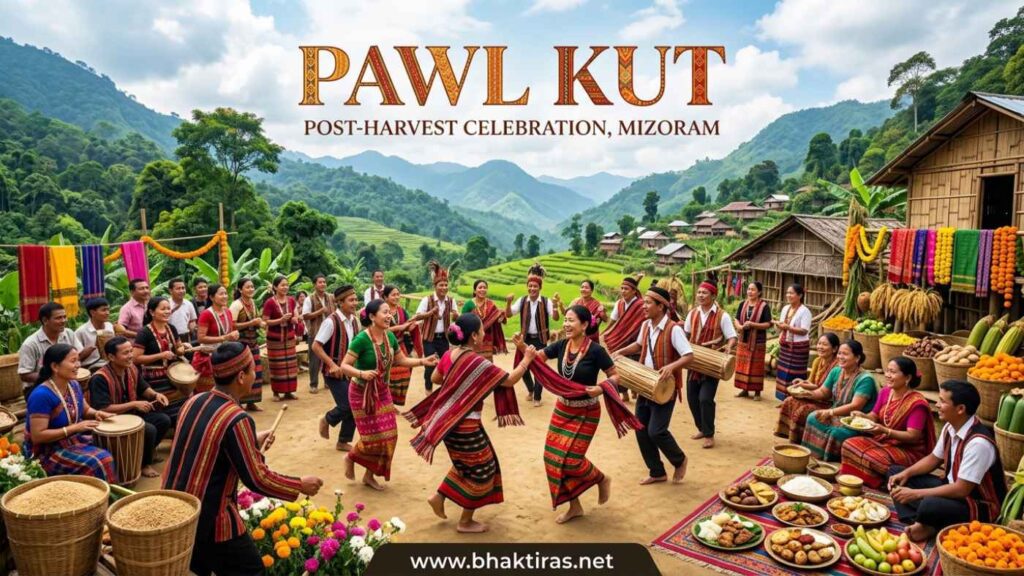
Pawl Kut is one of the happiest days in the Mizo year, a thanksgiving held once the rice is threshed and stored and the hard labour of the fields is behind everyone. Its name comes from pawl, the straw and stubble left after harvest, and kut, a festival. Falling around December, it is above all a festival of plenty and of children – a day for a shared feast of meat and rice, for songs and the Chai dance, and for the small acts of affection that bind a village together.
Pawl Kut 2026-2028: Dates & Calendar
Pawl Kut 2026 is expected around 19-21 December, once the rice harvest is gathered. Dates are approximate – they follow the farming calendar and are fixed community by community, not by a single fixed reckoning.
| Year | Approx. date | Season | Notes |
|---|---|---|---|
| 2025 | 19-21 December (approx.) | Post-harvest | After the rice is stored |
| 2026 | 19-21 December (approx.) | Post-harvest | Next occurrence – approximate |
| 2027 | 19-21 December (approx.) | Post-harvest | Set locally by community |
Because Pawl Kut marks the close of the harvest rather than a fixed lunar tithi, the day is decided by when the crop is safely in. Treat any single date as a guide and check announcements from Mizoram for the confirmed observance.
Why Pawl Kut Is Celebrated
Pawl Kut is celebrated as a thanksgiving for a full granary and a safe harvest, and as a day to renew the bonds of family and community. It is remembered especially as a festival of plenty and of children.
A full granary
The festival comes after the rice and other crops are threshed and stored, when the fear of a poor year has passed. It is a moment to enjoy the fruit of months of shared labour and to celebrate that there is enough – enough to eat well, and enough to give away.
A festival of children
Pawl Kut is often called the children’s festival. Little ones are dressed in their best, given the choicest morsels, and made the centre of the day. In a farming community, a good harvest is also a promise for the young, and the day honours that hope.
Bonds of the community
The custom of elders and children feeding each other morsels by hand carries the real meaning of the day: affection openly shown, generations looking after one another. Neighbours eat together, sing together and dance together, so the feast is as much about belonging as about food.
Key Customs, Step by Step
Pawl Kut is a joyful, communal festival rather than a temple rite. Its customs centre on the shared feast, affection between generations, and song and dance.
- Waiting for the harvest. The festival is held only once the rice is threshed and safely stored, so the community first brings in and secures the whole crop.
- Preparing the feast. Families cook a generous spread of meat and rice, often slaughtering pigs or fowl, so that everyone eats well and no one goes without.
- Dressing the children. Children are dressed in their finest clothes and given a place of honour, in keeping with Pawl Kut’s name as a festival of the young.
- Feeding each other morsels. Elders and children feed one another small morsels of food by hand – a gentle custom of affection that is the heart of the day.
- Singing and the Chai dance. The community gathers to sing traditional songs and to perform the Chai dance, men and women together, moving to drum and gong.
- Community games. Villagers join in games and light-hearted contests, and the celebrating carries on together through the day.
Special Foods of Pawl Kut
Pawl Kut is a feast of plenty, so the table is generous – meat and rice at its centre, cooked and shared across the whole community.
Rice
Freshly harvested rice is the pride of the day and the reason for the festival. It is served in abundance, the visible proof of a good year and a full granary.
Meat
Pork is a favourite, along with chicken and other meats, often prepared simply so the flavour of the meat comes through. A generous share of meat is central to the sense of plenty.
Rice beer
In the traditional setting a home-brewed rice beer, known as zu, was shared among adults as part of the celebration, adding to the warmth of the gathering.
Boiled vegetables and herbs
Simple boiled vegetables and local herbs round out the meal in the plain, hearty style of Mizo home cooking, so the feast is filling as well as festive.
Pawl Kut Do's and Don'ts
A few simple courtesies help you take part in Pawl Kut in the right spirit.
Do
- Share your food generously – the day is about plenty and giving.
- Make children feel special; they are the centre of the festival.
- Join in the singing, the Chai dance and the community games.
- Greet elders warmly and honour the bonds between generations.
- Come with an open, friendly spirit and eat together with neighbours.
Avoid
- Do not treat it as a solemn or private day – it is meant to be joyful and shared.
- Do not eat alone or hold back from the communal feast.
- Do not overlook the children or the elders in the celebrations.
- Do not assume a single fixed national date; it is set community by community.
- Do not reduce the day to only food – the songs, dance and company matter as much.
Frequently Asked Questions
When is Pawl Kut in 2026?
Pawl Kut 2026 is expected around 19-21 December in Mizoram, held once the rice harvest is safely gathered. The exact days are set community by community rather than by a fixed calendar, so the date is approximate and best confirmed locally nearer the time.
What is Pawl Kut?
Pawl Kut is a post-harvest thanksgiving festival of the Mizo people of Mizoram, one of their most joyful days. Held after the rice is threshed and stored, it celebrates a full granary with a great feast of meat and rice, singing, the Chai dance and community games.
Why is Pawl Kut celebrated?
Pawl Kut is celebrated to give thanks for a safe, plentiful harvest and to renew the bonds of family and community. It is remembered especially as a festival of plenty and of children, a day when there is enough for everyone and generosity is openly shown.
Why is Pawl Kut called a festival of children?
Pawl Kut is often called a festival of children because the young are given pride of place – dressed in their finest and offered the choicest morsels. A custom of elders and children feeding each other small morsels by hand carries the day’s spirit of affection between the generations.
What is the Chai dance at Pawl Kut?
The Chai dance is a traditional Mizo community dance performed at Pawl Kut, with men and women taking part together, moving to drum and gong. Along with singing and games, it is central to the celebration and gives the festival much of its joy.
What foods are eaten during Pawl Kut?
Pawl Kut is a feast of plenty built around meat and freshly harvested rice, with pork a particular favourite. In the traditional setting a home-brewed rice beer called zu was also shared, and the meal is enjoyed together across the whole community.
Where is Pawl Kut celebrated?
Pawl Kut is celebrated by the Mizo people of Mizoram in north-east India, and among Mizo communities more widely. It is one of the three principal kuts of the Mizo year, alongside Chapchar Kut in spring and Mim Kut, the maize festival.
What does the name Pawl Kut mean?
The name Pawl Kut comes from the Mizo words pawl, referring to the straw and stubble left in the fields after harvest, and kut, meaning festival. It fittingly marks the close of the harvest season, once the crop has been gathered in.
May your granary be full and your table crowded with those you love – a joyful Pawl Kut to you.