
Medaram Jatara 2028 – The World's Largest Tribal Gathering
మేడారం జాతర / సమ్మక్క సారలమ్మ జాతర
When is the Medaram Jatara in 2028?
The next Medaram Jatara (Sammakka Saralamma Jatara) is expected around 7-10 February 2028. It is a biennial festival held once every two years in the forest at Medaram, Mulugu district, Telangana, in the month of Magha. The 2026 Jatara took place on 28-31 January 2026, so the following one falls in 2028.
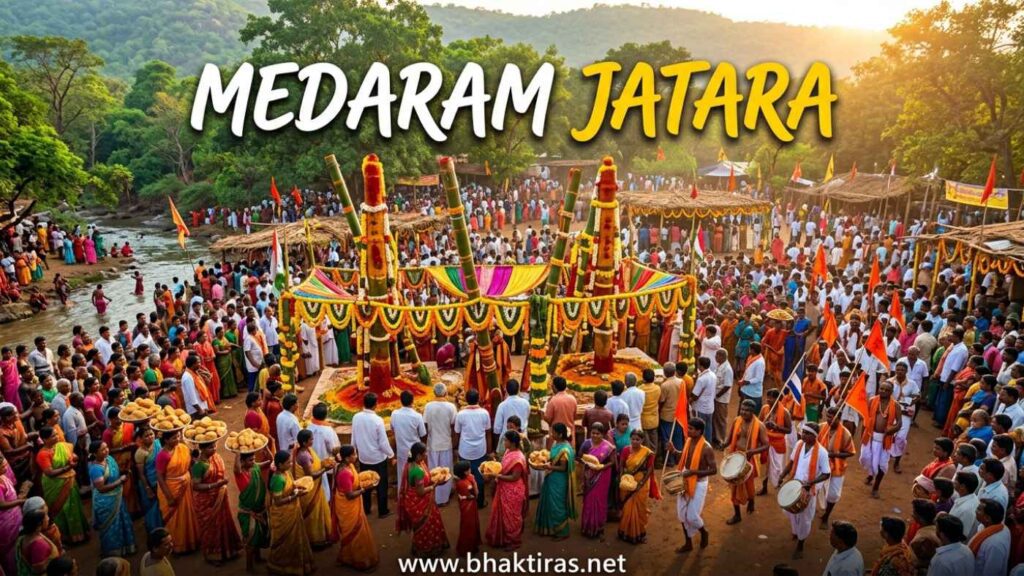
The Medaram Jatara, known formally as the Sammakka Saralamma Jatara, is widely counted as the largest tribal gathering on earth, drawing well over a crore of pilgrims to a clearing in the Telangana forest. It is held once every two years, in the month of Magha, over four days. There is no temple and no idol here: the Koya priests carry the goddesses down from the woods to a raised platform, and the crowd offers jaggery weighed against their own bodies. The next Jatara is expected around 7-10 February 2028.
Medaram Jatara 2026-2028: The Two-Year Cycle
The Medaram Jatara does not happen every year. It is biennial – held once every two years, in even-numbered years, timed to the Magha Purnima period. The 2026 Jatara has already passed, so the next one is in 2028.
| Year | Dates | Status | Notes |
|---|---|---|---|
| 2024 | 21-24 February | Held | Previous cycle |
| 2026 | 28-31 January | Passed | Most recent Jatara |
| 2028 | 7-10 February (approx.) | Next | Awaiting official confirmation |
Because the festival skips a year, there is no Jatara in 2027. If you are planning to attend, mark 2028 and watch for the official four-day schedule, which the temple authorities release a few months ahead.
Why the Medaram Jatara Is Celebrated
The Jatara honours Sammakka and her daughter Saralamma, mother-and-daughter heroines of the Koya tribe who, in local memory, gave their lives resisting an unjust tax during a drought.
The story handed down over generations tells of Sammakka, a Koya tribal woman said to have been found as a child beside a tigress in the forest, who grew into a leader and healer. When a ruling dynasty demanded tribute the Koya could not pay in a year of failed rains, Sammakka, her daughter Saralamma and their kin took up arms. The revolt was crushed. Saralamma fell in the fighting, and Sammakka, wounded, is believed to have walked into the forest near a hill and vanished, leaving behind only vermilion and a few markings.
For the Koya and the millions who now join them, the two women are not distant figures but living protectors. The Jatara is both a memorial to that stand against injustice and a plea for the goddesses’ care – health, rain, children, safe harvests. Its power lies partly in the fact that it grew from a small tribal remembrance into one of India’s biggest religious gatherings without ever needing a temple wall around it.
A stand against injustice
At its heart the festival remembers a refusal – a mother and daughter who would not let their people be taxed into starvation. That memory of dignity under pressure is why many pilgrims describe the goddesses as fierce and protective rather than serene.
Faith without a temple
There is no sanctum, no carved image and no priestly caste in the usual sense. The goddesses are represented by vermilion-smeared symbols brought from the forest. This keeps the Jatara rooted in Koya tradition and open to everyone who walks in.
A gathering of the poor and the powerful
Farmers, forest communities, ministers and film stars stand in the same queues here. The offering of jaggery equal to one’s own weight is something anyone can bring, which is part of why the crowd swells past a crore.
The Goddesses Sammakka and Saralamma
The Jatara worships two tribal goddesses: Sammakka, the mother, and Saralamma (also called Sarakka), her daughter. A few associated Koya deities are honoured alongside them.
Sammakka
The central goddess, remembered as a Koya leader, healer and warrior. On the appointed day the priests bring her – represented by vermilion and symbolic objects rather than an idol – from the Chilakala Gutta hillside down to the platform, and this arrival is the emotional peak of the festival.
Saralamma (Sarakka)
Sammakka’s daughter, who fell resisting the same unjust demand. She is brought to the platform from Kannepalli, and mother and daughter are worshipped together on their raised seats through the four days.
Pagididda Raju & Govindaraju
Male deities linked to the family in Koya tradition – Pagididda Raju is remembered as Sammakka’s husband and Govindaraju as a son-in-law. They are brought to their own platforms and honoured as part of the same divine family.
How the Jatara Unfolds, Day by Day
The four days follow a fixed sequence: the goddesses are brought out of the forest, worshipped on the platform, showered with offerings, and finally returned to the woods.
- Day 1 – the family arrives. Priests bring Saralamma, Pagididda Raju and Govindaraju to their platforms, or gaddes, opening the Jatara.
- Day 2 – Sammakka descends. Koya priests climb Chilakala Gutta and carry Sammakka, in the form of vermilion and symbols, down to her gadde. The waiting crowd erupts as she reaches the platform – for many this moment is the whole reason they came.
- Bathing in Jampanna Vagu. Pilgrims wade into the Jampanna Vagu, the small forest stream said to run red in memory of the goddesses’ blood, taking a purifying dip before their darshan.
- Offering bangaram. Devotees offer bangaram – literally ‘gold’, but here meaning jaggery – weighing out jaggery equal to their own body weight and presenting it to the goddesses as a vow fulfilled or a wish made.
- Day 3 – darshan and vows. The vast crowd files past the platforms for darshan, tying threads, breaking coconuts and making the offerings they travelled for. Cooking fires and camps fill the surrounding forest.
- Day 4 – the return to the forest. In the vanapravesham, the priests carry the goddesses back into the woods. The platforms fall quiet, the crowd thins, and the Jatara closes until the cycle brings it round again in two years.
What People Bring and Eat at Medaram
The signature offering is jaggery, and the food around the festival is simple, portable and shared – the fare of a forest camp holding lakhs of people.
Bangaram (jaggery)
Blocks of jaggery weighed against a devotee’s own body and offered as ‘gold’ to the goddesses. Families carry it in on their heads and shoulders; much of it is later distributed and shared.
Bellam and prasadam
Sweetened rice and jaggery-based prasadam are common, echoing the jaggery theme. Pilgrims often carry small portions home for those who could not make the journey.
Camp cooking
With no large kitchens in the forest, families cook rice, dal and simple curries on open fires at their camps, sharing meals with strangers who become neighbours for four days.
Medaram Jatara: Do's and Don'ts
A few practical and respectful pointers for the four days in the forest.
Do
- Plan for 2028, since the Jatara only happens every two years.
- Carry your own jaggery if you intend to offer bangaram.
- Take a respectful dip in Jampanna Vagu before darshan.
- Follow the Koya priests’ lead – the rituals are theirs to conduct.
- Carry water, basic supplies and cash, as the site is deep in the forest.
Avoid
- Do not expect a temple or an idol – the goddesses are symbolic.
- Do not litter the forest or the Jampanna Vagu stream.
- Do not push during the Sammakka descent – crowds are enormous.
- Do not treat it as a normal annual festival; check the year first.
- Do not disturb the priests or the platforms during rituals.
Frequently Asked Questions
When is the Medaram Jatara in 2028?
The Medaram Jatara in 2028 is expected around 7-10 February 2028. It is a four-day festival held in the Hindu month of Magha, and the exact dates are confirmed by the Koya priests and Telangana authorities a few months ahead.
Is the Medaram Jatara held every year?
No, the Medaram Jatara is biennial – it is held once every two years, in even-numbered years. The most recent Jatara was on 28-31 January 2026, so the next one falls in 2028, with none in 2027.
Why is the Medaram Jatara celebrated?
The Medaram Jatara is celebrated to honour Sammakka and her daughter Saralamma, mother-and-daughter heroines of the Koya tribe. According to legend they fought and died resisting an unjust tax demanded during a drought, and pilgrims worship them as protective goddesses.
Which goddesses are worshipped at Medaram?
The Medaram Jatara worships two tribal goddesses, Sammakka the mother and Saralamma (Sarakka) her daughter. There are no idols; the Koya priests bring the goddesses, represented by vermilion and symbols, from the forest to raised platforms called gaddes.
Where is the Medaram Jatara held?
The Medaram Jatara is held at Medaram, a remote forest village in Mulugu district, Telangana, in the Eturnagaram forest region. The festival takes place in the open forest rather than in a built temple, around the Jampanna Vagu stream.
What is bangaram at the Medaram Jatara?
Bangaram means ‘gold’, but at the Medaram Jatara it refers to the jaggery that devotees offer to the goddesses. Pilgrims weigh out jaggery equal to their own body weight and present it as bangaram, fulfilling a vow or making a wish.
Why is the Medaram Jatara called the world's largest tribal festival?
The Medaram Jatara is called the world’s largest tribal gathering because it draws well over a crore of devotees to a single forest site over four days. It grew from a Koya tribal remembrance into a congregation counted second only to the Kumbh Mela in India.
What is the Jampanna Vagu stream?
Jampanna Vagu is the small forest stream at Medaram in which pilgrims take a holy dip before their darshan. Its reddish water is believed by devotees to carry the memory of the goddesses’ blood shed in their final stand.
May Sammakka and Saralamma keep you and your family under their care – talli, kapadu.