
Mahavir Jayanti 2027 – Birth of the Last Tirthankara
महावीर जयंती
When is Mahavir Jayanti in 2027?
Mahavir Jayanti falls on Monday, 19 April 2027. It marks the birth of Bhagwan Mahavira, the 24th and final Tirthankara of Jainism, and is the most important festival of the Jain year. The date follows Chaitra Shukla Trayodashi, so it shifts each year with the lunar calendar.
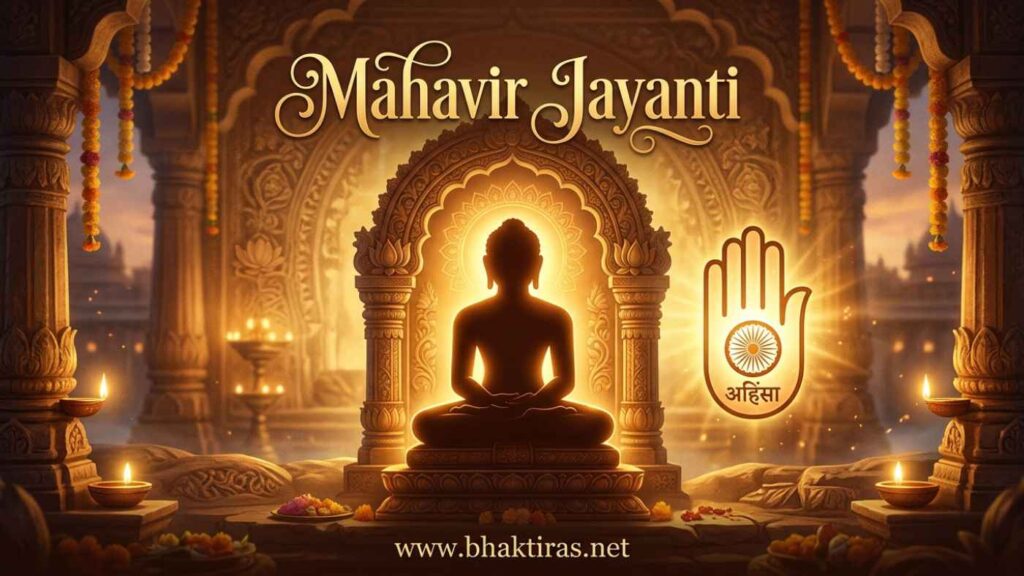
Mahavir Jayanti is the birth anniversary, or Janma Kalyanak, of Bhagwan Mahavira, the 24th and last Tirthankara of Jainism, traditionally born in 599 BCE at Kundagrama. Observed on Chaitra Shukla Trayodashi, it falls on 19 April in 2027 and is the single most important day in the Jain calendar. Both the Digambara and Svetambara sects mark it with temple ceremonies, chariot processions and quiet acts of compassion, remembering the teacher who placed non-violence at the centre of a way of life.
Mahavir Jayanti 2026-2028: Dates & Calendar
Mahavir Jayanti next falls on Monday, 19 April 2027. Because it tracks the lunar tithi Chaitra Shukla Trayodashi rather than a fixed solar date, it moves through late March and April from year to year.
| Year | Date | Day | Notes |
|---|---|---|---|
| 2026 | 31 March | Tuesday | Chaitra Shukla Trayodashi |
| 2027 | 19 April | Monday | Next occurrence |
| 2028 | 8 April | Saturday | Chaitra Shukla Trayodashi |
Why Mahavir Jayanti Is Celebrated
Mahavir Jayanti is celebrated to honour the birth of Bhagwan Mahavira and to renew his teaching that non-violence, or ahimsa, should guide every thought and action. It is a day of reflection, charity and compassion for all living beings.
Birth of a Tirthankara
Mahavira was the 24th and final Tirthankara, one of the enlightened teachers who show the path across the ocean of rebirth. His birth at Kundagrama is remembered as a moment when that path was fully renewed for the present age.
The Five Great Vows
Mahavira taught the five vows that still anchor Jain life: ahimsa (non-violence), satya (truth), asteya (not stealing), brahmacharya (chastity) and aparigraha (non-attachment). The festival is a yearly reminder to live by them.
A shared day for all Jains
Unusually, Mahavir Jayanti is observed by both the Digambara and Svetambara traditions, which differ on many practices. The day draws the whole community together around a single teacher and message.
Compassion in action
The festival is less about spectacle than conduct. Many Jains use it to give in charity, fund animal welfare, release captive creatures and commit again to a diet and lifestyle that causes the least possible harm.
Figure Honoured on Mahavir Jayanti
Mahavir Jayanti honours Bhagwan Mahavira, the 24th Tirthankara. Jains revere him not as a creator god but as a fully liberated teacher whose example points the way to spiritual freedom.
Bhagwan Mahavira
Born as Vardhamana at Kundagrama and traditionally dated to 599 BCE, he renounced worldly life, attained kevala jnana (omniscience) and spent decades teaching ahimsa and self-discipline. He is the last of the twenty-four Tirthankaras of the current cosmic age.
Key Rituals, Step by Step
Observance centres on the temple in the morning and on acts of charity and restraint through the day.
- Early temple visit. Devotees bathe, dress simply and gather at Jain temples soon after dawn to begin the day in worship.
- Abhishek of the infant idol. An image of the infant Mahavira is placed in a cradle and given a ceremonial abhishek, a ritual anointing with water and other pure substances, echoing the celestial bathing of the newborn Tirthankara.
- Rath yatra. A grand chariot procession carries the idol through the streets, often led by monks and nuns, with hymns and the recitation of Mahavira’s name.
- Discourse and scripture reading. Monks and elders read and explain his teachings, so that the crowd hears the five vows and the meaning of ahimsa in their own words.
- Daan and charity. Families give food, money and clothing to those in need, and many fund hospitals, schools and animal shelters as a mark of the day.
- Animal welfare and non-harm. Devotees make special efforts to protect life, avoiding all harm, and some release birds or animals and sponsor their care.
- Fasting and simple food. Many observe a fast or eat only once, taking plain sattvic vegetarian food and reflecting quietly on the teacher’s message.
Special Foods of Mahavir Jayanti
Food on this day is deliberately plain and non-violent, chosen to cause the least harm to living things.
Sattvic vegetarian meals
Households cook simple sattvic food, avoiding onion and garlic. In many strict Jain homes the day is kept entirely free of root vegetables such as potato, carrot and radish, since uprooting them harms the whole plant and the tiny lives in the soil.
Kheer
A mild milk-and-rice pudding, kheer is a favourite offering and a gentle way to break a fast, sweetened with sugar and flavoured with cardamom.
Fresh fruit
Seasonal fruit is eaten by those who take only one light meal or keep a partial fast, keeping the day’s diet clean and easily digestible.
Fasting and ekasana
Rather than a feast, many Jains mark the day by fasting or by taking a single meal (ekasana), turning restraint itself into an act of devotion.
Where Mahavir Jayanti Is Celebrated
Mahavir Jayanti is kept across India wherever Jain communities live, with the largest gatherings at the great pilgrimage sites.
Girnar & Palitana (Gujarat)
The hill temples of Girnar and the Shatrunjaya temple-city at Palitana draw large numbers of pilgrims, who climb to the shrines for worship on the day.
Pawapuri (Bihar)
Pawapuri, where Mahavira attained final liberation (nirvana), is a focus of devotion, and its Jal Mandir set in a lotus pond sees special observance.
Sammed Shikharji (Jharkhand)
Sammed Shikharji, the sacred hill associated with the liberation of many Tirthankaras, is among the holiest destinations for pilgrims marking the festival.
Cities across India
In Mumbai, Ahmedabad, Rajasthan, Delhi and other centres, temples hold abhishek and rath yatra processions, while community halls host discourses and charity drives.
Mahavir Jayanti Do's and Don'ts
A few simple points help keep the spirit of ahimsa at the centre of the day.
Do
- Visit a Jain temple and join the morning abhishek and prayers
- Read or listen to Mahavira’s teachings on the five vows
- Give in charity and support animal welfare or those in need
- Eat simple sattvic vegetarian food, or fast if you are able
- Practise patience, honesty and kindness in ordinary conduct
Avoid
- Do not eat non-vegetarian food or use products that harm animals
- Avoid onion, garlic and, in strict homes, all root vegetables
- Do not turn the day into loud spectacle at the cost of its meaning
- Avoid harsh speech, anger or actions that cause harm to any being
- Do not treat charity as display; give quietly and sincerely
Frequently Asked Questions
When is Mahavir Jayanti in 2027?
Mahavir Jayanti falls on Monday, 19 April 2027. It is observed on Chaitra Shukla Trayodashi and marks the birth of Bhagwan Mahavira, the 24th Tirthankara of Jainism.
When is Mahavir Jayanti in 2026 and 2028?
Mahavir Jayanti is on 31 March 2026 and on 8 April 2028. The date moves each year because it follows the lunar tithi Chaitra Shukla Trayodashi rather than a fixed calendar day.
Why is Mahavir Jayanti celebrated?
Mahavir Jayanti is celebrated to honour the birth of Bhagwan Mahavira and to renew his teaching of ahimsa, or non-violence. It is the most important Jain festival and a day of reflection, charity and compassion for all living beings.
Who was Mahavira?
Mahavira was the 24th and last Tirthankara of Jainism, traditionally born in 599 BCE at Kundagrama. A Tirthankara is an enlightened teacher, not a deity in the Hindu sense, and Mahavira taught the five great vows that still guide Jain life.
How is Mahavir Jayanti celebrated?
Mahavir Jayanti is celebrated with a ceremonial abhishek of the infant Mahavira idol, grand rath yatra chariot processions, and readings of his teachings. Many Jains also fast, give in charity and take special care to avoid harming any living being.
Is Mahavir Jayanti a Digambara or Svetambara festival?
Mahavir Jayanti is observed by both the Digambara and Svetambara sects of Jainism. It is one of the few days that unites the whole community around a single teacher and his message of non-violence.
What do people eat on Mahavir Jayanti?
People eat simple sattvic vegetarian food on Mahavir Jayanti, and many fast or take only one meal. Kheer and fresh fruit are common, and strict households avoid onion, garlic and all root vegetables to reduce harm to living things.
Where is Mahavir Jayanti celebrated most grandly?
Mahavir Jayanti is marked across India, with the largest gatherings at Jain pilgrimage centres such as Girnar and Palitana in Gujarat, Pawapuri in Bihar and Sammed Shikharji in Jharkhand. Temples in major cities also hold abhishek and rath yatra processions.
May the message of Mahavira soften how we live this year. Jai Jinendra.