
Maghi Purnima / Magh Sim 2027 – The Santhal Year's End
माघ सिम
When is Maghi Purnima (Magh Sim) in 2027?
Maghi Purnima, the Santhal festival of Magh Sim, falls around the full moon of the month of Magh, on or near 20 February 2027. It marks the close of the old Santhal working year, a week of rest after the harvest when the village headman (Manjhi) and other officials offer to resign and are re-appointed or replaced. Because it follows the village council rather than a fixed printed date, the exact day can vary slightly from one village to the next.
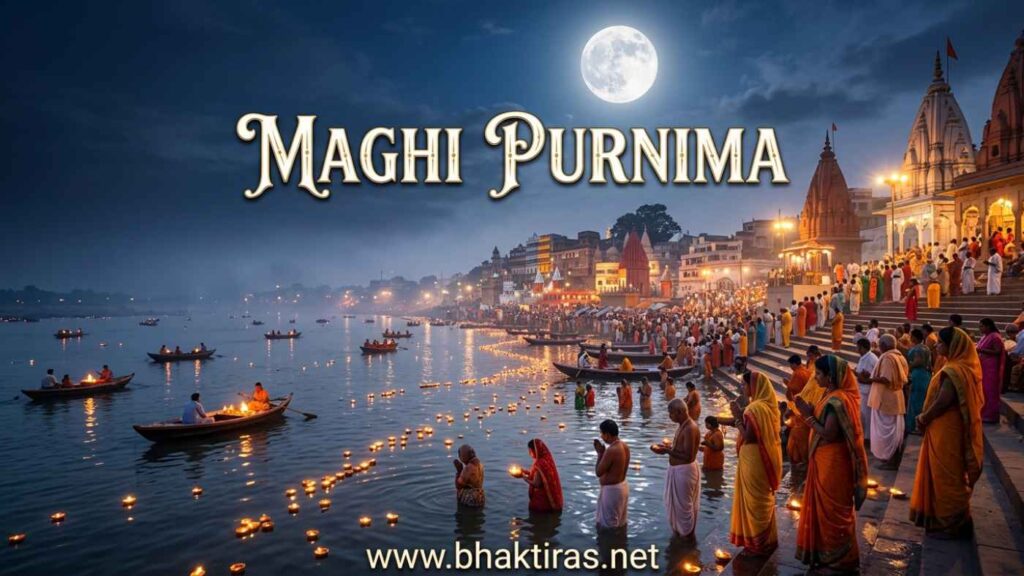
Magh Sim, celebrated around Maghi Purnima at the full moon of the month of Magh, is one of the most quietly important dates in the Santhal calendar. It is not a festival of temples or grand processions but of the village itself. The harvest is in, the granaries are full, and the community pauses to rest, feast, and settle its own affairs. Above all, it is the moment when the Santhal working year ends and the village headman and his fellow officials lay down their charge, to be re-chosen or replaced by the people they serve.
Maghi Purnima / Magh Sim 2026-2028: Dates & Calendar
Magh Sim is tied to the full moon (Purnima) of the lunar month of Magh, which falls in late January or February, so the Gregorian date shifts each year. The next observance is around 20 February 2027.
| Year | Magh Purnima | Day | Notes |
|---|---|---|---|
| 2026 | 1 February | Sunday | Magh full moon |
| 2027 | 20 February | Saturday | Next observance (approximate) |
| 2028 | 10 February | Thursday | Magh full moon |
The festival is not a single fixed day everywhere. In many villages the resignation of officials, the days of rest, and the re-appointment stretch across roughly a week around the full moon, ending when the council reconvenes.
Why Magh Sim Is Celebrated
Magh Sim marks the end of the Santhal working year: a time of rest after the harvest and, above all, the annual renewal of the village’s self-government.
For the Santhal community, one of India’s largest Adivasi groups spread across Jharkhand, West Bengal, Odisha and Assam, the year of labour is measured by the fields. Magh Sim arrives once the crop is gathered and the thatching grass has been cut, when there is finally room to breathe. It is a festival of pause rather than spectacle – a collective exhale before the next cycle of work begins.
The year closes
Magh Sim signals that the old working year is over. The hardest labour of ploughing, planting and harvesting is behind the village, and the days around the full moon are given over to rest, visiting, and eating well while the granaries are still full.
Self-government renewed
The heart of the festival is political in the truest village sense. The Manjhi (headman) and the other officials formally offer to step down, freeing the community to keep them, thank them, or choose someone new. It is a living act of accountability, repeated every single year.
A bond with the land
Worship at the Jaher, the sacred grove of trees left standing at the village edge, ties the celebration to nature rather than to any built shrine. The grove is where the Santhal spirits are honoured, and Magh Sim reaffirms that the community’s wellbeing rests on its relationship with the earth and forest.
Key Rituals, Step by Step
The observance unfolds over roughly a week, blending governance, worship at the sacred grove, and open community celebration.
- The year is declared over. As the Magh full moon nears and the thatching grass has been cut, the village recognises that the working year has ended and the season of rest has begun.
- The officials offer to resign. The Manjhi (headman), along with figures such as the Paranik, the Naike (priest) and the Jog Manjhi, formally lay down their posts before the assembled villagers.
- The community deliberates. Over the following days the villagers review the year and decide whether each official should be re-appointed to the same role or replaced by someone new, an open collective evaluation.
- Worship at the Jaher. The Naike leads offerings at the sacred grove, honouring the Santhal spirits and seeking wellbeing for the village in the year ahead.
- Hunting and gathering. Groups of men set out for a community hunt or forage in the forest, an old tradition that reinforces the bond with the land and provides for the shared feast.
- Feasting and handia. Households share food and the traditional rice beer (handia), the drink that accompanies almost every Santhal celebration, in a spirit of hospitality between neighbours.
- Bonfires, song and dance. In the cool February nights the village gathers around bonfires for Santhal song and rhythmic community dance, often lasting well into the night.
- The council reconvenes. At the end of the week the newly confirmed officials take up their charge again, and the fresh working year formally begins.
Special Foods of Magh Sim
Magh Sim food is the plain, generous fare of a post-harvest village, built around freshly gathered grain, forest catch and home-brewed drink.
Handia
The mildly fermented rice beer that is central to Santhal social and ritual life. Brewed at home and shared freely among guests, handia is offered to visitors and passed around the bonfire through the nights of the festival.
Rice-based meals
With the harvest just gathered, meals lean heavily on fresh rice, served with simple vegetable and pulse preparations. Abundance after months of labour is part of the mood of the week.
Meat from the hunt
Game and poultry from the community hunt or the household stock are cooked for the shared feast. The meal is as much about eating together as about the dishes themselves.
Forest gathering
Wild greens, tubers and other forest produce gathered during the festival add to the table, reflecting the Santhal habit of drawing food directly from the surrounding land.
Where It's Celebrated
Magh Sim is observed wherever Santhal villages are settled across eastern and central India, with local names and small differences in practice.
Jharkhand
The Santhal Pargana region and the surrounding districts form a heartland of the community, where Magh Sim is widely kept as the marker of the year’s end and the renewal of the village council.
West Bengal
In the western districts such as Purulia, Bankura and Jhargram, Santhal villages observe the festival with worship at the Jaher, community feasting, and nights of song and dance.
Odisha
Santhal settlements in northern Odisha keep Magh as a festival of rest and the annual re-selection of officials, in step with the wider community’s traditions.
Assam
Among Santhals who migrated to Assam’s tea-growing belt, the festival survives as a link to their eastern-Indian roots, kept alongside the rhythms of the local calendar.
Magh Sim Do's and Don'ts
A short guide for taking part respectfully, especially if you are a guest in a Santhal village.
Do
- Treat the resignation and re-selection of officials as a serious act of village democracy, not a spectacle.
- Accept hospitality, including handia, graciously if it is offered by your hosts.
- Join the community dance and song if invited, following your hosts’ lead.
- Respect the Jaher sacred grove as a place of worship.
- Ask before photographing rituals or people during the festival.
Avoid
- Do not treat the sacred grove or its trees casually or damage them.
- Do not mock or trivialise the traditional council or its officials.
- Do not assume the festival falls on a single fixed date everywhere – villages set their own day.
- Do not enter ritual spaces uninvited during the Naike’s worship.
- Do not reduce the occasion to only its feasting; its real meaning is renewal and rest.
Frequently Asked Questions
When is Maghi Purnima (Magh Sim) in 2027?
Maghi Purnima, the Santhal festival of Magh Sim, falls around the Magh full moon on or near 20 February 2027. It closes the old Santhal working year and opens a week of rest and village renewal. As the day is set by each village council, the exact date can vary slightly between villages.
When is Magh Sim in 2026 and 2028?
The Magh full moon falls on 1 February in 2026 (a Sunday) and on 10 February in 2028 (a Thursday). Magh Sim is observed around these dates. Because the festival follows the lunar month of Magh, the Gregorian date shifts each year and moves through late January and February.
Why is Magh Sim celebrated?
Magh Sim is celebrated to mark the end of the Santhal working year, a time of rest after the harvest. Its central purpose is the annual renewal of the village’s self-government, when the headman and other officials resign and are re-appointed or replaced. It also reaffirms the community’s bond with nature through worship at the sacred grove.
Who celebrates Magh Sim?
Magh Sim is celebrated by the Santhal community, one of the largest Adivasi (tribal) groups in India. Santhals live mainly in Jharkhand, West Bengal, Odisha and Assam, and the festival is observed in their villages across this region. It is a community and civic occasion rather than a temple festival.
What happens to the village officials during Magh Sim?
During Magh Sim the Manjhi (village headman) and the other officials formally offer to resign from their posts. The villagers then review the year and decide whether to re-appoint each official or choose someone new. After roughly a week the confirmed council takes up its charge again and the new working year begins.
What is the Jaher and why does it matter at Magh Sim?
The Jaher is the sacred grove, a stand of trees left at the edge of a Santhal village where the community’s spirits are honoured. At Magh Sim the Naike (village priest) leads worship there, seeking wellbeing for the coming year. The grove keeps the festival rooted in nature rather than in any built temple.
What food and drink are part of Magh Sim?
Magh Sim food centres on fresh rice from the new harvest, meat from the community hunt or household stock, and forest-gathered greens and tubers. The traditional rice beer, handia, is shared with guests and passed around the bonfires. The mood is one of abundance after a year of hard labour.
Is Magh Sim the same as the Hindu Maghi Purnima?
No, though they share the same full-moon timing. Maghi Purnima in the wider Hindu tradition is a day for holy bathing and charity, while for the Santhals the Magh full moon marks Magh Sim, a tribal festival of the year’s end and the renewal of village governance. The two observances fall together but carry very different meaning.
May the new year bring rest, a full harvest and a village that governs itself in fairness. Johar to the Santhal community.