
Bandana Parab 2026 – The Cattle-Worship Harvest Festival of Manbhum
बांदना परब
When is Bandana Parab in 2026?
Bandana Parab (Bandna) in 2026 falls around Kartik Amavasya, on 8 November, the same dark-moon night as Diwali and Kali Puja. It is the cattle-worship harvest festival of the Kudmi, Santhal and other Adivasi communities of the Manbhum-Purulia belt, spread over roughly five days of song, worship and thanksgiving to the animals who work the fields.
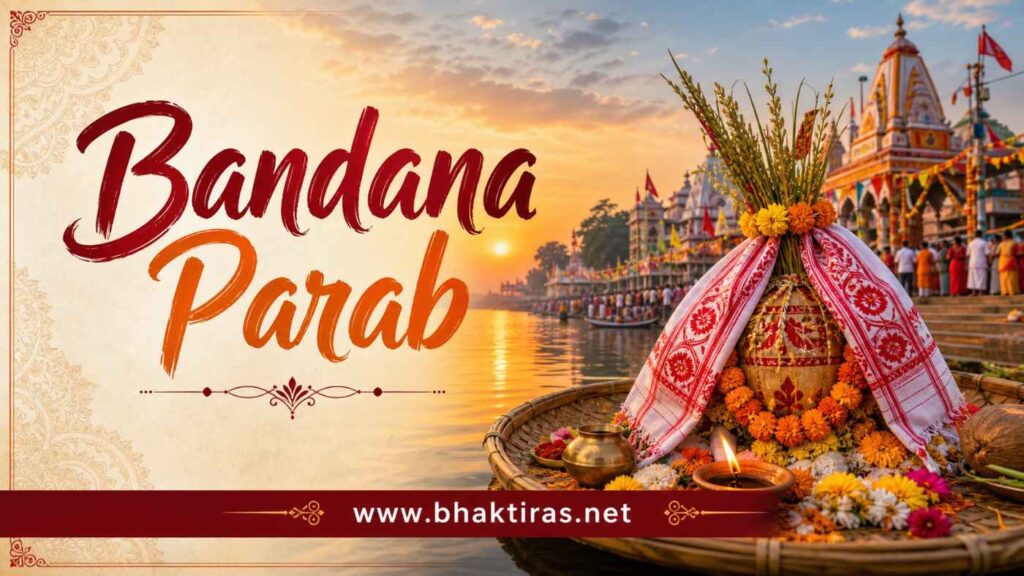
Bandana Parab, also written Bandna or Bandhna, is the great harvest festival of the Adivasi and Kudmi villages of the Chota Nagpur plateau – Jharkhand, the Purulia-Manbhum tract of West Bengal, and parts of Odisha. Held around Kartik Amavasya, the same dark-moon night as Diwali, it is above all a thanksgiving to cattle. The word itself comes from vandana, to salute or honour, and for about five days the villages bathe, oil, garland and feed their oxen and cows, sing to them by name at every doorstep, and close the season with the fierce bull-baiting known locally as Garhwa or Kunkuru.
Bandana Parab 2026-2028: Dates & Calendar
Bandana Parab in 2026 opens around Kartik Amavasya on 8 November. Because it follows the Hindu lunar calendar, the dark-moon date shifts each year against the Gregorian one.
| Year | Start (approx.) | Day | Notes |
|---|---|---|---|
| 2026 | 8 November | Sunday | Kartik Amavasya; five-day festival begins around Diwali |
| 2027 | 28-29 October | Thursday-Friday | Kartik Amavasya (approx.) |
| 2028 | 17 October | Tuesday | Kartik Amavasya (approx.) |
In the Manbhum-Purulia tradition the celebration runs roughly five days: cattle worship (Gorai or Goru puja), the round of Ohira and Bandana songs from house to house, and the closing Garhwa or bull-baiting. Neighbouring Santhal villages keep a longer count of days, so you will see the festival described as both a five-day and a seven-day one.
Why Bandana Parab Is Celebrated
Bandana Parab is celebrated to thank the cattle – the oxen, bulls and cows – who plough, thresh and carry through the whole farming year. Coming just after the harvest, it is the community’s public act of gratitude to the animals, the land and the ancestors.
For a farming family in Manbhum, the bullock is not a possession but a working partner. When the paddy is cut and the granary is full, the debt is felt and repaid: the animals are rested, washed, fed the best of the new grain, and honoured by name. Bandana turns that private feeling into a village-wide festival.
A salute to the cattle
The name says it plainly – vandana means to salute. The bulls and cows that broke the soil and dragged the plough are the guests of honour. For these days no ox is yoked to work; instead it is bathed, its horns oiled, and it is garlanded and fed.
Thanksgiving after harvest
Bandana marks the close of the main paddy season. The first fruits of the year are shared with the animals and offered to the household gods and ancestors, a way of acknowledging that the harvest was never the work of human hands alone.
The bond of the village
The Ohira and Bandana songs are sung house to house, so the whole hamlet moves together from one doorstep to the next. The Garhwa contest, the drums, the dancing and the shared food knit the Kudmi and Adivasi community tight at the turn of the year.
Key Rituals, Step by Step
In the Manbhum-Purulia villages Bandana unfolds over about five days, moving from cleaning and worship to the singing rounds and the closing bull contest.
- Cleaning and lighting. Homes and cattle sheds (the goth) are swept and freshly mud-plastered. Lamps are lit, and on the dark-moon night the courtyard glows the way it does at Diwali.
- Goth Puja – worship at the shed. The cattle byre itself is honoured. Offerings are made where the animals live, and the household ancestors are remembered as part of the same thanksgiving.
- Gorai or Goru Puja – honouring the animals. On the main day the oxen and cows are led out, bathed, their horns cleaned and oiled, then daubed with vermilion and garlanded. They are fed a special meal of rice, pulses and the new grain.
- The Ohira and Bandana songs. Groups of singers go from house to house through the night, singing praise-songs that name the family’s bulls and cows and bless the byre. Each household welcomes and feeds the singers in turn.
- Dhamsa and madal, and folk dance. The big dhamsa kettledrum and the madal keep the villages awake. Men and women dance in lines to the beat, and the sound carries from hamlet to hamlet.
- Garhwa – the bull contest. On the closing day a spirited bull is tethered to a stout post and provoked with a hide or cloth so it strains and charges, a test of the animal’s fire and the young men’s nerve. Known locally as Garhwa or Kunkuru, it is the loud, dramatic finish to the festival.
- Budhi Bandna – the closing. The last day rounds the festival off quietly, with a final round of feeding and worship before the animals return to their ordinary rest.
Special Foods of Bandana Parab
The kitchens turn out the sweet rice cakes and home-brewed drink of the plateau, and the first of the new grain is shared with people and animals alike.
Pitha (rice cakes)
Steamed and fried rice cakes made from the freshly harvested paddy, some plain, some filled with jaggery and grated coconut. They are the festival sweet of the whole Chota Nagpur belt.
Handia
The traditional fermented rice drink of the region, brewed at home and shared among guests and neighbours during the singing rounds and the dancing.
New-grain rice for the cattle
A special feed of cooked rice, pulses and the season’s new grain, given to the oxen and cows on their day of honour before anyone sits down to eat.
Festive rice and meat
Households cook a fuller meal than usual, often with chicken or goat, to feed the visiting singers and to gather the family together at the close of the harvest.
Regional Names & Variations
The same dark-moon cattle festival goes by different names across the plateau, and the length and emphasis shift a little from community to community.
Manbhum & Purulia (West Bengal)
Here it is Bandana or Bandna, most closely tied to the Kudmi (Kurmi) community. The house-to-house Ohira songs and the Garhwa bull contest are the heart of it, carried on dhamsa and madal drums.
Jharkhand
Across the Chota Nagpur plateau the festival is kept by Kudmi, Bhumij, Koda, Munda and Santhal villages alike. It is recognised statewide as one of the great Adivasi harvest festivals of the Kartik dark moon.
Santhal villages (Sohrai)
Among the Santhal the same cattle-honouring festival is best known as Sohrai, famous for the Sohrai wall paintings the women make. Santhal households often keep a longer, multi-day count than the Manbhum five days.
Odisha
In the northern districts of Odisha bordering Jharkhand, the agrarian and tribal communities keep the festival too, worshipping cattle and thanking the land at the close of the harvest.
Bandana Parab Do's and Don'ts
A few simple courtesies keep the spirit of a cattle-honouring, community festival.
Do
- Rest the cattle and give them their bath, oiling and special feed before anyone eats
- Clean and mud-plaster the home and the cattle shed beforehand
- Welcome and feed the Ohira singers when they reach your doorstep
- Remember the household ancestors as part of the thanksgiving
- Share the new grain, the pitha and the feast with neighbours and guests
Avoid
- Do not put the cattle to work on their day of honour
- Do not treat the Garhwa contest as ordinary sport – it is a village ritual, kept within the community’s own limits
- Do not turn away the visiting singers or leave them unfed
- Do not begin the family feast before the animals have been fed
- Do not neglect to clean the goth (byre) – it is worshipped, not just used
Frequently Asked Questions
When is Bandana Parab in 2026?
Bandana Parab in 2026 falls around Kartik Amavasya, on 8 November, the same dark-moon night as Diwali and Kali Puja. The five-day cattle-worship festival of the Kudmi and Santhal villages of Manbhum begins around this date. As it follows the lunar calendar, the exact day of each ritual can vary slightly by locality.
When is Bandana Parab in 2027 and 2028?
Bandana Parab is expected around 28-29 October in 2027 and around 17 October in 2028, in each case tied to Kartik Amavasya (the Kartik new moon). These dates are approximate because the festival is fixed by the traditional lunar calendar, so villages may observe it a day either side.
Why is Bandana Parab celebrated?
Bandana Parab is celebrated to thank the cattle who plough and work the fields, and to give thanks for the harvest just gathered. The name comes from vandana, to salute, and the festival is the community’s public act of gratitude to its oxen and cows, the land, and the ancestors at the close of the paddy season.
What is the meaning of the word Bandana?
Bandana comes from the word vandana, meaning to worship, honour or salute. The festival salutes the cattle – the bulls, oxen and cows – who toil in the fields, honouring them for a few days each year with a bath, oiled horns, garlands and a special feed of the new grain.
Which communities celebrate Bandana Parab?
Bandana Parab is celebrated by the Adivasi and Kudmi (Kurmi) communities of the Chota Nagpur plateau – across Jharkhand, the Manbhum-Purulia region of West Bengal, and parts of Odisha. In the Manbhum belt it is most closely tied to the Kudmi, while among the Santhal the same cattle festival is best known as Sohrai.
How is Bandana Parab celebrated?
Bandana Parab is celebrated over about five days by worshipping the cattle – bathing them, oiling their horns, garlanding and feeding them – and by singing Ohira and Bandana praise-songs from house to house through the night. Villages resound with dhamsa and madal drums and folk dance, and the festival closes with the Garhwa or Kunkuru bull-baiting contest.
What is the Garhwa or Kunkuru bull-baiting?
Garhwa, also called Kunkuru, is the dramatic closing ritual of Bandana Parab in which a spirited bull is tethered to a strong post and provoked with a hide or cloth to test its fire and strength. It is a village ritual rather than a sport, marking the loud finish to the days of cattle worship and song.
Is Bandana Parab the same as Sohrai?
Bandana Parab and Sohrai are two names for the same Kartik dark-moon cattle-worship harvest festival of the Chota Nagpur plateau. Bandana (or Bandna) is the name used in the Manbhum-Purulia region and among the Kudmi, while Sohrai is the name best known among the Santhal, famous for its Sohrai wall paintings. Santhal villages often keep a longer count of days than the Manbhum five.
Whether you know it as Bandana or Sohrai, this is the plateau’s quiet thank-you to the animals who carry the year. Bandana Parab ki subhkamna.