
Guru Nanak Jayanti 2026 – Gurpurab, the Birth of the First Sikh Guru
ਗੁਰੂ ਨਾਨਕ ਜਯੰਤੀ
When is Guru Nanak Jayanti in 2026?
Guru Nanak Jayanti (Gurpurab) falls on Tuesday, 24 November 2026. Also called Guru Nanak’s Prakash Utsav, it marks the birth of Guru Nanak Dev Ji, the founder of Sikhism, and is observed on Kartik Purnima, the full-moon day of the month of Kartik. Sikhs mark it with continuous scripture reading, processions, hymn-singing and free community meals.
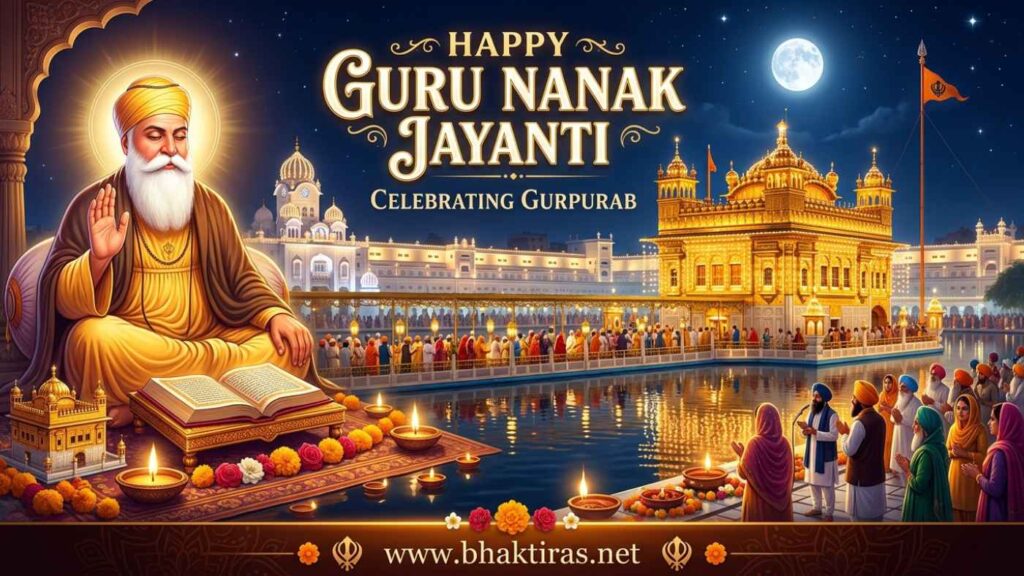
Guru Nanak Jayanti, widely known as Gurpurab or Guru Nanak’s Prakash Utsav, celebrates the birth of Guru Nanak Dev Ji, the first of the ten Sikh Gurus and the founder of Sikhism. It is observed on Kartik Purnima, the full-moon night of the lunar month of Kartik, which falls on 24 November in 2026. For Sikhs it is the most important day of the year, kept over roughly three days with continuous reading of the Guru Granth Sahib, street processions, devotional singing and open community kitchens. The day honours Guru Nanak’s teaching of one God, human equality, honest work and selfless service.
Guru Nanak Jayanti 2026-2028: Dates & Calendar
Guru Nanak Jayanti is next observed on 24 November 2026. The date shifts each year because it follows Kartik Purnima on the lunar calendar rather than a fixed solar date.
| Year | Date | Day | Notes |
|---|---|---|---|
| 2026 | 24 November | Tuesday | Next occurrence |
| 2027 | 15 November | Monday | Kartik Purnima |
| 2028 | 2 November | Thursday | Kartik Purnima |
The main celebrations centre on the full-moon day itself, but the observance usually begins two days earlier with a 48-hour continuous scripture reading and a procession on the eve of Gurpurab.
Why Guru Nanak Jayanti Is Celebrated
Guru Nanak Jayanti is celebrated to honour the birth of Guru Nanak Dev Ji, born in 1469 at Rai Bhoi Ki Talwandi (now Nankana Sahib in Pakistan), and to remember the message he gave the world.
One God, one humanity
Guru Nanak taught that there is one formless God present in all creation, captured in the opening words of the Guru Granth Sahib, Ik Onkar. He rejected caste hierarchy and ritual for its own sake, calling people to devotion of the heart instead.
Equality and langar
Guru Nanak challenged divisions of caste, gender and wealth. The tradition of langar, a free meal where everyone sits and eats together on the floor as equals, grew directly from this teaching and remains central to every Gurpurab.
Honest living and seva
His three guiding principles were Naam Japna (remembering God), Kirat Karni (earning an honest living) and Vand Chhakna (sharing with others). Selfless service, or seva, is how this ideal is practised on his birthday.
Prakash Utsav
The day is also called Prakash Utsav, the festival of light or enlightenment, because Sikhs see Guru Nanak’s birth as light dispelling ignorance. The Golden Temple at Amritsar and gurudwaras everywhere are lit up for the occasion.
The Figure Honoured
Guru Nanak Jayanti honours a human teacher rather than a deity. Sikhs do not worship Guru Nanak as a god but revere him as the founder Guru who revealed the path.
Guru Nanak Dev Ji
Born in 1469, Guru Nanak was the first of the ten Sikh Gurus and the founder of Sikhism. He travelled widely across South Asia and beyond on long journeys called udasis, teaching that God is one and that ritual without honesty and compassion is empty.
The Guru Granth Sahib
On Gurpurab the focus is the Guru Granth Sahib, the Sikh scripture regarded as the eternal living Guru. It contains Guru Nanak’s own hymns, and its continuous recitation is the heart of the day’s observance.
Key Rituals, Step by Step
Guru Nanak Jayanti unfolds over about three days, building from continuous scripture reading to the procession and the main day of worship.
- Akhand Path begins. Two days before Gurpurab, gurudwaras start a 48-hour non-stop reading of the entire Guru Granth Sahib, with volunteers taking turns so the recitation never pauses.
- Nagar Kirtan. On the day before, a procession moves through the streets led by the Panj Pyare, the five beloved ones, carrying the Sikh flag, with the Guru Granth Sahib borne on a decorated palanquin called the Palki.
- Singing and gatka. The procession features hymn-singing, groups displaying gatka martial arts, and devotees sweeping the road ahead of the Palki as a mark of respect.
- Early morning Asa di Var. On Gurpurab itself, worship begins before dawn with the singing of Asa di Var, hymns composed for the early morning.
- Kirtan and katha. Through the day ragis sing kirtan, and speakers give katha, recounting Guru Nanak’s life, teachings and travels.
- Langar. The free community kitchen serves meals to all visitors regardless of faith or background, prepared and served by volunteers as seva.
- Evening illumination. Gurudwaras, especially the Golden Temple at Amritsar, are lit up in the evening, and some places set off fireworks and light lamps.
Special Foods of Guru Nanak Jayanti
Food shared through langar is at the centre of the day, and a sweet offering is distributed to every visitor.
Karah prasad
A warm, dense pudding of wheat flour, sugar and ghee in equal parts, blessed during prayers and given to everyone with cupped hands. It is the sacred prasad of any Sikh service.
Langar meal
A simple vegetarian meal served to all who come, typically dal, a vegetable sabzi, roti and rice, sometimes with kheer. Everyone sits together on the floor in rows called pangat.
Kheer
A creamy rice pudding cooked with milk, sugar and cardamom, often part of the langar spread on festive days like Gurpurab.
Kada prasad and tea
Alongside the meal, volunteers serve tea and refreshments to devotees and to those walking in the Nagar Kirtan, so that no visitor leaves hungry.
Where It's Celebrated
Gurpurab is celebrated wherever Sikh communities live, with Punjab and the diaspora marking it most visibly.
Punjab
The heartland of the celebration. Amritsar’s Golden Temple is illuminated and draws huge crowds, while towns and villages hold Nagar Kirtans and round-the-clock langar.
Nankana Sahib, Pakistan
Guru Nanak’s birthplace, now in Pakistan, hosts one of the largest gatherings, with Sikh pilgrims travelling across the border to the gurudwara built on the site of his birth.
Delhi and across India
Major gurudwaras such as Bangla Sahib and Sis Ganj in Delhi hold processions and langar, and the day is a national public holiday observed across India.
The global diaspora
Sikh communities in the United Kingdom, Canada, the United States, Australia and elsewhere organise Nagar Kirtans through city streets and open their gurudwaras and langars to all.
Guru Nanak Jayanti Do's and Don'ts
A few simple courtesies help visitors take part respectfully in Gurpurab.
Do
- Cover your head with a scarf or cloth before entering a gurudwara.
- Remove your shoes and wash your hands and feet before going inside.
- Sit on the floor at the langar and accept the meal with humility.
- Take part in seva if you can, such as serving food or cleaning.
- Accept karah prasad with both hands, cupped together.
Avoid
- Do not enter the prayer hall wearing shoes or with your head uncovered.
- Avoid carrying or consuming tobacco, alcohol or intoxicants on the premises.
- Do not point your feet towards the Guru Granth Sahib.
- Avoid loud or disruptive behaviour during kirtan and the Akhand Path.
- Do not refuse or waste langar food; take only what you will eat.
Frequently Asked Questions
When is Guru Nanak Jayanti in 2026?
Guru Nanak Jayanti in 2026 falls on Tuesday, 24 November. It is observed on Kartik Purnima, the full-moon day of the lunar month of Kartik, and marks the birth of Guru Nanak Dev Ji, the founder of Sikhism.
When is Guru Nanak Jayanti in 2027 and 2028?
Guru Nanak Jayanti is on Monday, 15 November 2027, and on Thursday, 2 November 2028. The date changes each year because it follows the lunar Kartik Purnima rather than a fixed calendar date.
Why is Guru Nanak Jayanti celebrated?
Guru Nanak Jayanti is celebrated to honour the birth of Guru Nanak Dev Ji, the first Sikh Guru, born in 1469. It remembers his message of one God, the equality of all people, honest living and selfless service, and is the most important festival in the Sikh calendar.
What is Gurpurab?
Gurpurab is the term for a Sikh festival marking the birth or key event in the life of a Sikh Guru. Guru Nanak’s Gurpurab, celebrating his birth, is the best known and is also called Guru Nanak’s Prakash Utsav, the festival of light.
How is Guru Nanak Jayanti celebrated?
Guru Nanak Jayanti is celebrated over about three days with an Akhand Path, a 48-hour continuous reading of the Guru Granth Sahib, a Nagar Kirtan procession led by the Panj Pyare, hymn-singing (kirtan), and langar, a free community meal at gurudwaras. Gurudwaras, including the Golden Temple at Amritsar, are lit up in the evening.
What is the langar on Guru Nanak Jayanti?
Langar is the free community kitchen where a vegetarian meal is served to everyone, regardless of faith, caste or background. On Guru Nanak Jayanti it expresses the Guru’s teaching of equality, as all visitors sit together on the floor and eat as equals.
Where was Guru Nanak born?
Guru Nanak was born in 1469 at Rai Bhoi Ki Talwandi, now known as Nankana Sahib, in present-day Pakistan. The town hosts one of the largest Gurpurab gatherings, with Sikh pilgrims travelling there to the gurudwara on the site of his birth.
Is Guru Nanak Jayanti a public holiday in India?
Yes, Guru Nanak Jayanti is a gazetted public holiday across India. Government offices, banks and many businesses remain closed, and the day is observed nationwide, with the largest celebrations in Punjab.
May the light of Guru Nanak’s message of oneness and service brighten your home this Gurpurab. Waheguru Ji Ka Khalsa, Waheguru Ji Ki Fateh.