
Galdan Namchot 2026 – Ladakh's Festival of Lights
དགའ་ལྡན་ལྔ་མཆོད
When is Galdan Namchot in 2026?
Galdan Namchot falls on 3 December 2026. It is a Tibetan Buddhist festival of lights that marks the birth and parinirvana anniversary of Je Tsongkhapa, the scholar-saint who founded the Gelug school. Monasteries and homes across Ladakh glow with rows of butter lamps, and the day opens the festive run-up to Ladakhi Losar.
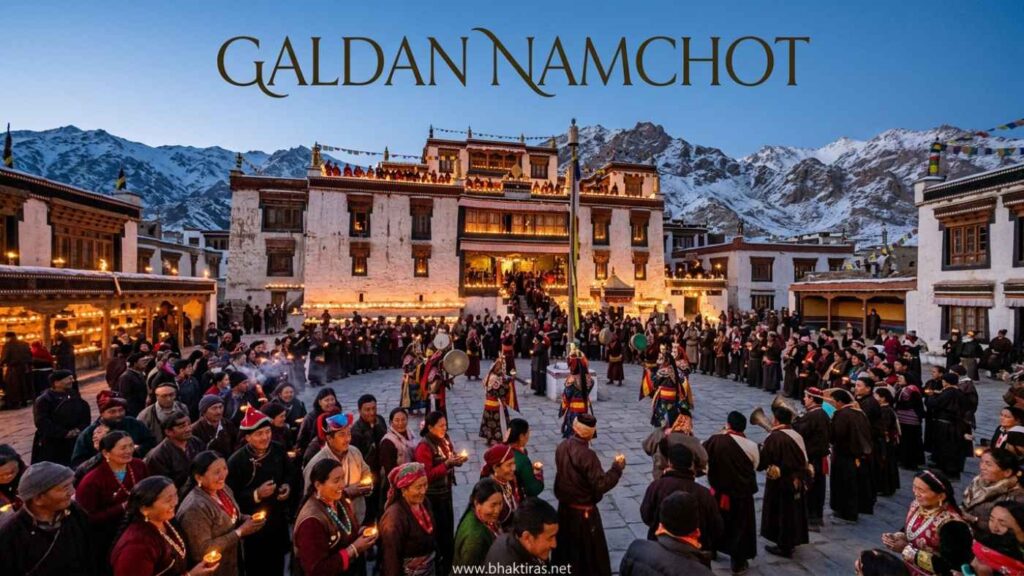
Galdan Namchot is the festival of lights of Tibetan Buddhism, kept most brightly across Ladakh and among Tibetan communities in Sikkim and beyond. It honours Je Tsongkhapa (1357-1419), the scholar-saint who founded the Gelug school, and marks both his birth and his parinirvana on a single day. Falling on the 25th day of the tenth Tibetan lunar month, usually early December, it opens the long festive season that runs on to Ladakhi Losar. Homes, monasteries and shop fronts are lined with butter lamps and small lights.
Galdan Namchot 2026-2028: Dates & Calendar
Galdan Namchot 2026 is on 3 December. Because it is set by the Tibetan lunar calendar, on the 25th day of the tenth month, its Gregorian date shifts each year and almost always lands in December.
| Year | Date | Day | Notes |
|---|---|---|---|
| 2025 | 14 December | Sunday | Previous year |
| 2026 | 3 December | Thursday | Next occurrence |
| 2027 | 23 December (approx.) | Thursday | Tibetan lunar, confirm nearer the date |
| 2028 | 11 December (approx.) | Monday | Tibetan lunar, confirm nearer the date |
In Ladakh the day marks the informal start of the winter festive season, which continues through Ladakhi Losar and on to the Dosmoche festival at the great monasteries.
Why Galdan Namchot Is Celebrated
Galdan Namchot is celebrated to remember Je Tsongkhapa, whose birth and parinirvana are both honoured on this day. Lighting lamps is a public act of gratitude for his teaching and reform of Tibetan Buddhism.
Honouring Je Tsongkhapa
Je Tsongkhapa (1357-1419) was a Tibetan scholar and reformer whose writings and monastic discipline shaped centuries of Buddhist practice. Galdan Namchot keeps his memory on the anniversary that tradition links to both his birth and his passing.
Birth of the Gelug school
Tsongkhapa founded the Gelug school, whose lineage later included the Dalai Lamas and Panchen Lamas. The name recalls Ganden, the monastery he established near Lhasa, and the festival celebrates the school’s continuing scholarship.
A festival of lights
Rows of butter lamps and electric lights fill windowsills, rooftops and monastery courtyards. The light stands for the clearing of ignorance through knowledge, one of the plainest images in Tsongkhapa’s own teaching.
Opening the festive season
In Ladakh, Galdan Namchot effectively begins the winter round of celebrations that carries through to Ladakhi Losar. Families clean and decorate homes, and the mood across Leh and the villages turns warm and social.
Figures Honoured
Galdan Namchot centres not on a god but on a teacher: Je Tsongkhapa, the founder of the Gelug school, remembered alongside the Buddhist ideal of wisdom he taught.
Je Tsongkhapa
The scholar-saint at the heart of the day, born in Amdo in 1357. Prayers, offerings and recitations of his works are made in his honour, and images of Tsongkhapa are placed with lamps in monasteries and homes.
The Buddhist ideal of wisdom
The lamps carry the older Buddhist theme of light dispelling darkness, understood as knowledge overcoming ignorance. Tsongkhapa’s teaching on wisdom and ethical conduct gives the imagery its meaning on this day.
Key Rituals, Step by Step
Observance is quiet and communal rather than grand, built around light, prayer and preparing the home for the season ahead.
- Clean and ready the home. Families tidy and decorate houses and shop fronts in the days before, mirroring the fresh start the festive season brings.
- Prepare the lamps. Butter lamps, and increasingly small electric lights, are set out along windowsills, rooftops, parapets and monastery walls.
- Light at dusk. As evening falls the lamps are lit together, so that whole streets, villages and monastery complexes glow at once.
- Prayers and recitation. Monks and lay people offer prayers and recite verses linked to Je Tsongkhapa and the Gelug tradition.
- Offerings at the monastery. Devotees visit local gompas to make offerings before images of Tsongkhapa and the Buddha.
- Share food and greetings. Families gather for warm winter dishes and exchange good wishes, marking the opening of the season.
- Carry the mood onward. The celebration flows into the wider run of winter festivals leading to Ladakhi Losar.
Special Foods of Galdan Namchot
The table leans on warming Ladakhi and Tibetan winter fare, meant to be shared as families and neighbours gather in the cold.
Thukpa
A hearty noodle soup with vegetables or meat, a staple of Himalayan winters and a natural centrepiece for a cold-evening gathering.
Momos
Steamed dumplings filled with vegetables or meat, served with a spiced sauce and shared freely among family and guests.
Butter tea (gur gur cha)
Salted tea churned with butter, sipped through the day to keep warm and offered readily to visitors during the festivities.
Khambir and tsampa
Khambir is a local baked bread, while tsampa, roasted barley flour, is an everyday staple that also features in offerings and shared meals.
Where It's Celebrated
Galdan Namchot is a Tibetan Buddhist observance, kept wherever the Gelug tradition is followed, most visibly across Ladakh.
Ladakh
The festival is at its brightest here. Leh and the villages line rooftops and streets with lamps, and the day is widely treated as the start of the winter festive season leading to Losar.
Sikkim and Himalayan communities
Tibetan Buddhist communities in Sikkim and other Himalayan areas mark the day at their monasteries with lamps, prayers and offerings for Je Tsongkhapa.
Tibetan communities and diaspora
Among Tibetan communities in India and abroad, Galdan Namchot is observed at monasteries and homes, keeping the memory of Tsongkhapa and the Gelug lineage.
Galdan Namchot Do's and Don'ts
A few simple points of respect help visitors join the day gracefully.
Do
- Light lamps at dusk with the community if you are hosted
- Visit a local monastery quietly and follow its customs
- Dress warmly and modestly for monastery visits
- Ask before photographing prayers or shrines
- Accept butter tea or food when offered as a courtesy
Avoid
- Do not treat it as a purely tourist spectacle
- Do not disturb monks during prayers or recitation
- Do not point your feet at altars or images
- Do not handle lamps or offerings without permission
- Do not confuse it with Diwali; the meaning here is Buddhist
Frequently Asked Questions
When is Galdan Namchot in 2026?
Galdan Namchot falls on 3 December 2026. It is set by the Tibetan lunar calendar on the 25th day of the tenth month, so the Gregorian date changes each year but almost always lands in December.
When is Galdan Namchot in 2027 and 2028?
Galdan Namchot is expected around 23 December in 2027 and around 11 December in 2028. These follow the Tibetan lunar calendar and are approximate, so confirm with local monasteries or a Tibetan calendar nearer the date.
Why is Galdan Namchot celebrated?
Galdan Namchot is celebrated to honour Je Tsongkhapa, the scholar-saint who founded the Gelug school of Tibetan Buddhism. The day marks both his birth and his parinirvana, and lamps are lit as an act of gratitude for his teaching.
Who was Je Tsongkhapa?
Je Tsongkhapa (1357-1419) was a Tibetan scholar, teacher and reformer whose work led to the Gelug school of Tibetan Buddhism. He founded Ganden Monastery near Lhasa, and his lineage later included the Dalai Lamas.
How is Galdan Namchot celebrated in Ladakh?
In Ladakh, homes, shops and monasteries are lined with butter lamps and lights, and prayers and offerings are made for Je Tsongkhapa. The day is treated as the start of the winter festive season that continues to Ladakhi Losar.
What is the meaning of the butter lamps?
The rows of butter lamps stand for light overcoming darkness, understood in Buddhist teaching as knowledge dispelling ignorance. Lighting them together honours Tsongkhapa’s emphasis on wisdom and ethical practice.
Is Galdan Namchot the same as Diwali?
No. Galdan Namchot is a Tibetan Buddhist festival of lights honouring Je Tsongkhapa, while Diwali is a Hindu festival. They share the imagery of lamps but differ completely in their meaning and traditions.
What foods are eaten during Galdan Namchot?
Warming Himalayan winter dishes are shared, including thukpa noodle soup, steamed momos, salted butter tea and local breads such as khambir. Meals are an occasion for families and neighbours to gather in the cold.
May the lamps of Galdan Namchot bring warmth and clear light to your winter. Tashi Delek.