
Kaal Bhairav Jayanti 2026 – The Night of Shiva's Fierce Guardian
काल भैरव जयंती
When is Kaal Bhairav Jayanti in 2026?
Kaal Bhairav Jayanti falls on Tuesday, 1 December 2026. It marks the appearance of Bhairava, the fierce form of Lord Shiva, on the Ashtami tithi of Krishna Paksha in the month of Margashirsha (Kartik Krishna Ashtami in the Purnimanta reckoning). Devotees keep a night vigil, worship Kaal Bhairav and pray for freedom from fear.
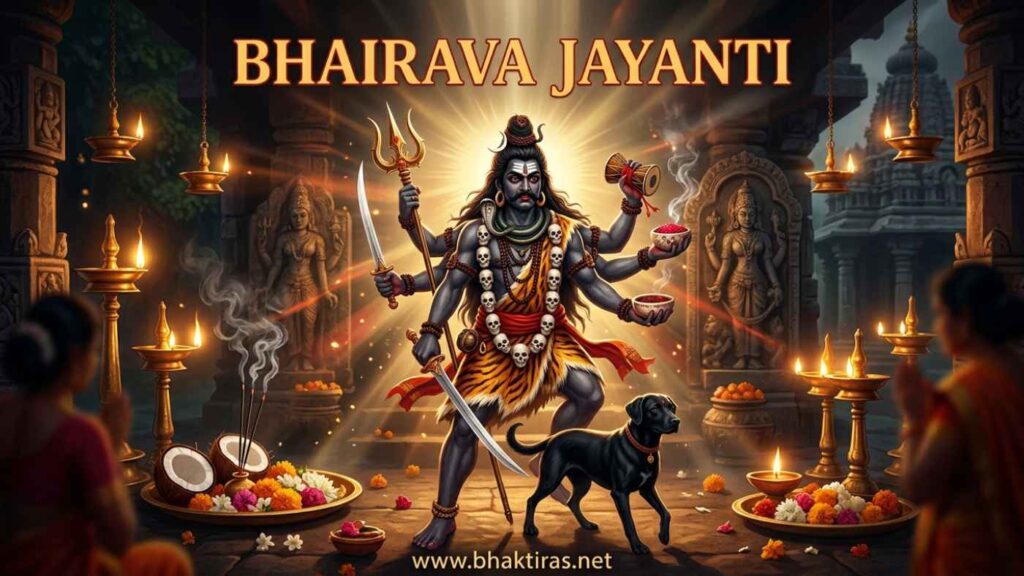
Kaal Bhairav Jayanti, also called Bhairava Ashtami or Kalashtami, honours the day Bhairava appeared as the fierce, protective form of Lord Shiva. It falls on the eighth day of the waning moon in Margashirsha, usually in late November or early December. Worshippers regard Kaal Bhairav as the kotwal or guardian who governs time and karma, and they spend the night in prayer to have fear, delay and negativity lifted from their lives. In 2026 the observance is on 1 December.
Kaal Bhairav Jayanti 2026-2028: Dates & Calendar
The next Kaal Bhairav Jayanti is on 1 December 2026. The date shifts each year because it follows the lunar Ashtami tithi rather than a fixed solar date.
| Year | Date | Day | Notes |
|---|---|---|---|
| 2026 | 1 December | Tuesday | Next occurrence; Tuesday is held especially auspicious for Bhairav |
| 2027 | 20 November | Saturday | Margashirsha Krishna Ashtami |
| 2028 | 9 November | Thursday | Margashirsha Krishna Ashtami |
The Ashtami tithi in 2026 begins in the early hours of 1 December and runs through the night, so most worship and the vigil take place after sunset on the same day.
Why Kaal Bhairav Jayanti Is Celebrated
Kaal Bhairav Jayanti celebrates the appearance of Bhairava, the fierce form Lord Shiva took to humble pride and to guard the cosmos. Devotees observe it to be freed from fear, obstacles and untimely harm.
The word Kaal means time and death, while Bhairav means the one who inspires awe. Together the name points to a form of Shiva who commands time itself. Tradition holds that in Kashi even Yama, the lord of death, has no authority; it is Kaal Bhairav who presides over life, death and release within the sacred city.
Shiva's fierce guardian
Bhairava is worshipped as the protective, wrathful aspect of Shiva. His severity is directed not at devotees but at ego, delay and evil, which is why people who feel stuck or afraid turn to him for a swift clearing of their path.
The kotwal of Kashi
In Varanasi, Kaal Bhairav is honoured as the kotwal, the divine keeper who watches over the city on Shiva’s behalf. Pilgrims traditionally seek his permission first before proceeding to darshan at Kashi Vishwanath.
Lord of time and karma
Because he governs time, Kaal Bhairav is believed to weigh a person’s deeds and free the sincere from the burden of past mistakes. The night vigil on his jayanti is an act of accounting, humility and surrender.
Removal of fear
The single prayer most associated with this day is freedom from bhaya, or fear. Worshippers ask Bhairava to steady the mind, guard the household and lift dread of illness, enemies and misfortune.
Deities & Figures Worshipped
The day centres wholly on Kaal Bhairav, the fierce form of Lord Shiva, along with his faithful dog and, in many temples, the eight Bhairavas who guard the directions.
Kaal Bhairav
Bhairava is depicted with a fearsome face, matted hair and a garland of skulls, carrying a trishul, a damaru, a noose and a skull cup. Each emblem has meaning: the trident cuts ego, the drum keeps the rhythm of creation and dissolution, the noose binds negative forces and the skull marks the end of ignorance.
Shwan, the dog
Kaal Bhairav’s mount is a dog, a symbol of loyalty, alertness and fearlessness. Feeding a dog on his jayanti is regarded as one of the simplest and most pleasing offerings a devotee can make.
The Ashta Bhairavas
Many shrines also invoke the eight Bhairavas, guardians of the eight directions, whose names include Asitanga, Ruru, Chanda, Krodha, Unmatta, Kapala, Bhishana and Samhara. They express the many moods of Shiva’s protective power.
Key Rituals, Step by Step
Observance combines a Kalashtami vrat by day with a night of worship, since Bhairava is a deity of the night.
- Wake early and resolve the vrat. Bathe before sunrise, wear clean clothes and take a sankalp to keep the fast and worship Kaal Bhairav through the day and night.
- Set up the worship space. Place an image or idol of Bhairava, light a lamp with mustard or sesame oil, and offer flowers, sandal paste, incense and vermilion.
- Keep the fast. Many observe a full fast; others take only fruit, milk or a single simple meal, breaking it after the night puja.
- Visit a Bhairav temple. Where possible, go for darshan at a Kaal Bhairav shrine, offer a lamp and circumambulate the sanctum with a prayer for protection.
- Chant his mantras and read his stotra. Recite the Kaal Bhairav Ashtakam and the Bhairava mantra, focusing the mind on freedom from fear and delay.
- Feed a dog. Offer food to a dog, Bhairava’s vahana, as a heartfelt act of devotion and compassion.
- Keep the night vigil. Stay awake in prayer, bhajan and meditation, since the strength of this day lies in worship after dark.
- Light lamps and give in charity. Kindle rows of lamps at the shrine or doorway, then break the fast and share food with the needy the next morning.
Special Foods of Kaal Bhairav Jayanti
Offerings lean towards simple, dark and warming foods, with regional temple customs adding their own character.
Urad dal (black gram)
Dishes and offerings made from black gram are strongly linked to Bhairava worship. Devotees prepare urad dal preparations and offer them at the shrine before sharing them as prasad.
Imarti and sweets
Imarti, a saffron-orange fried sweet, is a favourite offering, along with laddoos and other simple mithai given at Bhairav temples during the jayanti.
Food for the dog
Rotis, milk or plain cooked food set aside for a dog is treated as an offering to Bhairava himself, since the dog is his vahana.
Temple offerings at Ujjain
At the Kal Bhairav temple in Ujjain, liquor is presented to the deity as a tantric offering, a distinctive custom of that shrine. Elsewhere devotees keep to lamps, flowers and vegetarian prasad.
Regional Names & Variations
Bhairava is worshipped across India under related names, with Kashi and Ujjain drawing the largest gatherings.
Kashi (Varanasi)
The Kaal Bhairav temple in Varanasi is the spiritual heart of the observance. As the kotwal of the city, Bhairava receives huge crowds on his jayanti, and pilgrims tie a protective black thread received at the shrine.
Ujjain
The Kal Bhairav temple in Ujjain, Madhya Pradesh, is famous for its tantric liquor offering. It counts among the most visited Bhairav shrines and sees special worship on Bhairava Ashtami.
South India
In Tamil Nadu and neighbouring states Bhairava is revered as a guardian, often placed at temple gates, and the Ashta Bhairava tradition of the eight directional forms is closely followed.
Nepal
Kaal Bhairav is a major protective deity in the Kathmandu valley, where his large stone image is a focus of oaths and public worship, and the festival is marked with devotion.
Kaal Bhairav Jayanti Do's and Don'ts
A few simple observances keep the vrat sincere and respectful.
Do
- Bathe early and take a clear sankalp for the fast
- Light a lamp of mustard or sesame oil before Bhairava
- Feed a dog and offer food to the needy
- Chant the Kaal Bhairav Ashtakam with a calm mind
- Keep the night vigil in prayer and bhajan
Avoid
- Do not disrespect or drive away dogs on this day
- Avoid anger, harsh speech and quarrels during the vrat
- Do not consume tamasic food if you are keeping the fast
- Avoid approaching the worship out of fear rather than faith
- Do not skip seeking Bhairava’s permission before Kashi Vishwanath darshan in Varanasi
Frequently Asked Questions
When is Kaal Bhairav Jayanti in 2026?
Kaal Bhairav Jayanti in 2026 falls on Tuesday, 1 December. It is observed on the Ashtami tithi of Krishna Paksha in the month of Margashirsha. A Tuesday occurrence is considered especially auspicious for Bhairava worship.
When is Kaal Bhairav Jayanti in 2027 and 2028?
Kaal Bhairav Jayanti is on Saturday, 20 November 2027 and on Thursday, 9 November 2028. The date shifts every year because it follows the lunar Ashtami tithi of Margashirsha rather than a fixed calendar date.
Why is Kaal Bhairav Jayanti celebrated?
Kaal Bhairav Jayanti celebrates the appearance of Bhairava, the fierce guardian form of Lord Shiva. Devotees observe it to gain freedom from fear, obstacles and untimely harm, and to honour Kaal Bhairav as the lord who governs time and karma.
Who is Kaal Bhairav?
Kaal Bhairav is the fierce, protective manifestation of Lord Shiva. He is revered as the kotwal or divine guardian of Kashi, carries a trishul, damaru, noose and skull cup, and rides a dog. His worship is sought for courage, protection and the removal of fear.
How is Kaal Bhairav Jayanti observed?
Devotees keep a Kalashtami vrat, worship Bhairava with lamps and flowers, visit a Bhairav temple, feed a dog and keep a night vigil of prayer. Since Bhairava is a deity of the night, the main worship takes place after sunset with mantra chanting and bhajan.
Why is a dog associated with Kaal Bhairav?
The dog is the vahana, or mount, of Kaal Bhairav and symbolises loyalty, alertness and fearlessness. Feeding a dog on his jayanti is regarded as one of the simplest and most pleasing offerings, treated as service to Bhairava himself.
What is offered to Kaal Bhairav?
Common offerings include lamps of mustard or sesame oil, flowers, vermilion, urad dal preparations and sweets such as imarti. At the Kal Bhairav temple in Ujjain, liquor is presented as a distinctive tantric offering, while most other shrines keep to vegetarian prasad and lamps.
What is the difference between Kaal Bhairav Jayanti and Kalashtami?
Kalashtami is the monthly observance of Bhairava on the Ashtami tithi of the waning moon each month. Kaal Bhairav Jayanti is the most important of these, marking the actual appearance day of Bhairava in Margashirsha, and it carries the greatest significance of the year.
May Kaal Bhairav guard your path and lift every fear from your heart this Bhairava Ashtami. Har Har Mahadev.