
ॐ
Shashthi Chalisa
श्री षष्ठी चालीसा
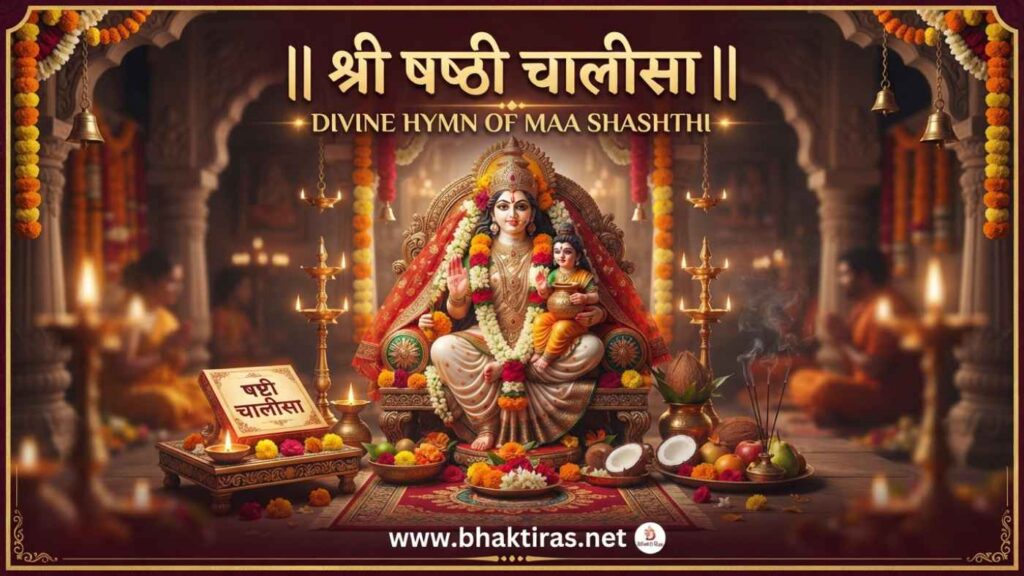
The Shashthi Chalisa is a devotional hymn to Goddess Shashthi, also called Chhathi Maiya, the guardian of children and mothers who is honoured on the sixth day after a baby’s birth and during Chhath. Linked with Skanda and shown riding a cat, she is invoked by parents for a healthy child, a safe delivery and a peaceful home. This page gives the full text in easy Roman transliteration with a clear, plain-English meaning under every verse so you can both chant it and follow what each line asks for.
Shashthi Chalisa Lyrics in English (Transliteration)
Roman transliteration for easy chanting. Tap “Meaning” under any verse for the English translation.
Namah Shashthi Jagat Janani, Karuna Barasaao
Santaan Aur Sukh Sampatti, Hamako Dijiye
Meaning
Salutations to Shashthi, mother of the whole world; pour your compassion on us. Grant us children, contentment and prosperity.
Jo Shashthi Maan Ke Charnan Ko, Nishi Din Dhyan Dhare
Taake Kaaj Saba Hoye, Sukh Sampatti Bhi Bhare
Meaning
Whoever keeps the feet of Mother Shashthi in mind day and night finds all their work completed and their life filled with happiness and plenty.
Jai Shashthi Mata, Santaan Sukhdaai
Sankat Harati, Dukh Mitaane Aai
Meaning
Victory to Mother Shashthi, giver of the joy of children. She takes away danger and has come to wipe out sorrow.
Putra Prapti Ki Kaamna Saphal Karein
Navjaaton Ki Raksha Karatin Har Din
Meaning
She makes the longing for a child bear fruit, and she guards newborns every single day.
Dhyan Dharein Jo Saadhak Maata Ka
Manvaanchhit Phal Paaye Har Din
Meaning
The seeker who steadies the mind on the Mother receives the very outcome they wish for, day after day.
Santaanheen Ke Ghar Mein Ujaala Karein
Baanjh Ko Putra-Ratna De Khushhaali Bharein
Meaning
She brings light into the home of the childless, gifting a precious child to a woman who had none and filling the house with cheer.
Shashthi Devi Ki Mahima Apaar
Jo Bhi Dhyaave, Ho Uska Uddhaar
Meaning
The greatness of Goddess Shashthi has no limit; whoever meditates on her is lifted up and delivered.
Shashthi Puja Vidhi Se Jo Kare
Sabhi Kashton Se Mukta Vah Bane
Meaning
One who worships Shashthi in the proper manner is freed from every kind of suffering.
Prasav Peeda Se Jo Naari Dukhi
Shashthi Devi Use Deti Sukhi
Meaning
The woman worn down by the pain of childbirth is eased and made well by Goddess Shashthi.
Putra-Putri Donon Ki Rakshak
Jo Bhi Maane Aapka Bhavya Swaroop
Meaning
She protects both sons and daughters alike; all who honour her majestic form are blessed.
Bade Sankat Ho, Ya Ho Koi Pareshani
Shashthi Mata Turant Harati Traas
Meaning
Whether a great crisis strikes or some smaller trouble arises, Mother Shashthi removes the fear at once.
Prasann Rahein Jo Shashthi Devi Par
Unke Jeevan Mein Ho Sukh Ka Vaas
Meaning
For those who keep Goddess Shashthi pleased, happiness makes its home in their lives.
Shashthi Devi Ka Jo Sachcha Pujari
Santaan Sukh Ka Vah Adhikari
Meaning
Anyone who is a sincere worshipper of Goddess Shashthi earns the right to the joy of children.
Shashthi Vrat Jo Sache Man Se Kare
Uske Jeevan Mein Kabhi Dukh Na Mile
Meaning
One who keeps the Shashthi fast with a true heart never meets with grief in life.
Shashthi Devi Ki Jo Sachchi Seva Kare
Santaan, Dhan, Sukh, Samriddhi Vah Paaye
Meaning
Whoever serves Goddess Shashthi in earnest gains children, wealth, comfort and prosperity.
Parivaar Mein Sukh-Shanti Aur Samriddhi Badhaati Hai
Stri Rogon Se Mukti Dilati Hai
Meaning
She increases comfort, peace and prosperity within the family, and frees women from ailments that trouble them.
Prasav Sambandhi Samasyaon Ka Samadhan Karati Hai
Bachchon Ke Swasthya Ko Majboot Banati Hai
Meaning
She resolves difficulties connected with childbirth and makes the health of children strong.
Sankaton Se Raksha Karati Hai
Vivaah Aur Santaan Sukh Mein Aane Vaali Baadhaen Door Karati Hai
Meaning
She shields her devotees from calamity and clears away the obstacles that block marriage and the joy of having children.
Jeevan Mein Sthirta Aur Shanti Laati Hai
Paarivaarik Kalah Ko Samapt Karati Hai
Meaning
She brings steadiness and calm into life and puts an end to quarrels within the family.
Devi Ki Kripa Se Vyaapaar Mein Vriddhi Hoti Hai
Shaaririk Aur Maanasik Kashton Se Chhutkara Dilati Hai
Meaning
By the grace of the Goddess, work and business grow, and she gives relief from both physical and mental distress.
Bhakti Se Aadhyaatmik Unnati Hoti Hai
Deerghaayu Aur Svasth Jeevan Ka Aashirvaad Milta Hai
Meaning
Devotion to her leads to inner growth, and one is blessed with a long and healthy life.
Devi Ki Kripa Se Shatru Naash Hota Hai
Jeevan Mein Sakaaraatmak Urja Ka Sanchaar Karati Hai
Meaning
By her grace hostile forces are undone, and she sends fresh, positive energy flowing through one's life.
Is Chalisa Ka Niyamit Paath 41 Dino Tak Kiya Jaata Hai
Muhurta: Suryoday Ke Baad Aur Sandhya Ke Samay Paath Karna Shubh Maana Jaata Hai
Meaning
This Chalisa is commonly recited steadily for forty-one days, with the hours just after sunrise and at dusk held to be the most favourable times to read it.
Shashthi Devi Chalisa Ke Niyam: Puja Aur Saadhna Ko Gupt Rakhna Chahiye
Niyamon Ka Paalan Karte Hue Saadhak Ko Brahmacharya Ka Paalan Karna Chahiye
Meaning
A guideline of the practice: the worship should be kept private, and while observing the vow the devotee is asked to live with restraint and self-discipline.
Shuddha Vastra Pahankar Hi Chalisa Paath Karein
Chalisa Ke Paath Ke Dauraan Dhyan Aur Ekagrata Zaroori Hai
Meaning
Recite the Chalisa only in clean clothing, keeping the mind attentive and focused throughout the reading.
Saadhna Ke Samay Jal, Phal, Aur Deepak Ka Prayog Karein
Paath Ke Samay Keval Sakaaraatmak Vichaaron Ka Man Mein Sankalp Lein
Meaning
During the practice keep water, fruit and a lit lamp at hand, and resolve to hold only positive thoughts as you chant.
Apne Aas-Paas Ka Vatavaran Swachchh Aur Shaant Rakhein
Is Paath Ko Niyamit Roop Se Karne Ka Sankalp Lein
Meaning
Keep the space around you clean and quiet, and make a firm intention to do this recitation regularly.
Puja Sthal Ko Swachchh Aur Pavitra Rakhein
Devi Ke Prati Samarpan Bhaav Se Saadhna Karein
Meaning
Keep the place of worship clean and sacred, and carry out the practice in a spirit of surrender to the Goddess.
Saadhna Ke Dauraan Maun Vrat Rakhne Ka Prayaas Karein
Devi Shashthi Ki Moorti Ya Chitra Ke Saamne Deepak Jalaayein
Meaning
Try to keep silence during the practice, and light a lamp before an image or picture of Goddess Shashthi.
Devi Ko Gur-Haldi Ka Bhog Arpit Karein
Paath Ke Dauraan Anjaane Mein Bhi Apashabdon Ka Prayog Na Karein
Meaning
Offer jaggery and turmeric to the Goddess, and take care never to use harsh or unclean words during the reading, even by accident.
Saadhna Ke Samay Nakaaraatmak Soch Se Bachein
Puja Sthal Par Kisi Bhi Prakar Ka Shor Na Ho
Meaning
Stay clear of negative thinking while you practise, and let no noise of any kind disturb the place of worship.
Chalisa Ka Paath Ekant Sthan Mein Karein
Puja Ke Dauraan Kaale Ya Neele Vastra Na Pahnein
Meaning
Recite the Chalisa in a quiet, private spot, and avoid wearing black or blue clothing during the worship.
Saadhna Ke Samay Kisi Bhi Prakar Ke Taamasik Bhojan Ka Sevan Na Karein
Paath Ke Dauraan Anuchit Vichaaron Se Bachein
Meaning
Do not take heavy or impure food during the practice, and keep unworthy thoughts away while you recite.
Apni Saadhna Ko Akaaran Doosron Se Saajha Na Karein
Paath Ke Dauraan Shaant Aur Sanyamit Rahein
Meaning
Do not speak of your practice to others without good reason, and stay calm and self-controlled during the reading.
Bina Snan Kiye Paath Na Karein
Saadhna Ke Dauraan Anaavashyak Baatchit Se Bachein
Meaning
Do not recite without first bathing, and avoid needless chatter while the practice is under way.
Chalisa Paath Mein Shraddha Aur Vishwaas Zaroori Hai
Ghar Ke Bade Buzurgo Ki Salaah Se Puja Karein
Meaning
Faith and trust are essential to reciting the Chalisa, and it is good to worship with the guidance of the elders of the household.
Saadhna Ka Prarambh Aur Ant Devi Ka Dhyan Karke Karein
Puja Samaapti Par Devi Se Aashirwaad Avashya Lein
Meaning
Begin and close the practice by turning the mind to the Goddess, and at the end of the worship be sure to ask for her blessing.
Shashthi Devi Ki Puja Santaan Sukh, Suraksha Aur Navjaat Shishuon Ki Raksha Ke Liye Ki Jaati Hai
Meaning
The worship of Goddess Shashthi is undertaken for the joy of children, for their safety and for the protection of newborn infants.
Is Chalisa Ka Paath Suryoday Ke Baad Aur Sandhya Ke Samay Karna Uttam Maana Jaata Hai
Meaning
Reciting this Chalisa after sunrise and again at dusk is considered the best practice.
41 Din Ka Samay Kisi Bhi Saadhna Ki Siddhi Ke Liye Shubh Maana Jaata Hai
Aur Devi Ki Kripa Praapt Hoti Hai
Meaning
A span of forty-one days is held to be favourable for completing any spiritual undertaking, and through it the grace of the Goddess is received.
Jo Niyam Aur Shraddha Se Yeh Paath Kare
Santaan, Dhan, Aur Sukh Sampatti Vah Paye
Meaning
Whoever reads this with discipline and faith gains children, wealth and lasting well-being.
Shashthi Maata Ki Kripa Se Har Kaam Hoye
Bhakt Janon Ke Sab Dukh-Kalesh Khoye
Meaning
By the grace of Mother Shashthi every task succeeds, and all the sorrows and troubles of her devotees are lost.
Jo Shashthi Chalisa Yeh, Kare Paath Niyam Se
Uski Har Manorath Poorn, Devi Ke Anugrah Se
Meaning
Whoever reads this Shashthi Chalisa with steady discipline sees every wish fulfilled through the favour of the Goddess.
Benefits of Reciting the Shashthi Chalisa
Devotees turn to the Shashthi Chalisa mainly for matters of children, motherhood and a settled home. Regular, sincere recitation is said to bring:
- Blessing of children: support for couples hoping to conceive and steady protection for the children they already have.
- Safe childbirth: comfort during pregnancy and labour and the well-being of both mother and newborn.
- Family peace and prosperity: greater harmony, contentment and material stability at home.
- Better health: particular help for children’s health and for women troubled by illness.
- Fewer obstacles: the clearing of hurdles around marriage, childbirth and everyday life.
- Growth within and without: spiritual progress alongside a long, healthy and productive life.
When and How to Chant the Shashthi Chalisa
The Shashthi Chalisa is most often recited on Shashthi tithi, the sixth lunar day of the month, and on the sixth day after a child’s birth, which is a key moment for the newborn’s protection; during Chhath it holds special meaning as well. Bathe first and wear clean clothes, ideally white or yellow rather than black or blue, then sit facing east or north in a quiet, tidy corner. Light a lamp before an image of the Goddess and offer water, fruit and a little jaggery with turmeric. Read slowly and clearly with a calm, focused mind. Many keep it as a vow for eleven, twenty-one or forty-one days for a specific wish; a single reading takes roughly seven to ten minutes.
About the Shashthi Chalisa
The Shashthi Chalisa is a traditional Hindi devotional hymn built in the familiar chalisa pattern of opening dohas (couplets) followed by chaupais (verses) and a closing doha; this version carries two opening dohas, forty chaupais and one closing doha. Its language is simple, and here it is given in Roman transliteration. The verses praise Shashthi, or Chhathi Maiya, as the protector of children and mothers, and a good number of the later lines set out the customary rules and care to observe while keeping the recitation as a vow. Unlike the ancient nine-verse Shashthi hymn found in the Brahmavaivarta Purana, this Chalisa is a later, popular composition, and its authorship is not individually recorded.
Frequently Asked Questions
What is the Shashthi Chalisa?
It is a forty-verse Hindi devotional hymn to Goddess Shashthi (Chhathi Maiya), the guardian of children and mothers who is worshipped on the sixth day after a birth and on Shashthi tithi. It praises her power to grant and protect children and to bring peace and prosperity to the family.
What are the benefits of reciting the Shashthi Chalisa?
Devotees recite it for the blessing of children, a safe delivery, the health and protection of newborns, freedom from women's ailments, and peace and prosperity at home. It is also chanted to clear obstacles and to seek a long, healthy life.
Which day is best to recite the Shashthi Chalisa?
Shashthi tithi, the sixth lunar day of each month, is considered most auspicious, along with the sixth day after a child's birth and the days of Chhath. Reciting after sunrise or at dusk is regarded as especially favourable.
How many verses are in the Shashthi Chalisa?
This version has forty chaupais (verses) framed by two opening dohas and one closing doha, following the standard chalisa form.
Can I recite the Shashthi Chalisa for a daughter as well?
Yes. The text names both sons and daughters as being under the Goddess's protection, so it may be chanted for the well-being of any child.
Can the Shashthi Chalisa be recited in English?
Yes. The Devanagari original can be chanted in Roman transliteration, as given on this page, so that anyone can read the words aloud clearly while following the meaning of each verse.
॥ Shashthi Chalisa ॥