
ॐ
Budh Chalisa
श्री बुध चालीसा
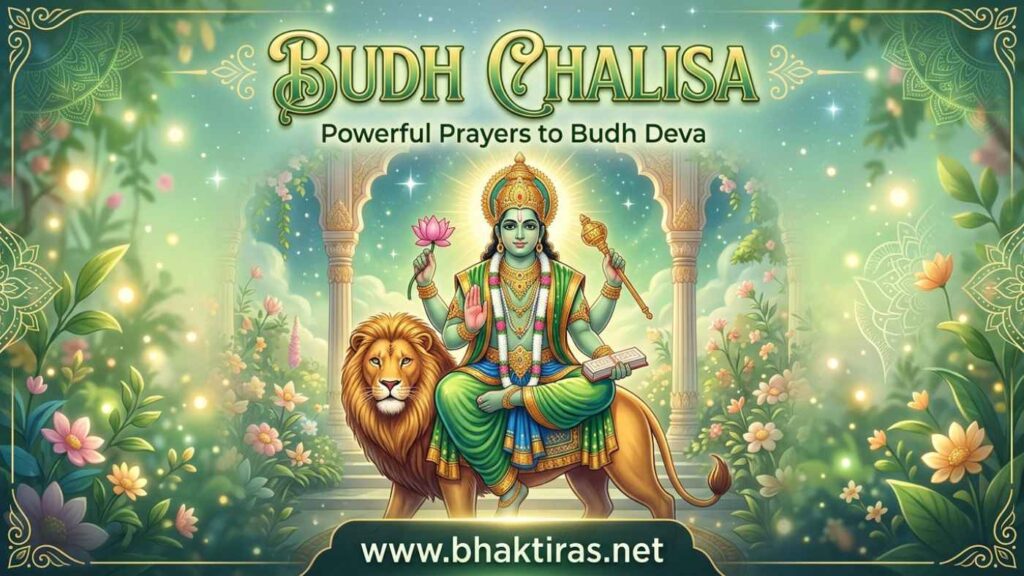
The Budh Chalisa is a devotional hymn to Budh Dev, the planet Mercury and one of the nine Navagrahas of Hindu astrology. Devotees turn to it for clearer thinking, fluent speech, success in study and trade, and relief from a weak or afflicted Mercury in the birth chart. This page gives the full English transliteration so you can recite it even without reading Devanagari, with an original line-by-line meaning under every verse.
Budh Chalisa Lyrics in English (Transliteration)
Roman transliteration for easy chanting. Tap “Meaning” under any verse for the English translation.
Shri Budh Dev Dayal, Keejai Mujh Par Daya
Buddhi Vivek Deejiye, Har Leejiye Sab Bhay
Meaning
Kind Budh Dev, look on me with compassion. Give me clear intellect and sound judgement, and take away every fear I carry.
Jai Budh Grah Deva
Karahu Kripa Ab Deva
Meaning
Hail to you, lord of the planet Mercury. Show me your grace now, O divine one.
Gyan Buddhi Ke Data
Sankat Harta Bhagya Vidhata
Meaning
You grant knowledge and intelligence, you lift away distress, and you shape the fortune of those who pray to you.
Roop Tumhara Ati Sohe
Man Ko Moh Leve Johe
Meaning
Your form is radiant and pleasing; one look at it draws the mind completely toward you.
Shwet Vastra Tum Pahno
Shant Swabhav Se Sab Kaho
Meaning
You are robed in white, and everything you say is spoken with a calm, untroubled temperament.
Haath Mein Pustak Mala Dhari
Buddhi Vidya Ke Tum Bhandari
Meaning
In your hands you hold a book and a rosary; you are the treasury of intellect and learning.
Vani Madhur Tumhari Lage
Sab Jan Karte Tumse Aage
Meaning
Your speech is sweet to hear, and by your favour people move forward and rise in life.
Tumhi Ho Vidya Ke Sagar
Tumhi Ho Buddhi Ke Aagar
Meaning
You alone are the ocean of learning, and you alone are the deep mine from which intelligence is drawn.
Jo Nar Tumko Dhyave Man Se
Buddhi Paye Vo Jeevan Mein
Meaning
Whoever meditates on you wholeheartedly is granted sharper understanding through the course of life.
Vyapar Mein Vriddhi Hove Bhari
Kutumb Mein Sukh Hove Nyari
Meaning
Trade grows abundantly under your blessing, and a rare, settled happiness fills the household.
Rog Shok Sab Door Ho Jave
Jo Tera Naam Man Se Gave
Meaning
Sickness and grief fall away from anyone who sings your name with a sincere heart.
Hari Ghas Tumko Ati Bhave
Daan Kare To Phal Pave
Meaning
Green grass is dear to you; those who offer it in charity receive their reward.
Budhwar Ka Din Tumhara
Jo Koi Kare Vrat Tumhara
Meaning
Wednesday is the day set apart for you, kept by those who take up a fast in your honour.
Hare Rang Ka Vastra Pahno
Hari Vastu Ka Daan Karo
Meaning
Wear garments of green and give green things away in charity to please you.
Ganesh Ji Ke Tum Ho Pyare
Sankat Harte Pal Mein Sare
Meaning
You are dear to Lord Ganesha, and you sweep away every trouble in a single moment.
Vishnu Roop Tum Hi Ho Deva
Karte Sab Jan Teri Seva
Meaning
You are seen as a form of Vishnu himself, and so all people gladly offer you service.
Shiv Ke Ansh Tum Kahlate
Bhakton Ke Kasht Mitate
Meaning
You are called a portion of Lord Shiva, and you erase the hardships of your devotees.
Jo Koi Padhe Chalisa Teri
Buddhi Badhe Uski Bhari
Meaning
Whoever reads this Chalisa of yours finds their power of intellect growing greatly.
Sukh Sampatti Uske Ghar Aave
Dukh Daridra Kahin Na Jave
Meaning
Comfort and wealth come into their home, while sorrow and poverty find no place there.
Budh Grah Ki Kripa Se
Sab Kaam Bane Aasani Se
Meaning
By the grace of the planet Mercury, every task is carried through with ease.
Vidya Vinay Vivek Badhao
Jeevan Mein Sukh Shanti Pao
Meaning
Let learning, humility and discernment increase, and find ease and peace across your life.
Budh Chalisa Prem Se Padhiye
Manvanchit Phal Paiye
Meaning
Read the Budh Chalisa with love, and the wish held in your heart will bear fruit.
Budh Chalisa Jo Padhe, Paye Sukh Apaar
Buddhi Vivek Badhe, Hove Jai Jaikar
Meaning
Whoever recites the Budh Chalisa gains boundless ease; intellect and judgement deepen, and the cry of victory rises in their life.
Benefits of Reciting the Budh Chalisa
Devotees recite the Budh Chalisa to steady Mercury’s influence and draw out its gifts of mind and speech. Regular, sincere recitation is associated with several benefits:
- Sharper intellect: Budh governs reasoning and memory, so the hymn is favoured by students and anyone doing mental work.
- Clearer speech: Mercury rules communication, and devotees seek fluency, tact and persuasive expression.
- Business and trade: commerce, accounts and negotiation fall under Budh, so merchants recite it for steady growth.
- Calmer mind: the slow, focused chanting eases restlessness and aids concentration.
- Relief for a weak Mercury: those with an afflicted Budh in the horoscope use it to soften the planet’s harsher effects.
- Confidence in decisions: the prayer for vivek (discernment) supports clearer judgement in daily choices.
When and How to Chant the Budh Chalisa
Wednesday (Budhwar) is the day dedicated to Budh Dev, and reciting after a morning bath is considered most effective. Sit facing east or north with a lamp lit before an image of Budh Dev, begin with the opening Doha, move through the chaupais without rushing, and close with the final Doha. Green is Mercury’s colour, so wearing green and offering green items or grass on Wednesdays is a traditional accompaniment. What matters most is steady attention and sincerity rather than speed or count.
About the Budh Chalisa
The Budh Chalisa belongs to the family of Navagraha (nine-planet) prayers in the Hindu devotional tradition, composed in the familiar chaupai-and-doha verse form and recited here in Roman transliteration. Budh, the planet Mercury, is pictured in white robes holding a book and rosary, treated as the source of intellect, learning and eloquent speech and linked in praise to Ganesha, Vishnu and Shiva. Unlike long-established texts such as the Hanuman Chalisa, Budh has no single fixed forty-verse recension; circulating copies vary and some pad the count by repeating lines, so this version keeps the clearly attested verses and notes that honestly rather than inventing more.
Frequently Asked Questions
What is the Budh Chalisa?
The Budh Chalisa is a Hindu devotional hymn to Budh Dev, the planet Mercury and one of the nine Navagrahas. It praises Mercury as the giver of intelligence, learning and clear speech, and is recited to gain these qualities and to balance a weak Mercury in the birth chart.
What are the benefits of reciting the Budh Chalisa?
Devotees recite it for sharper intellect and memory, clearer and more persuasive speech, success in study and business, calmer concentration, and relief from the harsher effects of an afflicted Mercury in the horoscope.
Which day is best to recite the Budh Chalisa?
Wednesday (Budhwar) is the day dedicated to Budh Dev and is considered the most auspicious time to recite it, ideally after a morning bath. Wearing green and offering green items on Wednesdays is a common accompaniment.
How many verses are in the Budh Chalisa?
Budh has no single fixed canonical forty-verse Chalisa. Reliable copies share an opening Doha, a set of devotional chaupais describing Budh Dev's form and gifts, and a closing Doha; many circulating versions pad the verse count by repeating earlier lines, so this page reproduces only the clearly attested verses.
Can the Budh Chalisa be recited in English?
Yes. This page gives the full hymn in Roman (English) transliteration, so you can recite it accurately even without reading Devanagari, with an English meaning under each verse to follow the sense.
Is the Budh Chalisa helpful for students and business people?
Yes. Because Mercury governs the intellect, memory and communication, students recite it for focus and recall, while traders and professionals recite it for clear thinking, fluent speech and steady success in commerce.
॥ Budh Chalisa ॥