
देवभूमि उत्तराखंड
Chota Char Dham: The Himalayan Yatra of Uttarakhand
Yamunotri, Gangotri, Kedarnath, Badrinath. Four shrines strung across the Garhwal Himalaya, every one of them above 3,000 metres, open barely six months a year. This guide covers the temples, the map, the climbs, the 2026 dates, and how to actually plan it.
What is the Chota Char Dham, in short?
The Chota Char Dham is Uttarakhand’s Himalayan pilgrimage circuit of four shrines: Yamunotri and Gangotri, the sources of the Yamuna and the Ganga, then Kedarnath, the highest Jyotirlinga of Shiva, and finally Badrinath, the abode of Vishnu. The temples open in late April and close around Diwali. Pilgrims travel west to east from Haridwar or Rishikesh, covering about 1,550 km in 10 to 12 days by road, with treks of ~6 km to Yamunotri and ~16 km to Kedarnath.
Four valleys of the Garhwal Himalaya
Each dham sits in its own river valley, and the classic route sweeps west to east across Uttarakhand. Tap any pin for that shrine’s photo, story, and full guide.
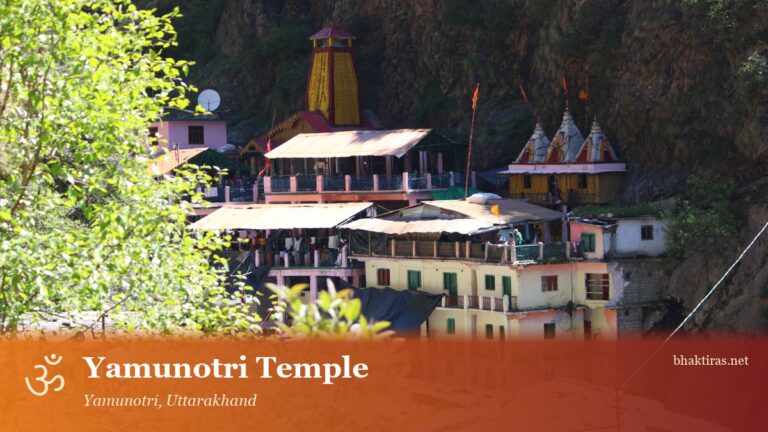
Yamunotri
Uttarkashi district · goddess Yamuna · ~3,291 m
The yatra’s first shrine sits where the Yamuna leaves her glacier. Pilgrims cook rice in the boiling Surya Kund hot spring and carry it home as prasad. Reached by a steep ~6 km trail from Janki Chatti.
Read the full temple guideTip: use Tab and Enter to move between pins with a keyboard.
From the plains to 3,583 metres
This is the one pilgrimage where altitude shapes everything: the dates, the packing list, the pace. Tap a marker to see what each stop asks of you. Haridwar sits at about 314 m; every dham is ten times higher.
Tap any marker. The two big climbs are on foot: Yamunotri’s short, steep 6 km and Kedarnath’s long 16 km; Gangotri and Badrinath are reached by road.
The 4 dhams, in the order the yatra walks them
West to east, valley by valley: two river goddesses first, then Shiva, then Vishnu. Mark the ones you have visited and the counter above keeps score.
1Yamuna valleyYamunotri Temple
Uttarkashi district · goddess Yamuna · ~3,291 m
Where the Yamuna begins
The first halt of the yatra honours Yamuna, sister of Yama, the lord of death; tradition promises that bathing in her waters spares a devotee a painful end. The shrine sits below the Bandarpunch massif, and beside it the Surya Kund spring boils out of the rock: pilgrims lower rice tied in muslin into it, and the cooked rice goes home as prasad. The temple is reached only on foot, pony, or doli up a steep ~6 km trail from Janki Chatti.
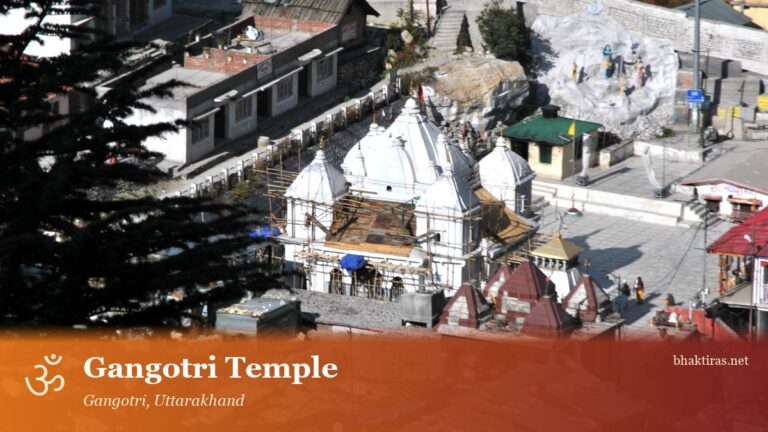 2Bhagirathi valley
Gangotri Temple
Uttarkashi district · goddess Ganga · ~3,100 m
Where the Ganga descends
Here King Bhagiratha’s penance is said to have drawn Ganga down from heaven, Shiva catching her fall in his hair. The white granite temple, raised by the Gorkha commander Amar Singh Thapa in the early 1800s, stands right on the roaring Bhagirathi, and the road runs all the way to its steps. The river’s true source, the ice cave at Gaumukh, lies another ~18 km up the glacier trail for those who want to walk to the beginning of the Ganga itself.
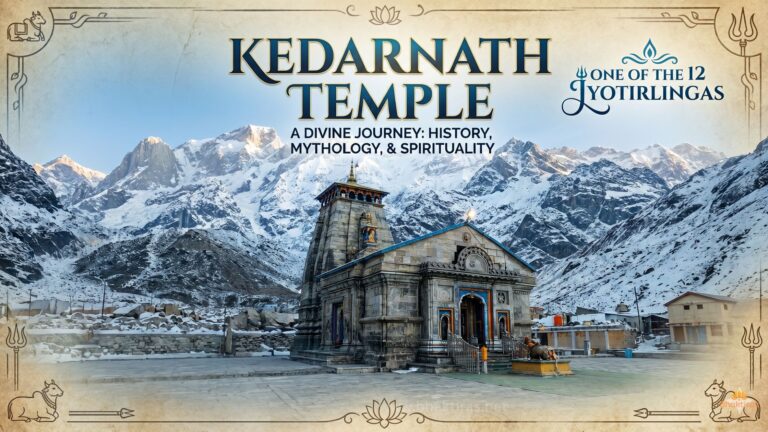 3Mandakini valley
Kedarnath Temple
Rudraprayag district · Shiva as Kedarnath · 3,583 m
The highest Jyotirlinga
The hardest-won darshan of the four: a ~16 km climb from Gaurikund to a thousand-year-old stone temple standing alone under the Kedarnath peaks. Shiva is worshipped here as a rock hump, the form he took to evade the Pandavas. The 2013 flash floods destroyed much of the town yet the shrine survived, shielded by a boulder pilgrims now call Bhim Shila. It is both a Chota Char Dham and one of the 12 Jyotirlingas, and the guardian Bhairavnath shrine watches the valley from a ridge nearby.
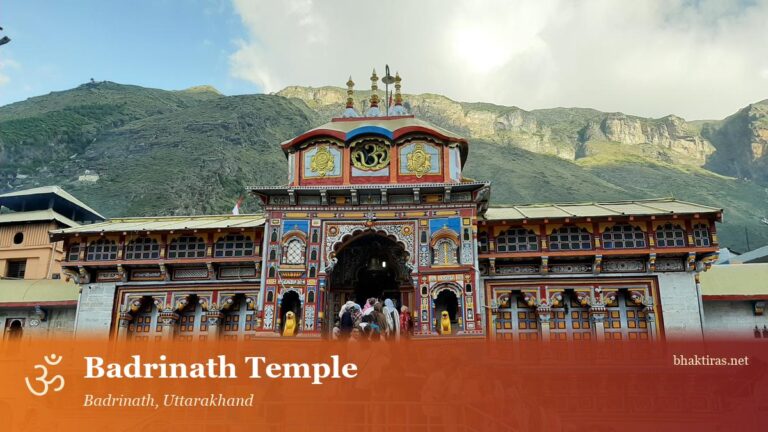 4Alaknanda valley
Badrinath Temple
Chamoli district · Vishnu as Badrinarayan · ~3,133 m
The yatra’s grand finale
The circuit ends where Vishnu sits in meditation beside the Alaknanda, the one shrine shared with the pan-India Char Dham. Pilgrims bathe first in Tapt Kund, the hot sulphur spring at the temple steps, before joining the darshan line beneath the brightly painted facade. Three kilometres up the road, Mana village marks the last settlement before Tibet, with the Vyas Gufa cave where tradition says the Mahabharata was dictated.
2026 opening and closing dates
All four shrines open in late April around Akshaya Tritiya and close after Diwali, their exact muhurats declared by temple tradition each year. The 2026 season is under way.
Yamunotri
Opened19 Apr 2026Closes around Bhai Dooj, ~11 NovGangotri
Opened19 Apr 2026Closes around Annakut, ~10 NovKedarnath
Opened22 Apr 2026Closes on Bhai Dooj, ~11 NovBadrinath
Opened23 Apr 2026Closes ~13 Nov, own muhuratThree ways to plan the circuit
The classic road yatra takes a relaxed 10 to 12 days. Helicopters compress it to under a week, and doing one or two dhams at a time is a perfectly traditional compromise.
Haridwar to Haridwar, west to east
The time-tested sequence, roughly 1,550 km. Overnight halts are the rhythm of this yatra; the drives are slow, winding, and spectacular.
- Day 1: Haridwar → Barkot via Dehradun and Mussoorie~215 km
- Day 2: Yamunotri: drive to Janki Chatti, trek ~6 km up and back, return to Barkottrek day
- Day 3: Barkot → Uttarkashi, evening at Kashi Vishwanath temple~100 km
- Day 4: Gangotri darshan and back to Uttarkashi~200 km round
- Day 5: Uttarkashi → Guptkashi, the long transfer day~235 km
- Day 6: Sonprayag → Kedarnath: the ~16 km climb, night near the templetrek day
- Day 7: Morning darshan, descend to Guptkashitrek day
- Day 8: Guptkashi → Badrinath via Joshimath~190 km
- Day 9: Badrinath darshan, Tapt Kund, Mana villagerest day
- Day 10: Badrinath → Rudraprayag or Srinagar along the Alaknanda~160 km
- Day 11: Return to Haridwar past Devprayag, where the Ganga is born~165 km
The 5-day helicopter yatra
Charter packages fly the full circuit from Dehradun’s Sahastradhara helipad in about 5 days, roughly Rs 1.5 to 2.8 lakh per person depending on the operator and tier.
- Day 1: Dehradun → Kharsali: darshan at Yamunotri side, night in the valleyheli + short walk
- Day 2: → Harsil for Gangotri darshanheli + drive
- Day 3: → Kedarnath: priority darshan slot, night at Guptkashi sideheli
- Day 4: → Badrinath: darshan plus Mana villageheli
- Day 5: Return to Dehradunheli
For Kedarnath alone, scheduled shuttle sorties fly from Phata, Sirsi and Guptkashi; 2026 round trips run roughly Rs 6,000 to 13,000 per seat. Book only on IRCTC HeliYatra, and expect weather to reshuffle any heli plan by a day.
Splitting the circuit
Nothing requires all four in one go. These pairings follow the valleys naturally and each works as its own trip from Haridwar.
- Do Dham, western pair (4-5 days): Yamunotri + Gangotri, the two river goddesses, sharing the Uttarkashi road~600 km
- Do Dham, eastern pair (5-6 days): Kedarnath + Badrinath, the most popular short version~900 km
- Kedarnath only (3-4 days): Haridwar → Guptkashi → trek or heli → return; add Triyuginarayan temple if time allows~450 km
- Badrinath only (3-4 days): an easy all-road darshan; pair with Joshimath and the Panch Prayag confluences on the way~640 km
Panch Prayag: five confluences on the road
The drive itself is a pilgrimage. Between Badrinath and Rishikesh the Alaknanda gathers four rivers at five sacred confluences, ending at Devprayag where the Ganga formally takes her name.
What the mountains ask of you
Altitude, fitness and health checks
Every dham sits above 3,000 m, where thin air is felt on stairs and slopes. Walk the treks slowly with rest stops, drink water constantly, and skip alcohol entirely. Anyone with heart or blood-pressure conditions should see a doctor before the trip; health screening points operate along the Kedarnath and Yamunotri trails in season, and carrying regular medication plus a basic oximeter is sensible for older pilgrims.
The two treks, honestly described
Yamunotri’s ~6 km trail is short but relentlessly steep; two to three hours up at a gentle pace. Kedarnath’s ~16 km from Gaurikund is a six-to-nine-hour climb gaining well over 1,500 m; most pilgrims sleep at Kedarnath and descend the next morning. Ponies, dolis, and porters are licensed at fixed rates at both trailheads, and the paths have railings, sheds, and food stalls throughout. Start at first light: afternoon weather turns fast in these valleys.
Registration, permits and bookings
Yatra registration on the Uttarakhand government portal is compulsory for all four dhams and costs nothing; carry the QR letter on your phone plus the ID you registered with. Kedarnath helicopter seats sell out within days of the booking window opening on IRCTC HeliYatra, so set a reminder for mid-April. Hotels at Barkot, Uttarkashi, and Guptkashi fill early in May-June; the Badrinath side has more capacity.
Packing for four seasons in one trip
Haridwar can be 35 degrees while Kedarnath drops near zero at night, in the same week. Layers win: thermals, a fleece, a windproof jacket, and a poncho (rain arrives without notice even in May). Broken-in walking shoes with grip matter more than anything else you pack. Add sunscreen and sunglasses for the high-altitude sun, a torch, and a small daypack for trek days so the main luggage stays in the vehicle.
Getting to the start
Haridwar and Rishikesh are the classic bases, both on the rail network with direct trains from Delhi; Dehradun’s Jolly Grant airport is the nearest airfield and the launch point for heli packages. GMOU and private buses run the yatra routes in season, shared jeeps cover every leg, and taxi circuits from Haridwar are the standard family option. Fuel up and withdraw cash at the base towns; ATMs get scarce and unreliable higher up.
Chota Char Dham Yatra: questions pilgrims ask
What are the Chota Char Dham temples?
Yamunotri, Gangotri, Kedarnath, and Badrinath, all in the Garhwal Himalaya of Uttarakhand. They honour the goddesses Yamuna and Ganga, Shiva, and Vishnu respectively.
How is it different from the original Char Dham?
The original Char Dham spans all of India: Puri, Rameswaram, Dwarka, and Badrinath at the four cardinal directions. The Chota (“little”) Char Dham is the Uttarakhand-only circuit, and Badrinath is the one shrine the two share.
How many days does the Chota Char Dham Yatra take?
Ten to twelve days by road from Haridwar for a comfortable circuit of all four, or about five days by full helicopter package. Two-dham versions take four to six days.
When did the dhams open in 2026?
Yamunotri and Gangotri opened on 19 April 2026 (Akshaya Tritiya), Kedarnath on 22 April, and Badrinath on 23 April. All four close around Diwali in November.
Is registration mandatory for the yatra?
Yes. Free registration on the Uttarakhand government portal registrationandtouristcare.uk.gov.in is compulsory for all four dhams, with offline counters at Haridwar and Rishikesh for those who cannot register online.
In which order should the four dhams be visited?
The traditional order runs west to east: Yamunotri first, then Gangotri, Kedarnath, and finally Badrinath. It follows the river valleys naturally and avoids backtracking.
How difficult is the Kedarnath trek?
It is a steep ~16 km climb from Gaurikund gaining over 1,500 m, typically six to nine hours on foot. Ponies, dolis, and helicopter shuttles offer alternatives, and most pilgrims overnight at Kedarnath before descending.
Can elderly people do the Chota Char Dham Yatra?
Yes, with planning. Gangotri and Badrinath need no trekking at all, while Yamunotri and Kedarnath offer ponies, dolis, and helicopters. A pre-trip health check is strongly advised for anyone with heart or blood-pressure conditions.
How much does the Kedarnath helicopter cost?
Scheduled round trips from Phata, Sirsi, and Guptkashi cost roughly Rs 6,000 to 13,000 per seat in 2026, booked only through the official IRCTC HeliYatra portal. Full four-dham charter packages run about Rs 1.5 to 2.8 lakh per person.
Which is the highest of the four dhams?
Kedarnath, at about 3,583 m, is the highest and the most remote, reachable only by trek or helicopter. It is also the highest of the twelve Jyotirlingas of Shiva.