
चार धाम यात्रा
Char Dham: One Lifetime Journey to India’s Four Corners
Puri in the east, Rameswaram in the south, Dwarka in the west, Badrinath in the north. Four ancient shrines, fixed to the four directions by Adi Shankaracharya twelve centuries ago, still anchor the longest pilgrimage in Hindu tradition. Here is the whole circuit on one page.
What is the Char Dham, in short?
The Char Dham are four ancient temples at the four compass points of India: Jagannath Puri in the east, Ramanathaswamy at Rameswaram in the south, Dwarkadhish at Dwarka in the west, and Badrinath in the north. Consolidated as one circuit by Adi Shankaracharya in the 8th century, the full yatra covers roughly 6,000 km and is traditionally done clockwise, starting at Puri and ending in the Himalayas at Badrinath.
Four shrines, one map of India
Tap any pin to see that dham’s photo, its story, and the link to our full temple guide. The dashed line traces the traditional clockwise order: east, south, west, then north.
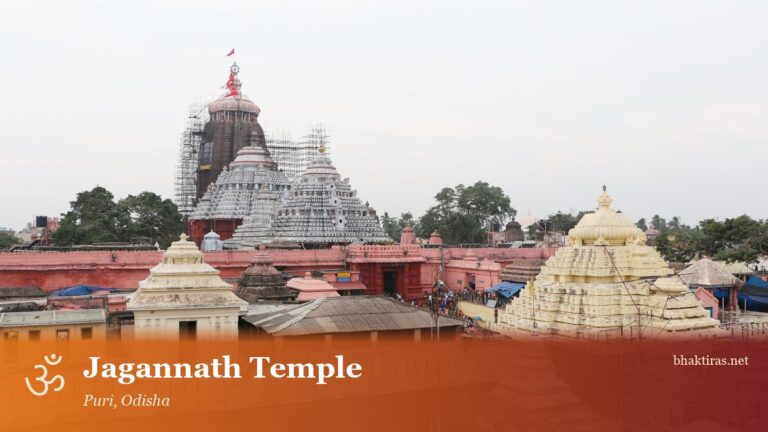
Jagannath, Puri
Puri, Odisha · deity: Jagannath (Krishna)
The wooden trinity of Jagannath, Balabhadra and Subhadra rides out each Ashadha on the great Rath Yatra chariots. The temple kitchen, said to be the largest in the world, cooks Mahaprasad for tens of thousands daily.
Read the full temple guideTip: use Tab and Enter to move between pins with a keyboard.
The 4 Char Dham temples, in the traditional order
Each dham faces a different direction, honours a different form of the divine, and is even linked to a different yuga, a cosmic age. Mark the ones you have visited and the counter above keeps your score.
EEast · Dham 1Jagannath Temple, Puri
Puri, Odisha · Vishnu as Jagannath, Lord of the Universe
Linked to Kali Yuga
The sanctum holds a wooden trinity, Jagannath with his siblings Balabhadra and Subhadra, remade ceremonially every 12 to 19 years. Atop the 65-metre shikhara, a priest climbs barehanded every evening to change the flag, a ritual said to be unbroken for around 800 years. The temple kitchen feeds tens of thousands daily with Mahaprasad cooked in earthen pots, and each June-July the deities ride massive wooden chariots through Puri in the Rath Yatra.
 SSouth · Dham 2
Ramanathaswamy Temple, Rameswaram
Rameswaram island, Tamil Nadu · Shiva as Ramanathaswamy
Linked to Treta Yuga
Rama himself is said to have worshipped Shiva here before crossing to Lanka, which makes this the rare shrine sacred to Vaishnavas and Shaivas alike, and it doubles as one of the 12 Jyotirlingas. Its third corridor runs about 1.2 km on more than 1,200 carved pillars, the longest temple corridor in India. Pilgrims first bathe at Agni Theertham on the shore, then at the 22 theerthams inside, before changing into dry clothes for darshan.
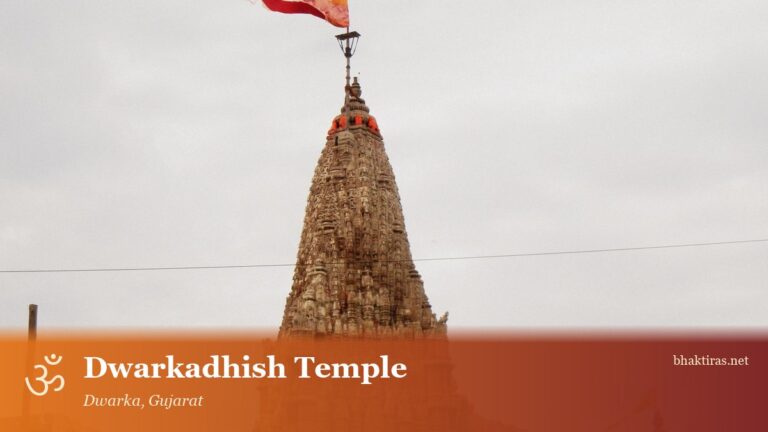 WWest · Dham 3
Dwarkadhish Temple, Dwarka
Dwarka, Gujarat · Krishna as Dwarkadhish, King of Dwarka
Linked to Dvapara Yuga
Tradition counts the present town as the seventh Dwarka, the six earlier cities of Krishna’s kingdom lying beneath the Arabian Sea, and marine archaeology off the coast keeps the legend alive. The five-storey Jagat Mandir rises on 72 pillars above the Gomti creek, and its enormous flag, changed five times a day, is visible far out over the water. The Sudama Setu footbridge crosses the creek to the bathing beach.
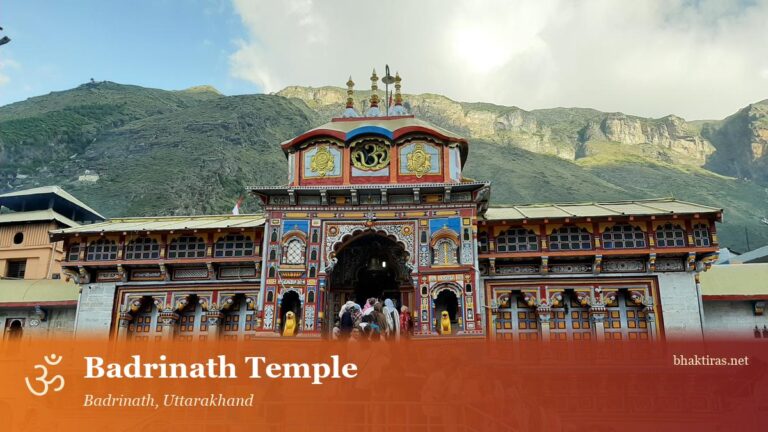 NNorth · Dham 4
Badrinath Temple
Chamoli, Uttarakhand · Vishnu as Badrinarayan · ~3,100 m altitude
Linked to Satya Yuga
The black saligram image of Vishnu sits in meditation beside the Alaknanda, framed by the Neelkanth peak. Vishnu is said to have done penance here while Lakshmi, as the badri berry tree, shielded him from the snow that gives the place its name. The shrine closes for roughly six months every winter; the ceremonial worship shifts down to Joshimath while an akhand jyoti, a lamp lit at closing, burns inside the sealed sanctum until spring.
Temple hours flex around festivals, rituals and season, and Badrinath’s opening and closing dates are declared afresh each year. Confirm locally before you travel.
Adi Shankaracharya and the idea of four corners
In the 8th century CE, the philosopher Adi Shankaracharya walked the length of India several times over, debating, writing, and reorganising Hindu monastic life. Along the way he bound four far-flung shrines into a single idea: visit all four corners of the land, and the journey itself becomes an act of seeing the whole of Bharat as sacred geography.
To anchor the idea he founded four mathas, monastic seats, one for each direction, each entrusted with one Veda and a lineage of teachers that continues today. Two of the mathas sit inside dham towns themselves: Govardhana Matha in Puri and the Dwarka Pitha beside the Dwarkadhish temple. The northern seat is at Joshimath, Badrinath’s own winter home. The southern seat is the one exception: Sringeri Sharada Peetham stands in Karnataka’s hills, not at Rameswaram, so the south’s dham and its matha are two different towns.
| Direction | Dham | Matha | Veda |
|---|---|---|---|
| East | Jagannath Puri | Govardhana Matha, Puri | Rigveda |
| South | Rameswaram | Sringeri Sharada Peetham, Karnataka | Yajurveda |
| West | Dwarka | Dwarka Pitha, Dwarka | Samaveda |
| North | Badrinath | Jyotir Math, Joshimath | Atharvaveda |
Char Dham vs Chota Char Dham: which one are you planning?
Most “Char Dham Yatra” packages advertised today are actually the Uttarakhand circuit. The two pilgrimages share one temple and a name, and nothing else. Here is the difference at a glance.
Char Dham (the original four)
Pan-India · this page
- Puri, Rameswaram, Dwarka, Badrinath – four states, four directions
- Consolidated by Adi Shankaracharya in the 8th century
- ~6,000 km; done by train, flights, or a 2-3 week road journey
- Three dhams open all year; only Badrinath is seasonal
- Often completed across separate trips over years
Chota Char Dham (Uttarakhand)
Garhwal Himalayas only
- Yamunotri, Gangotri, Kedarnath, Badrinath – all in one state
- A 20th-century label for a much older Himalayan circuit
- 10-12 days by road from Haridwar; 5-6 days by helicopter
- Entire circuit is seasonal: open roughly May to November
- Involves mountain treks (Yamunotri, Kedarnath)
Three realistic ways to do it
A 6,000 km circuit is not a weekend plan. Pilgrims today choose between one grand journey and a lifetime of instalments; all three approaches below are fully traditional.
The traditional pradakshina, east to north
The scriptural way follows a clockwise circle around India, saving the Himalayan climb to Badrinath for last. Point-to-point legs below are road distances; allow 3 to 4 weeks if driving it as one journey.
- Begin at Puri (east): darshan of Jagannath, a dip at the Swargadwar beachstart
- Puri → Rameswaram (south): down the Coromandel coast via Visakhapatnam and Chennai~1,840 km
- Rameswaram → Dwarka (west): the longest leg, across the peninsula via Madurai, Pune and Ahmedabad~2,520 km
- Dwarka → Badrinath (north): up through Rajasthan and Delhi to Rishikesh, then the mountain highway~1,690 km
- Finish at Badrinath: the circle closes at Vishnu’s Himalayan seat~6,000 km total
Order is a convention, not a commandment: many pilgrims start from whichever dham is nearest home and keep the clockwise direction from there.
IRCTC’s Bharat Gaurav Char Dham train
Indian Railways runs a dedicated tourist train that strings all four dhams into one 17-day loop from Delhi, with hotels, buses and meals bundled in. Roughly 8,250 km of travel, fares from about Rs 63,000 per person in AC class.
- Delhi → Rishikesh: road transfer up to Badrinath (via Joshimath) and backdays 1-5
- → Varanasi: Kashi Vishwanath darshan and Ganga aarti en route eastdays 6-7
- → Puri: Jagannath darshan, Konark stop on some departuresdays 8-10
- → Rameswaram: the long southern run, darshan and theertham snandays 11-13
- → Dwarka → Delhi: western dham, Nageshwar optionally, then homedays 14-17
Departures and fares change season to season; check the current IRCTC Bharat Gaurav schedule before planning around it.
Four trips, one lifetime
Nothing in tradition demands a single journey. Each dham works as its own 3-4 day trip with direct rail or nearby airports, and this is how most families actually complete the Char Dham.
- Puri (3 days): fly to Bhubaneswar or take a direct train; pair with Konark’s Sun Temple and the Lingaraj templeany time of year
- Rameswaram (3 days): trains cross the Pamban bridge onto the island; pair with Madurai’s Meenakshi templeOct – Mar ideal
- Dwarka (3 days): direct trains via Jamnagar; pair with Nageshwar Jyotirlinga and Bet DwarkaOct – Mar ideal
- Badrinath (4-5 days): Haridwar or Rishikesh, then a mountain drive; pair with Mana village, India’s last village on that roadMay – Oct only
When to go: one mountain sets the calendar
Three of the four dhams welcome pilgrims all year. Badrinath does not, so every full-circuit plan starts with its open season and works backwards.
The Badrinath window
Roughly late April to mid-November
The kapat (doors) open near Akshaya Tritiya each spring, on a date declared months ahead on Basant Panchami, and close around Bhai Dooj in November. In 2026 the temple opened on 23 April. Outside this window the deity’s worship continues at Joshimath, but the dham itself is snowbound and shut.
Best full-circuit months
September – November, or April – June
Early autumn pairs an open Badrinath with post-monsoon clarity in the mountains and bearable heat in the south. Late spring works too, though the plains warm up fast. Peak winter suits the three coastal dhams beautifully but rules out the north.
Festival peaks
Crowds worth planning around
Puri’s Rath Yatra (June-July) is a spectacle drawing lakhs; go for it deliberately or steer clear. Janmashtami (August-September) packs Dwarka, and Maha Shivaratri fills Rameswaram. Festival darshan is unforgettable and slow; quiet darshan is neither.
Monsoon notes
June – September
The Rishikesh-Badrinath highway is prone to landslides in heavy rain, so mountain legs need buffer days in these months. The coastal dhams stay open through the rains; Rameswaram and Puri simply get wet, windy and moody rather than inaccessible.
Small things that make a big yatra smoother
Dress codes and temple rules
Modest traditional wear works everywhere: trousers or dhoti with a shirt for men, saree or salwar-kameez for women; shorts, sleeveless tops and torn jeans will be turned away at Rameswaram and frowned on elsewhere. Puri admits Hindus only into the temple; others can see the deities during Rath Yatra, when they come out to the street. Phones and cameras stay outside the sanctums at all four, and Puri bans them past the gate entirely, so use the lockers.
The Rameswaram bathing ritual, done right
The sequence matters: first a dip in the sea at Agni Theertham, then the 22 theerthams inside the temple, where attendants pour a bucket from each well in order. Buy the theertham ticket at the counter, carry a change of clothes in a small bag, and change into the dry set before sanctum darshan; wet clothes are not allowed inside. Allow 1.5 to 2 hours for the full circuit of wells before the queue for darshan.
Preparing for Badrinath’s altitude
At roughly 3,100 m, Badrinath is high enough to feel: go easy on day one, drink water, and skip alcohol on the way up. Nights are cold even in June, so pack a proper jacket whatever the season. The drive from Rishikesh takes 10 to 12 hours with hill traffic; breaking the journey at Joshimath or Pipalkoti is kinder than pushing through. Elderly pilgrims should carry regular medication and consult a doctor about the altitude beforehand.
Getting to each dham
Three dhams have stations in town: Puri, Rameswaram (across the sea on the Pamban bridge, a journey in itself) and Dwarka. Badrinath is the exception; rail ends at Rishikesh and the last ~295 km are by road, with shared taxis and buses running from Haridwar and Rishikesh through the season. Nearest airports: Bhubaneswar for Puri, Madurai for Rameswaram, Jamnagar for Dwarka, and Dehradun for the Badrinath road.
Budgets, packages and doing it in parts
Costs span a wide range: a self-planned budget circuit by sleeper trains can be done from around Rs 18,000 to 25,000 per person, the IRCTC Bharat Gaurav train starts near Rs 63,000, and premium fly-and-stay packages run well past a lakh. Splitting the yatra into separate trips spreads the cost and lets you time each dham for its best season; tradition regards the four darshans as complete however many years they take.
Char Dham Yatra: questions pilgrims ask
What are the four Char Dham temples?
Jagannath Temple at Puri in the east, Ramanathaswamy at Rameswaram in the south, Dwarkadhish at Dwarka in the west, and Badrinath in the north. Together they mark the four cardinal directions of India.
Who established the Char Dham Yatra?
Adi Shankaracharya, the 8th-century philosopher, is credited with grouping the four shrines into one pilgrimage and founding a matha for each direction to anchor the tradition.
What is the difference between Char Dham and Chota Char Dham?
Char Dham is the pan-India circuit of Puri, Rameswaram, Dwarka and Badrinath. Chota Char Dham is a separate Uttarakhand circuit of Yamunotri, Gangotri, Kedarnath and Badrinath. Badrinath is the only temple common to both.
In which order should the Char Dham be visited?
Tradition prescribes a clockwise order: Puri first, then Rameswaram, Dwarka, and finally Badrinath in the north. Many pilgrims adapt the starting point to wherever they live and keep the clockwise direction.
Can the Char Dham Yatra be completed in one trip?
Yes. IRCTC’s Bharat Gaurav tourist train covers all four dhams in about 17 days, and a self-planned road or rail circuit takes three to four weeks. Completing it across several separate trips is equally accepted.
How many kilometres is the full Char Dham circuit?
Roughly 6,000 km by road for the circuit itself, and more once approach journeys are counted; the dedicated IRCTC train route covers about 8,250 km from Delhi and back.
Is Badrinath open all year?
No. Badrinath opens near Akshaya Tritiya in late April or early May and closes around Bhai Dooj in November. Through winter the deity’s worship continues at Joshimath while the temple stays snowbound.
Can non-Hindus visit the Char Dham temples?
Jagannath Puri admits Hindus only inside the temple; non-Hindus can witness the deities during the Rath Yatra procession. Badrinath, Dwarka and Rameswaram generally welcome all respectful visitors, subject to each temple’s rules.
How much does the Char Dham Yatra cost?
A budget rail circuit can be managed from about Rs 18,000 to 25,000 per person, the IRCTC Bharat Gaurav train starts around Rs 63,000, and premium air packages exceed a lakh. Costs vary with season and class of travel.
Which dham should be visited first?
Traditionally Puri in the east, following the clockwise pradakshina around India. If you begin elsewhere, keeping the clockwise sequence from your starting dham preserves the traditional order.