
Tiger Eye (Baghmani)
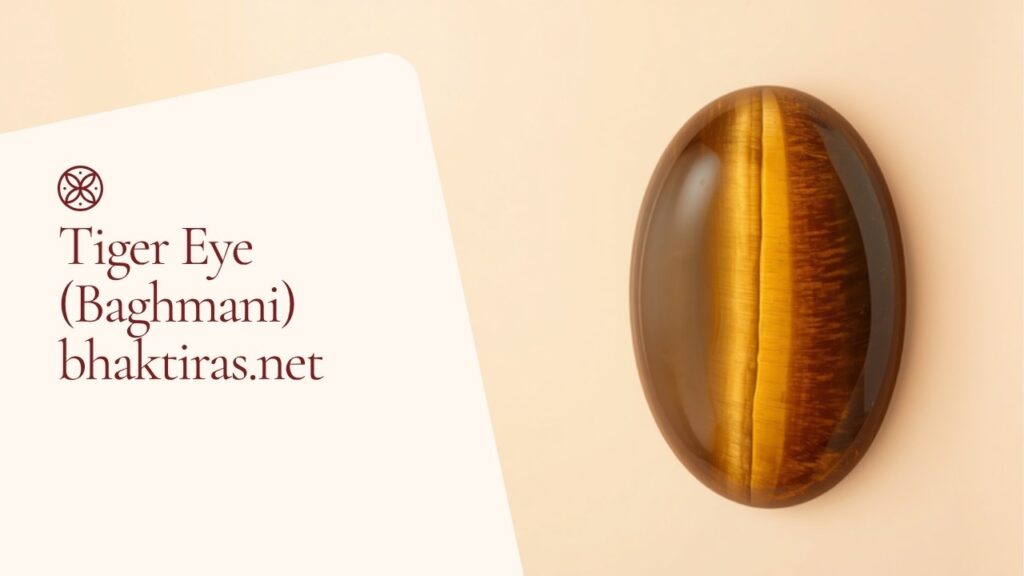
Golden brown bands with a silky moving sheen, worn in silver for Ketu related confusion, restlessness and protection from negative energy.
- Ketu
- Tuesday
- Middle finger
- 5-8 ratti
| Ruling planet | Ketu (south lunar node) |
|---|---|
| Rashi (zodiac) | Worn on Ketu indications in the chart, not by rashi |
| Day to wear | Tuesday |
| Finger | Middle finger of the working hand |
| Metal | Silver |
| Weight | 5-8 ratti |
| Mantra | Om Kem Ketave Namah |
| Hardness | 7 on the Mohs scale |
| Colour | Golden brown bands with a silky moving sheen |
Who Should Wear Tiger Eye?
Ketu does not govern a rashi the way the seven classical grahas do, so tiger eye is not handed out by ascendant the way ruby or pearl might be. It comes up most often when Ketu is running as mahadasha or antardasha and is producing confusion, sudden detachment from work or relationships, skin or nerve complaints, or a restless pull toward spiritual questions with no clear answers.
It is also considered when Ketu sits weak or badly placed in a chart, since its energy needs an anchor rather than more scattering. Because Ketu’s behaviour shifts sharply with house, conjunction and dasha timing, this is one to confirm with an astrologer rather than guess at. Checking exactly where Ketu sits in your own chart right now is the sensible next step.
Does Tiger Eye suit your kundali? The answer is in your birth chart, not your sun sign. Check free in under a minute.
Check My GemstoneBenefits of Wearing Tiger Eye
The moving band inside tiger eye is chatoyancy, light bouncing off tightly packed parallel fibres inside the stone, and that in-and-out shimmer is often read as an echo of Ketu’s own restless, half-seen nature.
- Calmer focus during confusion: wearers report steadier concentration and less mental scatter during Ketu dasha or antardasha periods.
- Protection from negative energy: classical uparatna use credits tiger eye with shielding the wearer from nazar and stray negative influences.
- Sharper intuition: traditional texts associate Ketu with insight beyond the obvious, and the stone is worn to support that instinctive, gut level clarity.
- Steadier nerves: older gemstone literature links it to easing nerve related restlessness and the jumpiness sometimes tied to an unsettled Ketu.
- Support through detachment phases: it is traditionally worn to help a person move through Ketu driven withdrawal or upheaval without losing their footing.
How to Wear Tiger Eye (Baghmani)
Tiger eye is one of the few uparatnas prescribed in silver rather than gold, keeping in line with Ketu’s traditional metal.
- Wear it on a Tuesday, ideally in the morning after bathing.
- Have it set in silver and worn on the middle finger.
- Use a stone between 5 and 8 ratti in weight, confirmed against your chart by an astrologer.
- Before the first wear, soak the ring or pendant overnight in raw milk, then rinse in Gangajal to purify it.
- Once purified, chant “Om Kem Ketave Namah” 108 times while holding the piece, then wear it.
- Replace the stone once the band loses its sharpness and glide, or the surface chips or dulls with wear, and re-check timing with your astrologer if your Ketu period has ended.
Who Should Not Wear Tiger Eye
Because tiger eye is prescribed by placement and period rather than by rashi, avoiding it is also a chart question, not a birth sign one.
If Ketu already sits strong, well placed and favourable in your chart, adding tiger eye can push its detaching, isolating side too far, leaving a person withdrawn or indecisive rather than settled. It is also generally not paired with gemstones for planets your astrologer identifies as inimical to Ketu in your specific chart, since the two can work against each other rather than together. As with any uparatna, the honest approach is a trial: wear it for a few days first and watch for restlessness, skin irritation or unease before committing to it long term, and stop if anything feels off.
Tiger Eye Price in India
Tiger eye is the least expensive stone in this whole list, which is exactly why so much of it circulates as plain fashion beads rather than astrological pieces.
South African tiger eye runs from about Rs 20 to Rs 200 per ratti. Within that range, price tracks how sharp and mobile the band looks under light, how clean the cabochon cut is, and whether the piece was shaped specifically for a ring or pendant rather than strung as a bead. For astrological wear, skip loose bead strand stock and look for a properly cut cabochon with a crisp, well centred band.
Given how affordable genuine tiger eye already is, there is little reason to buy unverified stock. Ask for a gem testing lab report before setting it, so you know you are paying for a natural stone and not a treated or dyed substitute.
How to Identify a Real Tiger Eye
Tiger eye’s chatoyant band comes from parallel quartz fibres that once replaced crocidolite asbestos, and that fibrous structure is exactly what a fake struggles to copy.
- Rotate it under a single light source: a genuine band glides smoothly across the stone as you turn it; a painted or printed line on glass or plastic stays flat and does not move the same way.
- Loupe check: look for fine, parallel fibrous streaks running under the surface rather than a single flat sheet of colour sitting on top.
- Scratch resistance: genuine tiger eye sits at 7 on the Mohs scale and will scratch ordinary glass with ease; dyed quartzite or glass imitations often behave differently under a careful scratch test.
- Weight in hand: a real piece feels noticeably heavier and denser than glass or plastic imitations of the same size.
- Watch for over bright or unnatural colour: heavily dyed material or “hawk’s eye” (the bluish sister mineral) sometimes gets passed off as tiger eye; genuine stone keeps its natural golden brown tone even under close light.
Since this is such an affordable stone, there is no good excuse to skip a lab certificate. Buy from a dealer who provides one confirming a natural, untreated stone before you have it set.
FAQs About Tiger Eye
Who should wear Tiger Eye (Baghmani)?
Tiger eye, or Baghmani, is generally recommended when Ketu is running as mahadasha or antardasha and causing confusion, sudden detachment, restlessness or nerve related issues. It is prescribed by chart placement rather than rashi, so an astrologer should confirm Ketu's position and timing before you wear it.
How does Tiger Eye Baghmani work, and does it guarantee results?
Classical texts credit tiger eye with grounding Ketu's scattered energy, supporting focus, intuition and protection from negative influences during difficult Ketu periods. It works alongside your chart, not instead of it, and results vary by individual, so treat it as traditional support rather than a guaranteed fix.
Which finger, metal and day are correct for wearing Baghmani?
Tiger eye is traditionally set in silver and worn on the middle finger. It is put on for the first time on a Tuesday, usually in the morning after bathing, following purification in raw milk and Gangajal and chanting the Ketu mantra 108 times.
What weight or ratti of Tiger Eye should I buy?
Tiger eye is usually worn between 5 and 8 ratti, depending on your chart and the astrologer's recommendation. Since it is one of the more affordable gemstones, there is little reason to compromise on quality within that weight range, so choose a well cut, clean banded stone.
What should not be combined with Baghmani (Tiger Eye)?
If Ketu is already strong and well placed in your chart, tiger eye can overdo its detaching effect, so it is usually not added in that situation. It is also generally kept away from gemstones for planets an astrologer identifies as inimical to Ketu in your specific chart. Try it for a few days first.
What is the price of Tiger Eye Baghmani gemstone?
Genuine South African tiger eye costs roughly Rs 20 to Rs 200 per ratti, making it the most affordable stone in this category. Price depends on how sharp and centred the chatoyant band is and how clean the cabochon cut is, so ask for a lab certificate before buying.
Is Tiger Eye a substitute for another gemstone, or does it have substitutes of its own?
Tiger eye itself is traditionally worn as an affordable substitute for cat's eye (lehsunia), the primary Ketu gemstone, when the natural cat's eye is out of budget. Tiger eye does not currently have listed substitutes of its own on this site.