
Moonstone (Chandrakant Mani)
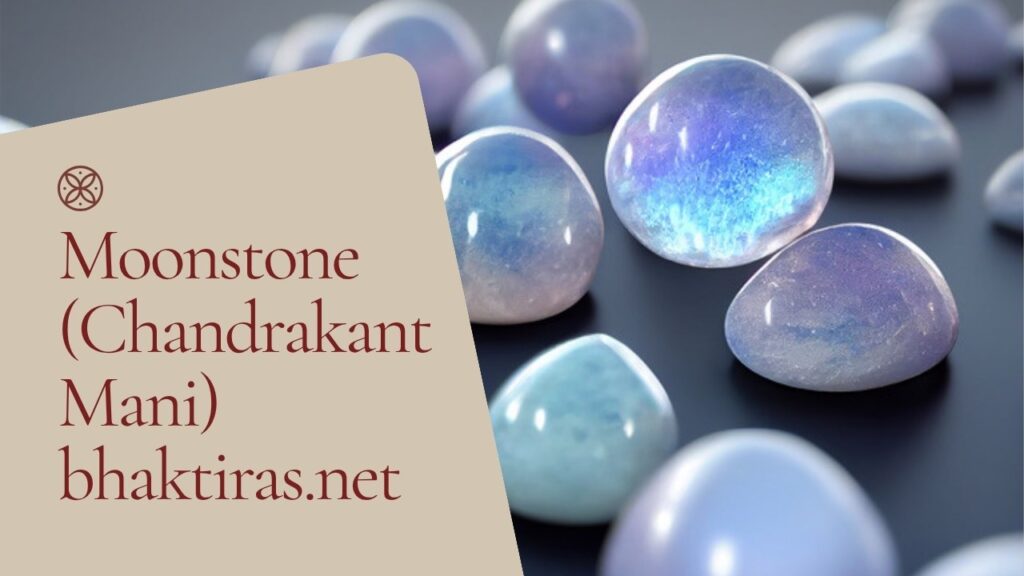
The pearl substitute for Cancer ascendants: a Monday, silver-set, little-finger stone known for its floating blue sheen.
- Moon
- Monday
- Little finger
- 4-7 ratti
| Ruling planet | Moon (Chandra) |
|---|---|
| Rashi (zodiac) | Cancer (Karka) |
| Day to wear | Monday |
| Finger | Little finger of the working hand |
| Metal | Silver |
| Weight | 4-7 ratti |
| Mantra | Om Som Somaya Namah |
| Hardness | 6-6.5 on the Mohs scale |
| Colour | White to grey with a floating blue sheen (adularescence) |
Who Should Wear Moonstone?
Cancer ascendants (Karka lagna) are the natural candidates for moonstone, since the Moon rules that ascendant and a well-placed lunar stone is thought to steady the very planet governing the chart. It is also reached for by anyone running a Moon mahadasha or antardasha who notices restlessness, mood swings, or a mind that will not settle, particularly when the birth chart shows the Moon weak, waning, or sitting with a malefic.
Because moonstone is classed as an uparatna, or substitute stone, it is most often chosen by people advised to wear pearl for their Moon but who find a fine natural pearl out of reach in price or quality. A trained astrologer should still check the Moon’s house, sign and aspects in your specific birth chart before you commit to it, since the same planet can call for very different remedies depending on where it sits.
A quick check of your Moon’s exact strength and dasha timing is the sensible next step before you buy.
Does Moonstone suit your kundali? The answer is in your birth chart, not your sun sign. Check free in under a minute.
Check My GemstoneBenefits of Wearing Moonstone
- Calmer, steadier moods: wearers report fewer sudden mood swings and an easier time settling the mind, especially before sleep.
- Better sleep and less mental restlessness: classical texts credit a strengthened Moon with quieter nights and fewer racing thoughts.
- Smoother relationship with the mother figure: since the Moon governs the mother in a chart, some wearers notice warmer family ties after wearing it.
- More intuition and emotional clarity: practitioners associate a supported Moon with sharper gut instinct and less indecision.
- Support through a Moon mahadasha or antardasha: astrologers often recommend it specifically for this period, to ease the planet’s transit through the chart.
How to Wear Moonstone (Chandrakant Mani)
- Day and time: start wearing on a Monday, ideally during Shukla Paksha (the waxing Moon) in the early morning after sunrise.
- Metal and finger: set in silver and worn on the little finger, matching moonstone’s link to the Moon.
- Weight: 4 to 7 ratti is the standard range; an astrologer can narrow this down for your chart.
- Purification: soak the stone in raw milk for a few minutes, then rinse it in Gangajal before the first wear.
- Mantra: chant “Om Som Somaya Namah” 108 times while holding the ring, ideally with a mala to count.
- Replacement: check the stone every few years for surface scratches or a fading sheen, and replace it once the blue flash dulls or the stone cracks.
Who Should Not Wear Moonstone
Moonstone is not for everyone the Moon touches kindly on paper. Classical texts caution against it when the Moon sits combust or is tightly conjunct or aspected by Rahu or Ketu (grahan yoga), since the stone is thought to amplify a planet that is already compromised rather than repair it. It is also generally set aside during an active Rahu or Ketu mahadasha or antardasha, when a lunar stone can sharpen the very confusion and restlessness those periods bring.
Scorpio and Capricorn ascendants, along with anyone whose Moon rules a difficult house in their specific chart, should get individual confirmation before wearing moonstone rather than assume it suits them by default. Follow the traditional trial custom too: wear the ring for three to seven days first and watch for disturbed sleep, unusual irritability or a heavier mood. If any of that shows up, take the stone off and speak to your astrologer before continuing, since a stone that argues with your chart will not settle down with time.
Moonstone Price in India
Ordinary Indian moonstone runs Rs 100 to Rs 1,000 per ratti, and fine blue-sheen material from Ceylon can go up to Rs 3,000 per ratti. The gap between those numbers comes down to one thing you can check with your own eyes: how strong and how centred the blue flash sits when you tilt the stone under light.
- Sheen strength and placement: a bright blue flash that floats right in the middle of the dome, moving smoothly as you tilt it, commands the higher end of the price band.
- Body colour: a clean white-to-grey base without brown or yellow tints is worth more than a stone with a murky background.
- Cut and dome: a well-proportioned cabochon that shows the sheen evenly across the surface, rather than in one corner, is priced higher.
- Certification: buy from a jeweller who can provide a lab report confirming the stone is natural moonstone, not glass or a treated imitation, especially as you move toward the upper end of the range.
How to Identify a Real Moonstone
- Loupe check: genuine moonstone shows fine, thread-like internal stress fractures sometimes called “centipedes” under a 10x loupe, and the light appears to float beneath the surface rather than sit on top of it.
- Hardness test: real moonstone sits at 6 to 6.5 on the Mohs scale, so it will scratch glass but should itself be marked by a steel file or quartz point; a stone that shrugs off both is unlikely to be genuine feldspar.
- Sheen behaviour: the blue flash (adularescence) should appear to move and shift as you rotate the stone, not sit flat like a printed or coated shimmer.
- Common substitutes to watch for: glass imitations and “opalite” (man-made glass sold as moonstone) feel warmer to the touch, lack any internal sheen movement, and are often too perfectly clear or too uniformly blue.
- Weight and feel: genuine feldspar has a cool, layered depth that glass copies rarely match; use this alongside the loupe and hardness tests rather than touch alone.
For anything above a modest price, ask for a gemological lab certificate confirming natural moonstone before you pay, particularly for stones sold as fine Ceylon quality.
FAQs About Moonstone
Who should wear moonstone (Chandrakant Mani)?
Cancer ascendants and people running a Moon mahadasha or antardasha with a weak or afflicted Moon are the usual candidates, especially when a fine natural pearl is hard to find or afford. Confirm with your astrologer first, since the same Moon placement can call for different remedies in different charts.
How does moonstone work and what results can I expect?
Classical astrology credits moonstone with strengthening a weak Moon, which governs the mind, emotions and mother in a chart. Wearers report calmer moods, steadier sleep and clearer intuition over time, though results depend on your specific chart and no outcome is guaranteed.
Which finger, metal and day should I wear Chandrakant Mani on?
Wear moonstone set in silver on the little finger, starting on a Monday, ideally during Shukla Paksha soon after sunrise. This combination follows the Moon's traditional associations and is the standard prescription across classical gemstone guidance.
What weight or ratti of moonstone should I wear?
The standard range is 4 to 7 ratti for moonstone. An astrologer can recommend an exact weight within that range based on the Moon's strength and house position in your birth chart, so treat 4 to 7 ratti as the starting bracket, not a fixed number.
What should not be combined with moonstone?
Avoid wearing moonstone when the Moon is combust or heavily afflicted by Rahu or Ketu, and set it aside during an active Rahu or Ketu mahadasha or antardasha. Scorpio and Capricorn ascendants should get individual confirmation before wearing it.
How much does moonstone (Chandrakant Mani) cost per ratti?
Indian moonstone typically costs Rs 100 to Rs 1,000 per ratti, while fine blue-sheen stones from Ceylon can reach Rs 3,000 per ratti. Price tracks the strength and centring of the blue flash, so ask for a lab certificate before buying at the higher end.
Is moonstone a substitute for pearl, and what else can replace pearl?
Yes, moonstone (Chandrakant Mani) is classed as an uparatna worn as a lower-cost substitute for natural pearl when the Moon needs strengthening. It is chosen specifically because it carries the same lunar association as pearl at a more accessible price.