
ॐ
Danteshwari Chalisa
श्री दंतेश्वरी चालीसा
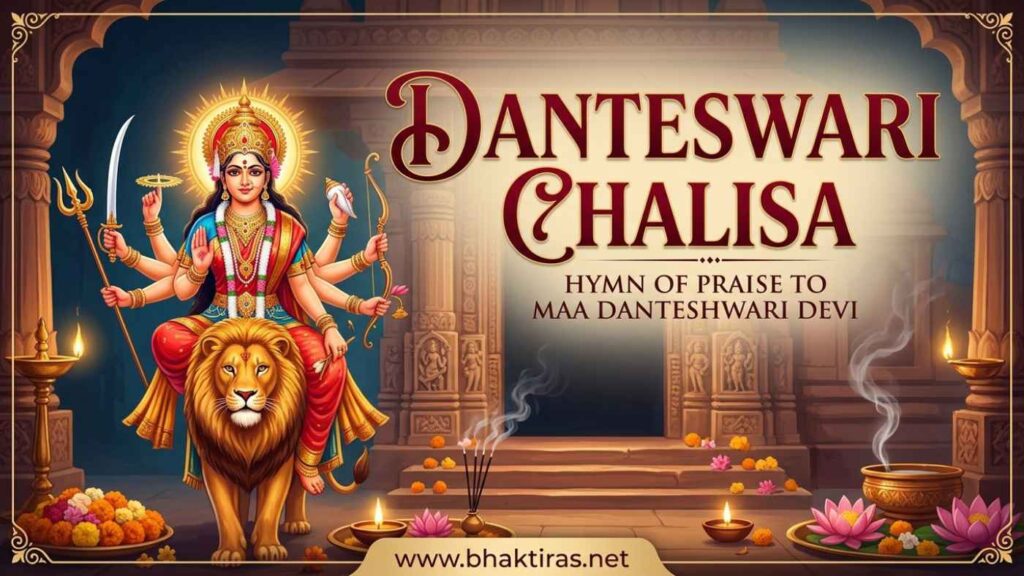
The Danteshwari Chalisa is a 40-verse hymn to Maa Danteshwari, the presiding Shakti Peeth goddess of Dantewada in the Bastar region of Chhattisgarh. Worshipped as a fierce yet caring form of Durga, she is the kuldevi (family deity) of the old Bastar royal house and the guardian of its famous Dussehra. This page gives the full chalisa in easy Roman transliteration so you can read and chant it even without knowing Devanagari, along with an original English meaning for every verse.
Danteshwari Chalisa Lyrics in English (Transliteration)
Roman transliteration for easy chanting. Tap “Meaning” under any verse for the English translation.
Om Danteshwarye Namah, Paavan Mantra Puneet
Satya Sanatan Shashwati, Beejak Roop Prateek
Meaning
I bow to the holy and purifying mantra of Goddess Danteshwari. She is eternal truth, ancient and unchanging, the very seed-symbol from which all creation springs.
Agam Agochar Ambike, Nigun Nirvikaar
Aadishakti Jagat Tarini, Sagun Roop Sakaar
Meaning
O Mother Ambika, you are unreachable and beyond the senses, formless and untouched by change. Yet you are also the primal power that carries the world across, taking on a visible, embodied form for your devotees.
Danteshwari Devi Jagad-ambe
Namo Namah Bhaneshwari Ambe
Meaning
Goddess Danteshwari, mother of the whole universe, I bow to you again and again, O radiant Ambika.
Shivani Parvati Jagamata
Danteshwari Shyamangi Sujata
Meaning
You are Shivani and Parvati, the mother of the world. O Danteshwari, you shine with a lovely dark-hued form.
Durga Kali Naam Tumhare
Bahuvidh Roop Bhakt Hit Dhare
Meaning
Durga and Kali are among your names. For the good of your devotees you take on many different forms.
Sharan Gahe Jo Sheesh Navavein
Kaal Kate Puni Paap Nashavein
Meaning
Whoever takes your shelter and bows their head before you sees their hard times pass and their sins washed away.
Dankini Shankini Sangam Paavan
Bhavyadham Sthit Man Bhavan
Meaning
Your abode sits at the sacred meeting of the Dankini and Shankini streams. Your grand temple there is a place that gladdens every heart.
Banjarin Hai Swagat Dware
Darshan Nishidin Sanjh Sakare
Meaning
Like a caring guide who welcomes travellers, you greet devotees at your gate. Your darshan is open day and night, at dawn and at dusk.
Bhaneshwari Ka Punya Basera
Sakhyabhav Anuja Ka Dera
Meaning
This is the blessed dwelling of Bhaneshwari. Here too resides the friendly younger sister-goddess who stands beside you.
Shakti Sati Shambhavi Bhavani
Gauri Sharade Maa Kalyani
Meaning
You are Shakti, Sati, Shambhavi and Bhavani. You are Gauri the fair one, Sharada the giver of knowledge, and Mother Kalyani who brings all that is good.
Warangal Se Jag-hit Aayi
Karta Chala Nripati Aguayi
Meaning
For the welfare of the world you journeyed from Warangal, with a king walking ahead to lead your way.
Vachan-baddh Prapt Vardana
Nupur Dhvani Jab Suna Na Kana
Meaning
You granted your boon under a promise: you would follow as long as the sound of your anklets could be heard behind him.
Lakha Palat Jyon Divya Ujala
Ho Gaya Shila Khand Tatkala
Meaning
The moment he turned and saw the divine light, the stone before him split at once into pieces, marking the place where you would stay.
Yagya-katha Kavigan Bahu-barni
Daksh Suta Jag Mangal Karni
Meaning
Poets have told the story of Daksha's sacrifice in many ways. You are the daughter of Daksha, the one who brings blessing to the world.
Tyagi Pran Jab Anal Manjhari
Deh Dhare Ghumat Tripurari
Meaning
When you gave up your life in the sacrificial fire, Shiva, the destroyer of Tripura, took up your body and wandered in grief.
Ang Vimo-chit Hue Jahan Par
Punya Peeth Samaroop Vahan Par
Meaning
Wherever parts of your body came to rest, those very spots became holy Shakti Peethas.
Dant-sati Maa Ke Sthapit
Shri Danteshwari Siddha Shaktipeeth
Meaning
Where your tooth fell, the goddess was enshrined. This is the revered Danteshwari, a Shakti Peeth of proven power.
Shivshankar Ka Maanas Nijgan
Rakshak Ban Jo Sthit Pratikshan
Meaning
The mind-born attendants of Lord Shiva stand there every moment as your guardians.
Tehi Avsar Nit Bhairav Tatpar
Charan-chinh Dvay Ankit Prastar
Meaning
Bhairava, the fierce form of Shiva, keeps watch there ready at all times. Your two footprints are marked upon the stone.
Aise Aan Basi Dandak Van
Mata Kalimal Shok Nashavan
Meaning
In this way you came and settled in the Dandaka forest. O Mother, you destroy the impurities of the Kali age and lift away sorrow.
Nadi Teer Mandir Ati Sundar
Bhavan Doosra Sthit Dongar
Meaning
Your temple on the riverbank is beautiful beyond words, and a second shrine of yours stands upon the hill.
Jagdalpur To Prati Samvatsar
Mata Gaman Kare Sang Anuchar
Meaning
Each year the Mother travels to Jagdalpur, moving in procession with her attendants at her side.
Adbhut Bastar Parv Dshahara
Seerasar Janu Pushpak Utara
Meaning
The Dussehra festival of Bastar is a marvel to behold, as if the celestial Pushpaka chariot had descended to earth.
Bhitar Raini Bahir Raini
Jogi Bithai Jogi Uthni
Meaning
There are the inner-night and outer-night rites, when the yogi is ceremonially seated and later ceremonially raised.
Aadi Kumari Kachhin Gadin
Kumharakot Ki Yatra Sadhin
Meaning
The primal maiden goddess is seated on her throne, and the sacred journey to Kumharakot is carried out.
Bajai Turhi Dhol Manjeera
Dev Chadhe Phir Nachat Dheera
Meaning
Trumpets, drums and cymbals sound out. The deities are mounted in procession and then dance with calm dignity.
Anga Mawali Aru Nar-Nari
Devi-Devta Manjhi Pujari
Meaning
The Anga and Mawali priests, men and women alike, the gods and goddesses and the Manjhi attendants all gather together.
Rath Par Shobhit Dhvaja Pataka
Chhatra Chavar Doli-yut Mata
Meaning
The chariot is bright with flags and banners. The Mother rides with royal canopy, fly-whisks and palanquin.
Vijayadashami Purna Karavai
Darshan De Jag Dham Ko Avai
Meaning
On Vijayadashami the festival reaches its close. The goddess comes to her sacred seat and grants darshan to all who arrive.
Navaratri Dvay Chhata Nirali
Mano Nagar Hoay Diwali
Meaning
Both Navratris carry a splendour all their own; it feels as though the whole town has turned into Diwali.
Jyoti Kalash Ki Jagmag Mala
Jhilmil Pun-jit Dhaval Ujala
Meaning
The lamp-pots form a glittering garland of light, casting a shimmering, gathered, pure-white glow.
Ghrit Aru Tel Ki Nirmal Bati
Satat Akhand Jale Navarati
Meaning
With clean wicks fed by pure ghee and oil, the lamp burns on, unbroken, through all the nights of Navratri.
Alaukik Siddhi Yantra Ki Pooja
Aur Mahi Par Thaur Na Dooja
Meaning
Here the wondrous, power-giving Yantra is worshipped. There is no other place quite like it anywhere on earth.
Indrajaal Sab Jadu Tona
Rog Shok Yam Se Rakh-wali
Meaning
You shield your devotees from every illusion, sorcery and spell, and you guard them from disease, grief and even death itself.
Nirkhat Kaanp Naam Dithona
Bhoot Pishach Shatru Balshali
Meaning
At the mere sight of your name, powerful ghosts, evil spirits and strong enemies begin to shake with fear.
Asur Mardini Shatbhuj Dhari
Bhushan Vasan Tadap Avkari
Meaning
You are the slayer of demons, bearing six arms, and your ornaments and garments are striking and unlike any other.
Jayati Jay Danteshwari Mai
Jad Chetan Kan Kan Mein Samai
Meaning
Victory, victory to Mother Danteshwari! You dwell in every particle, in all that lives and all that does not.
Dharma Dhurandhar Pandit Gyani
Bhupati Rank Sab Bhikshu Dani
Meaning
Upholders of dharma, learned scholars, kings, paupers, beggars and givers of charity, all stand equal before you.
Tantrik Mantrik Yati Tapasvi
Sadhu Aughad Siddh Yashasvi
Meaning
Tantriks, reciters of mantras, ascetics and penance-doers, saints, the unconventional Aughads and the celebrated perfected ones all turn to you.
Brahmachari Grihasthi Khevak
Vanaprasthi Sanyasi Sevak
Meaning
Celibate students, householders, boatmen, forest-dwelling elders and renunciates all serve you alike.
Jo Sadhak Dhyavai Chitalai
Sumiran Karat Saphal Sevakai
Meaning
The seeker who meditates on you with a steady mind, and the servant who keeps you in remembrance, find their devotion rewarded with success.
Paath Kare Jo Yah Chalisa
Sankat Harai Mite Sab Klesha
Meaning
Whoever recites this Chalisa has their troubles taken away, and every distress is brought to an end.
Charan Kamal Ki Sadhna, Bhakti Ka Vyapar
Shraddha Ka Saud Sulabh, Darshan Ka Uphar
Meaning
To meditate on your lotus feet is the true trade of devotion. Faith is the easy price to pay, and your darshan is the priceless gift received in return.
Benefits of Reciting the Danteshwari Chalisa
Devotees turn to the Danteshwari Chalisa for the Mother’s protection and for steadiness of mind through difficult times. Regular recitation is believed to bring these blessings:
- Protection and safety: The verses call on Danteshwari as a guardian against fear, harm and hostile forces, asking her to keep the family shielded.
- Courage in adversity: As a fierce form of Durga, she is invoked for the inner strength to face hardship, illness and loss without breaking.
- Peace of mind: Chanting the hymn helps calm anxiety and settle a restless mind, especially during the two Navratris.
- Relief from troubles: Verse forty promises that sincere recitation lifts distress and eases sorrow.
- Connection to Bastar’s tradition: For families of the region, the chalisa keeps alive the bond with their kuldevi and the great Bastar Dussehra.
- Focus and devotion: Reading the meaning alongside the words deepens understanding and steadies daily practice.
When and How to Chant the Danteshwari Chalisa
Danteshwari is most fervently worshipped during Chaitra and Sharadiya Navratri and around the long Bastar Dussehra, though the chalisa can be recited on any day, and especially on Tuesdays and Fridays. Bathe first, sit before an image or lamp of the Goddess, light a diya, and chant with a calm, unhurried voice. What matters most is sincere faith and attention, not speed or perfect Sanskrit, so read at a pace that lets you feel each line.
About the Danteshwari Chalisa
The Danteshwari Chalisa follows the classic form of forty chaupai verses framed by opening and closing doha couplets. Composed in Hindi with regional Bastar colouring, it praises Maa Danteshwari of Dantewada, one of the region’s revered Shakti Peethas, said to mark the spot where the tooth (danta) of Sati fell. The verses retell her legendary journey from Warangal, her place among the great forms of the Goddess, and the grand Dussehra of Bastar in which she is carried in procession. The text is traditional and has been passed down through local devotion; its exact authorship is not recorded.
Frequently Asked Questions
What is the Danteshwari Chalisa?
It is a forty-verse Hindi devotional hymn in praise of Maa Danteshwari, the presiding goddess of the Danteshwari Shakti Peeth at Dantewada in Bastar, Chhattisgarh. A fierce, protective form of Durga, she is the kuldevi of the old Bastar royal family. The chalisa recounts her legend, her divine forms and the famous Bastar Dussehra.
What are the benefits of reciting the Danteshwari Chalisa?
Devotees recite it seeking protection from fear and harm, courage in hard times, peace of mind and relief from troubles. The closing verses promise that sincere recitation removes distress and eases sorrow, while regular chanting strengthens focus and devotion to the Mother.
Which day is best to recite the Danteshwari Chalisa?
The most auspicious times are the two Navratris and the long Bastar Dussehra, when Danteshwari is worshipped with special fervour. Tuesdays and Fridays are also favoured for Devi worship, but the chalisa may be recited with devotion on any day.
How many verses are in the Danteshwari Chalisa?
It has forty chaupai verses, in keeping with the chalisa tradition, along with two opening doha couplets and one closing doha, for a complete and self-contained hymn.
Can the Danteshwari Chalisa be recited in English?
Yes. This page provides the full text in clear Roman transliteration so you can chant it accurately without reading Devanagari, and it includes an original English meaning for every verse so you understand what you are reciting.
॥ Danteshwari Chalisa ॥