
Kerala Boat Races (Vallam Kali) 2026 – Snake Boats of the Backwaters
വള്ളംകളി
When are the Kerala boat races (Vallam Kali) in 2026?
The next major Kerala boat race is the Nehru Trophy Boat Race on Saturday, 22 August 2026, held on Punnamada Lake near Alappuzha. Vallam Kali (snake-boat racing) runs across the Onam season from July to September, with the Aranmula Uthrattathi race following on 30 August 2026 and the Payippad Jalotsavam in early September.
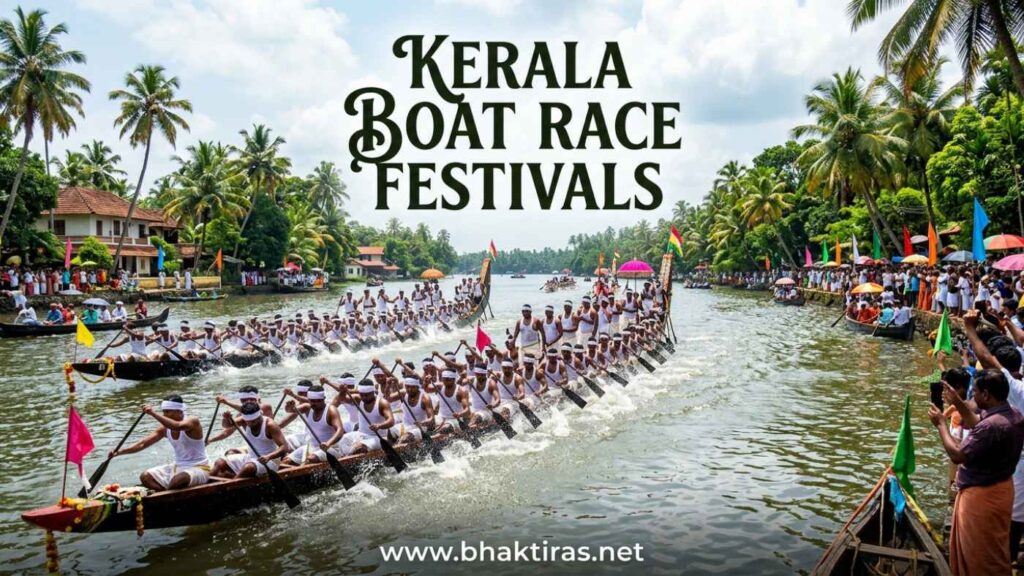
Vallam Kali, Kerala’s snake-boat races, turn the backwaters of Kuttanad into a roar of drums, paddles and song each Onam season. Long chundan vallam boats, some over 100 feet, are rowed by up to a hundred oarsmen who keep time to vanchipattu boat songs. The most famous of them, the Nehru Trophy Boat Race at Punnamada Lake in Alappuzha, falls on 22 August 2026. Part sport and part temple tradition, the races bind whole villages together in months of practice and pride.
Kerala Boat Races 2026: Main Races & Dates
The next big race after mid-2026 is the Nehru Trophy Boat Race on 22 August 2026. Because the dates follow the Malayalam calendar and each temple’s nakshatra, they shift a little every year.
| Race | 2026 Date | Where | Notes |
|---|---|---|---|
| Champakulam Moolam | July 2026 (Moolam, Midhunam) | Pampa river, Champakulam | Kerala’s oldest race; already held for 2026 |
| Nehru Trophy | 22 August 2026 | Punnamada Lake, Alappuzha | Biggest and most famous; next occurrence |
| Aranmula Uthrattathi | 30 August 2026 | Pampa river, Aranmula | Temple race tied to the Parthasarathy shrine |
| Payippad Jalotsavam | Early September 2026 | Payippad lake, Haripad | Three-day water festival |
The Nehru Trophy has long been associated with the second Saturday of August, but the fixture is confirmed year by year, so always check the district announcement before booking. Temple races such as Champakulam, Aranmula and Payippad are set by their own nakshatra and do not follow a fixed Gregorian date.
Why Kerala's Boat Races Matter
Vallam Kali is celebrated as both a village sport and a temple offering, rooted in centuries of backwater life and devotion to Krishna.
The races grew out of the everyday life of Kuttanad, a low-lying rice belt laced with canals, where fast war-boats once moved men and goods between villages. Over time the rowing became a contest of honour between neighbouring karas (waterside hamlets), and later a shared celebration of the Onam harvest season.
The Champakulam legend
The oldest race, Champakulam Moolam, is linked to the Ambalappuzha Sree Krishna temple. Tradition holds that the idol of Krishna installed there was brought by boat along the Pampa, and the race commemorates that journey on the Moolam star of the Malayalam month of Midhunam. It remains as much a temple observance as a sporting event.
Aranmula's temple offering
The Aranmula Uthrattathi race honours Krishna as Parthasarathy at the Aranmula temple. The snake boats here are treated as sacred and are tied to a vallasadya, a grand feast offered to the deity, so the rowing is an act of devotion rather than pure competition.
Village pride and teamwork
Each chundan vallam belongs to a village or a group of families, and a single crew may include over a hundred rowers moving as one. Months of practice, shared meals and the rhythm of the boat songs knit the community together long before race day arrives.
Spirit of the Onam season
Most races fall during the Onam months, when Kerala welcomes the mythical King Mahabali. The water carnivals add colour to the harvest celebrations and draw families back to their ancestral villages, so the season blends sport, faith and homecoming.
Deities & Figures Honoured
The temple races are dedicated to Krishna, worshipped locally as Parthasarathy and as the Ambalappuzha Krishna, while the sport itself is a shared cultural inheritance of the backwaters.
Krishna as Parthasarathy
At Aranmula, Krishna is worshipped as Parthasarathy, the charioteer of Arjuna. The snake boats and the vallasadya feast are offerings to him, which is why the Uthrattathi race is treated as a temple ritual first and a contest second.
Ambalappuzha Sree Krishna
The Champakulam race is bound to the Ambalappuzha Sree Krishna temple, whose founding legend involves the arrival of the Krishna idol by water. The Moolam-day race recalls that sacred journey along the Pampa.
The rowers and their villages
Beyond the deities, the races honour the oarsmen and boatwrights of Kuttanad. Building and maintaining a chundan vallam is a village-wide effort, and the crews carry the name and pride of their home kara onto the water.
How a Vallam Kali Unfolds
A race day mixes temple ceremony with hours of heats and finals on the water.
- Boat blessing. Before the season, each chundan vallam is cleaned, oiled and blessed at its village temple, and offerings are made for a safe, victorious race.
- Crew assembles. Up to a hundred or more rowers, along with helmsmen and singers, take their positions along the long hull, with the tallest tail of the boat rising behind them.
- Vanchipattu is raised. The lead singers begin the vanchipattu boat songs, and the whole crew answers in chorus to set a shared rhythm for the paddles.
- Procession to the start. The boats glide to the starting line, often past temple ghats, with drums and cheering crowds lining the banks and bridges.
- Heats on the water. Boats race in timed heats over the marked course, the paddles striking together as the vanchipattu tempo quickens.
- The final. The fastest boats meet in the final sprint, decided by seconds as the crowds roar from the water’s edge.
- Trophy and feast. Winners lift the trophy, and at temple races such as Aranmula the day is completed with the vallasadya feast offered to Krishna.
Food Around the Boat Races
The races share the Onam-season table, and the Aranmula vallasadya is a feast in a class of its own.
Aranmula Vallasadya
The vallasadya is a lavish temple feast served to the boat crews as an offering to Krishna. Dozens of dishes are ladled out on a banana leaf, and the rowers traditionally call out for their favourite curries in song, making the meal a performance in itself.
Onam Sadhya
The classic Onam sadhya is a vegetarian banquet of rice with sambar, avial, thoran, olan, pachadi and payasam, all served on a banana leaf. It is the standard festive meal of the season the races belong to.
Payasam
Payasam, a sweet pudding of rice or lentils simmered in jaggery or milk, closes almost every festive meal. Ambalappuzha’s temple palpayasam is especially famous among devotees.
Banana chips & snacks
Crisp Kerala banana chips, sharkara varatti (jaggery-coated chips) and hot tea or filter coffee are the everyday snacks sold along the race banks while spectators wait for the finals.
Where the Races Happen
Vallam Kali is centred on the Kuttanad backwaters of central Kerala, with each race attached to a particular lake, river or temple.
Alappuzha (Alleppey)
Known as the Venice of the East for its canals, Alappuzha hosts the Nehru Trophy Boat Race on Punnamada Lake and is the easiest base for visitors, with houseboats, hotels and rail links.
Kuttanad
This low-lying belt of paddy fields, below sea level in places, is the cradle of the snake boats. Its network of canals and villages produced the rowing tradition and most of the famous crews.
Pampa river & Aranmula
The Pampa flows past Aranmula in Pathanamthitta, where the Uthrattathi temple race is held. The same river is tied to the Champakulam race further downstream.
Haripad & Payippad
The Payippad Jalotsavam takes place on Payippad lake near Haripad in Alappuzha district, a three-day festival linked to the local Subramanya temple.
Boat Race Do's and Don'ts
A little planning keeps a race-day visit safe and enjoyable, especially near open water and big crowds.
Do
- Book tickets and grandstand seats early for the Nehru Trophy, as they sell out fast.
- Reach the venue well before the finals to beat the crowds and traffic.
- Carry water, a hat and sunscreen, since you may wait for hours in the sun.
- Respect temple customs at Aranmula and Champakulam and follow local dress norms.
- Keep children close and stay behind barriers along the water’s edge.
Avoid
- Do not lean over railings or unofficial jetties to get a better view.
- Do not enter the water or crowd the boats during the races.
- Do not litter the lake or riverbanks; carry your waste back with you.
- Do not fly drones or block others’ view for photos without permission.
- Do not treat the temple races as pure spectacle; they are acts of devotion.
Frequently Asked Questions
When are the Kerala boat races in 2026?
The main Kerala boat race in 2026 is the Nehru Trophy Boat Race on Saturday, 22 August 2026, at Punnamada Lake near Alappuzha. Other major races include the Aranmula Uthrattathi race on 30 August 2026 and the Payippad Jalotsavam in early September, with the Champakulam Moolam race held earlier in July.
When is the Nehru Trophy Boat Race 2026?
The Nehru Trophy Boat Race 2026 is on Saturday, 22 August 2026, on Punnamada Lake in Alappuzha, Kerala. It is the largest and most famous of the snake-boat races, drawing lakhs of spectators who watch the chundan vallam boats compete in the afternoon finals.
What is Vallam Kali?
Vallam Kali means boat play or boat race in Malayalam, and it refers to Kerala’s traditional snake-boat races held during the Onam season. Long chundan vallam boats are rowed by dozens of oarsmen to the rhythm of vanchipattu songs, blending village sport with temple tradition on the backwaters.
Which is the oldest boat race in Kerala?
The Champakulam Moolam Vallam Kali is regarded as Kerala’s oldest snake-boat race. It is tied to the Ambalappuzha Sree Krishna temple and is held on the Moolam star of the Malayalam month of Midhunam, commemorating the temple’s founding legend of Krishna’s idol arriving by boat.
Which god is worshipped at the temple boat races?
Krishna is the deity honoured at the main temple races. At Aranmula he is worshipped as Parthasarathy, and the Uthrattathi race and its vallasadya feast are offerings to him, while the Champakulam race is linked to the Ambalappuzha Sree Krishna temple.
What is a chundan vallam (snake boat)?
A chundan vallam is a long, narrow racing canoe with a high, curved stern that resembles a cobra’s raised hood, giving it the name snake boat. Some measure over 100 feet and carry up to a hundred or more rowers, along with singers and helmsmen who keep the crew in time.
What is the Aranmula Vallasadya?
The Aranmula Vallasadya is a grand temple feast served to the boat crews as an offering to Krishna at the Aranmula Parthasarathy temple. Rowers are treated to dozens of dishes on a banana leaf and traditionally sing out their requests for particular curries, making the meal part of the ritual.
How can I watch the Kerala boat races?
The easiest race to attend is the Nehru Trophy at Alappuzha, where ticketed grandstands line Punnamada Lake and tickets should be booked in advance. Temple races such as Aranmula and Champakulam are watched free from the riverbanks, though space is limited, so arriving early and respecting local customs is important.
May the drums, songs and snake boats of the backwaters carry the joy of the Onam season to your home. Nurayum pularum!