
Krishna Jayanti in Tamil Nadu 2026 – Sri Jayanthi & Gokulashtami
ஸ்ரீ கிருஷ்ண ஜயந்தி
When is Krishna Jayanti in Tamil Nadu in 2026?
Krishna Jayanti in Tamil Nadu falls on Friday, 4 September 2026. Known locally as Sri Jayanthi or Gokulashtami, it marks the midnight birth of Lord Krishna and is fixed by the solar Tamil calendar, on the day that carries Rohini nakshatram in the month of Avani. Tamil families welcome the infant Krishna by drawing his tiny footprints from the doorway to the puja room and offer a spread of home-made savouries and sweets.
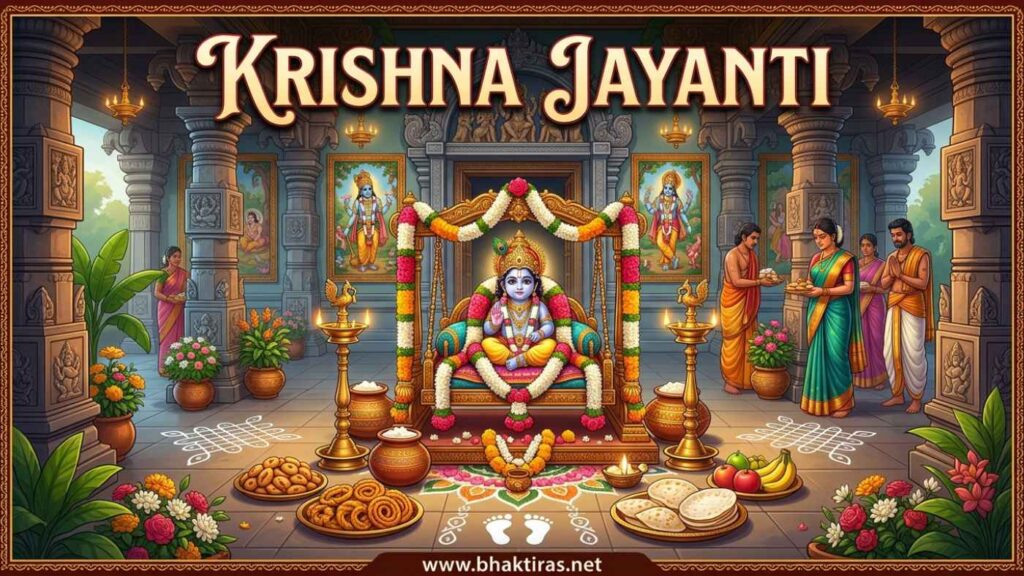
Krishna Jayanti, called Sri Jayanthi or Gokulashtami across Tamil Nadu, celebrates the midnight birth of Lord Krishna, the eighth avatar of Vishnu. Tamil households fix the day by the solar calendar, choosing the date in the month of Avani that carries Rohini nakshatram, the star under which Krishna was born. In 2026 it falls on Friday, 4 September. The observance is warm and domestic: little footprints of Kannan painted from the front door to the shrine, a table of crisp savouries and sweets, evening prayers once the star rises, and the Uriyadi pot-breaking game in temple courtyards and village lanes.
Krishna Jayanti in Tamil Nadu 2026-2028: Dates & Calendar
In Tamil Nadu the next Krishna Jayanti (Sri Jayanthi) is on Friday, 4 September 2026. The date shifts each year because it is tied to the Ashtami tithi and Rohini nakshatram falling in the solar month of Avani, so it can differ by a day or more from the North Indian Janmashtami.
| Year | Date | Day | Notes |
|---|---|---|---|
| 2026 | 4 September | Friday | Next occurrence; Rohini nakshatram in Avani |
| 2027 | 24 August | Tuesday | Falls a day before the North Janmashtami of 25 August |
| 2028 | 11 September | Monday | Later date as Rohini in Avani falls in September |
The midnight puja is timed to Nishita, the eighth muhurat of the night, when Krishna is believed to have been born; families in Tamil Nadu usually complete the star-rise prayers in the evening and mark the birth again at midnight.
Why Krishna Jayanti Is Celebrated in Tamil Nadu
Krishna Jayanti in Tamil Nadu honours the birth of Lord Krishna, born at midnight in a Mathura prison to Devaki and Vasudeva, under Rohini nakshatram. The Tamil observance fixes the day by that star in the solar month of Avani, which is why it is called Sri Jayanthi.
The midnight birth
Krishna was born at the darkest hour to Devaki and Vasudeva while their captor, the tyrant Kamsa, waited to kill him. The night of his arrival is remembered as the moment goodness slipped past cruelty; Vasudeva carried the newborn across the flooded Yamuna to safety in Gokul. Tamil families keep vigil and mark the birth with prayers at midnight.
Following Rohini nakshatram
Unlike the mostly lunar reckoning in the north, Tamil Nadu, Kerala and parts of Karnataka choose the Avani-month day on which Rohini nakshatram meets the Krishna Paksha Ashtami. This solar method is why the day is titled Sri Jayanthi and Ashtami Rohini, and why its Gregorian date can slip a day either side of Janmashtami.
Inviting the child Krishna home
The most tender Tamil custom treats the day as Kannan’s actual visit. Small footprints are painted in rice flour from the threshold inward, as if the divine child has just walked into the house. It turns a temple festival into an intimate family welcome for a beloved infant god.
Deities & Figures Worshipped
The day belongs to Lord Krishna, worshipped in Tamil Nadu especially as the mischievous infant Kannan, the butter-loving child who charms every home he enters.
Lord Krishna
Krishna, the eighth avatar of Vishnu, is honoured as protector, teacher of the Bhagavad Gita and the playful cowherd of Vrindavan. On Sri Jayanthi his childhood is uppermost, and images of the baby resting on a banyan leaf or reaching for butter fill home shrines.
Baby Krishna (Kannan)
Tamil homes dote on Kannan, the naughty butter-thief. The painted footprints, the pot of aval and butter, and the Uriyadi pot all echo his childhood pranks in Gokul, making the festival feel like welcoming a real child into the family.
Perumal at the temples
At Vishnu (Perumal) temples across the state, Krishna is worshipped with special abhishekam, garlands and recitals from the Divya Prabandham. Devotees who cannot keep an elaborate home puja simply visit the local Perumal koil for darshan on the evening of the festival.
Key Rituals, Step by Step
A Tamil Sri Jayanthi runs from a cleaned, decorated house in the morning to a midnight remembrance of Krishna’s birth, with the footprint tradition and Uriyadi giving it a character all its own.
- Clean and decorate the home. The house is swept, the puja room set up and a fresh kolam drawn at the entrance to welcome the divine child.
- Draw Krishna’s footprints. Using rice flour or wet rice paste, small footprints of the infant Kannan are painted from the front doorway leading inward to the puja room, as though the child has just entered the house.
- Prepare the neivedyam. The family cooks the traditional spread of savouries and sweets – seedai, murukku, thattai, appam, aval and more – which is offered to Krishna before anyone tastes it.
- Set up the shrine. An image or idol of baby Krishna is placed on a decorated seat, surrounded by lamps, tulsi, flowers, fruit and a small pot of butter and aval that he is said to love.
- Do the evening puja after the star rises. Once Rohini nakshatram and dusk arrive, the family lights lamps, offers the neivedyam, and performs archana with Krishna’s names; many mark the birth again at the midnight Nishita hour.
- Sing bhajans and slokas. Household members and neighbours gather to sing Krishna bhajans, recite the Bhagavad Gita or verses on his childhood, and children often dress up as Krishna and Radha.
- Play Uriyadi. In temple grounds and village streets a clay pot of buttermilk, aval or coins (the uri) is hung high; blindfolded players take turns trying to break it with a stick, re-enacting Krishna and his friends stealing butter.
- Distribute prasadam. The offered savouries and sweets are shared among family, neighbours and temple visitors, closing the day on a note of hospitality.
Special Foods of Krishna Jayanti in Tamil Nadu
The neivedyam is the heart of a Tamil Sri Jayanthi – mostly crisp, deep-fried savouries with a few sweets, all made at home and offered to Kannan before the family eats.
Seedai (uppu & vella)
Little crunchy balls of rice flour and urad flour, made in a salted version (uppu seedai) and a jaggery version (vella seedai). Seedai is the signature Sri Jayanthi snack; cooks dry the flour and prick the balls carefully so they do not burst in the hot oil.
Murukku
Spiral-shaped, crisp fritters of rice and urad flour seasoned with sesame, cumin or ajwain, pressed through a mould into hot oil. Murukku is offered because Krishna loved crunchy snacks, and it keeps well for days of sharing.
Thattai
Flat, round, crunchy discs of spiced rice flour studded with channa dal and sesame. Thattai sits alongside seedai and murukku as one of the three staple savouries of the day.
Appam & sweets
Sweet appam (nei appam) – soft jaggery-and-rice-flour fritters fried in ghee – along with verkadalai urundai (groundnut and jaggery balls) round off the sweet side of the offering.
Aval (poha) & butter
Sweet aval, made with flattened rice, jaggery, coconut and cardamom, is offered because Krishna loved poha and butter. A small pot of fresh butter is set before him, echoing the butter he stole as a child.
Where and How It Is Celebrated
Across Tamil Nadu the festival is domestic and community-minded, with the same core customs playing out in city homes, Perumal temples and village courtyards.
Tamil homes
The footprint kolams, the tray of home-made savouries and the evening puja make Sri Jayanthi one of the most home-centred of Tamil festivals. Children dressed as Krishna and Radha are photographed at the family shrine.
Perumal temples
Vishnu temples across the state hold special abhishekam, alankaram and Divya Prabandham recitals for Krishna, drawing crowds for evening darshan and prasadam.
Villages and Uriyadi
In towns and villages the Uriyadi pot-breaking game turns the festival into a lively public event, with hung pots, blindfolded contestants and cheering crowds re-enacting Krishna’s butter-stealing pranks.
Krishna Jayanti Do's and Don'ts
A few simple customs help keep the day traditional and welcoming for the child Krishna.
Do
- Clean the home and draw a fresh kolam at the entrance before starting.
- Draw Krishna’s footprints leading from the doorway to the puja room.
- Prepare and offer the neivedyam to Krishna before anyone tastes it.
- Complete the puja after the star rises, and mark the birth at midnight if you keep vigil.
- Share the prasadam savouries and sweets with family, neighbours and visitors.
Avoid
- Do not eat the seedai, murukku or sweets before they are offered to Krishna.
- Do not point the painted footprints out of the house; they should lead inward, welcoming the child.
- Do not skip drying the rice flour for seedai, as damp flour makes the balls burst in hot oil.
- Do not treat Uriyadi carelessly; keep the pot and stick play safe for children and onlookers.
- Do not confuse the Tamil solar date with the North Indian Janmashtami, which can fall on a different day.
Frequently Asked Questions
When is Krishna Jayanti in Tamil Nadu in 2026?
Krishna Jayanti (Sri Jayanthi) in Tamil Nadu falls on Friday, 4 September 2026. The day is chosen by the solar Tamil calendar, on the date in the month of Avani that carries Rohini nakshatram, the star under which Lord Krishna was born.
When is Krishna Jayanti in Tamil Nadu in 2027 and 2028?
In Tamil Nadu, Krishna Jayanti falls on Tuesday, 24 August 2027 and Monday, 11 September 2028. The date moves each year because it depends on Rohini nakshatram meeting the Ashtami tithi in the solar month of Avani.
How is the Tamil Krishna Jayanti different from the North Indian Janmashtami?
The Tamil Krishna Jayanti, called Sri Jayanthi or Ashtami Rohini, is fixed by the solar calendar on the Avani-month day that carries Rohini nakshatram, while the North Indian Janmashtami mostly follows lunar reckoning. Because of this, the Tamil date can fall a day earlier or later, and in some years a few weeks apart, from the wider Janmashtami.
What are the special foods made for Krishna Jayanti in Tamil Nadu?
The Tamil neivedyam is mostly crisp savouries: seedai, murukku and thattai, along with sweets such as nei appam, verkadalai urundai and sweet aval. These are made at home and offered to the child Krishna before the family eats, then shared as prasadam.
Why are footprints drawn on Krishna Jayanti in Tamil Nadu?
Tamil families paint small footprints of the infant Krishna in rice flour from the front door to the puja room to welcome the divine child into the home. The footprints face inward, as though Kannan has just walked in, turning the festival into an intimate family welcome.
What is Uriyadi?
Uriyadi is the Tamil pot-breaking game played on Krishna Jayanti, similar to the Dahi Handi of Maharashtra. A clay pot of buttermilk, aval or coins is hung high, and blindfolded players take turns trying to break it with a stick, re-enacting how young Krishna and his friends stole butter in Gokul.
Which god is worshipped on Krishna Jayanti?
Lord Krishna, the eighth avatar of Vishnu, is worshipped on Krishna Jayanti. In Tamil Nadu he is honoured especially as the infant Kannan, the butter-loving child, with prayers, bhajans and a home-made spread of savouries and sweets.
How is Krishna Jayanti celebrated at home in Tamil Nadu?
At home, families clean the house and draw a kolam, paint Krishna’s footprints leading to the shrine, prepare the seedai-and-murukku neivedyam, and perform the puja after the star rises. Children often dress as Krishna and Radha, bhajans are sung, and the offered food is shared as prasadam.
May the little footprints of Kannan lead joy into your home this Sri Jayanthi.