
Narali Purnima 2026 – The Koli Coconut Festival of the Sea
नारळी पौर्णिमा
When is Narali Purnima in 2026?
Narali Purnima falls on Friday, 28 August 2026. It is the coconut festival of Maharashtra’s Koli fishing community, observed on Shravana Purnima, the full moon of the Hindu month of Shravana. Fisherfolk offer coconuts to the sea to honour Varuna, the sea god, and to mark the start of the fresh fishing season.
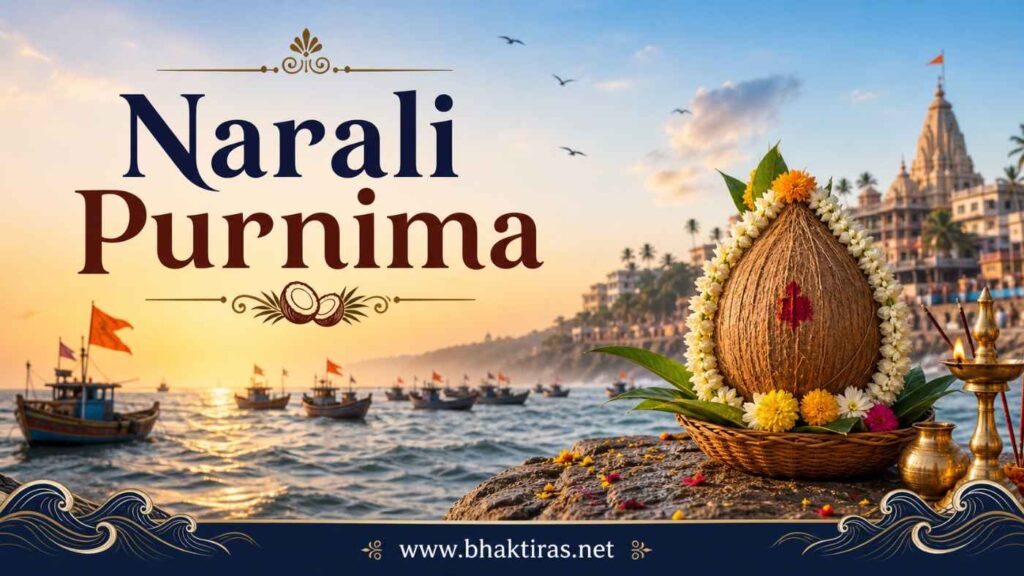
Narali Purnima is the coconut festival of coastal Maharashtra and the Konkan, kept most warmly by the Koli fishing communities of Mumbai and the villages along the Arabian Sea. Falling on Shravana Purnima, the full moon of the monsoon month of Shravana, it marks the day fishermen return to the water after the rains. Decorated boats line the shore, garlanded coconuts are offered to the waves, and the sea god Varuna is asked for calm waters and a safe, plentiful catch in the season ahead.
Narali Purnima 2026-2028: Dates & Calendar
Narali Purnima 2026 is on Friday, 28 August. The date shifts each year because it follows the Hindu lunar calendar, always landing on the full moon (Purnima) of the month of Shravana.
| Year | Date | Day | Notes |
|---|---|---|---|
| 2026 | 28 August | Friday | Next occurrence; same day as Raksha Bandhan |
| 2027 | 17 August | Tuesday | Shravana Purnima |
| 2028 | 5 August | Saturday | Shravana Purnima |
Narali Purnima always shares the calendar with Raksha Bandhan and Shravani (Rakhi) Purnima, since all three fall on the same Shravana full moon.
Why Narali Purnima Is Celebrated
Narali Purnima is celebrated to thank and appease the sea before fishermen resume work. Offering the season’s first coconuts to the waves is a prayer for calm seas and a safe, generous catch.
First offering to the sea
The word naral means coconut, and purnima means full moon. On this day the Koli community gives the sea its first gift of the season, a coconut, before any boat goes out to fish. The gesture is one of gratitude and request: thanks for the sea’s bounty, and a plea for its protection.
End of the monsoon fishing pause
Through the heavy monsoon months, deep-sea fishing largely stops because the water is rough and dangerous, and the ban also lets fish stocks breed. Narali Purnima signals that the worst of the storms has passed and the new fishing season can begin, making it as much a working milestone as a religious one.
The Koli maritime culture
For the Koli fisherfolk, among the oldest inhabitants of the Mumbai and Konkan coast, the sea is livelihood, larder and deity in one. Narali Purnima is their signature festival, a day when songs, dances and decorated boats express a whole community’s bond with the water.
One day, three names
Because it lands on Shravana Purnima, the same full moon is also Raksha Bandhan across much of India and Shravani or Rakhi Purnima elsewhere. Many coastal families tie rakhis and offer coconuts on the very same day, weaving family and sea into one celebration.
Deities & Figures Worshipped
Narali Purnima is dedicated to Varuna, the Vedic god of the sea and waters, worshipped here as Sindhu Sagar, the ocean itself.
Varuna
Varuna is the ancient guardian of the oceans, rivers and cosmic waters. On Narali Purnima the sea is treated as his living form, so the coconut offered to the waves is offered to Varuna, asking him to keep the water gentle and the boats safe.
Sindhu Sagar (the sea)
For fishing families the ocean is not an abstract force but a provider they address directly as Sindhu Sagar. The prayers of the day are spoken to the sea face to face, thanking it for past catches and seeking its blessing for the year to come.
Key Rituals, Step by Step
The day builds from home preparation to a community gathering at the water’s edge, ending with the coconut offering and folk celebration.
- Bathe and prepare offerings. Families rise early, bathe, and put on fresh, often traditional, clothing. Coconuts are washed, and some are wrapped in decorative paper or foil and garlanded with flowers.
- Decorate the boats. Fishermen clean and adorn their boats with flowers, buntings, coloured cloth and rangoli, since the vessels are the heart of their trade and share in the day’s honour.
- Gather for the procession. The community walks together towards the shore, many in bright dress, carrying the coconuts and singing traditional Koli songs along the way.
- Perform the seashore puja. At the water’s edge a puja is offered to Varuna and the sea, with lamps, incense, kumkum, flowers and prayers for calm waters and a safe season.
- Offer the coconut to the waves. The central act: garlanded coconuts are cast into the sea as the first offering of the year, a gift returned to the water that feeds the community.
- Sing and dance the Koli way. Folk songs and the energetic Koli dance follow the offering, with drums and celebration filling the shoreline through the day.
- Share a festive meal. Families return home to eat coconut-rich dishes, especially the sweet naral bhaat, sharing the day’s joy across households.
Special Foods of Narali Purnima
The coconut is the star ingredient of the day, appearing in sweet rice, sweets and offerings across coastal Maharashtrian kitchens.
Naral bhaat
The festival’s signature dish: sweet coconut rice cooked with grated coconut, jaggery, cardamom and ghee, sometimes with cashews and cloves. It is prepared in almost every Koli and coastal Maharashtrian home on this day.
Coconut sweets
Grated coconut becomes the base for treats such as naralachi vadi (coconut barfi), coconut ladoos and karanji filled with sweet coconut and jaggery, tying the whole day’s cooking to the coconut theme.
Sanja
A warm, semolina-based sweet dish similar to sheera, flavoured with ghee, sugar and cardamom, often made as a quick festive treat and offered before the family meal.
Ukadiche modak & rice dishes
Steamed rice-and-coconut sweets and other coconut-laced rice preparations round out the spread, all leaning on the fresh coconut that gives the festival its name.
Where It's Celebrated
Narali Purnima is a coastal festival, kept most vividly wherever Koli and fishing communities live along the western seaboard.
Mumbai Koli villages
In fishing villages (koliwadas) such as Worli, Cuffe Parade, Versova and Mahim, the day brings decorated boats, processions and shoreline pujas that draw the whole neighbourhood to the water.
Gateway of India & city shore
The seafront near the Gateway of India and other Mumbai shores fills with families offering coconuts and enjoying the festivities, one of the most visible public faces of the festival.
Konkan coast
Along the Konkan belt of Maharashtra, coastal towns and villages from Raigad to Ratnagiri and Sindhudurg mark the day with their own seaside offerings and community meals.
Coastal Karnataka & Goa
Fishing communities further down the western coast observe similar sea-worship on Shravana Purnima, offering coconuts and prayers before resuming the season.
Narali Purnima Do's and Don'ts
A few simple customs help you take part respectfully in this community and sea-centred festival.
Do
- Offer a coconut and prayers to the sea with genuine gratitude and respect.
- Wear clean, festive clothing and join the community procession if you are near a koliwada.
- Prepare or share naral bhaat and other coconut dishes with family and neighbours.
- Support local fishermen and their community celebrations on the day.
- Tie a rakhi too, since it shares the calendar with Raksha Bandhan.
Avoid
- Do not litter the beach or leave plastic behind after the offerings.
- Do not treat the seashore puja as mere spectacle; respect the worshippers’ space.
- Do not venture into rough monsoon waters just to make an offering.
- Do not waste food; cook and share the festive meal thoughtfully.
- Do not force a fixed date; confirm it with your local panchang each year.
Frequently Asked Questions
When is Narali Purnima in 2026?
Narali Purnima 2026 falls on Friday, 28 August. It is observed on Shravana Purnima, the full moon of the Hindu month of Shravana, which is why the date shifts each year on the Gregorian calendar.
When is Narali Purnima in 2027 and 2028?
Narali Purnima will be on Tuesday, 17 August in 2027 and on Saturday, 5 August in 2028. Both fall on Shravana Purnima, the same monsoon full moon that governs the festival every year.
Why is Narali Purnima celebrated?
Narali Purnima is celebrated to thank and appease the sea before the fishing season begins. By offering the year’s first coconut to the waves, Maharashtra’s Koli fisherfolk pray to Varuna, the sea god, for calm waters and a safe, plentiful catch.
Which god is worshipped on Narali Purnima?
Varuna, the Vedic god of the sea and waters, is worshipped on Narali Purnima, honoured here as Sindhu Sagar, the ocean itself. Coconuts offered to the sea are treated as offerings made directly to him.
Why do people offer coconuts to the sea?
People offer coconuts because the coconut (naral) is considered a pure, auspicious fruit and serves as the fishing community’s first gift of the season to the sea. The act expresses gratitude for the sea’s bounty and asks for its protection through the coming fishing months.
Is Narali Purnima the same day as Raksha Bandhan?
Yes, Narali Purnima falls on the same day as Raksha Bandhan because both are observed on Shravana Purnima, the full moon of Shravana. Many coastal families offer coconuts to the sea and tie rakhis on the very same day, and the full moon is also called Rakhi or Shravani Purnima.
Who celebrates Narali Purnima?
Narali Purnima is chiefly celebrated by the Koli fishing community and other coastal Hindus of Maharashtra and the Konkan, including in Mumbai. Fishing communities down the western coast of Karnataka and Goa observe similar sea-worship on the same full moon.
What foods are made on Narali Purnima?
The signature dish of Narali Purnima is naral bhaat, sweet coconut rice made with grated coconut, jaggery and cardamom. Coconut sweets such as naralachi vadi and coconut ladoos, along with sanja, are also prepared to celebrate the coconut that gives the festival its name.
May the sea stay calm and the nets stay full this season. Happy Narali Purnima to every family that lives by the water.