
Subramanya Shashti 2026 – The Serpent Lord's Day at Kukke
सुब्रह्मण्य षष्ठी
When is Subramanya Shashti in 2026?
Subramanya Shashti (Champa Shashti) falls on Tuesday, 15 December 2026. It is observed on the Shashti (sixth day) of the bright fortnight in the Hindu month of Margashirsha. The day honours Lord Subramanya (Kartikeya/Murugan) worshipped in his serpent form, and is celebrated most grandly at the Kukke Subramanya temple in coastal Karnataka.
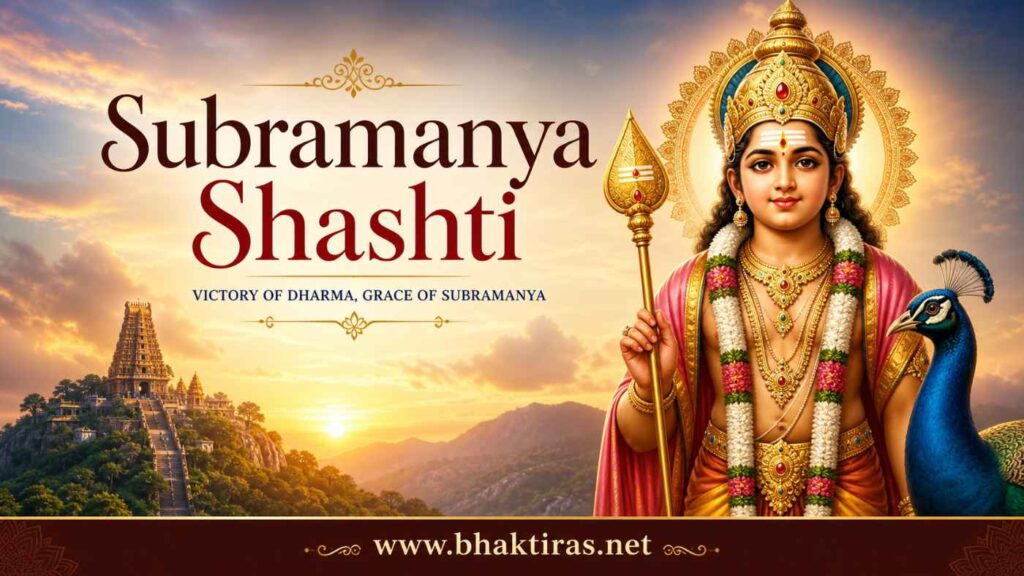
Subramanya Shashti, also called Champa Shashti, is a Hindu festival dedicated to Lord Subramanya – the deity known across India as Kartikeya, Skanda and Murugan. It is kept on the sixth day of the waxing moon in Margashirsha, which usually lands in late November or December. In 2026 it falls on 15 December. The day draws its greatest crowds to the Kukke Subramanya temple in coastal Karnataka, where the god is revered in his serpent form and devotees come to seek relief from Sarpa Dosha and Kala Sarpa Dosha.
Subramanya Shashti 2026-2028: Dates & Calendar
The next Subramanya Shashti is on 15 December 2026. Because it tracks the Hindu lunar month of Margashirsha, the Gregorian date shifts each year between late November and mid-December.
| Year | Date | Day | Notes |
|---|---|---|---|
| 2025 | 26 November | Wednesday | Past occurrence |
| 2026 | 15 December | Tuesday | Next occurrence – main Champa Shashti day at Kukke |
| 2027 | 3 December | Friday | Margashirsha Shukla Shashti |
At Kukke Subramanya the observance is the climax of a multi-day Champa Shashti Mahotsava, with daily processions of the utsava deity on different vahanas leading up to the Shashti.
Why Subramanya Shashti Is Celebrated
Subramanya Shashti marks the day Lord Subramanya, the warrior son of Shiva and Parvati, is honoured as the commander of the divine army and the lord of serpents. It is both a victory festival and a day of serpent propitiation.
The number six threads through the festival. Kartikeya was raised by the six Krittika mothers, so he carries the name Shanmukha (the six-faced one), and the observance falls on the sixth tithi. Many devotees keep a six-day fast that begins on Amavasya and ends on this Shashti.
Kartikeya's victory
The festival recalls Subramanya’s triumph over the demon Tarakasura, whom the gods could not defeat until Shiva’s son took command of their army. In the Khandoba tradition of Maharashtra and northern Karnataka, the same day (Champa Shashti) celebrates Khandoba, a form of Shiva, defeating the demons Mani and Malla after a six-day battle.
The serpent lord
At Kukke, Subramanya is worshipped together with Vasuki, the serpent king who is said to have taken refuge with him. The deity is therefore approached as the lord who governs the naga realm, which is why the temple is India’s foremost centre for serpent-related worship.
Relief from Sarpa Dosha
Many believe that afflictions read in a horoscope as Sarpa Dosha, Naga Dosha or Kala Sarpa Dosha – linked to delayed marriage, difficulty conceiving, skin ailments or persistent obstacles – can be eased by worship here. Subramanya Shashti is considered an especially potent day to begin this remedy.
Deities & Figures Worshipped
The day centres on Lord Subramanya, worshipped in his serpent form, alongside the serpent king Vasuki.
Subramanya (Kartikeya / Murugan)
The son of Shiva and Parvati, born to lead the gods against Tarakasura. Known as Kartikeya and Skanda in the north and as Murugan in the Tamil south, he rides a peacock and carries the vel (divine lance). At Kukke he is the presiding lord of serpents.
Vasuki, the serpent king
In the Kukke tradition Vasuki, king of the nagas, sought protection with Subramanya and is worshipped alongside him. This union of the war-god and the serpent king gives the temple its authority over Sarpa Dosha remedies.
Khandoba
In parts of Maharashtra and northern Karnataka the same tithi is kept as Champa Shashti for Khandoba, a folk form of Shiva shown as a golden warrior smeared with turmeric. His six-day victory over Mani and Malla mirrors the Skanda story.
Key Rituals, Step by Step
Observance ranges from a simple home vrat to the elaborate serpent-worship sevas performed at Kukke Subramanya.
- Begin the vrat. Many devotees start a fast on Margashirsha Amavasya and keep it for six days, breaking it on the Shashti; others fast only on the Shashti itself, taking fruit, milk and water and avoiding grains, onion, garlic and non-vegetarian food.
- Bathe and take a sankalpa. On the morning of the Shashti, devotees bathe, clean the puja space and make a vow (sankalpa) to worship Subramanya for health, protection and relief from serpent-related afflictions.
- Worship the deity. An image or idol of Subramanya is offered water, turmeric, kumkum, flowers, a lit lamp and incense, with chanting of Skanda Shashti Kavacham or the Subramanya mantra.
- Sarpa Samskara at Kukke. This two-day serpent rite is performed to remove Sarpa Dosha; it addresses harm believed to have been done to snakes in a family’s past and seeks forgiveness of the naga deities.
- Ashlesha Bali. A serpent-propitiation ritual aligned with the Ashlesha nakshatra, offered to ease Naga Dosha, Kala Sarpa Dosha and the effects of Rahu and Ketu.
- Nagaprathishtha. Where a horoscope calls for it, a serpent idol of silver, stone or alloy is consecrated to establish and honour the naga deity.
- Join the procession. At Kukke the utsava murti is carried in a grand rathotsava (chariot procession) on the Shashti, drawing tens of thousands of pilgrims.
- Break the fast with prasad. After the main worship, devotees end the vrat with temple prasad, sharing it as the blessing of the lord.
Special Foods of Subramanya Shashti
The day balances light fasting fare before worship with warm, mostly sweet prasad shared afterwards.
Fasting fare
Through the fast most devotees keep to fruit, milk and water, or a single sattvic meal without grains, onion, garlic or non-vegetarian food. The restraint is part of the vow, not a hardship to be rushed through.
Appam
Sweet appam – a soft fried cake of rice, jaggery and coconut – is a favourite offering and prasad in the coastal Karnataka belt around Kukke, shared once the fast is broken.
Temple prasad
Pilgrims receive cooked prasad and tirtha at the temple after darshan and the serpent sevas, taken as the direct blessing of Subramanya.
Khandoba offerings
In the Champa Shashti-Khandoba tradition, offerings such as thombara and rodaga (multigrain and wheat preparations) and bhandara (turmeric) are made to the deity and distributed to devotees.
Regional Names & Variations
The same tithi is observed in different forms across western and southern India.
Kukke Subramanya, Karnataka
The best-known observance. The coastal Karnataka temple treats the day as the peak of its Champa Shashti Mahotsava, with the rathotsava and heavy demand for Sarpa Samskara and Ashlesha Bali bookings.
Maharashtra (Khandoba)
Kept as Champa Shashti for Khandoba, especially at Jejuri. Households complete a six-day fast, decorate the deity in turmeric and mark the god’s victory over Mani and Malla.
Andhra Pradesh & Telangana
Observed as Subrahmanya Sashti at Murugan and Subramanya shrines, with vrat, temple visits and the same emphasis on relief from Naga Dosha.
Tamil Nadu
Devotees of Murugan mark the Margashirsha Shashti with fasting and temple worship. Note this is distinct from the more famous Tamil Skanda Sashti of the Aippasi month, which ends in Soorasamharam.
Subramanya Shashti Do's and Don'ts
Simple guidance for keeping the day with the right spirit.
Do
- Keep the fast sincerely, whether the full six days or the Shashti alone
- Bathe and take a clear sankalpa before worship
- Book Sarpa Samskara or Ashlesha Bali at Kukke in advance, as slots fill fast
- Chant the Skanda Shashti Kavacham or Subramanya mantra with attention
- Share prasad with family and fellow devotees after breaking the fast
Avoid
- Do not confuse this Margashirsha festival with the Tamil Skanda Sashti of Aippasi
- Do not eat grains, onion, garlic or non-vegetarian food while fasting
- Do not harm or disrespect snakes; serpent worship is central to the day
- Do not treat Sarpa Dosha rituals as a transaction – approach them with humility
- Do not skip the sankalpa and rush straight to breaking the fast
Frequently Asked Questions
When is Subramanya Shashti in 2026?
Subramanya Shashti (Champa Shashti) is on Tuesday, 15 December 2026. It is observed on the Shashti tithi of the bright fortnight of Margashirsha, and is the main worship day at the Kukke Subramanya temple in Karnataka.
When is Subramanya Shashti in 2025 and 2027?
Subramanya Shashti was on 26 November 2025 and will next be on 15 December 2026. In 2027 it falls on Friday, 3 December. The Gregorian date shifts each year because it follows the lunar month of Margashirsha.
What is the difference between Subramanya Shashti and Kanda Shashti (Skanda Sashti)?
Subramanya Shashti (Champa Shashti) falls in the month of Margashirsha (November-December) and is centred on Kukke Subramanya and serpent worship. Kanda Shashti, or Skanda Sashti, is the six-day Tamil festival of the Aippasi month (October-November) that ends with Soorasamharam, marking Murugan’s slaying of Surapadman. They honour the same deity but are separate festivals with different dates and traditions.
Why is Subramanya Shashti celebrated?
Subramanya Shashti celebrates Lord Subramanya (Kartikeya), the warrior son of Shiva who led the gods to victory over the demon Tarakasura. At Kukke it also honours his role as lord of serpents, and devotees observe it to seek relief from Sarpa Dosha and Kala Sarpa Dosha.
Which god is worshipped on Subramanya Shashti?
The day is dedicated to Lord Subramanya, known across India as Kartikeya, Skanda and Murugan, the son of Shiva and Parvati. At Kukke Subramanya he is worshipped in his serpent form alongside Vasuki, the serpent king.
What is the connection with Sarpa Dosha and Kukke Subramanya?
Kukke Subramanya is India’s foremost temple for serpent-related worship because Subramanya is revered there as the lord who protects the naga king Vasuki. Devotees who read Sarpa Dosha, Naga Dosha or Kala Sarpa Dosha in their horoscope come to perform Sarpa Samskara and Ashlesha Bali, believed to ease these afflictions.
How do devotees observe the fast?
Some devotees keep a six-day fast from Margashirsha Amavasya and break it on the Shashti, while others fast only on the Shashti itself. Through the fast they take fruit, milk and water or a single sattvic meal, avoiding grains, onion, garlic and non-vegetarian food, and break it with temple prasad.
Where is Subramanya Shashti celebrated most grandly?
The grandest celebration is at the Kukke Subramanya temple in coastal Karnataka, where the day is the climax of a multi-day Champa Shashti Mahotsava with a chariot procession. It is also kept as Champa Shashti for Khandoba in Maharashtra, notably at Jejuri.
May Lord Subramanya guard you from every hidden fear and bless your home with health and peace. Subramanya Shashti ki shubhkamnayein.