
Phulari, the Flower Festival of the Mishing 2026 – An Indigenous Assam Celebration
What is Phulari, the flower festival of the Mishing tribe?
Phulari is celebrated as a flower and autumn-season observance of the Mishing (Miri) community of Assam, marked by floral decorations, folk song and dance, and community feasting with pithas and apong (rice beer). It falls around September, during the Brahmaputra valley’s harvest season, and the exact day is fixed each year by the community rather than by a set calendar date.
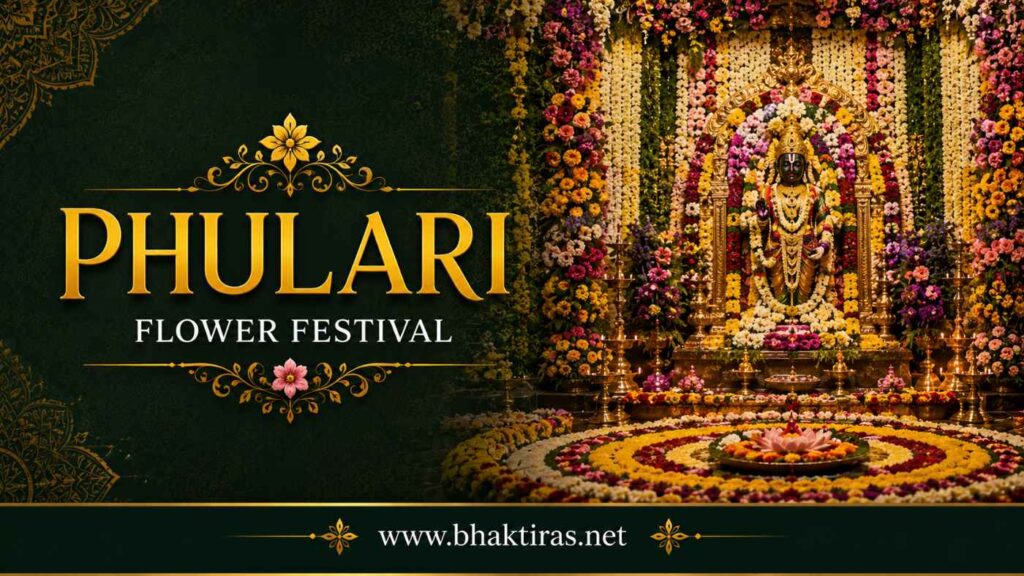
Phulari is remembered as a flower festival of the Mishing (Miri) community, an indigenous, riverine people of Assam’s Brahmaputra floodplains. It belongs to the autumn and harvest season, roughly around September, when fields are heavy and wild flowers colour the sandbars and embankments. Unlike the community’s two principal festivals, Ali-Aye-Ligang in spring and Porag after the harvest, Phulari is a smaller, gentler occasion of flowers, folk song and dance, and shared food. The Mishing set the day themselves each year, so it has no fixed calendar date.
Why Phulari Matters to the Mishing
Phulari carries the flower and autumn-season spirit of the Mishing, a moment when the community gathers to enjoy the season’s blooms, its music, and each other’s company.
A festival of flowers and the season
The name itself points to flowers, and the occasion sits in the autumn harvest window when the Brahmaputra valley is at its most colourful. For a farming community that reads its year through the river and the paddy, a celebration built around flowers marks gratitude for the season and the land that sustains it.
Community bonding
Like other Mishing gatherings, Phulari is less about individual worship and more about people coming together. Neighbours share food, sing, and dance, and the day strengthens the ties that hold a village of the floodplains together through a demanding agricultural year.
Indigenous identity
For the Mishing, an indigenous people of the Brahmaputra floodplains, occasions like Phulari help carry language, song, dress and food from one generation to the next. Celebrating in their own way is part of how the community keeps its distinct identity alive alongside the wider festival life of Assam.
What Happens During Phulari
Phulari is a community celebration rather than a temple ritual, so its shape is set by song, dance, decoration and shared food more than by fixed liturgy.
- Floral decoration. Homes and gathering spaces are brightened with flowers of the season, in keeping with the festival’s name and its autumn setting.
- Folk song. The community sings its own songs, part of the wide Mishing repertoire of work songs, love songs and seasonal tunes.
- Folk dance. Young people perform Mishing dance forms such as gumrag, accompanied by drums and cymbals, a hallmark of the community’s celebrations.
- Community feasting. Families prepare and share food together, turning the day into a shared meal for the whole village.
- Apong and hospitality. Apong, the community’s home-brewed rice beer, is offered to guests as a mark of welcome, as it is at Mishing gatherings generally.
Foods Shared at Phulari
The food is simple, rice-centred Mishing fare, made from what the land and the Brahmaputra provide.
Pithas
Rice-flour pithas, a staple of Assamese and Mishing festive tables, are prepared for guests and shared through the day.
Purang apin
Purang apin is sticky rice cooked wrapped in leaves, a much-loved Mishing preparation served at community celebrations.
Fish
Fish from the Brahmaputra and its channels is a natural part of Mishing cooking and features at community meals.
Apong
Apong, the Mishing home-brewed rice beer, is offered to guests and shared among the community as part of the day’s hospitality.
The Mishing and Their Festival Year
Phulari is best understood alongside the community’s main, better-documented festivals and its home along the Brahmaputra.
Along the Brahmaputra
The Mishing (also called Miri) are a Tibeto-Burman people who live mostly on the river islands, chars and embankments of the Brahmaputra in Assam, including Majuli and the upper Assam districts. Their life, food and festivals are shaped by the river.
Ali-Aye-Ligang (spring)
The community’s principal spring festival, held on the first Wednesday of the month of Phagun, marks the beginning of the sowing season. Its name refers to the sowing of seeds, and it is celebrated with the gumrag dance, song and feasting.
Porag and Amrok (harvest season)
Porag is the post-harvest festival, held every few years, when villages invite their neighbours for days of dance and drumming. Around August-September the Mishing also observe Amrok, when each household offers food from the new harvest to the ancestors.
Phulari Do's and Don'ts
This is an indigenous community celebration, so the guidance here is mostly about attending with respect.
Do
- Treat it as a living Mishing tradition and follow the lead of your hosts
- Accept food and apong graciously if offered, as a mark of hospitality
- Ask before photographing people, dances or homes
- Learn a little about the Mishing and their river home before you go
- Support local Mishing artisans, weavers and cooks where you can
Avoid
- Do not treat the celebration as a staged spectacle or a photo backdrop
- Do not assume a fixed date – the community sets the day each year
- Do not confuse Phulari with the bigger festivals Ali-Aye-Ligang or Porag
- Do not impose outside customs or expectations on the observance
- Do not repeat unverified legends or dates about the festival
Frequently Asked Questions
What is Phulari, the flower festival of the Mishing?
Phulari is a flower and autumn-season celebration of the Mishing (Miri) community of Assam, marked by floral decorations, folk song and dance, and community feasting. It reflects the community’s bond with the seasons of the Brahmaputra floodplains rather than the worship of a particular deity.
When is Phulari celebrated?
Phulari falls around September, during the autumn harvest season in the Brahmaputra valley. It does not have a fixed calendar date, and the exact day is decided by the community each year.
Which community celebrates Phulari?
Phulari is celebrated by the Mishing, also called Miri, an indigenous Tibeto-Burman people of Assam. They live mainly along the Brahmaputra river, its islands and embankments, including areas such as Majuli and upper Assam.
Which god is worshipped during Phulari?
Phulari is a community and seasonal celebration rather than a deity-centred one, so it is not tied to the worship of a specific god. Its focus is flowers, folk culture, the harvest season and coming together as a community.
What foods are eaten at Phulari?
Phulari food is simple, rice-centred Mishing fare. It typically includes pithas (rice cakes), purang apin (sticky rice cooked in leaves), fish from the river, and apong, the community’s home-brewed rice beer served as hospitality.
How is Phulari different from Ali-Aye-Ligang and Porag?
Phulari is a smaller flower and autumn-season celebration, while Ali-Aye-Ligang and Porag are the Mishing community’s two principal, better-documented festivals. Ali-Aye-Ligang is the spring sowing festival, and Porag is the post-harvest festival held every few years.
Is there a fixed legend or date for Phulari?
There is no widely documented single legend or fixed date for Phulari. It is best understood honestly as an indigenous Mishing flower and harvest-season observance whose day is set by the community, and reliable published sources on it are limited.
Phulari is a gentle, flower-filled window into the culture of the Mishing, an indigenous people of Assam’s great river. Where sources are limited we have kept to what is honest and respectful.