
Ambaji Mela 2026 – Gujarat's Great Bhadarvi Poonam Pilgrimage
अंबाजी भादरवी पूनम मेळो
When is the Ambaji Bhadarvi Poonam Mela in 2026?
The Ambaji Bhadarvi Poonam Mela peaks on Saturday, 26 September 2026, the full-moon day of Bhadrapada (Bhadarvi Poonam). The fair itself runs for roughly five days in the lead-up to that date at the Ambaji temple in Banaskantha, Gujarat, drawing over a million pilgrims, many arriving on foot.
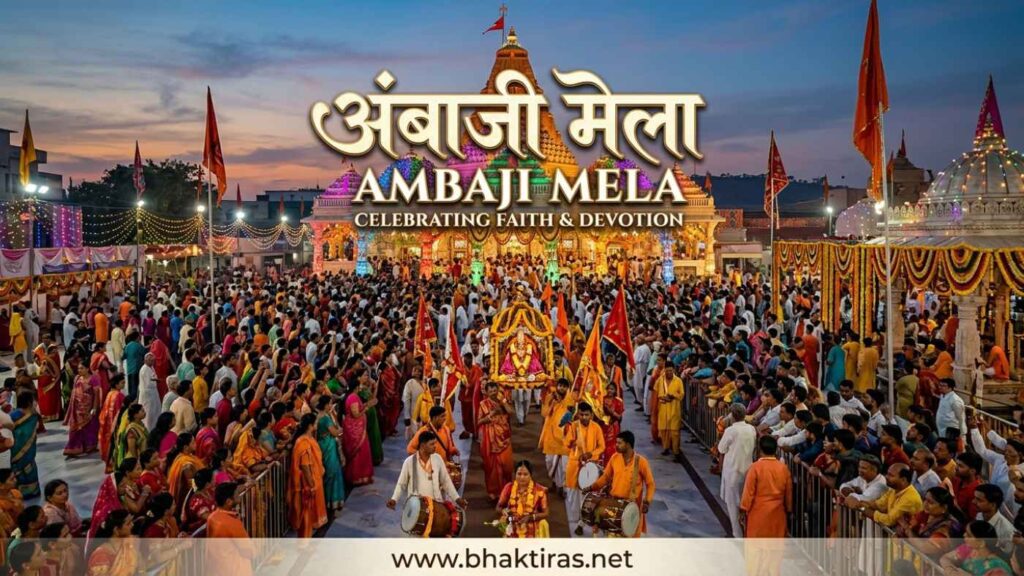
The Ambaji Bhadarvi Poonam Mela is one of Gujarat’s largest annual pilgrimages, held around the full-moon of Bhadrapada at the Ambaji temple in Banaskantha, near the Rajasthan border. Ambaji is counted among the 51 Shakti Peethas, the spot where the heart of Sati is said to have fallen. For about five days the small town swells with well over a million devotees, many of whom walk for days carrying flags, to seek darshan of the goddess Amba, who is worshipped here not as an idol but as the sacred Visa Yantra.
Ambaji Mela 2026-2028: Bhadarvi Poonam Dates
The mela climaxes on Bhadarvi Poonam, the full-moon night of the month of Bhadrapada. Because it follows the lunar Hindu calendar, the Gregorian date shifts by a couple of weeks each year.
| Year | Bhadarvi Poonam | Day | Notes |
|---|---|---|---|
| 2026 | 26 September | Saturday | Next occurrence – main fair day |
| 2027 | 15 September | Wednesday | Roughly five-day mela ends on this Poonam |
| 2028 | 3 September | Sunday | Falls earlier in September |
The fair is spread over the days leading up to Poonam, so pilgrims on padyatra typically set out about a week ahead to reach Ambaji in time for the full-moon darshan and aarti.
Why the Ambaji Mela Is Celebrated
The Ambaji Mela honours the goddess Amba at one of the 51 Shakti Peethas, the sacred sites marking where parts of Sati’s body fell to earth. Ambaji is revered as the place of her heart.
A Shakti Peetha of the heart
In the Puranic story of Sati’s self-immolation and Shiva’s grief, her body was scattered across the land, and each spot became a Shakti Peetha. Ambaji is honoured as the place where Sati’s heart came to rest, which gives the shrine its deep emotional pull for devotees.
Worship without an idol
There is no carved image of the goddess in the sanctum. Devotion centres on the Visa Yantra, an inscribed geometric diagram set into a niche in the wall. The tradition holds that the site is so old it predates idol worship, and the yantra is honoured by a priest whose eyes are kept covered.
Gabbar, the original seat
The hill of Gabbar, about two kilometres from the main temple, is regarded as the goddess’s first and original abode, with a small shrine in a cave near its peak. Many pilgrims climb Gabbar and light a jyot (flame) there as part of their visit.
One of Gujarat's great pilgrimages
For rural and urban Gujarat alike, walking to Ambaji for Bhadarvi Poonam is a treasured act of faith. The sheer scale, over a million pilgrims on the move, makes it one of the biggest religious gatherings the state sees each year.
The Deity Worshipped
The presiding deity is Amba, also called Ambaji or Arasuri Amba, a form of the mother goddess Shakti.
Amba (Ambaji)
Amba is the fierce and protective mother goddess, a form of Shakti and closely linked with Durga. At Ambaji she is worshipped through the Visa Yantra rather than an image, and devotees call on her for health, protection and family wellbeing. The name Arasuri Amba ties her to the Arasur hills in which the shrine sits.
The Pilgrimage, Step by Step
For most devotees the mela is a journey as much as a day of worship. A typical Bhadarvi Poonam pilgrimage unfolds roughly like this.
- The padyatra. Groups of pilgrims set out on foot from towns and villages across Gujarat, some walking for several days, carrying red flags and chanting the goddess’s name along roadside camps and service stalls.
- Arriving at Ambaji. Reaching the temple town, walkers rest, bathe and join the slow-moving darshan queues that wind through Ambaji during the fair days.
- Darshan of the Visa Yantra. Inside the sanctum devotees take darshan of the sacred yantra and the goddess’s adorned niche, offering prayers, coconuts and chunni (sacred cloth).
- Climbing Gabbar hill. Many continue to Gabbar, two kilometres away, climbing to the cave shrine at the top to honour the goddess’s original seat and light a jyot.
- Chachar chowk rituals. In the open square before the temple, priests perform havan and the ceremonial aarti that draws large crowds at the chachar chowk.
- Evening aarti and Garba. As night falls the aarti is sung and devotees dance Garba in the goddess’s honour, often through the night around the temple precinct.
- Offerings and mameru. Pilgrims present sweets, sukhdi and other bhog, and some families bring mameru offerings as part of vows fulfilled at the shrine.
Special Foods and Prasad
Food at the mela is simple Gujarati fare, from temple prasad to the community meals served along the pilgrim routes.
Sukhdi
The best-known Ambaji prasad is sukhdi, a dense fudge-like sweet made from wheat flour, jaggery and ghee. It travels well, which suits a pilgrimage, and is distributed and shared widely during the fair.
Mohanthal and pedas
Gram-flour mohanthal and milk pedas are common offerings and prasad, prepared in large quantities by sweet shops and volunteers through the mela days.
Community bhojan
Free meals of rotli, dal, rice and shaak are served at annakshetra kitchens and roadside camps, feeding the streams of walking pilgrims free of charge.
Where the Pilgrims Come From
Though the shrine sits in a single corner of North Gujarat, its pull reaches right across the state and into neighbouring Rajasthan.
Banaskantha and North Gujarat
Ambaji lies in Banaskantha district, close to the Rajasthan border, and villages across North Gujarat send large groups of foot pilgrims year after year.
Across Gujarat
Padyatra sanghs (walking groups) leave from Ahmedabad, Mehsana, Patan, Gandhinagar and further afield, converging on Ambaji in the days before Poonam.
Rajasthan and the diaspora
Devotees from nearby Rajasthan join the fair, and Gujarati families settled elsewhere in India and abroad time visits home to coincide with Bhadarvi Poonam.
Ambaji Mela Do's and Don'ts
A few practical points help pilgrims stay safe and respectful in the very large crowds.
Do
- Carry water, comfortable footwear and a hat if you are walking the padyatra.
- Follow the marked queue lines and the instructions of temple volunteers and police.
- Keep children close and agree a meeting point in case anyone is separated.
- Use the annakshetra and rest camps set up along the routes.
- Dress modestly and cover your head in the sanctum as a mark of respect.
Avoid
- Do not photograph or film inside the sanctum; the Visa Yantra darshan is not for cameras.
- Do not push in the darshan queues; the crush can be dangerous in peak hours.
- Do not carry large bags or valuables into the temple lines.
- Do not leave litter along the pilgrim routes or at Gabbar hill.
- Do not attempt the Gabbar climb in the dark without proper footing and light.
Frequently Asked Questions
When is the Ambaji Bhadarvi Poonam Mela in 2026?
The Ambaji Bhadarvi Poonam Mela peaks on Saturday, 26 September 2026, the Bhadrapada full-moon day. The fair runs for about five days in the run-up to that date at the Ambaji temple in Banaskantha, Gujarat.
When is the Ambaji Mela in 2027 and 2028?
Bhadarvi Poonam falls on 15 September 2027 (Wednesday) and on 3 September 2028 (Sunday). The mela date moves each year because it follows the lunar month of Bhadrapada.
Why is Ambaji a Shakti Peetha?
Ambaji is one of the 51 Shakti Peethas, the sites marking where parts of goddess Sati’s body fell after her death in the Puranic legend. Ambaji is revered as the place where her heart came to rest, which is why it draws such devotion.
Which goddess is worshipped at Ambaji?
The presiding deity is Amba, also called Ambaji or Arasuri Amba, a form of the mother goddess Shakti. She is honoured here for protection, health and family wellbeing.
Why is there no idol at Ambaji temple?
Ambaji temple has no carved image in the sanctum. Instead devotees worship the Visa Yantra, a sacred geometric diagram set into the wall. The tradition holds that the shrine is so ancient it predates idol worship.
What is Gabbar hill at Ambaji?
Gabbar hill, about two kilometres from the main temple, is regarded as the goddess’s original abode, with a cave shrine near its peak. Many pilgrims climb Gabbar and light a jyot as part of their visit.
How do pilgrims reach the Ambaji Mela?
A great many pilgrims walk to Ambaji on padyatra, setting out on foot from towns across Gujarat days in advance and carrying flags. Others come by bus and car; the fair provides food, water and rest camps along the routes.
What prasad is offered at Ambaji?
The signature Ambaji prasad is sukhdi, a wheat-flour, jaggery and ghee sweet, alongside mohanthal and pedas. Free community meals are also served at annakshetra kitchens during the mela.
May Amba Mata bless your journey to Ambaji this Bhadarvi Poonam. Jai Ambe.