
Lotus Festival Delhi 2026 – The City's Monsoon Flower Show
कमल महोत्सव
When is the Lotus Festival in Delhi in 2026?
The Lotus Festival in Delhi is a short civic garden event usually held around the monsoon and late-summer weeks, often in August, at a city garden such as the Garden of Five Senses. It is organised by Delhi’s parks and tourism bodies to display lotus and water-lily varieties in bloom, and the exact dates are announced fresh each year rather than fixed to a calendar. Check the Delhi Tourism or Delhi Parks and Gardens Society listing close to the date before you travel.
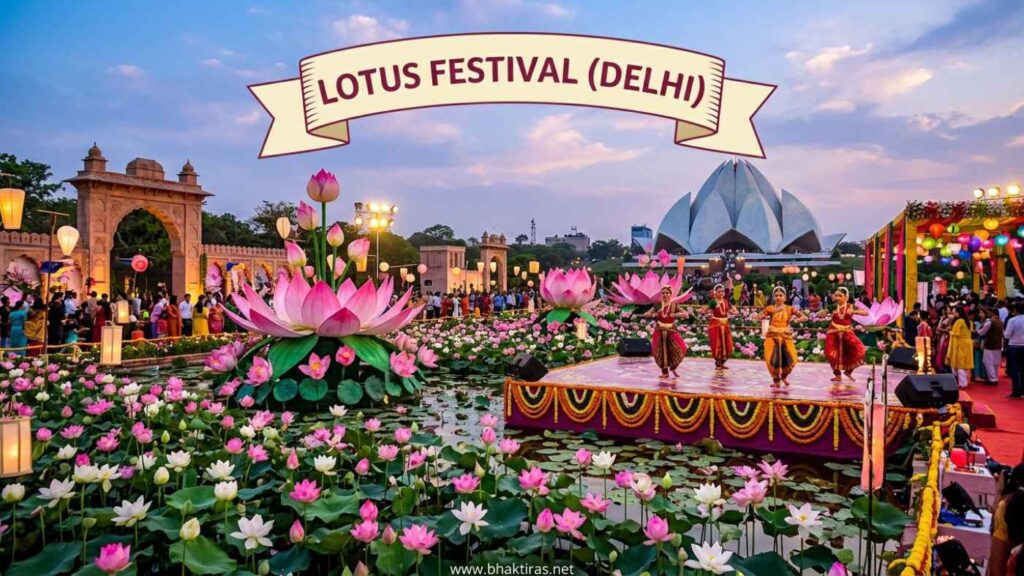
The Lotus Festival is one of Delhi’s quieter civic celebrations, a short flower show that the city’s parks and tourism bodies put on to mark the lotus and other aquatic blooms at their monsoon best. Rather than a temple festival, it is a garden day out: pools and tubs of lotus and water-lily varieties on display, plant and eco stalls, workshops on growing aquatic plants, and folk music or dance in the evening. It usually takes place at a green public space such as the Garden of Five Senses in south Delhi, over a day or two in the wetter, greener stretch of the year.
Lotus Festival Delhi 2026-2028: When It Is Held
This is a civic garden event, not a lunar-calendar festival, so it has no fixed tithi or date. It is usually timed to the monsoon and late-summer weeks when lotus and water lilies flower best, and the organisers confirm the actual days afresh each year.
| Year | Likely window | Season | Notes |
|---|---|---|---|
| 2026 | Around August (monsoon) | Late summer / monsoon | Timed to peak lotus bloom; dates announced by organisers |
| 2027 | Around August (monsoon) | Late summer / monsoon | Expected in the same monsoon window |
| 2028 | Around August (monsoon) | Late summer / monsoon | Approximate; awaits official dates |
Because the event follows the flowering season and the city’s programming rather than a set date, the days can shift by a few weeks from year to year and it may not run at all in a given season. If you are travelling specifically for it, confirm the schedule and venue through the official Delhi Tourism channels close to the time.
Why Delhi Holds a Lotus Festival
The festival celebrates the lotus – India’s national flower – and uses it to draw attention to the plant life of the city’s water bodies and gardens, and to the wider cause of urban greenery.
The lotus grows out of muddy, still water yet opens clean and bright above it, which is why it has long stood in Indian thought for purity rising above its surroundings. A festival built around it is partly a flower show and partly a nudge towards taking the city’s ponds, tanks and gardens more seriously.
A show of the national flower
The lotus (Nelumbo nucifera) is India’s national flower, and the festival gives it a proper stage – beds and tubs of different lotus and water-lily colours and forms, labelled so visitors can tell the varieties apart. For many city dwellers it is a rare close look at a plant they usually see only in pictures.
An eco and awareness event
Alongside the blooms, the festival carries a green message: how aquatic plants keep water bodies healthy, why urban ponds and wetlands matter, and how households can grow lotus and lilies at home. Stalls and short talks turn a pretty display into a small lesson in city ecology.
A civic day out
The event is free or low-cost and open to everyone, which makes it a gentle family outing rather than a ticketed spectacle. It fits Delhi Tourism’s habit of using the city’s gardens – as it does with the winter Garden Tourism Festival – to bring residents outdoors and show off local horticulture.
The Lotus in Indian Culture
This is a secular garden festival with no presiding deity, but the lotus it celebrates carries deep cultural and spiritual meaning in India that gives the event its resonance.
Seat of Lakshmi and Saraswati
In Hindu imagery the goddess Lakshmi is shown seated or standing on a lotus, and Saraswati too is linked with the flower. The lotus stands for prosperity, learning and a beauty that stays unstained by the water it grows from – which is why it recurs across temple art and prayer.
A shared sacred symbol
The lotus is meaningful well beyond one tradition. It appears in Buddhist and Jain art as a sign of spiritual awakening and purity, and Delhi’s own Bahai House of Worship, the Lotus Temple, takes its 27-petal shape from the flower – a reminder of how widely the image is shared.
India's national flower
The lotus was adopted as the national flower of India for its long-standing place in the country’s culture and its symbolism of purity and self-renewal. The festival leans on that status to make the case for protecting the waters where the plant naturally grows.
What Happens at the Festival
There is no ritual worship here; the day is built around flower displays, learning and light entertainment. A typical programme runs something like this.
- Lotus and water-lily displays. The centrepiece is rows of potted and pooled lotus and lily plants in different colours and sizes, usually labelled by variety so visitors can compare pink, white and other blooms up close.
- Aquatic plant stalls. Nurseries and growers set up stalls selling lotus tubers, water-lily plants, pots and pond kit, so keen visitors can take a plant home and try growing their own.
- Eco and awareness corners. Displays and short talks explain how aquatic plants clean and shelter water bodies, and why the city’s ponds, tanks and wetlands are worth protecting.
- Workshops and demonstrations. Hands-on sessions may cover potting a lotus, keeping a small water garden or basic pond care, aimed at families and first-time growers.
- Cultural performances. Folk music, dance or light classical items are often staged through the day or evening, turning the garden into a relaxed open-air venue.
- Food and craft stalls. Refreshment stalls serve Delhi snacks and drinks, and craft or plant sellers round out the fair-like feel.
- Family strolls and photography. Much of the appeal is simply walking the garden, photographing the blooms and spending an easy morning or evening outdoors.
What to Eat at the Lotus Festival
Food at the event is the usual Delhi garden-fair fare – street snacks and cooling drinks rather than any festival-specific dish – with the occasional healthy or eco stall.
Delhi street snacks
Stalls typically sell the city’s favourite chaats – golgappe, aloo tikki, papdi chaat – along with samosas and pakoras that go down well on a damp monsoon day. They are quick, cheap and easy to eat while wandering the beds.
Cooling drinks
Expect nimbu paani, lassi, sugarcane juice, chaas and cold coffee to beat the late-summer humidity. A cold drink in hand is close to essential while walking a garden in August.
Regional and eco food
Some editions bring in stalls of regional Indian food or healthier, organic-leaning fare in keeping with the green theme – millet snacks, fresh juices and simple home-style plates.
Sweets and ice cream
Kulfi, ice cream and Indian sweets are the natural finish to a garden outing, and vendors usually set up near the seating and performance area.
Lotus Festival Delhi Visitor Tips
A few practical pointers to enjoy the festival comfortably and to protect the plants and garden.
Do
- Confirm the dates and venue through the official Delhi Tourism listing before you set out.
- Go early in the day when the lotus blooms are freshest and open.
- Carry water, a hat and an umbrella – August in Delhi is hot and can rain.
- Use mosquito repellent, as water displays and monsoon weather draw insects.
- Reach the Garden of Five Senses easily via Saket metro, about a kilometre away.
Avoid
- Don’t assume the festival runs on a fixed date – it may shift or not run some years.
- Don’t pluck flowers, leaves or plants from the displays or pools.
- Don’t litter the garden; use the bins and keep the green space clean.
- Don’t step into the ponds or lean over the water beds for photos.
- Don’t expect a large religious event; it is a modest civic garden show.
Frequently Asked Questions
When is the Lotus Festival in Delhi in 2026?
The Lotus Festival in Delhi is a short civic garden event usually held in the monsoon and late-summer weeks, often around August, at a city garden such as the Garden of Five Senses. It has no fixed calendar date, so the organisers confirm the days afresh each year – check the official Delhi Tourism or Delhi Parks and Gardens Society listing close to the time.
Is the Lotus Festival a religious festival?
No, the Lotus Festival in Delhi is a secular eco and cultural event, not a religious one. It has no presiding deity or worship; instead it centres on displays of lotus and water-lily varieties, eco-awareness stalls, workshops and folk performances in a public garden.
Where is the Lotus Festival held in Delhi?
The Lotus Festival is typically held at a public green space in Delhi, most often the Garden of Five Senses in the Said-ul-Ajaib area of south Delhi, near Saket. The venue can vary by year, so confirm the location with the official listing before you travel.
Why is the lotus celebrated in India?
The lotus is celebrated because it is India’s national flower and a long-standing symbol of purity, prosperity and spiritual awakening. It grows clean out of muddy water, is linked with goddesses such as Lakshmi and Saraswati, and appears across Hindu, Buddhist and Jain art – which is why a festival built around it carries cultural weight even as a civic garden event.
What happens at the Delhi Lotus Festival?
The festival revolves around displays of lotus and water-lily varieties in pools and tubs, plant and eco stalls, workshops on growing aquatic plants, and cultural performances. Visitors walk the garden, photograph the blooms, buy plants and learn about the ecology of the city’s water bodies.
How much does it cost to attend the Lotus Festival?
The Lotus Festival is a low-cost or free public event, though the host garden may charge its usual small entry fee – the Garden of Five Senses, for example, charges a nominal ticket. There is no separate expensive festival ticket; check the current garden entry fee before you go.
Is the Lotus Festival good for families and children?
Yes, the Lotus Festival is a gentle, family-friendly outing. Children can see the flowers up close, join simple plant workshops and enjoy the open garden, while the eco-awareness theme makes it a light, educational day out rather than a crowded or ticketed spectacle.
How do I get to the Garden of Five Senses for the festival?
The Garden of Five Senses is in south Delhi and is easiest to reach by metro – Saket station on the Yellow Line is about a kilometre away, with autos and cabs available for the last stretch. Confirm the venue and timings on the official listing, since the festival location can change from year to year.
If you want a calm, green morning away from Delhi’s rush, a walk among the lotus pools is a lovely way to spend it – go see the national flower in full bloom.