
Baba Mohan Ram Mela 2027 – Dhuni Fair of a Folk Deity
बाबा मोहन राम मेला
When is the Baba Mohan Ram Mela in 2027?
The main Baba Mohan Ram Mela is held around Holi and Phalguna Purnima, so in 2027 it falls in the days after 22 March. Devotees gather at the Kali Kholi shrine in Bhiwadi and at temples across Haryana, Delhi-NCR and Rajasthan to keep the sacred dhuni fire and offer bhog. Smaller melas also take place on the Doj (second lunar day) of most months.
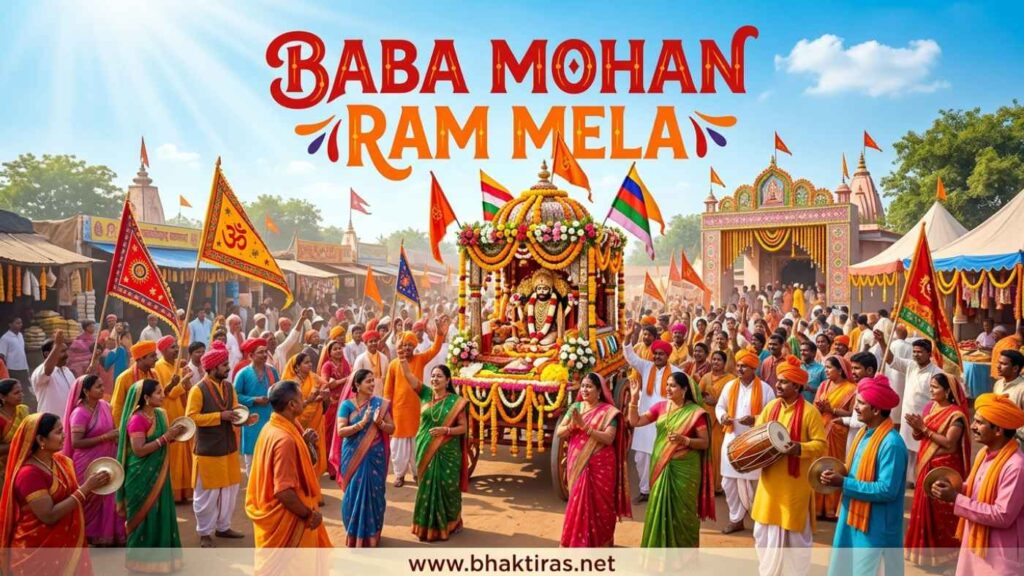
Baba Mohan Ram Mela is a folk fair that honours Baba Mohan Ram, a regional deity many devotees regard as a form of Krishna. His main shrine sits inside the Kali Kholi cave near Milkpur, Bhiwadi, where an ever-burning dhuni is tended, and his following is strong across Haryana (including Bhiwani), Delhi-NCR and eastern Rajasthan. The largest gathering comes around Holi and Phalguna Purnima in spring, though local temples also hold monthly melas on the Doj, the second lunar day.
Baba Mohan Ram Mela 2026-2028: Dates & Calendar
The main annual mela is tied to Holi and Phalguna Purnima, so its date shifts each year with the Hindu lunar calendar. Exact fair days are fixed locally by each temple trust; the dates below mark the Holi window the mela follows.
| Year | Holi window | Day | Notes |
|---|---|---|---|
| 2026 | 3-4 March | Tue-Wed | Holika Dahan 3 March, Holi 4 March; mela already held |
| 2027 | 21-22 March | Sun-Mon | Next main mela around this Holi window |
| 2028 | 11-12 March | Sat-Sun | Following year’s Holi window |
Alongside the spring fair, Baba Mohan Ram temples draw crowds on the Doj of each month and around Raksha Bandhan, so smaller melas recur through the year rather than only once.
Why the Baba Mohan Ram Mela Is Held
The mela is held to honour Baba Mohan Ram, a folk deity whose devotees keep his sacred dhuni fire alive and gather to give thanks for wishes fulfilled. It is community devotion more than a scripture-fixed festival.
A living folk tradition
Baba Mohan Ram is a regional deity rather than a pan-Indian one. His worship grew through oral tradition and family devotion among communities in Haryana, Delhi-NCR and Rajasthan, and the mela is the moment that scattered following comes together in one place.
The dhuni and akhand jyoti
At the heart of the worship is the dhuni, a sacred fire, and an akhand jyoti or eternal flame at the Kali Kholi shrine. Devotees offer ghee and uppla (cow-dung cakes) to the fire, and the fair is when this fire-centred devotion is at its most intense.
Thanksgiving and vows
Many devotees visit after a wish has been granted, coming to complete a vow, share their gratitude and feed others through a bhandara. The mood is one of thanksgiving, singing and community meals rather than elaborate ritual.
Who Is Worshipped
The mela is dedicated to Baba Mohan Ram, whom his followers venerate as a folk deity and often describe as a form of Krishna.
Baba Mohan Ram
Baba Mohan Ram is the folk deity at the centre of the fair. Devotees regard him as a protector who removes hardship, and many traditions link him to Krishna. His presence is felt through the dhuni fire and the akhand jyoti at Kali Kholi rather than through a single fixed image.
Link with Krishna
In the belief of his followers, Baba Mohan Ram is connected to Krishna, which places his worship within the wider Vaishnav fold. This is a devotional understanding held by the community, and different families express it in their own way.
Key Rituals of the Mela, Step by Step
The mela centres on a short pilgrimage, the sacred fire and shared food. The pattern below reflects how devotees commonly observe it.
- Dhauk (pilgrimage). Devotees travel to the shrine, many walking the final stretch, to pay their respects. This visit of homage is often called a dhauk.
- Darshan and offering. At the shrine they take darshan and offer items such as coconut, sweets and a chunri, and many pour ghee for the flame.
- Tending the dhuni. Ghee and uppla (cow-dung cakes) are offered to the dhuni, the sacred fire, which devotees keep burning as the focus of worship.
- Sacred ash and prasad. Devotees receive vibhuti (sacred ash) from the dhuni and prasad, carrying a little home as a blessing.
- Bhajan and jagran. Groups sing bhajans and hold night vigils in the deity’s honour, and drums and folk singing carry through the fairground.
- Bhandara (community meal). Families and temple committees run a bhandara, serving free food to all who come, which is a central act of the mela.
- Completing a vow. Those who came after a wish was granted complete their vow, often by sponsoring part of the bhandara or making an offering they had promised.
Food at the Baba Mohan Ram Mela
Food at the mela is simple north-Indian fare, most of it served free through the bhandara. These are dishes you are likely to be offered.
Kachori and sabji
Crisp fried kachori served with a spiced potato sabji is a staple of the fair kitchens and the bhandara, eaten off leaf plates by long rows of visitors.
Halwa
Sooji (semolina) halwa is a common prasad and bhandara sweet, cooked in large quantities in ghee and handed out warm.
Bhandara thali
The free community meal usually pairs puri or roti with a seasonal sabji and something sweet. Serving and eating together is part of the devotion, not just refreshment.
Boondi and pedas
Sweets such as boondi and pedas are bought at fair stalls to offer at the shrine and then shared, so the sweet returns to the family as blessed prasad.
Where the Mela Is Held
Though the main shrine is near Bhiwadi in Rajasthan, the deity’s following spreads across a wider belt, and local temples hold their own melas.
Kali Kholi, Bhiwadi (Rajasthan)
The principal shrine is the Kali Kholi cave near Milkpur, Bhiwadi, in eastern Rajasthan. This is where the akhand jyoti burns and where the largest crowds gather for the Holi-season fair.
Bhiwani and Haryana
Baba Mohan Ram has a devoted following in Haryana, including around Bhiwani, where community temples and gatherings mark his fairs and carry the dhuni tradition into the state.
Delhi-NCR
Across Delhi and the National Capital Region, neighbourhood temples dedicated to Baba Mohan Ram hold their own melas and bhandaras, especially around Holi and on the monthly Doj.
Baba Mohan Ram Mela Do's and Don'ts
A few simple points help you take part respectfully at the shrine and the mela.
Do
- Join the bhandara and eat the community meal; sharing food is part of the devotion.
- Treat the dhuni fire and its ash with respect and follow the sevadars’ guidance.
- Keep small children close in the large mela crowds.
- Carry your offering of coconut, sweets or ghee if you wish to present one.
- Confirm the exact fair dates and timings with the local temple before travelling.
Avoid
- Do not put anything into the sacred fire beyond what the temple permits.
- Do not treat the fairground as only an outing; it is first a place of worship.
- Do not waste bhandara food; take only what you will eat.
- Do not bring alcohol, tobacco or non-vegetarian food to the shrine.
- Do not block darshan queues or the fire area for photographs.
Frequently Asked Questions
When is the Baba Mohan Ram Mela in 2027?
The main Baba Mohan Ram Mela follows the Holi and Phalguna Purnima window, which in 2027 falls around 21-22 March, so the fair is held in the days after this. Temple committees set the exact programme locally, so confirm with the shrine before you travel.
When was the mela in 2026 and when is it in 2028?
In 2026 the Holi window fell on 3-4 March, so that year’s fair has already passed. In 2028 Holi falls around 11-12 March, so the mela will follow that window. The dates move each year with the Hindu lunar calendar.
Who is Baba Mohan Ram?
Baba Mohan Ram is a Hindu folk deity worshipped across Haryana, Delhi-NCR and Rajasthan, whom his devotees often regard as a form of Krishna. His main shrine is the Kali Kholi cave near Bhiwadi, where an eternal flame and a sacred dhuni fire are kept burning.
What is the dhuni at the mela?
The dhuni is the sacred fire that lies at the centre of Baba Mohan Ram’s worship, kept alive at the Kali Kholi shrine. Devotees offer ghee and uppla (cow-dung cakes) to it and receive its ash as a blessing, and tending this fire is the main act of the fair.
What is a dhauk in this tradition?
A dhauk is the pilgrimage of homage that devotees make to Baba Mohan Ram’s shrine, often walking the final stretch to pay their respects. Many undertake it after a wish has been granted, to give thanks and complete a vow.
Where is the Baba Mohan Ram Mela held?
The largest mela is at the Kali Kholi cave shrine near Milkpur, Bhiwadi, in eastern Rajasthan. Local temples across Haryana, including around Bhiwani, and throughout Delhi-NCR also hold their own melas and bhandaras in the deity’s honour.
What food is served at the mela?
The mela is known for its bhandara, a free community meal, usually of kachori with sabji, puri or roti, and a sweet such as sooji halwa. Sweets like boondi and pedas are also offered at the shrine and shared as prasad.
Are there melas at other times of the year?
Yes, besides the main Holi-season fair, Baba Mohan Ram temples hold gatherings on the Doj, the second lunar day of most months, and around Raksha Bandhan. So smaller melas and bhandaras recur through the year, not only in spring.
May Baba Mohan Ram keep your family’s dhuni bright and your path free of trouble. Jai Baba Mohan Ram.