
Jivitputrika Vrat 2026 – Jitiya Fast for a Child's Long Life
जीवित्पुत्रिका व्रत
When is Jivitputrika Vrat (Jitiya) in 2026?
Jivitputrika Vrat falls on Saturday, 3 October 2026. Also called Jitiya or Jiutiya, it is a strict nirjala (waterless) fast that mothers keep on Ashwin Krishna Ashtami for the long life and wellbeing of their children. The observance runs across three days – Nahay-Khay on 2 October, the fasting day on 3 October, and Paran on 4 October.
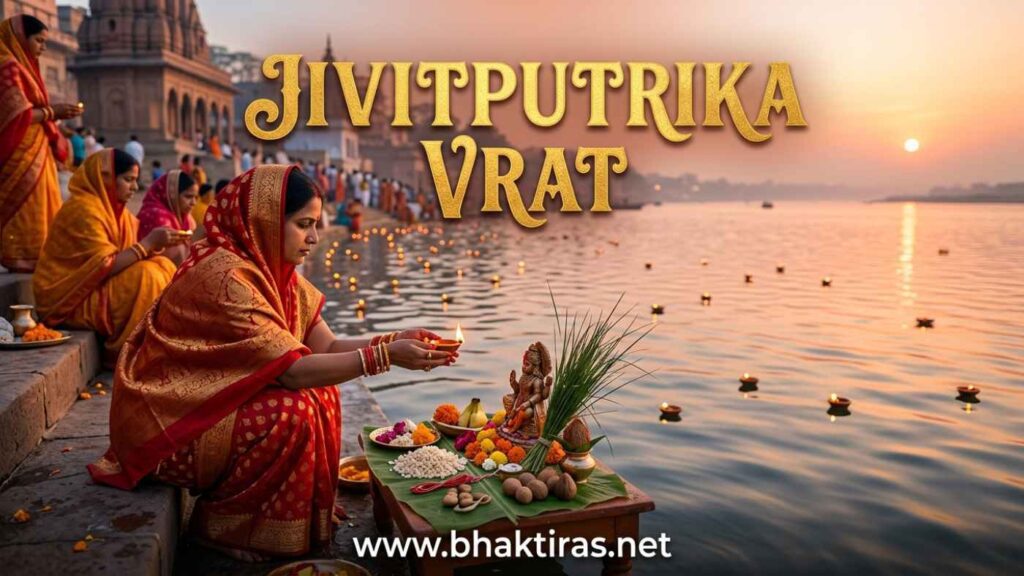
Jivitputrika Vrat, widely called Jitiya or Jiutiya, is one of the most demanding fasts a Hindu mother keeps. Falling on Ashwin Krishna Ashtami in September or October, it is a nirjala vrat – no food and not even a sip of water for roughly twenty-four hours – observed for the long life, health and success of her children. Rooted in the legend of Jimutavahana and the eagle-jackal story, and strongest in Bihar, Jharkhand and eastern Uttar Pradesh, the fast unfolds over three days: Nahay-Khay, the fasting day, and Paran.
Jivitputrika Vrat 2026-2028: Dates & Calendar
Jitiya 2026 falls on Saturday, 3 October. The date shifts each year because it is fixed to Ashtami of the Krishna Paksha in the lunar month of Ashwin, not to the Western calendar.
| Year | Fasting day | Day | Notes |
|---|---|---|---|
| 2026 | 3 October | Saturday | Next occurrence – Nahay-Khay 2 Oct, Paran 4 Oct |
| 2027 | 23 September | Thursday | Ashtami tithi through the day and night |
| 2028 | 12 September | Tuesday | Falls earlier as the lunar month advances |
In 2026 the Ashtami tithi begins at 07:59 AM on 3 October and ends at 05:51 AM on 4 October, so the fast is broken on the morning of 4 October after the tithi ends. Many families follow local Maithil and Bhojpuri panchang traditions for the exact Paran timing.
Why Jivitputrika Vrat Is Observed
Jivitputrika Vrat is observed by mothers as a vow for the long life, health and prosperity of their children. The very name means ‘the one whose children live’, and the fast is offered so that no harm reaches them.
The vrat sits within the Pitru Paksha fortnight, the ancestral half-month, which gives it a quiet second layer of meaning. Alongside praying for living children, many women remember departed elders and the continuity of the family line, linking the wellbeing of the young to the blessings of the ancestors.
A mother's vow
The heart of Jitiya is a personal promise. A mother goes without food and water for a full day and night, and in that discipline she asks for her children to be protected from illness, accident and early loss. In families where the fast has passed down for generations, keeping it is also a way of honouring one’s own mother and grandmother.
Why nirjala
The fast is deliberately nirjala – without even water – to make it a true test of resolve. In folk belief the harder the vow, the stronger the protection it earns. Older women, and those who are unwell or pregnant, are usually advised to take a gentler fast or skip it, since the intention matters more than the strain.
The Jimutavahana thread
The observance is tied to Jimutavahana, a selfless prince of the Chandravamsha lineage who offered his own body to save a naga youth from Garuda, the eagle king. His compassion, which spared a mother her son, became the model for a fast in which mothers plead for their own children’s lives.
Deities & Figures Honoured
Jivitputrika Vrat centres on Jimutavahana, the compassionate prince whose story gives the fast its meaning. The presiding form worshipped on the day is Jivitputrika, imagined as the guardian of children’s lives.
Jimutavahana
A prince remembered for surrendering his own life to Garuda so that a naga mother would not lose her son. Women recite or listen to his katha on the fasting day, and his self-sacrifice is the reason the vrat is believed to shield children from death.
Jivitputrika
The deity of the vow, whose name carries the blessing ‘may your child live’. A small clay or cow-dung image is often shaped for the puja, and offerings are placed before it during the katha.
The eagle and the she-jackal
Two figures from the accompanying folk tale, the chil (eagle) and the siyarin (she-jackal), who once observed this fast together. Their story, told alongside the katha, explains why sincerity of heart, not mere ritual, decides whether the vow bears fruit.
The Three Days, Step by Step
Jitiya is spread across three named days. Each has its own food, mood and small acts of preparation.
- Day 1 – Nahay-Khay (2 October 2026). The observer bathes early, often in a river or pond, and eats a simple sattvic meal cooked in pure ghee or mustard oil. This single satisfying meal is meant to carry her through the fast to come.
- Pre-dawn Sargahi / Ontheng. In many Maithil and Bhojpuri homes, just before dawn on the fasting day, women eat a final light meal – often including noni (jhor) saag and a little rice – before the nirjala vow begins with sunrise.
- Day 2 – The fast begins (3 October 2026). From sunrise the mother takes neither food nor water. She keeps herself clean, calm and away from anger and gossip, holding the vow through the full day and into the night.
- Puja and katha. A small image of Jivitputrika, sometimes with figures of Jimutavahana, the eagle and the she-jackal, is set up. The observer offers flowers, rice, sindoor and simple sweets, then listens to the vrat katha that explains the legend.
- Kushi grass and the child’s blessing. Women often wear or hold kush grass and tie a red-yellow thread; in some households the story is read aloud with the children present so the blessing falls directly on them.
- Night vigil. The nirjala fast continues overnight. Families gather to sing traditional Jitiya songs and retell the katha, keeping the mood devotional rather than festive.
- Day 3 – Paran (4 October 2026). After the Ashtami tithi ends the next morning, the mother breaks her fast. She first drinks water, then eats the special Paran foods – thekua, marua (ragi) roti, noni saag and rice – marking the vow completed for another year.
Special Foods of Jitiya
The food of Jitiya is regional and rustic – millet, leafy greens and jaggery-sweet snacks eaten either before the fast or at Paran, never during it.
Thekua
A deep-fried wheat-flour and jaggery biscuit, firm and lightly sweet, shaped by hand or in wooden moulds. Thekua is the signature Paran snack, the same treat that returns at Chhath a few weeks later, and it keeps well for days.
Noni (jhor) saag
A tangy leafy green, also called khatta saag or noni ka saag, cooked simply and eaten at Nahay-Khay and Paran. Folk wisdom holds that it settles the stomach and prepares the body to break a long nirjala fast gently.
Marua roti
Flatbread of marua, the local name for ragi or finger millet, dark and earthy in taste. Rich in iron and calcium, it is a nourishing food to return to after a full day without water.
Rice and simple dal
Plainly cooked rice, often with a light dal or vegetable, forms the base of both the Nahay-Khay meal and the Paran plate. The cooking stays sattvic – no onion or garlic – in keeping with the vrat.
Regional Names & Variations
Jitiya is kept across the Bihar-Jharkhand-eastern UP belt and in the Nepal Terai, with small differences in name, timing and food.
Bihar & eastern Uttar Pradesh
Known as Jitiya or Jiutiya, it is a major women’s fast in the Bhojpuri and Magahi districts. The three-day rhythm of Nahay-Khay, the fast, and Paran is followed closely, and thekua is the fixed Paran sweet.
Jharkhand
Celebrated with strong tribal and folk colour, especially among Maithil and Magahi communities. Marua roti and local saag feature more prominently here, and community singing of Jitiya songs is common on the fasting night.
Mithila region
In the Maithil heartland of north Bihar the vrat carries elaborate katha traditions, with the Jimutavahana and eagle-jackal stories recited in Maithili. Small clay images of the deity are shaped at home for the puja.
Nepal Terai
Observed as Jitiya Parva in the Madhesh and Terai plains, where it is a recognised occasion for Maithil and Bhojpuri families. The rituals mirror those across the border in Bihar, sharing the same three-day structure and foods.
Jivitputrika Vrat Do's and Don'ts
A few simple guidelines help keep the fast safe and sincere.
Do
- Eat a full, wholesome Nahay-Khay meal the day before so the body is prepared.
- Keep the puja area, clothes and yourself clean through the fasting day.
- Listen to or read the Jimutavahana katha with a calm, focused mind.
- Break the fast at Paran gently, starting with water and light food like saag.
- Let elderly, pregnant or unwell women take a fruit or water fast instead of nirjala.
Avoid
- Do not take food or water once the nirjala fast has begun at sunrise.
- Do not break the fast before the Ashtami tithi ends on Paran morning.
- Do not cook with onion, garlic or non-vegetarian ingredients during the vrat.
- Do not let anger, quarrels or harsh words disturb the day of the vow.
- Do not push through severe dizziness or ill health – the intention counts more than strain.
Frequently Asked Questions
When is Jivitputrika Vrat (Jitiya) in 2026?
Jivitputrika Vrat in 2026 falls on Saturday, 3 October. It is observed on Ashwin Krishna Ashtami, with Nahay-Khay on 2 October and Paran on 4 October after the tithi ends. Mothers keep a strict nirjala fast on the main day for their children’s long life.
When is Jitiya in 2027 and 2028?
Jitiya falls on Thursday, 23 September 2027 and on Tuesday, 12 September 2028. The date moves each year because it is tied to Ashtami of the Krishna Paksha in the lunar month of Ashwin rather than a fixed Western date. It usually lands in September or early October.
Why is Jivitputrika Vrat observed?
Jivitputrika Vrat is observed by mothers as a vow for the long life, health and success of their children. The name itself means ‘the one whose children live’, and the fast is linked to the legend of the selfless prince Jimutavahana. It is one of the most demanding fasts because it is kept without food or water.
What does nirjala fasting mean in Jitiya?
Nirjala means the fast is kept without even a drop of water, from sunrise on the fasting day until the fast is broken at Paran the next morning. In Jitiya this makes the vow especially strict, lasting roughly twenty-four hours. Elderly, pregnant or unwell women are advised to take a gentler fruit or water fast instead.
What is the story behind Jitiya?
Jitiya is linked to Jimutavahana, a prince who offered his own life to Garuda, the eagle, to save a naga mother’s son. A companion folk tale of an eagle and a she-jackal who kept the fast teaches that sincerity of heart decides its reward. Both stories are told as the vrat katha on the fasting day.
What foods are eaten during Jivitputrika Vrat?
During Jitiya food is eaten only before and after the fast, never on the fasting day itself. The Nahay-Khay and Paran meals feature thekua, noni (jhor) saag, marua (ragi) roti and rice. Thekua, a jaggery-sweet fried snack, is the signature treat of the Paran plate.
Where is Jitiya mainly celebrated?
Jitiya is mainly celebrated in Bihar, Jharkhand and eastern Uttar Pradesh, and in the Nepal Terai. It is also kept by Maithil and Bhojpuri families living elsewhere in India and abroad. The three-day pattern of Nahay-Khay, fasting day and Paran is common across all these regions.
How are the three days of Jitiya observed?
The three days of Jitiya are Nahay-Khay, the fasting day and Paran. On Nahay-Khay the mother bathes and eats a simple sattvic meal; on the second day she keeps a nirjala fast and does the puja and katha; on Paran she breaks the fast with special foods after the Ashtami tithi ends.
May every mother’s vow be answered with the long life and happiness of her children. Jitiya ki hardik shubhkamnayein.