
Tamladu Festival 2027 – Mishmi Prayer for the Earth and Water
When is Tamladu in 2027?
Tamladu falls on Monday, 15 February 2027. It is an indigenous festival of the Digaru and Miju Mishmi tribes of Arunachal Pradesh, held on a fixed 15 February each year. The community prays to the Earth God and the Water God for protection from natural calamities and for the wellbeing of people, crops and cattle.
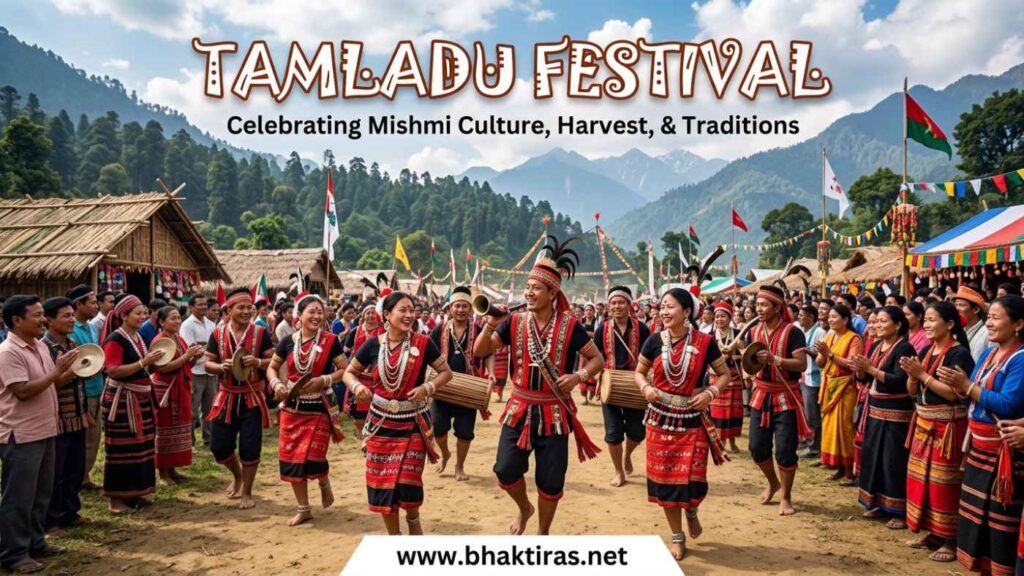
Tamladu is a one-day festival of the Digaru and Miju Mishmi tribes of Arunachal Pradesh, observed on 15 February each year across the Lohit, Dibang and Anjaw valleys. Its heart is a prayer for safety: village priests appeal to the Earth God and the Water God to hold back earthquakes, floods and epidemics, and to keep people, standing crops and cattle in good health. The word itself points to the rite, and the day closes with Mishmi dances, folk songs and a shared feast as winter gives way to spring.
Tamladu 2026-2028: Dates & Calendar
Tamladu is fixed to 15 February every year, so unlike lunar Hindu festivals it does not shift. The next observance falls on Monday, 15 February 2027.
| Year | Date | Day | Notes |
|---|---|---|---|
| 2026 | 15 February | Sunday | Observed |
| 2027 | 15 February | Monday | Next occurrence |
| 2028 | 15 February | Tuesday | Observed |
The largest public gatherings take place around Tezu in Lohit district, where families, priests and dancers come together for the community rites.
Why Tamladu Is Celebrated
Tamladu is celebrated to seek protection from natural calamities and to ask for the wellbeing of people, crops and cattle. It is the Mishmi community’s yearly plea to the forces of nature as spring approaches.
Protection from disaster
The central purpose is safety. Living in a seismically active, monsoon-prone corner of the eastern Himalayas, the Mishmi pray to the Earth God and the Water God to spare their villages from earthquakes, landslides, floods and epidemics through the coming year.
Harvest and livestock
Alongside protection, the rites ask for a good farming year. Priests offer prayers for the health of standing crops, garden plots and domestic animals, on which the hill households depend for food and trade.
A marker of Mishmi identity
Tamladu is one of the defining festivals of the Digaru and Miju Mishmi. Held to a shared February date across the Lohit and Anjaw hills, it draws scattered clans together and keeps their language, dress and dance forms alive.
Turning of the season
The 15 February date sits at the close of winter. The festival doubles as a welcome to the approaching spring and, in many villages, to the new working year in the fields.
Deities & Figures Worshipped
Tamladu is addressed to the nature gods of the Mishmi world, chiefly the Earth God and the Water God, invoked together for protection. These are indigenous deities, distinct from the Hindu pantheon.
The Earth God
The god of the earth is petitioned to keep the ground steady and the soil giving. In a region shaken by frequent tremors, this appeal for firm, safe land sits at the core of the festival.
The Water God
The god of water is asked to send rain in measure and to hold back destructive floods along the Lohit and its tributaries. Together with the Earth God, this figure carries the festival’s protective prayer.
Nani Intaya (Mother Earth)
The Mishmi honour the earth as a mothering presence, addressed by names such as Nani Intaya. The relationship is one of respect and dependence rather than fear, thanking the land while asking for its mercy.
The supreme god
Above the nature spirits, the Mishmi recognise a supreme deity to whom the wider welfare of the people, crops and cattle is commended. Names vary between the Digaru and Miju clans, but the appeal for overall prosperity is shared.
Key Rituals, Step by Step
Tamladu is guided by village priests, who lead the community through prayers and offerings before the day opens into dancing and feasting. The order below reflects the typical flow of the day.
- Preparing the enclosure. An area around the house or village is readied for the rites, giving the day its ritual space. Families gather in their finest Mishmi dress.
- Priestly invocation. The village priest opens the ceremony, chanting to call on the Earth God and the Water God and to set out the community’s requests for the year.
- Offerings and sacrifice. Ritual offerings are made on the priest’s instruction, including animal sacrifices, understood by the community as gifts of appeasement to the nature gods.
- Prayers for protection. The gathering prays together against earthquakes, floods and epidemics, and for the safety of the village through the coming months.
- Blessings for crops and cattle. Further prayers ask for healthy standing crops, productive gardens and strong domestic animals in the farming year ahead.
- Folk dance. With the rites complete, the mood lifts into Mishmi dances such as the rhythmic Tanggong, performed in lines with drumming and song.
- Community feast. The day closes with shared food and locally brewed rice beer, as neighbours and visiting clans eat, sing and celebrate the change of season.
Special Foods of Tamladu
Tamladu food is hill fare centred on rice, meat and the community’s home-brewed rice beer, laid out for the shared feast that follows the rituals.
Rice beer
Locally fermented rice beer is the drink of the day, brewed at home and passed around the gathering. It is offered to guests and shared through the feasting and dancing that close the festival.
Meat dishes
Meat features strongly, some of it from the ritual offerings. Pork and other hill meats are cooked simply, often smoked or boiled, and eaten with rice as the main festival meal.
Rice and millet
Steamed rice is the staple of the feast, sometimes joined by millet preparations. These grains carry the meal and are shared across households through the day.
Foraged greens and roots
Wild leafy greens, bamboo shoot and root vegetables from the surrounding forest and gardens round out the plates, reflecting the Mishmi kitchen’s reliance on what the hills provide.
Regional Names & Variations
Tamladu is shared across the Mishmi hills of eastern Arunachal Pradesh, with local differences between the Digaru and Miju clans and their home valleys.
Digaru Mishmi
The Digaru Mishmi of the Lohit and Dibang region are closely linked with Tamladu, and the name Tamla-du, referring to the ritual performed in an enclosure, comes from their tradition.
Miju Mishmi
The Miju Mishmi, settled further into the Anjaw and upper Lohit valleys, keep the same 15 February observance, praying to the nature gods for protection and good harvests with their own priestly and clan customs.
Tezu and the Lohit valley
The largest public celebrations gather around Tezu in Lohit district, where clans converge for the community rites, dances and feast, making it the best-known focal point of the festival.
Tamladu Do's and Don'ts
A short guide for taking part in or attending Tamladu with respect.
Do
- Follow the lead of the village priest during the prayers and offerings.
- Dress modestly and join the community feast when welcomed.
- Accept rice beer or food offered by hosts as a gesture of goodwill.
- Ask before photographing rituals, priests or sacred spaces.
- Treat the prayers for protection from disaster with seriousness and respect.
Avoid
- Do not treat the animal offerings or rites as a spectacle or curiosity.
- Do not disturb the ritual enclosure or step into it uninvited.
- Do not frame Mishmi indigenous belief through an outsider’s assumptions.
- Do not interrupt the priest’s chanting or the community prayers.
- Do not overlook that this is a sacred day, not only a tourist event.
Frequently Asked Questions
When is Tamladu in 2027?
Tamladu falls on Monday, 15 February 2027. The festival is held on a fixed 15 February date every year, so it does not move with the lunar calendar. It is observed by the Digaru and Miju Mishmi of Arunachal Pradesh.
When is Tamladu in 2026 and 2028?
Tamladu is on 15 February in both years, because the date is fixed to the solar calendar. In 2026 it falls on Sunday, 15 February, and in 2028 on Tuesday, 15 February. Only the weekday changes from year to year.
Why is Tamladu celebrated?
Tamladu is celebrated to pray for protection from natural calamities such as earthquakes, floods and epidemics, and for the wellbeing of people, crops and cattle. The Mishmi address these prayers to the Earth God and the Water God. The day also welcomes the coming spring.
Which gods are worshipped during Tamladu?
The Earth God and the Water God are the main deities worshipped during Tamladu, invoked together for protection and prosperity. The Mishmi also honour the earth as a mothering presence known by names such as Nani Intaya, and commend the wider welfare of the community to a supreme deity. These are indigenous Mishmi gods, not part of the Hindu pantheon.
Which tribe celebrates Tamladu?
Tamladu is celebrated by the Digaru and Miju Mishmi tribes of Arunachal Pradesh. It is one of their defining festivals, observed mainly in the Lohit, Dibang and Anjaw valleys, with large gatherings around Tezu in Lohit district.
What happens during Tamladu?
During Tamladu, village priests lead prayers and offerings, including animal sacrifices, to the Earth and Water gods for protection and good harvests. The rites are followed by Mishmi folk dances such as the Tanggong, folk songs, and a community feast with rice beer. The whole day is spent in shared worship and celebration.
What does the name Tamladu mean?
The name Tamladu comes from the Mishmi words for an enclosure and a ritual, so it refers to a rite performed in an enclosed space around a house or village. This enclosure is where the priest conducts the prayers and offerings that form the core of the festival.
What foods are eaten at Tamladu?
Tamladu food is built around rice, meat and home-brewed rice beer, shared at the community feast after the rituals. Pork and other hill meats, steamed rice, foraged greens and bamboo shoot are common, reflecting the everyday Mishmi kitchen. Rice beer is passed around through the feasting and dancing.
May the Earth and the Water keep your village safe and your fields full. A joyful Tamladu to the Mishmi hills.