
Chalo Loku 2026 – Nocte Harvest Thanksgiving Festival
When is Chalo Loku in 2026?
Chalo Loku is celebrated centrally on 25 November 2026, running for three days to 27 November. It is the main post-harvest thanksgiving festival of the Nocte tribe of Tirap district, Arunachal Pradesh. Individual villages fix their own start from the waxing moon, so local dates in October and November can vary slightly.
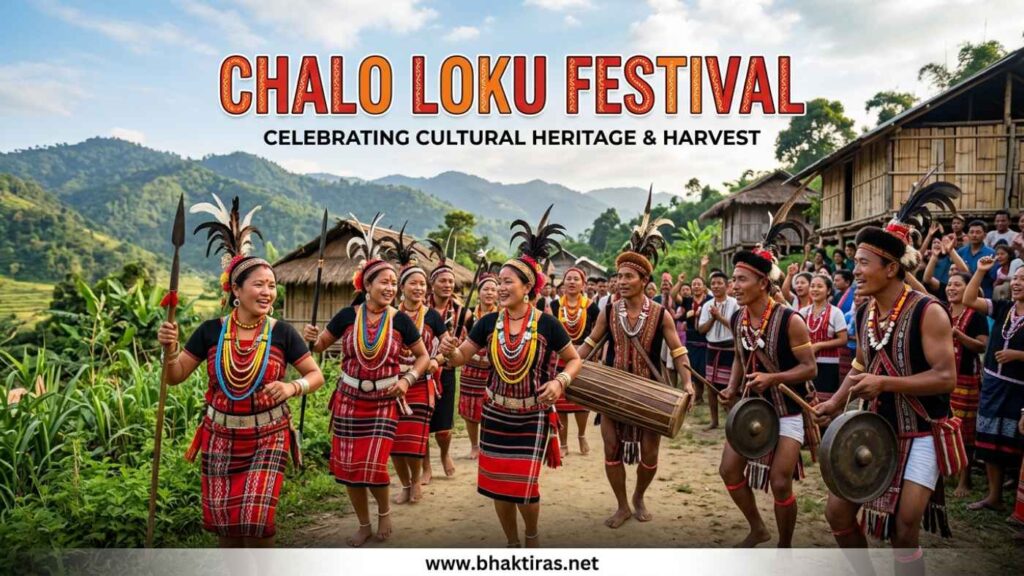
Chalo Loku is the biggest festival of the Nocte people of Tirap district in south-eastern Arunachal Pradesh, held each year once the paddy is in. Over three days the community thanks the supreme spirit Rang and its ancestors for the harvest, slaughters pigs and buffalo for a shared feast, reads egg omens to choose next year’s fields, and dances the vigorous Chalo through the night in bright red woven cloth. The village chief, the Lowang, leads every rite. The centralised celebration is fixed on 25 November.
Chalo Loku 2026-2028: Dates & Calendar
Chalo Loku is celebrated centrally on 25 November each year and runs for three days. The next observance begins on 25 November 2026.
| Year | Central Date | Day | Notes |
|---|---|---|---|
| 2025 | 25 November | Tuesday | Past occurrence |
| 2026 | 25-27 November | Wednesday | Next occurrence, three days |
| 2027 | 25-27 November | Thursday | Three days |
| 2028 | 25-27 November | Saturday | Three days |
Because village dates follow the moon rather than a single calendar, the three phases in a given hamlet may not line up exactly with the headquarters programme at Khonsa. If you plan to visit, confirm the local schedule with the district administration or the host village.
Why Chalo Loku Is Celebrated
Chalo Loku is a thanksgiving for the completed harvest and a request for a good year ahead. The Nocte offer gratitude to Rang, the supreme power, and to their ancestors for food, health and peace.
The name itself carries the meaning. Loku comes from Lofe, to drive out, and Rang-Ku, the season, so the festival is understood as driving out the old year to make room for the new. After the Ahu paddy is reaped, the community pauses to acknowledge that the granaries are full and that the hard months of clearing and cultivating jhoom fields are behind them.
Harvest thanksgiving
The festival closes the farming cycle. Families set aside part of the new rice for the feast and the brewing of beer, turning the yield straight back into a shared celebration rather than private storage alone.
Gratitude to Rang and ancestors
Prayers are offered to Rang, the supreme spirit, and to forebears who cleared the same hillsides. The Nocte thank them for the harvest and ask for peace and wellbeing for every living thing in the coming season.
Reading the year ahead
On the final day elders and the chief break eggs and read the shapes inside as omens. The signs guide which jhoom plots to open for the next round of cultivation, tying the celebration directly to the survival of the village.
Clan and village bonds
Every household contributes rice, and everyone eats and dances together at the chief’s courtyard. The three days renew ties between clans and reaffirm Nocte identity across the villages of Tirap.
Whom the Nocte Honour
Chalo Loku is an indigenous festival rather than a temple worship. The Nocte address Rang, the supreme spirit, together with ancestral spirits, and the living chief holds the central ceremonial role.
Rang
Rang is the almighty power the Nocte thank for the harvest and petition for a healthy, peaceful year. Offerings and prayers through the festival are directed to Rang for the welfare of the whole community.
Ancestors
The spirits of ancestors who first settled and farmed the hills are remembered and thanked. Honouring them keeps the link between past and present generations of the clan alive.
The Lowang (chief)
The Lowang, the hereditary Nocte chief, leads the rites. Elders gather at his house, prayers at the village edge are said in his presence, and the main dancing happens in his courtyard, so his home is the ceremonial heart of Loku.
The Three Phases, Step by Step
Chalo Loku unfolds over three named days: Phamlamja, Chamkatja and Thanlangja. Each has its own tasks, from preparing the feast to reading omens for the fields.
- Preparation. Young people collect Kow leaves to fold into vessels, gather firewood, and go house to house collecting each family’s rice contribution for the common feast and brewing.
- Phamlamja (Day 1). The opening day begins with the slaughter of pigs and buffalo. Rice beer is prepared in quantity and the articles for entertainment are readied while village elders meet at the chief’s residence.
- Chamkatja (Day 2), prayer. Villagers gather at the Chaatam on the village outskirts, where the Lowang leads prayers for community welfare and a good harvest before a shared meal.
- Chamkatja (Day 2), the night dance. The dancing, called Chamwangboang, opens with blank gunfire at the chief’s house and continues in full ceremonial dress. The Chalo dance carries on until dawn.
- Thanlangja (Day 3), egg omens. Elders and the chief break eggs collected from the households and read the shapes to select the jhoom plots for the next year’s cultivation.
- Thanlangja (Day 3), visiting and feasting. Families move from house to house sharing food and rice beer, strengthening bonds across clans in an open round of hospitality.
- The Chalo dance at Songlongthong. Everyone converges on the chief’s courtyard, the Songlongthong, for the community Chalo dance in bright red attire, the visual high point of the festival.
- Farewell. The three days close with farewell songs, marking the old season driven out and the new year begun.
Special Foods of Chalo Loku
The feast is built from the new harvest and the animals offered at the start. Rice, pork and home-brewed rice beer sit at the centre of every table.
Rice beer
Locally brewed rice beer is the highlight of Loku. Prepared in bulk on the first day, it flows through the prayers, the visiting and the night-long dancing, and sharing a cup is itself a mark of welcome.
Pork
Pigs are among the animals slaughtered on Phamlamja, and pork is the main festive meat. It is cooked simply, often boiled or smoked, and served to guests and neighbours across the three days.
Buffalo meat
Buffalo are also offered at the opening of the festival, and the meat is distributed for the community feast. The sharing of the slaughter is part of what binds households together during Loku.
New rice
The freshly reaped Ahu paddy is cooked as plain rice and used in the beer. Serving the season’s own grain closes the loop between the harvest just gathered and the celebration that thanks for it.
Leaf-wrapped fare
Food is often prepared and served in Kow leaves that the young people gather beforehand. Vegetables, herbs and meat from the hills round out the plates set before family and visitors.
Where Chalo Loku Is Celebrated
Chalo Loku belongs to the Nocte of Tirap, but it is observed across the eastern belt of Arunachal Pradesh where the community lives among the Patkai hills.
Khonsa and Tirap headquarters
The centralised celebration on 25 November is held at Khonsa, the district headquarters. With Khonsa sitting at the heart of the Nocte population, it is the best place to see the full sweep of red attire and the community Chalo dance.
Nocte villages of Tirap
Individual villages hold their own Loku on dates set by the waxing moon, some in October and some in November. Each hamlet centres the rites on its own chief’s house and courtyard.
Eastern Arunachal Pradesh
Beyond Tirap the festival is marked across the eastern part of the state wherever Nocte families have settled, keeping the harvest tradition alive within the wider Patkai region.
Chalo Loku Do's and Don'ts
A short guide for visitors who want to take part respectfully in an indigenous community festival.
Do
- Ask the host village or district office for the correct local dates before travelling.
- Accept rice beer and food when offered; sharing a cup is a gesture of welcome.
- Dress modestly and follow the lead of elders during the prayers at the Chaatam.
- Ask before photographing the chief, the rituals or people in ceremonial dress.
- Learn a few Nocte greetings and thank your hosts for their hospitality.
Avoid
- Do not treat the animal offerings or egg omens as spectacle; they are sacred to the community.
- Do not interrupt the Lowang’s prayers or the night dancing at the chief’s house.
- Do not enter a chief’s courtyard or private ceremony uninvited.
- Do not assume a single fixed date for every village; the moon sets local timing.
- Do not overindulge in rice beer to the point of disrespecting your hosts.
Frequently Asked Questions
When is Chalo Loku in 2026?
Chalo Loku is celebrated centrally on 25 November 2026 and runs for three days to 27 November. This is the fixed headquarters date at Khonsa in Tirap district; individual Nocte villages may hold their own Loku slightly earlier in October or November based on the waxing moon.
When is Chalo Loku in 2027 and 2028?
The central Chalo Loku date stays on 25 November each year, so it falls on 25-27 November 2027 and again on 25-27 November 2028. Village-level dates around this period vary because elders fix them by counting the digits of the waxing moon.
Why is Chalo Loku celebrated?
Chalo Loku is celebrated as a post-harvest thanksgiving by the Nocte tribe. After the Ahu paddy is reaped, the community thanks the supreme spirit Rang and its ancestors for the harvest and asks for peace, health and a good year ahead. The name means to drive out the old season.
Which tribe celebrates Chalo Loku and where?
Chalo Loku is the main festival of the Nocte tribe of Tirap district in south-eastern Arunachal Pradesh, in the Patkai hills. The largest centralised celebration takes place at Khonsa, the district headquarters, though the festival is observed across the eastern part of the state.
What are the three days of Chalo Loku?
Chalo Loku has three phases. Phamlamja, the first day, opens with the slaughter of pigs and buffalo and the brewing of rice beer. Chamkatja, the second, brings prayers led by the chief and night-long dancing. Thanlangja, the third, involves egg omens to pick next year’s fields, visiting and a final community dance.
What is the Chalo dance?
The Chalo dance is the vigorous community dance performed by the Nocte during the festival, mainly in the chief’s courtyard on the final days. Dancers wear bright red traditional attire, and the dance gives the celebration part of its name and its most striking visual moment.
What food and drink are served at Chalo Loku?
Rice beer is the highlight of Chalo Loku, brewed in quantity and shared throughout the three days. The feast centres on pork and buffalo meat from the animals offered at the start, along with plain rice from the new harvest and leaf-wrapped dishes prepared in gathered Kow leaves.
What role does the chief play in Chalo Loku?
The Lowang, the hereditary Nocte chief, leads Chalo Loku from start to finish. Elders gather at his house to plan the festival, he leads the prayers for the community’s welfare, and the main dancing takes place in his courtyard, making his home the ceremonial heart of the celebration.
May the new harvest bring peace and plenty to every Nocte home this Chalo Loku.