
Nyokum 2027 – The Nyishi Festival of Land and Togetherness
When is Nyokum in 2027?
Nyokum (also Nyokum Yullo) falls on 26 February 2027, a Friday. It is the principal festival of the Nyishi people of Arunachal Pradesh, who invoke the goddess Nyokum for a good harvest, prosperity and harmony among all beings. The main rites run on 26 February, with community gatherings continuing for about two days.
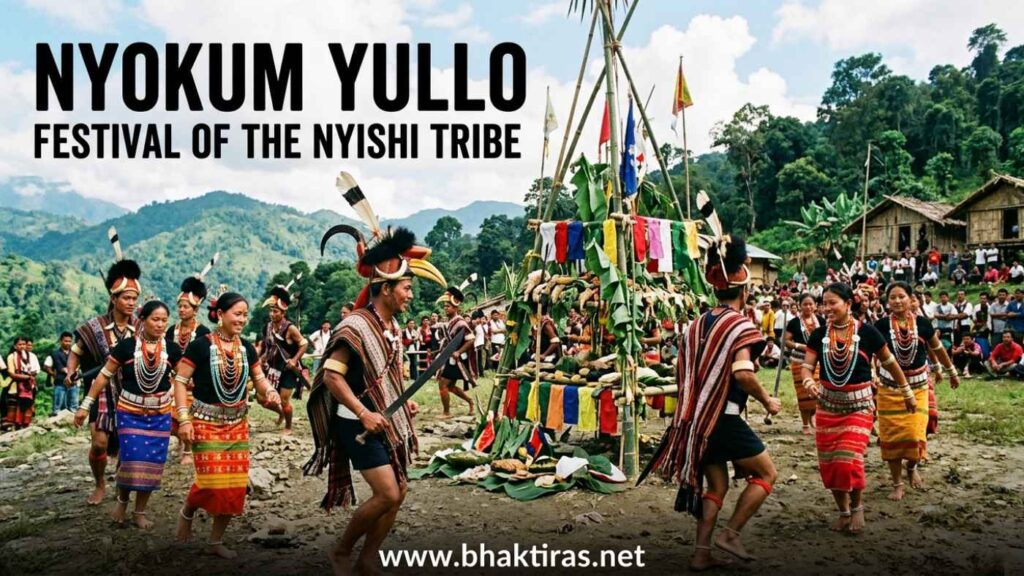
Nyokum, often called Nyokum Yullo, is the main festival of the Nyishi, the largest tribe of Arunachal Pradesh. Held on 26 February each year, it calls on the goddess Nyokum, keeper of the land and of all living beings, for a plentiful harvest, protection from famine and flood, and peace and goodwill among people. Followers of the indigenous Donyi-Polo faith gather at a central bamboo altar where a priest chants, offerings are made, and the whole community joins in song and dance.
Nyokum 2026-2028: Dates & Calendar
The next Nyokum falls on 26 February 2027, a Friday. Unlike most Hindu festivals, its date does not shift with the lunar calendar; modern observance keeps it fixed on 26 February every year.
| Year | Date | Day | Notes |
|---|---|---|---|
| 2026 | 26 February | Thursday | Main day |
| 2027 | 26 February | Friday | Next occurrence |
| 2028 | 26 February | Saturday | Main day |
Community programmes and cultural events often begin the evening before and continue for a day or so after the main rites on 26 February.
Why Nyokum Is Celebrated
Nyokum is celebrated to invoke the goddess Nyokum for a good harvest, for prosperity, and for harmony among all people and between humans, nature and the divine. The name itself carries this meaning: Nyok means land or earth and Kum means togetherness.
For the Nyishi, wellbeing depends on balance. The festival asks that the coming season be free of famine, drought and flood, that pests spare the crops, and that the whole community share in the good fortune of the land.
A prayer for the land and harvest
At its core Nyokum is an agricultural thanksgiving and petition. The goddess of prosperity is asked to bless the fields so the next harvest is abundant and no disaster spoils the crops.
Unity of all beings
Nyokum is offered not for one family but for everyone. The Nyishi see the festival as a plea for peace, goodwill and the shared welfare of all humankind, not only their own community.
Harmony with nature
The Nyishi hold that people can live in peace only when a proper balance is kept between man, god and nature. Nyokum renews that balance each year.
Nyishi identity and the Donyi-Polo faith
As the foremost festival of Arunachal’s largest tribe, Nyokum affirms Nyishi language, dress and custom. It is rooted in Donyi-Polo, the indigenous faith of the sun (Donyi) and the moon (Polo).
Deities & Figures Worshipped
The festival centres on the goddess Nyokum, the deity of the land, prosperity and all living beings. The Nyibu, the traditional priest, leads the worship on the community’s behalf.
Goddess Nyokum
Nyokum is the goddess of the land and of prosperity, guardian of all beings that live on the earth. She is invoked for good harvests and for protection of crops from famine, flood and pests. In keeping with Nyishi custom there are no idols; the goddess is honoured at the open-air altar.
The Nyibu (priest)
The Nyibu is the ritual specialist who chants the sacred verses, decides the offerings and conducts the rites at the altar. His long recitations carry the community’s prayers to the goddess and the spirits.
Key Rituals, Step by Step
The rites are led by the Nyibu at a central bamboo altar and unfold over the main day, ending in shared feasting and dance.
- Raising the Yugang altar. A tall altar called the Yugang is built from bamboo at the centre of the festival ground. It forms the focal point of every rite; there are no idols.
- Tethering the offerings. Sacrificial animals, which may include mithun, cattle and goats, are tied to posts beside the Yugang, ready for the ceremony.
- The Nyibu’s chants. The priest begins his long ritual recitations, invoking the goddess Nyokum and the spirits and asking for a good harvest, protection of crops and the welfare of all.
- Offerings and sacrifice. Following the Nyibu’s guidance, offerings and the animal sacrifices are made at the altar to seek the goddess’s blessings for prosperity and peace.
- Songs and dance. Men and women in traditional dress join in Nyishi folk songs and group dances around the ground, and mock sword displays are performed.
- Community feast. The gathering shares a feast of rice, pork and locally brewed rice beer, sealing the day’s spirit of togetherness.
Special Foods of Nyokum
Nyokum food is simple, hearty Nyishi fare shared by the whole gathering, with rice beer at the centre of the hospitality.
Apong (rice beer)
Apong, the traditional beer brewed from rice, and sometimes from millet, is offered to guests and shared through the celebration. It is the customary drink of Nyishi hospitality.
Pork
Pork is a staple of the festival table, often smoked or boiled and served with local greens and bamboo shoot. It features prominently in the community feast.
Rice and local greens
Steamed rice is the base of every meal, eaten with leafy greens, chillies and bamboo shoot. Meat and rice together form the heart of the shared feast.
Where Nyokum Is Celebrated
Nyokum is chiefly a Nyishi festival of Arunachal Pradesh, marked wherever Nyishi communities live across the state and by Nyishi families elsewhere.
Nyishi heartland, Arunachal Pradesh
The festival is observed across the districts where the Nyishi, the largest tribe of the state, are settled, including areas around Papum Pare, Kra Daadi, Kurung Kumey and the Yazali region.
Community grounds and towns
Large public celebrations are held at designated festival grounds and in towns such as Itanagar and Yazali, where cultural programmes draw Nyishi from surrounding villages.
Nyishi diaspora
Nyishi families living outside their home districts, and in other parts of India, mark the day with smaller gatherings that keep the customs and prayers alive.
Nyokum Do's and Don'ts
A few respectful pointers if you take part in or attend Nyokum, an indigenous community festival.
Do
- Join the community spirit of togetherness the festival is built around.
- Dress modestly and follow the lead of local hosts at the festival ground.
- Ask before photographing the Yugang altar, the rites or individuals.
- Accept offered hospitality, such as apong, graciously if you are welcomed.
- Learn the meaning of Nyokum, land and togetherness, to appreciate the day.
Avoid
- Do not treat the rituals or the sacred altar as a mere tourist spectacle.
- Do not disturb the Nyibu during his chants or interrupt the ceremonies.
- Do not touch or climb onto the Yugang or its offerings.
- Do not make light of the animal offerings, which hold deep ritual meaning here.
- Do not assume it is a pan-Indian festival; it is specific to the Nyishi people.
Frequently Asked Questions
When is Nyokum in 2027?
Nyokum is on 26 February 2027, a Friday. In modern observance the festival is held on this fixed solar date every year, so it does not move with the lunar calendar. The main rituals take place on 26 February, with gatherings around it.
When is Nyokum in 2026 and 2028?
Nyokum falls on 26 February in both 2026 and 2028, as it does every year. In 2026 that is a Thursday and in 2028 a Saturday. The date stays fixed at 26 February regardless of the year.
What does the word Nyokum mean?
The word Nyokum combines two Nyishi words: Nyok, meaning land or earth, and Kum, meaning togetherness or collectiveness. Together they express the festival’s idea of the community coming together on the land to seek shared prosperity and harmony.
Why is Nyokum celebrated?
Nyokum is celebrated to invoke the goddess Nyokum for a good harvest, prosperity, and peace and harmony among all people. The Nyishi ask her to protect their crops from famine, drought, flood and pests, and to keep balance between humans, nature and the divine.
Which goddess is worshipped during Nyokum?
The goddess Nyokum, deity of the land, prosperity and all living beings, is worshipped during the festival. She is invoked for abundant harvests and for the welfare of the whole community. Following Nyishi custom there are no idols; she is honoured at the open-air Yugang altar.
Who are the Nyishi and what is the Donyi-Polo faith?
The Nyishi are the largest tribe of Arunachal Pradesh, and Nyokum is their principal festival. Many follow Donyi-Polo, the indigenous faith centred on the sun (Donyi) and the moon (Polo), which underlies Nyokum’s prayers for harmony between people, nature and the divine.
What happens during the Nyokum ceremony?
During Nyokum a bamboo altar called the Yugang is raised at the centre of the festival ground, and the Nyibu priest chants long invocations to the goddess. Offerings and animal sacrifices are made beside the altar, after which the community joins in folk songs, dances and a shared feast.
What foods are eaten at Nyokum?
Nyokum feasts feature rice, pork and apong, the traditional rice beer, along with local greens and bamboo shoot. Apong is offered to guests as a mark of Nyishi hospitality, and meat with rice forms the heart of the community meal.
May the goddess Nyokum bless the land with a good harvest and all people with peace and togetherness.