
12 Jyotirlingas of Lord Shiva
Where the infinite column of light touched the earth – twelve shrines, one map, one journey. Explore, plan your yatra, and track your darshan.
The Legend
What Are the Jyotirlingas?
Not built. Not installed. Believed to have arisen on their own where Shiva appeared as pure light.
The Kotirudra Samhita tells the story: Brahma and Vishnu argued over who was supreme, when an immense pillar of light split earth and sky between them. Vishnu became a boar and dug downward; Brahma became a swan and flew upward. Neither found an end. Shiva emerged from the radiance – and the places where that light touched the earth became the Jyotirlingas.
For Shaiva devotees, darshan of all twelve in one lifetime is among the most meritorious pilgrimages in Hinduism. Even reciting the twelve names each morning – as taught in the Dwadasha Jyotirlinga Stotram – is believed to dissolve the sins of many births.
Self-Manifested
Each linga is swayambhu – arisen on its own where Shiva’s column of light met the earth.
Rooted in Scripture
Listed in the Shiva Purana; fixed in verse by Adi Shankaracharya’s Dwadasha Jyotirlinga Stotram.
A Map of Faith
From Kedarnath at 3,583 m to Rameshwaram on the southern sea – the twelve trace all of India.
Interactive
The Map of Light
Twelve flames on one map. Tap any glowing pin for the temple’s story, season and gateway – then step into its full guide. Zoom with the buttons, drag to pan.
Map outline: DataMeet India (Survey of India boundary), simplified for the web.
Plan
Recommended Yatra Routes
The twelve cluster into four natural circuits. Most pilgrims complete them region by region; the full parikrama of India runs about 7,500 km. Kedarnath opens only from Akshaya Tritiya (Apr-May) to Bhai Dooj (Oct-Nov) – plan the northern leg inside that window.
- 1SomnathPrabhas Patan, Gujarat – begin where the Stotram begins
- 2NageshwarNear Dwarka – ~230 km up the Saurashtra coast
- 3TrimbakeshwarNashik – overnight train or drive south-east
- 4GrishneshwarVerul – pair with the Ellora caves
- 5BhimashankarSahyadri hills near Pune – forest ghat roads
- 6OmkareshwarNarmada island, MP – north via Indore
- 7MahakaleshwarUjjain – rise early for Bhasma Aarti
- 8Kashi VishwanathVaranasi – long rail leg east
- 9BaidyanathDeoghar, Jharkhand – the healer Jyotirlinga
- 10KedarnathUttarakhand – 16 km trek from Gaurikund; season-bound
- 11MallikarjunaSrisailam – fly or rail south to Hyderabad
- 12RameshwaramTamil Nadu island – conclude at the southern sea
- 1SomnathArrive via Rajkot or Diu; shore darshan and evening aarti
- 2NageshwarCombine with Dwarkadhish darshan the same day
- 3TrimbakeshwarOvernight to Nashik; source of the Godavari
- 4BhimashankarGhat drive through the Sahyadris from Pune side
- 5GrishneshwarFinish at Verul beside Ellora – the last of the twelve
- 1MahakaleshwarUjjain – book the pre-dawn Bhasma Aarti well in advance
- 2OmkareshwarDrive ~140 km to the Om-shaped Narmada island; do the parikrama
- 1Kashi VishwanathVaranasi – corridor darshan plus Ganga aarti at Dashashwamedh
- 2BaidyanathRail east to Deoghar; in Shravan this is the Kanwar heartland
- 3KedarnathWest to Haridwar then Gaurikund; trek, pony or heli – open Apr/May to Oct/Nov only
- 1MallikarjunaSrisailam in the Nallamala hills – Shiva and Shakti in one campus
- 2RameshwaramOvernight rail via Madurai; bathe at the 22 theerthams before darshan
Explore
All 12 Jyotirlingas
In the traditional order of the Dwadasha Jyotirlinga Stotram. Open any card for the full guide – and tap the flame to mark your darshan. Your progress stays on this device.
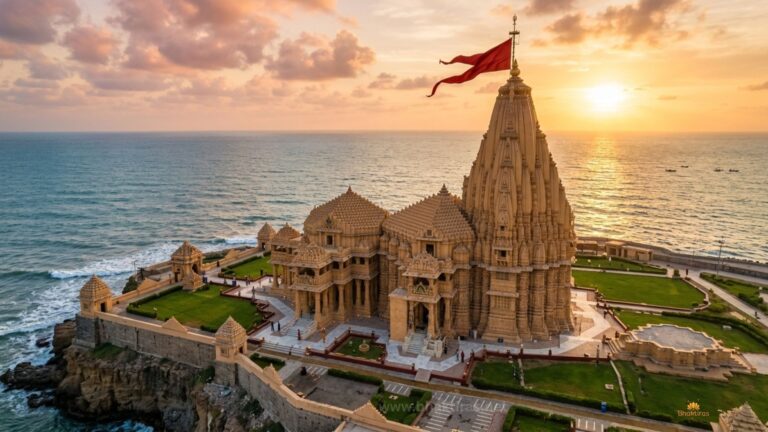
Somnath
📍 Prabhas Patan, Veraval · Gujarat
The first Jyotirlinga, on the Arabian Sea shore – razed and rebuilt through the centuries, its present temple a monument of unbroken devotion.
📅 Best: Oct-Mar · Mahashivratri · Kartik Purnima
View Temple →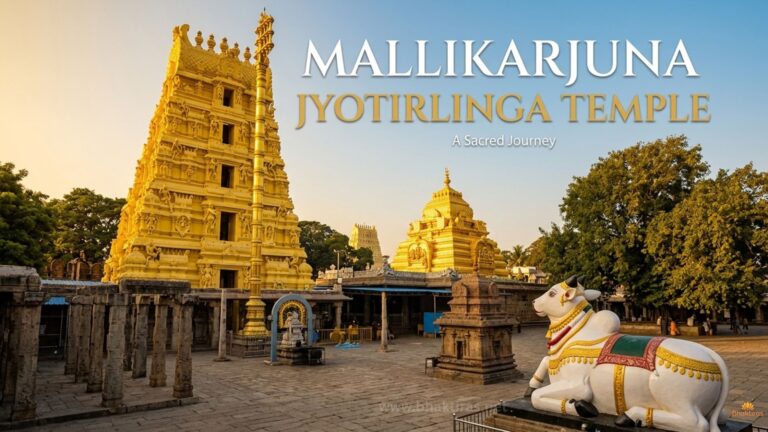
Mallikarjuna
📍 Srisailam · Andhra Pradesh
Shiva and Parvati worshipped together on Srisailam hill – a rare site that is both a Jyotirlinga and a Shakti Peetha.
📅 Best: Oct-Feb · Mahashivratri · Ugadi
View Temple →
Mahakaleshwar
📍 Ujjain · Madhya Pradesh
The south-facing lord of time in Ujjain, famed for the pre-dawn Bhasma Aarti performed with sacred ash.
📅 Best: Oct-Mar · Bhasma Aarti needs advance booking
View Temple →
Omkareshwar
📍 Mandhata Island, Narmada · Madhya Pradesh
Set on an island in the Narmada whose outline is read as the sacred syllable Om – circled by pilgrims on a full parikrama.
📅 Best: Oct-Mar · Narmada Jayanti
View Temple →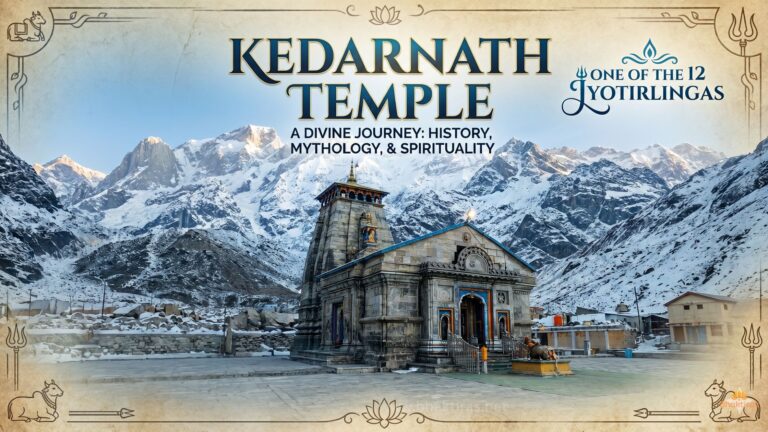
Kedarnath
📍 Rudraprayag · Uttarakhand
The highest Jyotirlinga at 3,583 m near the Mandakini’s source – reached by a 16 km trek and open only about six months a year.
📅 Open Apr/May-Oct/Nov · best May-Jun, Sep-Oct
View Temple →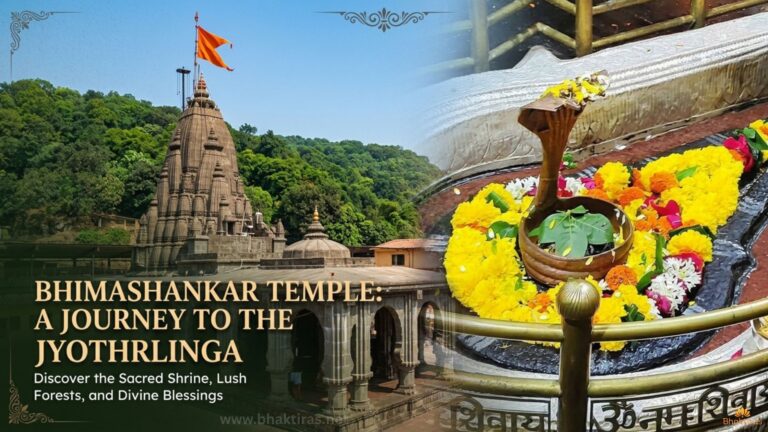
Bhimashankar
📍 Sahyadri Hills, Pune district · Maharashtra
A forest shrine in the Western Ghats where the Bhima river rises – ringed by a wildlife sanctuary rich in birdlife.
📅 Best: Oct-Feb · lush just after monsoon
View Temple →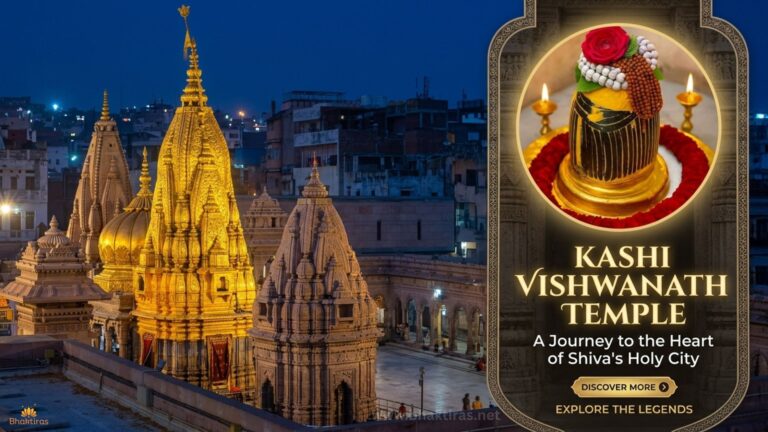
Kashi Vishwanath
📍 Varanasi · Uttar Pradesh
The lord of the universe in Shiva’s own city on the Ganga, where darshan and the city itself are held to grant liberation.
📅 Best: Oct-Mar · Mahashivratri · Dev Deepawali
View Temple →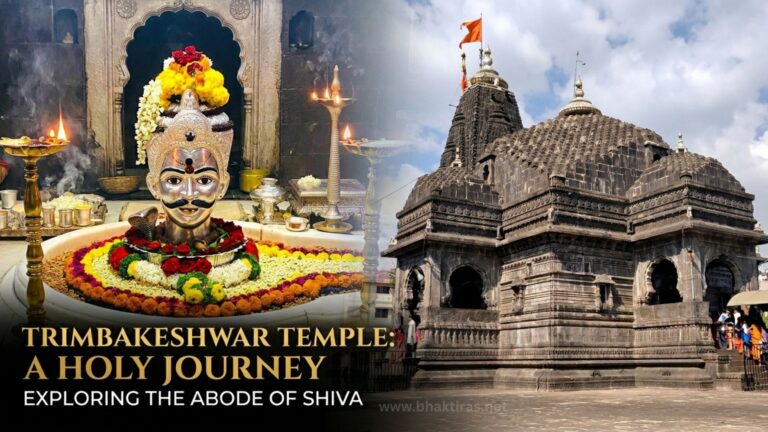
Trimbakeshwar
📍 Trimbak, Nashik · Maharashtra
A unique three-faced linga embodying Brahma, Vishnu and Shiva, at the source of the Godavari beneath Brahmagiri hill.
📅 Best: Oct-Mar · Shravan Somvar · Kumbh years
View Temple →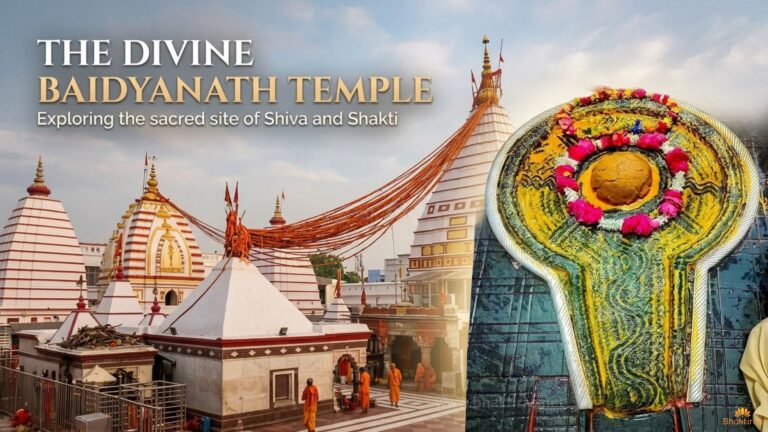
Baidyanath
📍 Deoghar · Jharkhand
Shiva as the divine healer – in Shravan, lakhs of kanwariyas walk 100+ km from Sultanganj carrying Ganga water here.
📅 Best: Oct-Mar · Shravan for the mela spirit
View Temple →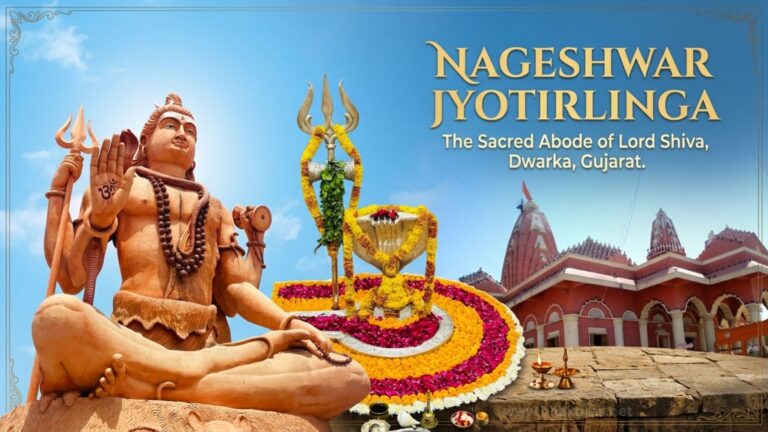
Nageshwar
📍 Near Dwarka · Gujarat
The serpent-lord of the Darukavana legend near Krishna’s Dwarka, marked by a 25 m seated Shiva visible from afar.
📅 Best: Oct-Mar · pair with Dwarkadhish darshan
View Temple →
Rameshwaram
📍 Rameswaram Island · Tamil Nadu
The linga sanctified by Shri Rama before the crossing to Lanka – its corridors are the longest of any temple in India.
📅 Best: Oct-Apr · Mahashivratri · Thai Amavasya
View Temple →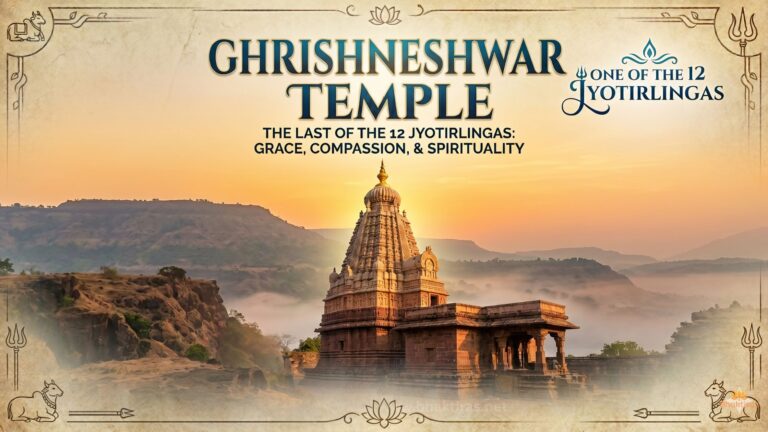
Grishneshwar
📍 Verul (Ellora) · Maharashtra
The last and smallest of the twelve, a red-stone shrine rebuilt by Ahilyabai Holkar, minutes from the Ellora caves.
📅 Best: Oct-Mar · combine with Ellora and Daulatabad
View Temple →Through the Ages
A Short Timeline
- The Puranic age – the pillar of light
The Kotirudra Samhita of the Shiva Purana narrates the endless column of fire and lists the twelve places where Shiva’s radiance settled on earth.
- 8th century CE – fixed in verse
The Dwadasha Jyotirlinga Stotram, attributed to Adi Shankaracharya, names the twelve in the order pilgrims still follow, beginning “Saurashtre Somanatham…”
- Medieval centuries – destruction and defiance
Somnath, Kashi Vishwanath and others were plundered and demolished repeatedly – and rebuilt each time, the rebuilding itself becoming an act of faith.
- 18th century – the great restoration
Queen Ahilyabai Holkar of Indore rebuilt or renewed several of the shrines – Kashi Vishwanath, Trimbakeshwar, Grishneshwar and Somnath among them.
- 1951 – Somnath rises again
Independent India’s first great temple reconstruction: the new Somnath consecrated with the installation of the Jyotirlinga by President Rajendra Prasad.
- Today – corridors and crores
The Kashi Vishwanath Corridor (2021) and Ujjain’s Mahakal Lok (2022) have remade pilgrim access; tens of millions now take darshan each year.
The Call
Why Visit the 12 Jyotirlingas?
Scripture holds that remembering the twelve names dissolves the sins of lifetimes; completing all twelve is among the highest Shaiva vows.
Every shrine embodies a Purana episode – Ravana’s penance at Baidyanath, Rama’s worship at Rameshwaram, the moon-god’s cure at Somnath.
Chalukya, Hemadpanthi, Maratha and Dravidian styles side by side – from Rameshwaram’s pillared corridors to Kedarnath’s stone austerity.
Bhasma Aarti at dawn, Mahashivratri night vigils, the Shravan kanwar tide at Deoghar – rituals found nowhere else in this form.
Sea coast, river island, forest ghat and Himalayan glacier – the circuit carries you through eight states and every Indian landscape.
Queues, treks, dawn starts and river baths strip travel down to intention – pilgrims return speaking less of places than of what changed in them.
Seasons
Best Time to Visit
Cool, clear weather across all plains temples. Ideal for the West, Central and South circuits, and for Varanasi and Deoghar.
Plains run hot, but the Himalayan gates open around Akshaya Tritiya – May-June is prime for the Kedarnath trek.
Shiva’s own month falls here: Mondays swell with devotees and Deoghar hosts the Shravani Mela. Rain, crowds, intense devotion.
The great night of Shiva at any Jyotirlinga is unforgettable – all-night abhishekam and chanting. Book stay and darshan weeks ahead.
Each Somvar (Monday) is a festival in itself; Ujjain’s royal sawari processions and the kanwar yatras define the month.
Prepare
Travel Planning & Pilgrim Etiquette
Temple etiquette & dress
Dress modestly – shoulders and knees covered; traditional wear is welcomed everywhere and required in some sanctums (e.g. dhoti for certain abhishekams). Footwear is deposited outside; leather items are best left at your stay. Follow priest and volunteer instructions in queues, and keep phones silent inside the sanctum.
Darshan timings & special aartis
Most Jyotirlingas open around 4-6 am and close by 9-10 pm, with an afternoon break at some. Signature rituals need planning: Mahakaleshwar’s Bhasma Aarti (pre-dawn, bookable online), Somnath’s evening aarti and light show, and Kashi Vishwanath’s Mangala Aarti all have separate queues or tickets. Verify timings on each temple’s page before travel.
Photography rules
Assume photography is prohibited inside sanctums at all twelve shrines; several (including Kashi Vishwanath and Mahakaleshwar) restrict phones beyond the security check entirely, with paid lockers provided. Outer courtyards and river ghats are generally fine – look for signage.
Accommodation
Every Jyotirlinga town offers temple-trust guesthouses and dharamshalas (simple, clean, very affordable), plus private hotels in all ranges. Book well ahead for Mahashivratri, Shravan and school holidays. For Kedarnath, pilgrims stay at Guptkashi, Sonprayag or Gaurikund and at GMVN camps near the shrine.
Packing checklist
- Comfortable slip-on footwear + warm layer (hill shrines are cold at dawn)
- Small cloth bag for offerings; avoid leather
- Government photo ID (needed for some darshan bookings and heli tickets)
- Reusable water bottle, electrolytes, basic medicines
- Rain shell in monsoon; trekking shoes and woollens for Kedarnath
- Copies of darshan/aarti bookings, offline maps, power bank
Getting around
Rail is the backbone – Veraval, Dwarka, Nashik Road, Pune, Indore/Ujjain, Varanasi, Jasidih (Deoghar), Haridwar and Rameswaram are all well connected. Regional flights shorten the long hops (Rajkot, Sambhajinagar, Indore, Varanasi, Deoghar, Dehradun, Madurai). Local taxis and state buses cover the last miles; Kedarnath adds a 16 km walk, pony, palki or helicopter.
Answers
Frequently Asked Questions
What are the 12 Jyotirlingas?
The 12 Jyotirlingas are the twelve holiest shrines of Lord Shiva, where he is worshipped as a self-manifested “linga of light.” Listed in the Shiva Purana, they are: Somnath, Mallikarjuna, Mahakaleshwar, Omkareshwar, Kedarnath, Bhimashankar, Kashi Vishwanath, Trimbakeshwar, Baidyanath, Nageshwar, Rameshwaram and Grishneshwar.
Which Jyotirlinga should be visited first?
Somnath in Gujarat is traditionally visited first, because the Dwadasha Jyotirlinga Stotram names it first (“Saurashtre Somanatham”). There is no scriptural penalty for another order – most pilgrims simply follow whichever regional circuit is nearest.
Can all 12 Jyotirlingas be visited in one trip?
Yes – a complete circuit is possible in roughly 18-25 days covering about 7,500 km by rail and road. The only hard constraint is Kedarnath, which is open only from around Akshaya Tritiya (April-May) to Bhai Dooj (October-November), so full-circuit trips are planned inside that window.
How many days are required for the yatra?
Plan 18-25 days for all twelve; 6-8 days for the five western shrines; 2-3 days for the two in Madhya Pradesh; 7-9 days for the northern-eastern three including the Kedarnath trek; and 3-4 days for the two southern shrines.
Which is the oldest Jyotirlinga?
Somnath is traditionally regarded as the first and oldest Jyotirlinga – its sanctity linked to the moon-god Soma’s worship of Shiva. As standing structures, several present buildings are later reconstructions; among surviving architecture, shrines like Kedarnath preserve some of the oldest fabric.
Why are the Jyotirlingas important in Hinduism?
They mark the places where Shiva is believed to have appeared as an infinite column of light – making them sites of his direct presence rather than human consecration. Darshan at a Jyotirlinga is held to carry exceptional merit, and the twelve together form one of Hinduism’s greatest pilgrimage vows.
Which Jyotirlinga is nearest to me?
Use the regional grouping: Gujarat has Somnath and Nageshwar; Maharashtra has Trimbakeshwar, Bhimashankar and Grishneshwar; Madhya Pradesh has Mahakaleshwar and Omkareshwar; the north-east arc has Kashi Vishwanath (UP), Baidyanath (Jharkhand) and Kedarnath (Uttarakhand); the south has Mallikarjuna (Andhra Pradesh) and Rameshwaram (Tamil Nadu).