
Das Lakshan Parva 2027 – Ten Days of the Ten Dharmas
दस लक्षण पर्व
When is Das Lakshan Parva in 2027?
Das Lakshan Parva in 2027 runs from 5 to 14 September, ending on Ananta Chaturdashi (Tuesday, 14 September). It is the Digambara Jain festival of ten days, each dedicated to one of the ten cardinal virtues, and it closes with Kshamavani, the day of forgiveness, on 15 September.
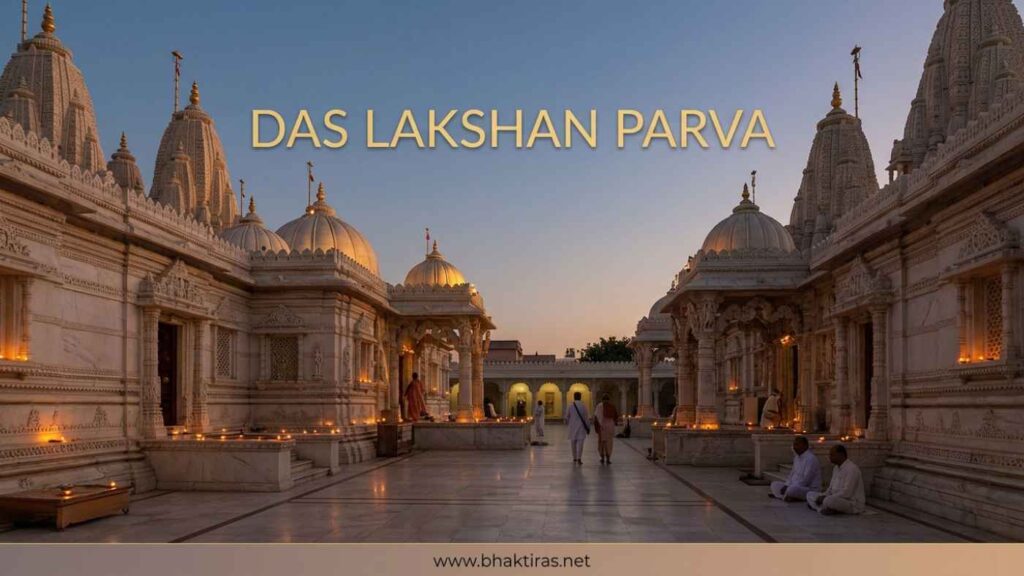
Das Lakshan Parva is the ten-day festival kept by Digambara Jains, usually starting the day the Svetambara Paryushan ends. Across Bhadrapada Shukla, one virtue is taken up each day – forgiveness, humility, straightforwardness, purity, truth, restraint, austerity, renunciation, non-attachment and chastity – the ten dharmas that give the festival its name. Jains fast, worship the Tirthankaras, read the Tattvartha Sutra and deepen their practice of non-violence, closing on Kshamavani when everyone asks and grants pardon.
Das Lakshan Parva 2026-2028: Dates & Calendar
The next Das Lakshan Parva runs 5-14 September 2027, ending on Ananta Chaturdashi. Because it follows the Jain lunar calendar (Bhadrapada Shukla Panchami to Chaturdashi), the ten-day window shifts by a few days each year.
| Year | Ten-day span | Ananta Chaturdashi | Kshamavani |
|---|---|---|---|
| 2026 | 16-25 September | Fri, 25 September | Sat, 26 September |
| 2027 | 5-14 September | Tue, 14 September | Wed, 15 September |
| 2028 | 24 August-2 September | Sat, 2 September | Sun, 3 September |
The festival always opens on Bhadrapada Shukla Panchami and runs through Ananta Chaturdashi, ten days in all. The following day is Kshamavani, or Kshama Vani, the great day of forgiveness that formally ends the parva.
Why Das Lakshan Parva Is Celebrated
Das Lakshan Parva is celebrated to cultivate the ten cardinal virtues (das lakshan dharma) that carry the soul toward liberation, one contemplated each day. It is the Digambara counterpart of the Svetambara Paryushan and centres on inner cleansing rather than outward festivity.
The name comes from das (ten) and lakshan (characteristics or attributes) – the ten qualities of true dharma described in Jain scripture. Rather than honouring an event, the festival asks each person to turn one virtue over in the mind each day, measure their own conduct against it, and correct what falls short.
Digambara tradition ties the ten days to the reading of the Tattvartha Sutra, Umaswami’s foundational text, so the season is as much study and reflection as it is ritual. The aim is not celebration for its own sake but the quiet work of shedding karma through discipline, honesty and restraint.
The ten dharmas
The heart of the festival is a set of ten virtues taken up in order over ten days: Uttam Kshama (forgiveness), Mardav (humility), Aarjav (straightforwardness), Shauch (contentment and purity), Satya (truth), Sanyam (self-restraint), Tapa (austerity), Tyaga (renunciation and charity), Akinchanya (non-attachment) and Brahmacharya (chastity). Each is prefixed with uttam, meaning supreme.
Cleansing the soul
Jain thought holds that karma clings to the soul and dims it. The ten days are set aside to loosen that hold through fasting, honest self-review and the deliberate practice of ahimsa, so a person emerges lighter and clearer than they began.
Forgiveness as the seal
The parva ends on Kshamavani, when Jains ask pardon of every living being for any harm caused, knowingly or not, and freely forgive in return. The greeting is Uttam Kshama or Micchami Dukkadam – may all my wrongs be forgiven. Nothing is meant to be carried into the year ahead.
Whom Jains Worship During Das Lakshan
Jainism has no creator god; worship during Das Lakshan is directed at the liberated souls and the Tirthankaras who show the path, rather than at a deity who grants favours. Devotion here is a model to follow, not a plea for boons.
The Tirthankaras
The twenty-four Tirthankaras, the enlightened teachers who cross the ocean of rebirth and leave a path for others, are honoured through the ten days. Mahavira, the last of them, is remembered especially, along with Adinatha and Parshvanatha.
The Siddhas
Worship is offered to the Siddhas, the perfected souls who have shed all karma and reached moksha. They are not asked for anything; they are revered as proof that the soul can become entirely free and as the goal each virtue points toward.
The Siddha Chakra
Many Digambara households and temples worship the Siddha Chakra, a sacred diagram honouring the five supreme beings (Arihant, Siddha, Acharya, Upadhyaya and Sadhu). It is bathed and revered as a focus for meditation during the festival.
Key Rituals, Step by Step
The ten days follow a steady daily rhythm of worship, study and restraint, building toward the forgiveness rite at the close.
- Begin with a vow. On the first day many take on a personal resolve for the parva – a fast, giving up a food, silence for a period, or extra scripture reading – and keep it through all ten days.
- Morning worship (puja). Devotees bathe, visit the temple and perform abhisheka and puja before the Tirthankara images and the Siddha Chakra, often with the eight substances of Jain worship.
- The virtue of the day. Each of the ten days is assigned one dharma; discourses, readings and reflection focus on that single virtue, so the community moves through all ten in sequence.
- Reading the Tattvartha Sutra. Umaswami’s Tattvartha Sutra is read and expounded chapter by chapter over the festival, a defining practice of the Digambara observance.
- Fasting and restraint. Fasts range from a single day to the full ten (das lakshan vrat); others eat once a day or give up green vegetables, root foods and anything that involves harm to life.
- Pratikraman and self-review. Devotees perform pratikraman, a ritual of reviewing conduct and repenting faults, examining where they fell short of the day’s virtue.
- Ananta Chaturdashi. The tenth day is kept with special worship and, in many places, the Ananta Vrat and the observance of ananta (the endless) – the high point of the ten days.
- Kshamavani. The day after, Jains ask forgiveness of family, friends and all beings with Uttam Kshama and Micchami Dukkadam, and forgive freely in return, formally closing the parva.
Food During Das Lakshan Parva
Food during the parva is shaped by non-violence and fasting rather than feasting; many meals are simplified, and several foods are set aside entirely for the ten days.
Fasting foods
Those fasting often take only boiled water during daylight, or a single sattvic meal a day. Common fast-friendly foods are plain rice, fruit, milk and simple preparations free of onion and garlic.
Foods set aside
Root vegetables such as potato, onion, garlic, ginger and carrot are avoided, since uprooting them is held to harm countless tiny lives. Many also give up green vegetables during the ten days for the same reason.
Before sunset only
In keeping with the Jain practice of not eating after dark, meals are finished before sunset through the festival, so no food is cooked or eaten once night falls.
Breaking the fast
The fast is broken gently the morning after it ends, often with warm water, fruit or a light meal, and frequently after feeding the needy or offering food in charity as part of the day’s dharma of tyaga.
Das Lakshan Parva Do's and Don'ts
A short guide to keeping the ten days in the spirit of the ten dharmas.
Do
- Take up one honest resolve and keep it through all ten days.
- Reflect each day on that day’s virtue and your own conduct.
- Practise ahimsa carefully in food, speech and action.
- Read or listen to the Tattvartha Sutra and the discourses.
- On Kshamavani, ask and grant forgiveness with a sincere heart.
Avoid
- Do not eat root vegetables, onion or garlic during the ten days.
- Avoid eating after sunset.
- Do not hold on to grudges into Kshamavani; let them go.
- Avoid harsh speech, anger and pride – the opposites of the dharmas.
- Do not treat a fast as a competition; keep only what you can honestly sustain.
Frequently Asked Questions
When is Das Lakshan Parva in 2027?
Das Lakshan Parva in 2027 runs from 5 to 14 September, ending on Ananta Chaturdashi (Tuesday, 14 September). Kshamavani, the day of forgiveness that closes the festival, falls the next day, 15 September.
When is Das Lakshan Parva in 2026 and 2028?
In 2026 Das Lakshan Parva is observed from about 16 to 25 September, with Kshamavani on 26 September. In 2028 it runs from around 24 August to 2 September, ending on Ananta Chaturdashi on 2 September. The exact days follow the Jain lunar calendar and can vary slightly by community.
What are the ten dharmas of Das Lakshan Parva?
The ten dharmas contemplated over the ten days are Uttam Kshama (forgiveness), Mardav (humility), Aarjav (straightforwardness), Shauch (contentment and purity), Satya (truth), Sanyam (self-restraint), Tapa (austerity), Tyaga (renunciation), Akinchanya (non-attachment) and Brahmacharya (chastity). One is taken up each day, in that order.
What is the difference between Das Lakshan and Paryushan?
Das Lakshan Parva is the Digambara Jain observance, while Paryushan Parva is the Svetambara one; both fall in Bhadrapada and share the same purpose of self-purification and forgiveness. Das Lakshan runs ten days and centres on the ten dharmas and the Tattvartha Sutra, and usually begins as the eight-day Svetambara Paryushan ends.
Why is Das Lakshan Parva celebrated?
Das Lakshan Parva is celebrated to cultivate the ten cardinal virtues of Jain dharma and to cleanse the soul of accumulated karma. Through fasting, worship, scripture reading and deep non-violence, and finally the forgiveness of Kshamavani, devotees aim to end the season lighter and closer to liberation.
What is Kshamavani?
Kshamavani, or Kshama Vani, is the day of forgiveness that ends Das Lakshan Parva, falling the day after Ananta Chaturdashi. Jains ask pardon of every living being for any harm caused and forgive others in return, using the greetings Uttam Kshama and Micchami Dukkadam.
How do Jains fast during Das Lakshan?
Fasting during Das Lakshan ranges from a single day to the full ten (the das lakshan vrat). Some take only boiled water by day, others eat one simple sattvic meal, and most give up root vegetables, onion and garlic and finish eating before sunset.
Which scripture is read during Das Lakshan Parva?
The Tattvartha Sutra, composed by Acharya Umaswami, is the text read and expounded through Das Lakshan Parva. Its chapters are taken up over the ten days, making study and reflection central to the Digambara observance alongside worship and fasting.
May the ten days lighten every heart and settle every quarrel – Uttam Kshama.