
Kori Rotti 2026 – The Festive Feast Dish of Tulu Nadu
ಕೋರಿ ರೊಟ್ಟಿ
What is Kori Rotti and when is it eaten?
Kori Rotti is the signature festive dish of Tulu Nadu (coastal Karnataka), not a fixed-date festival. It pairs a fiery coconut-and-red-chilli chicken curry, kori gassi, with wafer-thin crisp rice rotti. Tuluva families serve it at weddings, temple jatras, Bhuta Kola nights and Sunday gatherings, so it is enjoyed year-round rather than on one set day.
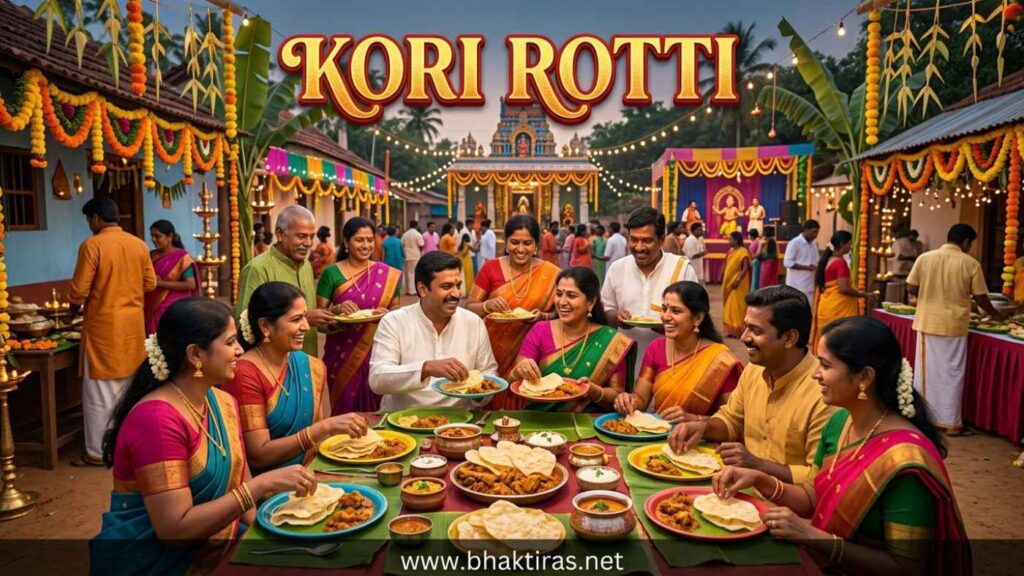
Kori Rotti is the dish coastal Karnataka reaches for whenever there is something to celebrate. In Tulu, kori means chicken and rotti the papery, sun-crisp rice wafer it is poured over. A ladle of dark red kori gassi – chicken simmered in roasted chillies and coconut – softens the brittle rotti into something between a curry and a bread. Among the Bunt, Billava and allied Tuluva communities it is less a recipe than a marker of occasion: the food of weddings, temple jatras and family Sundays. It has no calendar date; its season is whenever people gather.
When Is Kori Rotti Eaten? (It Has No Fixed Date)
Kori Rotti is a food tradition rather than a dated festival, so there is no single day for it. It appears whenever Tuluva families mark an occasion, which is why it is eaten across the whole year.
| Occasion | When | Role of Kori Rotti |
|---|---|---|
| Wedding receptions | Year-round | The expected non-vegetarian main at Bunt and allied Tuluva weddings |
| Temple jatras & Daiva nights | During the festival season | Cooked in large batches for community feasts and after Bhuta Kola |
| Sundays & family gatherings | Any week | A near-compulsory Sunday dish in many Tulu Nadu homes |
| Dasara & harvest feasts | Autumn season | Served to mark the abundance of the coastal harvest |
Because it is tied to weddings, jatras and gatherings rather than a lunar or solar date, you will find Kori Rotti on the table in every month of the year. Treat it as a dish of the celebration season, not a festival with one day.
Why Kori Rotti Matters to Tulu Nadu
Kori Rotti matters because it is the dish that says an occasion is important. Serving it is an act of hospitality and belonging in Tuluva culture.
A wedding without Kori Rotti feels incomplete to many Tuluva families, and guests quietly judge a feast by how good its kori gassi is. The dish carries the memory of a household – the exact roast of the chillies, the balance of coconut and tamarind – so recipes pass down through mothers and aunts more reliably than any written book.
A dish of occasion
In Tulu Nadu, Kori Rotti signals that something matters. It is cooked for the people you want to honour – a bride and groom, a visiting relative, a village that has gathered for its temple’s jatra.
Rooted in the land
The dish is built entirely from coastal resources: paddy rice for the rotti, coconut for the gravy, and the red chillies of the Karnataka coast. It reads like an edible map of Tulu Nadu’s farms and groves.
Tied to Daiva worship
Kori Rotti often follows Bhuta Kola and Daiva ceremonies, where communities cook and share a meal after the spirits have been honoured. Feeding everyone present is part of the observance, and this is the dish that feeds a crowd.
A thread of identity
For Tuluvas living away from the coast, cooking Kori Rotti is a way of staying Tuluva. The dish travels with the community, and a plate of it can carry a whole homeland’s worth of memory.
How Kori Rotti Is Made, Step by Step
Kori Rotti is really two preparations brought together at the last moment: the curry (kori gassi) and the crisp wafers (rotti). Here is how a traditional Tuluva kitchen builds it.
- Roast the spices. Dry-roast dried red chillies (often Byadgi for colour), coriander seeds, cumin, fenugreek and peppercorns until fragrant. The depth of a good gassi comes from this careful, unhurried roasting.
- Grind with coconut. Blend the roasted spices with grated fresh coconut, garlic, a little tamarind and turmeric into a thick red masala paste, using water to loosen it.
- Cook the chicken. Simmer the chicken in the ground masala with sliced onion until the pieces are tender and the raw smell of the spices has cooked out.
- Finish with coconut milk. Pour in thick coconut milk near the end and warm gently without a hard boil, so the gravy turns glossy and rounded rather than split.
- Prepare the rotti. Rice is soaked, boiled and ground to a smooth batter, then spread wafer-thin and cooked and dried until brittle. Most homes now buy these crisp rotti sheets ready-made.
- Assemble at the table. Break the crisp rotti into a bowl, ladle the hot kori gassi over it and let it sit briefly. The wafer drinks up the curry and softens – eat it before it goes soggy.
- Serve generously. At feasts the gassi is cooked in enormous pots and the rotti stacked high, so every guest can go back for more. Abundance is part of the point.
What Goes With Kori Rotti
The dish is a pairing at heart, but a full Tuluva spread builds around it with a few coastal companions.
Kori Gassi
The heart of the dish: chicken in a red gravy of roasted chillies, coconut and spices, finished with coconut milk. Rich, hot and unmistakably coastal.
Rotti (rice wafers)
Wafer-thin, dry sheets made from boiled ground rice. Crackly on their own, they turn tender the moment the curry hits them.
Neer dosa
Soft, lacy rice crepes are the gentle counterpart to the crisp rotti, and many families keep a stack alongside for those who prefer them.
Kori Sukka
A dry, deeply spiced chicken preparation that often shares the table, giving guests a drier texture next to the gravy.
Boiled rice (kuchalakki)
The red parboiled rice of the coast rounds out the meal and soaks up any gassi left after the rotti is gone.
Kori Rotti Across Communities
Within Tulu Nadu the dish shifts slightly from kitchen to kitchen and community to community, though the core pairing stays the same.
Bunt kitchens
The Bunt community is closely linked with Kori Rotti, and it is the anchor of their wedding receptions. The gassi here leans robust and generously spiced.
Billava and allied homes
Among Billava and other Tuluva communities the dish is an everyday-festive staple, cooked for Sundays and Daiva observances alike.
Mangalore and Udupi
Across Dakshina Kannada and Udupi districts the recipe varies in chilli heat and coconut richness, with families guarding their own masala balance.
The Tuluva diaspora
In Mumbai, Bengaluru and the Gulf, Tuluva families carry the dish with them, ordering packaged rotti so a taste of the coast reaches faraway kitchens.
Kori Rotti: Tips and What to Avoid
A few practical notes for getting the dish right.
Do
- Do roast the spices slowly – the colour and depth of kori gassi depend on it.
- Do add thick coconut milk at the end and warm it gently to keep the gravy smooth.
- Do ladle the curry over the rotti just before eating so the wafer stays part-crisp.
- Do cook the gassi a little ahead; the flavours settle and deepen after resting.
- Do serve it hot and in plenty – abundance is part of the tradition.
Avoid
- Do not soak the rotti too early, or it turns to mush before it reaches the table.
- Do not let the coconut milk reach a rolling boil, or the gravy may split.
- Do not skimp on the chilli roast; pale, under-roasted masala gives a flat curry.
- Do not treat it as a fixed-date festival dish – it belongs to occasions, not a calendar day.
- Do not skip the tamarind or souring agent that balances the coconut’s richness.
Frequently Asked Questions
Is Kori Rotti a festival with a fixed date?
No, Kori Rotti is a beloved festive dish and food tradition of Tulu Nadu, not a festival with a set calendar date. It is served at weddings, temple jatras, Daiva ceremonies and family gatherings throughout the year, so it has no single fixed day.
What is Kori Rotti?
Kori Rotti is a signature dish of coastal Karnataka’s Tulu Nadu region. It combines kori gassi, a spicy chicken curry made with roasted red chillies and coconut, with rotti, wafer-thin crisp sheets of boiled rice. The curry is poured over the rotti, which softens as it soaks up the gravy.
When is Kori Rotti eaten?
Kori Rotti is eaten year-round rather than on one date. Tuluva families serve it at wedding receptions, temple festivals, Bhuta Kola and Daiva nights, harvest feasts like Dasara, and on ordinary Sundays, making it the region’s go-to dish for any occasion.
Which community is Kori Rotti associated with?
Kori Rotti is associated with the Tuluva communities of coastal Karnataka, especially the Bunt and Billava communities. It is a near-compulsory dish at Bunt wedding receptions and a staple at community and temple feasts across Dakshina Kannada and Udupi.
How is Kori Rotti made?
Kori Rotti is made by cooking chicken in a ground paste of roasted red chillies, coriander, coconut, garlic and tamarind, then finishing the curry with thick coconut milk. Separately, boiled rice is ground and dried into crisp wafers. At the table the hot curry is poured over the broken wafers just before eating.
What is the difference between Kori Rotti and Kori Gassi?
Kori Gassi is the chicken curry itself – the coconut and red-chilli gravy. Kori Rotti is that same curry served over rotti, the crisp rice wafers. In short, kori gassi is the sauce, and kori rotti is the complete dish of curry plus wafer.
Is Kori Rotti vegetarian?
No, Kori Rotti is traditionally a non-vegetarian dish built around chicken cooked in coconut gravy. Some cooks make vegetarian versions of the gravy using mushrooms or vegetables with the same rotti wafers, but the classic Tuluva preparation is a chicken dish.
Where can I eat authentic Kori Rotti?
Authentic Kori Rotti is found across Mangalore, Udupi and the wider Tulu Nadu region of coastal Karnataka, in home kitchens and Tuluva restaurants. It is most memorable at a Tuluva wedding or temple jatra feast, where it is cooked in large batches for the whole gathering.
However it reaches your plate – a village jatra, a wedding hall or a quiet Sunday at home – Kori Rotti carries the warmth of Tulu Nadu with it. Oota aayitha? Come, eat.