
Goa Carnival 2027 – Panaji's Pre-Lenten Street Party
When is the Goa Carnival in 2027?
The Goa Carnival runs 13-16 February 2027, the four days from Saturday to Fat Tuesday just before Ash Wednesday (10 February 2027 marks the start of Lent, so the revelry ends the day before). It is a Portuguese-era street festival of float parades, masked dancers and music across Panaji, Margao, Vasco and Mapusa.
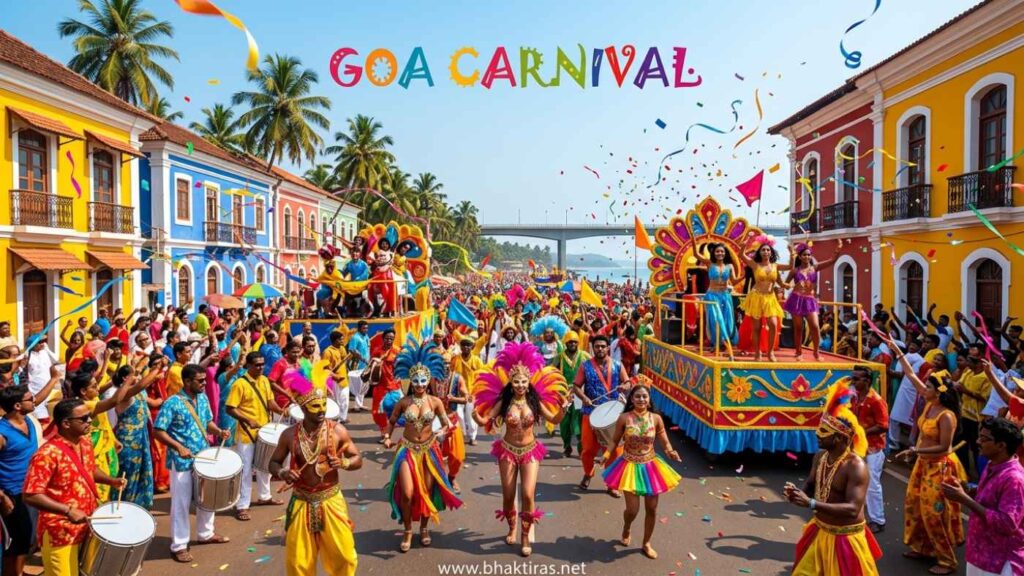
The Goa Carnival, known locally as Carnaval or Intruz, is the state’s big pre-Lenten street party, a habit picked up over more than 450 years of Portuguese rule. For four days before Ash Wednesday, the mythical King Momo issues his decree to eat, drink and be merry, and the towns answer with float parades, brass bands, masked dancers and a great deal of colour. It is one of the few carnivals of its kind in Asia, and the one time of year Goa’s Indo-Portuguese character is on full public display.
Goa Carnival 2026-2028: Dates & Calendar
The Goa Carnival next runs 13-16 February 2027. Its dates shift each year because they are fixed to Ash Wednesday, which in turn depends on the moveable date of Easter.
| Year | Dates | Days | Notes |
|---|---|---|---|
| 2026 | 14-17 February | Sat-Tue | Ash Wednesday falls 18 February |
| 2027 | 13-16 February | Sat-Tue | Next occurrence; Ash Wednesday 10 February |
| 2028 | 26-29 February | Sat-Tue | Leap year; ends 29 Feb, Ash Wednesday 1 March |
The grand opening parade led by King Momo is traditionally held in Panaji on the first day (Saturday), with Margao, Vasco da Gama and Mapusa hosting their own parades over the following days. Exact parade routes and timings are announced each year by the Goa Tourism Development Corporation.
Why the Goa Carnival Is Celebrated
The Goa Carnival is celebrated as one last burst of feasting and fun before Lent, the 40-day period of fasting and reflection that Catholics observe before Easter. It arrived with the Portuguese and became a distinctly Goan tradition.
A farewell to indulgence
Carnival across the Catholic world marks the days before Ash Wednesday, when the faithful begin the Lenten fast. The word carnival is often linked to the idea of putting away meat. In Goa, as elsewhere, it became a time to enjoy rich food, music and dancing before the sober weeks ahead.
A Portuguese legacy made Goan
The festival was introduced during Portuguese rule, which lasted in Goa until 1961. Over the centuries locals reshaped it, blending European carnival customs with Konkani music, Goan costume and Indo-Portuguese food, so today’s Carnaval feels unlike anything in the rest of India.
King Momo's decree
Each year a local figure is chosen to play King Momo, the mythical king of merriment. He opens the festival by reading a light-hearted decree – ‘Kha, piye aani majja kar’, eat, drink and make merry – which signals the streets to fill with revelry.
Goa's cultural showpiece
Beyond the fun, the Carnival has become a showcase of Goan identity and a major draw for visitors. The Goa Tourism Development Corporation organises the official parades, and the season now anchors a busy stretch of the state’s tourist calendar.
How the Carnival Unfolds, Day by Day
The Carnival is street theatre more than temple ritual, but it follows a familiar rhythm across its four days.
- King Momo’s opening decree. On the first day (Saturday), the chosen King Momo mounts the lead float in Panaji and proclaims his decree to eat, drink and be merry, officially opening the Carnival.
- The Panaji float parade. A long procession of decorated floats rolls through the capital, each built by clubs, villages and businesses around themes both playful and topical, trailed by dancers, stilt-walkers and brass bands.
- Parades move across Goa. Over the next days the celebration travels to Margao, Vasco da Gama and Mapusa, each town staging its own parade so the festivities are shared across the state rather than fixed to the capital.
- Masks, costumes and street performers. Revellers dress in bright costumes and masks, and troupes perform folk dances, fado-tinged music and comic skits along the routes, drawing crowds onto the streets.
- Food and drink everywhere. Stalls and homes serve Goan-Portuguese specialities, and feni and local sweets flow freely as families and visitors join the open-air feasting.
- The Red and Black dance finale. The Carnival closes on the final evening with the famous Red & Black Ball, hosted by clubs such as Clube Nacional in Panaji, where dancers turn out in the traditional red-and-black dress code.
What People Eat at the Goa Carnival
Carnival food is Goan-Portuguese comfort cooking, meant to be enjoyed before the Lenten fast begins. Expect rich meat dishes, layered sweets and plenty of local drink.
Sorpotel
A tangy, spicy pork dish slow-cooked with vinegar, chillies and spices, traditionally made better by resting a day or two. It is a classic feast dish that appears on tables through the Carnival season.
Sannas & pork vindaloo
Soft, slightly sweet steamed rice cakes called sannas are the usual partner to fiery pork vindaloo, the Goan take on a Portuguese vinegar-and-garlic stew.
Bebinca
Goa’s signature layered pudding, baked one thin coconut-and-egg layer at a time so it sets into many fine tiers. It is the sweet most associated with Goan celebration.
Dodol & doce
Dark, chewy dodol made from coconut, jaggery and rice, plus assorted Goan doce sweets, round out the Carnival sweet table.
Feni & local drink
Feni, the Goan spirit distilled from cashew or coconut, is the drink of the season, poured alongside beer and soft drinks as the streets celebrate.
Where the Carnival Happens
The Carnival is centred on four towns, each with its own parade and flavour over the four days.
Panaji
The capital hosts the grand opening parade led by King Momo and the closing Red & Black dance at clubs like Clube Nacional. It draws the largest crowds and the biggest floats.
Margao
South Goa’s commercial hub stages a lively parade of its own, popular with families and known for spirited local participation from villages around the city.
Vasco da Gama
The port town holds one of the main parades, with a strong turnout from its clubs and a festive, harbour-town atmosphere.
Mapusa
In the north, Mapusa’s parade rounds out the state-wide celebration, giving north Goa its own share of the floats, music and street fun.
Goa Carnival Do's and Don'ts
A few practical pointers to enjoy the parades safely and respectfully.
Do
- Reach parade routes in Panaji or Margao early to find a good spot before the crowds build.
- Book Goa accommodation well ahead – Carnival is peak season and rooms fill fast.
- Try the Goan-Portuguese food and sweets from stalls along the route.
- Keep cash, phone and valuables secure in the dense street crowds.
- Join the fun in the spirit intended – it is a family-friendly public celebration.
Avoid
- Do not drink and drive; use taxis or arrange a designated driver.
- Do not expect fixed timings – parade schedules can shift, so check locally on the day.
- Do not litter the parade routes or beaches; carry your waste to a bin.
- Do not block floats or step into the procession path for photos.
- Do not treat it as a religious service – it is a secular street festival, so simply enjoy it courteously.
Frequently Asked Questions
When is the Goa Carnival in 2027?
The Goa Carnival is on 13-16 February 2027, running from Saturday to Fat Tuesday. It ends the day before Ash Wednesday, which falls on 10 February 2027 and begins the Christian season of Lent.
When is the Goa Carnival in 2026 and 2028?
The Goa Carnival is 14-17 February in 2026 and 26-29 February in 2028. The dates move each year because the festival is tied to Ash Wednesday, which depends on the moveable date of Easter.
Why is the Goa Carnival celebrated?
The Goa Carnival is celebrated as a final burst of feasting and fun before Lent, the 40-day Catholic period of fasting before Easter. It began during Portuguese rule and became a distinctly Goan tradition of parades, music and revelry.
Is the Goa Carnival a Hindu festival?
No, the Goa Carnival is not a Hindu festival. It is a Christian-origin, largely secular cultural celebration inherited from Portuguese rule, held in the days before the Catholic season of Lent, and today enjoyed by people of all communities.
Who is King Momo at the Goa Carnival?
King Momo is the mythical king of merriment who presides over the Carnival. A local person is chosen to play the role each year and opens the festival by reading a decree calling everyone to eat, drink and be merry.
Where is the Goa Carnival held?
The Goa Carnival is held mainly in four towns: Panaji, Margao, Vasco da Gama and Mapusa. Panaji hosts the grand opening parade and the closing Red & Black dance, while each town stages its own parade over the four days.
What is the Red and Black dance?
The Red & Black dance, or Red & Black Ball, is the grand finale of the Goa Carnival, hosted by clubs such as Clube Nacional in Panaji. Guests dress in the traditional red-and-black colour code to close the festivities before Lent begins.
What food is eaten during the Goa Carnival?
Carnival food is Goan-Portuguese fare eaten before the Lenten fast, including sorpotel, pork vindaloo with sannas, and layered bebinca for dessert. Feni, the local cashew or coconut spirit, is the drink of the season.
However you spend it, the Goa Carnival is Goa at its most colourful and welcoming – so if you are there in February, join the crowd, catch a float, and enjoy the party. Viva Carnaval!