
Yemshe 2026 – The Pochury Naga Pre-Harvest Festival
When is Yemshe in 2026?
Yemshe is celebrated on 5 October 2026 (approximate; the date is usually fixed around 5 October). It is the pre-harvest festival of the Pochury Naga tribe of Phek district, Nagaland, when the community prays for a good harvest and shares food, folk songs and dances before the crops are gathered.
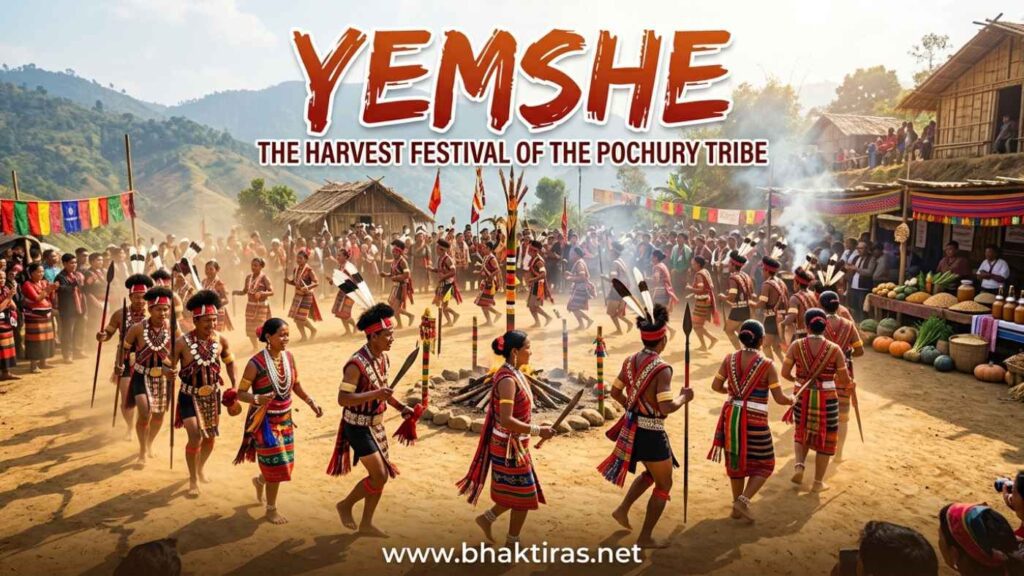
Yemshe is the pre-harvest festival of the Pochury Naga tribe, one of the smaller Naga communities of Phek district in Nagaland. Held around 5 October each year, it falls in the tense weeks before the paddy is cut, when the fields are heavy but the granaries are not yet full. Elders offer prayers for a good yield and for the wellbeing of every household, and the villages answer with folk songs, dancing in full tribal dress, shared meals and rice beer. At heart it is a festival of gratitude and belonging.
Yemshe 2026-2028: Dates & Calendar
Yemshe is next observed around 5 October 2026. Unlike lunar Hindu festivals, its date is largely fixed to early October, tied to the farming cycle rather than a shifting moon.
| Year | Date | Day | Notes |
|---|---|---|---|
| 2025 | 5 October | Sunday | Fixed early-October observance |
| 2026 | 5 October | Monday | Next occurrence (approximate) |
| 2027 | 5 October | Tuesday | Fixed early-October observance |
Because Yemshe marks the turn from growing to harvesting, the celebration is anchored to the agricultural calendar of the Pochury villages rather than to a tithi. Small shifts of a day are common between villages.
Why Yemshe Is Celebrated
Yemshe is celebrated as a pre-harvest thanksgiving and prayer, a moment for the Pochury Naga community to ask for a good harvest and to renew its bonds of kinship before the hard work of gathering the crop begins.
A prayer before the harvest
The festival lands in the anxious gap between a ripening crop and a filled granary. Elders lead prayers and blessings for a plentiful yield and for the health and safety of the people, setting a hopeful tone for the weeks of harvesting ahead.
Gratitude to nature
Yemshe is an act of thanks to the land, the rain and the seasons that carried the paddy this far. For a farming people, the festival is a way of acknowledging that the harvest is never taken for granted.
Pochury identity and kinship
As one of the smaller Naga tribes, the Pochury use Yemshe to hold their culture together. Shared food, song and dance reaffirm who they are, draw scattered relatives home, and pass customs to the young.
Key Rituals, Step by Step
Yemshe unfolds over the day as prayer, performance and feasting, guided by the village elders.
- Preparations. Households clean their homes and courtyards, brew rice beer, and set aside meat and grain for the shared meals; dancers ready their ornaments and ceremonial dress.
- Prayers and blessings by the elders. Elders open the festival with traditional prayers for a good harvest and for the wellbeing of every family, a role that carries real authority in Pochury life.
- Folk songs. Groups sing old harvest and community songs, many of them handed down orally, that carry the memory and mood of the season.
- Folk dances in full tribal dress. Men and women dance together in ceremonial costume, shawls, headgear and ornaments, the movements echoing planting, harvesting and village life.
- Feasting. Families cook and lay out food for guests and neighbours; eating together is the heart of the day and a sign of trust and welcome.
- Sharing rice beer. Locally brewed rice beer is offered and shared, a customary part of Naga hospitality that loosens the gathering into celebration.
- Sharing of food across households. Dishes and portions move between homes and clans, a deliberate act that binds kin and settles the community for the harvest to come.
Special Foods of Yemshe
The Yemshe table is a Naga harvest spread: smoked meat, foraged greens, sticky rice and the rice beer that ties the day together.
Rice beer
Locally brewed from fermented rice, it is central to Pochury hospitality and shared freely through the day. Offering it is a mark of welcome and of the harvest’s promise.
Smoked and boiled meat
Pork and other meats, often smoked over the hearth or simmered with local herbs, anchor the feasting. Meat shared between households is a sign of goodwill for the season ahead.
Sticky rice and grain dishes
Freshly cooked rice, sometimes sticky varieties, forms the base of every plate. As a pre-harvest festival, the food quietly honours the crop that is about to be gathered.
Foraged greens and bamboo shoot
Wild leafy greens, herbs and fermented bamboo shoot bring the sharp, smoky flavours typical of Naga cooking to the shared meals.
Yemshe Do's and Don'ts
A few simple courtesies help visitors and hosts share Yemshe well.
Do
- Follow the lead of the elders during prayers and blessings.
- Accept and share food and rice beer as offered, in the spirit of hospitality.
- Learn a little about Pochury custom before joining the celebration.
- Ask permission before photographing people, dances or rituals.
- Join the folk songs and dances if invited, with respect for the costume and tradition.
Avoid
- Do not treat the ceremonial dress and ornaments as a costume for casual dress-up.
- Do not disrupt the elders’ prayers or rush the ritual sequence.
- Do not photograph or record without asking first.
- Do not waste or refuse shared food and drink in a way that slights the host.
- Do not reduce a living community festival to a tourist spectacle.
Frequently Asked Questions
When is Yemshe in 2026?
Yemshe in 2026 falls around 5 October (approximate). The Pochury Naga community customarily keeps the festival to early October, so the date stays close to 5 October each year rather than shifting with the moon.
When is Yemshe in 2025 and 2027?
Yemshe is observed around 5 October in both 2025 and 2027. Because it is a pre-harvest festival tied to the farming calendar, the date is roughly fixed to early October, with only small variations between villages.
Who celebrates Yemshe?
Yemshe is celebrated by the Pochury Naga tribe, one of the smaller Naga communities of Phek district in Nagaland, India. It is a community festival rather than a pan-Indian one, closely tied to Pochury identity and village life.
Why is Yemshe celebrated?
Yemshe is celebrated as a pre-harvest prayer and thanksgiving. The community asks for a good harvest and for the wellbeing of every household before the crops are gathered, and gives thanks to nature for the year’s growth.
What happens during Yemshe?
During Yemshe, elders offer traditional prayers and blessings, and the villages celebrate with folk songs and dances in full tribal dress and ornaments. Feasting, rice beer and the sharing of food between households complete the day.
Where is Yemshe celebrated?
Yemshe is celebrated in the Pochury Naga villages of Phek district in Nagaland, north-east India. It is a local festival, so its heart lies in these communities rather than across the wider country.
Is Yemshe a religious festival?
Yemshe is a cultural and agricultural festival of the Pochury Naga tribe rather than a Hindu one. Its prayers and blessings centre on the harvest and the community’s wellbeing, and it expresses gratitude to nature and a strong sense of kinship.
What food is eaten at Yemshe?
Yemshe food is a Naga harvest spread of smoked and boiled meat, sticky rice, foraged greens and fermented bamboo shoot, with locally brewed rice beer shared throughout the day. Sharing food between households is one of the festival’s most important customs.
May this Yemshe bring a full harvest and a warm gathering to every Pochury home.