
Chapchar Kut 2027 – Mizoram's Spring Bamboo-Dance Festival
When is Chapchar Kut in 2027?
Chapchar Kut is expected in the first week of March 2027, most likely Friday 5 March. It is the biggest spring festival of the Mizo people in Mizoram, celebrated after the jhum forest-clearing is done and before the cut bamboo is burnt. The exact date is fixed each year by the Mizoram government, so treat early-March dates as approximate until officially announced.
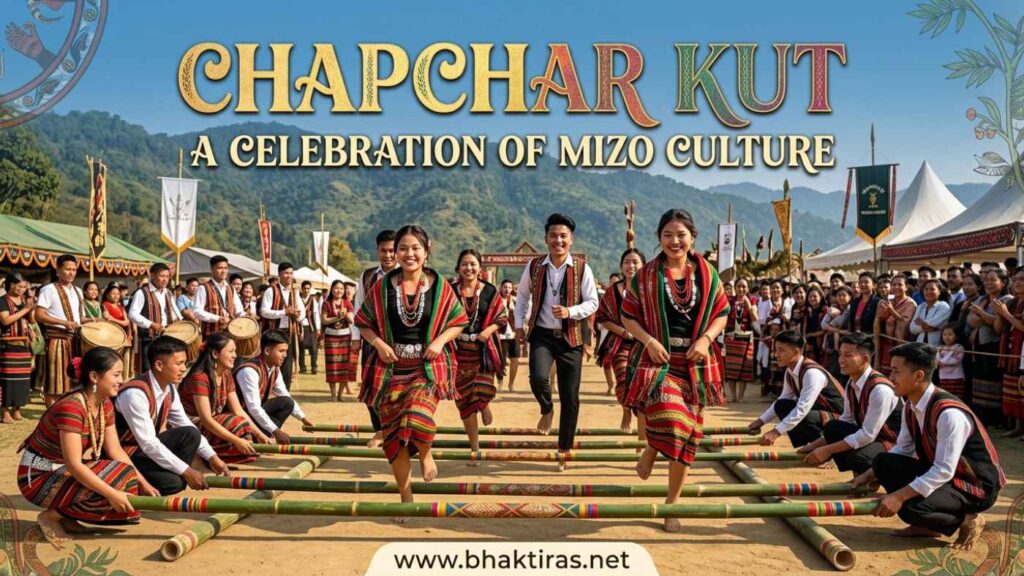
Chapchar Kut is the best-loved festival of the Mizo people, a spring celebration that fills Mizoram with music, dance and colour. It arrives at a quiet pause in the farming year: the jhum patches have been slashed and cleared, and the felled bamboo and trees are left to dry before burning. With the hard cutting done and the burning not yet begun, whole villages gather to sing, feast and dance. Its signature is the Cheraw, the graceful bamboo dance, and the grand state programme is held in Aizawl in early March.
Chapchar Kut 2026-2028: Dates & Calendar
Chapchar Kut is held in the first week of March, traditionally on the first Friday, with the next celebration expected around 5 March 2027. The precise day is announced each year by the Mizoram government, so the years below are approximate.
| Year | Date (approx.) | Day | Notes |
|---|---|---|---|
| 2026 | 6 March | Friday | Held earlier in 2026 |
| 2027 | 5 March (approx.) | Friday | Next occurrence – date to be confirmed |
| 2028 | 3 March (approx.) | Friday | First Friday of March |
The main public celebration takes place at Aizawl, usually spread over one to two days of dance displays, competitions and cultural events, with smaller programmes in towns and villages across Mizoram.
Why Chapchar Kut Is Celebrated
Chapchar Kut is celebrated as a festival of joy and togetherness during a natural break in the jhum farming year, once the forest has been cleared and while the cut wood dries before burning.
The name points to that very moment in the agricultural cycle. In the old days a good clearing meant the promise of a good harvest, and the pause before burning was a rare stretch of rest and plenty. Communities marked it with food, rice-beer, storytelling, song and dance, and the custom has carried through into modern Mizoram.
A farmers' breather
Chapchar Kut falls after the exhausting work of slashing and clearing the jhum land is finished. With the bamboo and trees left to dry, families finally have time to rest, visit one another and celebrate together before the next stage of farming begins.
Community over everything
More than a religious rite, Chapchar Kut is about belonging. Neighbours, clans and whole villages come together to dance, sing and share meals, reaffirming the tight social bonds that Mizo life is built on.
Keeping Mizo culture alive
Today the festival is also a proud showcase of Mizo identity. Folk dances, traditional songs, handwoven puan cloth and old customs are performed and passed on, so younger generations see and learn them first-hand.
Key Rituals, Step by Step
Chapchar Kut is less a ritual festival and more a day of organised community celebration, built around dance, music and traditional dress. Here is how a typical Aizawl programme unfolds.
- Gathering in traditional dress. People arrive in their finest handwoven puan and traditional Mizo attire, with headgear and ornaments that mark the festive occasion.
- Opening the celebration. The main event at Aizawl is formally opened with a cultural programme, drawing large crowds and, often, state dignitaries and visitors.
- The Cheraw bamboo dance. The highlight begins: dancers step in and out of long bamboo poles that are clapped together in rhythm by seated performers, timing each move so the poles never catch their feet.
- Khuallam and other folk dances. Dancers perform Khuallam, a graceful welcome dance draped in puan, moving in a slow circle to the beat of gongs and drums.
- Sarlamkai and martial dances. Energetic dances such as Sarlamkai, once linked to victory and valour, are performed with drums, gongs and spirited movement.
- Singing and music. Folk songs and traditional tunes run through the day, with drums (khuang) and gongs setting the rhythm for the dancers and the crowd.
- Feasting and fellowship. Food and drink are shared freely, and the day closes with people eating together, watching the performances and celebrating late into the evening.
Special Foods of Chapchar Kut
Chapchar Kut food is simple, hearty Mizo home cooking, shared generously among family and neighbours during the celebrations.
Bai
A staple Mizo dish of boiled vegetables and leafy greens simmered with rice, herbs and often a pinch of fermented flavouring. Wholesome and everyday, it is the kind of comfort food that anchors a festive meal.
Vawksa rep
Smoked pork, a much-loved Mizo delicacy, cooked with local greens and spices. Its deep, smoky taste makes it a favourite at gatherings and celebrations.
Sawhchiar
A rice porridge cooked with meat, usually chicken or pork, into a soft, savoury one-pot dish. It is easy to prepare in large quantities, which suits a festival crowd.
Zu (rice beer)
Traditional rice-based brew shared during the celebrations in many Mizo communities, in keeping with older customs of hospitality. Its role varies by household and belief.
Where It's Celebrated
Chapchar Kut belongs to the Mizo people and is celebrated most fully across Mizoram, with echoes wherever Mizo communities live.
Aizawl
The capital hosts the grandest celebration, with a large public cultural programme of Cheraw and folk dances that draws performers and spectators from across the state, plus tourists and visiting officials.
Across Mizoram
Towns and villages throughout Mizoram hold their own smaller Chapchar Kut programmes, so the festive spirit is felt statewide, not only in the capital.
Mizo diaspora
Mizo communities and students living outside the state, in other parts of India and abroad, often organise their own gatherings to mark Chapchar Kut and stay connected to home.
Chapchar Kut Do's and Don'ts
A few pointers for enjoying and respecting Chapchar Kut, whether you are Mizo or a visitor.
Do
- Wear or appreciate traditional Mizo puan and attire in the festive spirit.
- Watch the Cheraw bamboo dance closely – it is the heart of the festival.
- Join in the community feasting and hospitality if you are welcomed.
- Learn a little about the jhum farming cycle behind the festival’s name.
- Ask before photographing dancers or people in traditional dress.
Avoid
- Don’t treat it as a purely religious rite – it is a community and cultural festival.
- Don’t disrupt the Cheraw dancers; the poles move in tight rhythm and timing matters.
- Don’t assume a fixed date – confirm the official day, as it is set each year.
- Don’t be dismissive of local customs, food or rice-beer traditions.
- Don’t leave litter at public celebration grounds in Aizawl or elsewhere.
Frequently Asked Questions
When is Chapchar Kut in 2027?
Chapchar Kut in 2027 is expected in the first week of March, most likely Friday 5 March. The Mizoram government fixes the exact date each year, so the early-March date should be treated as approximate until it is officially announced.
When is Chapchar Kut in 2026 and 2028?
Chapchar Kut in 2026 was held in early March (around 6 March), and in 2028 it is expected around 3 March, the first Friday of the month. Because the state sets the date annually, these dates are approximate.
Why is Chapchar Kut celebrated?
Chapchar Kut is celebrated as a spring festival of joy and community, held after the jhum forest-clearing is finished and while the cut bamboo and trees are left to dry before burning. It marks a restful, hopeful pause in the farming year and today also celebrates Mizo culture and identity.
What is the Cheraw dance in Chapchar Kut?
Cheraw is the famous bamboo dance and the highlight of Chapchar Kut. Seated performers clap long bamboo poles together in rhythm while dancers step nimbly in and out of the gaps, timing each move so their feet are never caught between the poles.
Who celebrates Chapchar Kut?
Chapchar Kut is the festival of the Mizo people and is celebrated mainly in Mizoram, with the largest programme held at Aizawl. Mizo communities living elsewhere in India and abroad also gather to mark it.
What do people wear and eat at Chapchar Kut?
At Chapchar Kut people dress in traditional Mizo attire, especially the handwoven puan cloth, for the dances and celebrations. Festive food includes Mizo dishes such as bai (mixed vegetable stew), smoked pork (vawksa rep) and rice porridge (sawhchiar), shared among family and friends.
Is Chapchar Kut a religious festival?
Chapchar Kut is primarily a cultural and community festival rather than a religious rite. It grew out of the Mizo jhum farming cycle and centres on dance, music, feasting and togetherness, making it Mizoram’s most popular festival.
Where is the main Chapchar Kut celebration held?
The main Chapchar Kut celebration is held at Aizawl, the capital of Mizoram, with a large public programme of Cheraw and folk dances. Smaller celebrations also take place in towns and villages across the state.
Chapchar Kut is Mizoram at its warmest – bamboo poles clapping, puan cloth swirling and a whole community dancing in the spring. Ka lawm e, and a joyful Chapchar Kut to all.