
Nagula Chavithi 2026 – Telugu Serpent Worship Day
నాగుల చవితి
When is Nagula Chavithi in 2026?
Nagula Chavithi falls on Friday, 13 November 2026. It is a Telugu serpent-worship day kept on the fourth lunar day (Chaturthi) of the bright fortnight of Kartika, the fourth day after Deepavali. Families in Andhra Pradesh and Telangana offer milk and turmeric to snake mounds or Subrahmanya temples and keep a day-long fast.
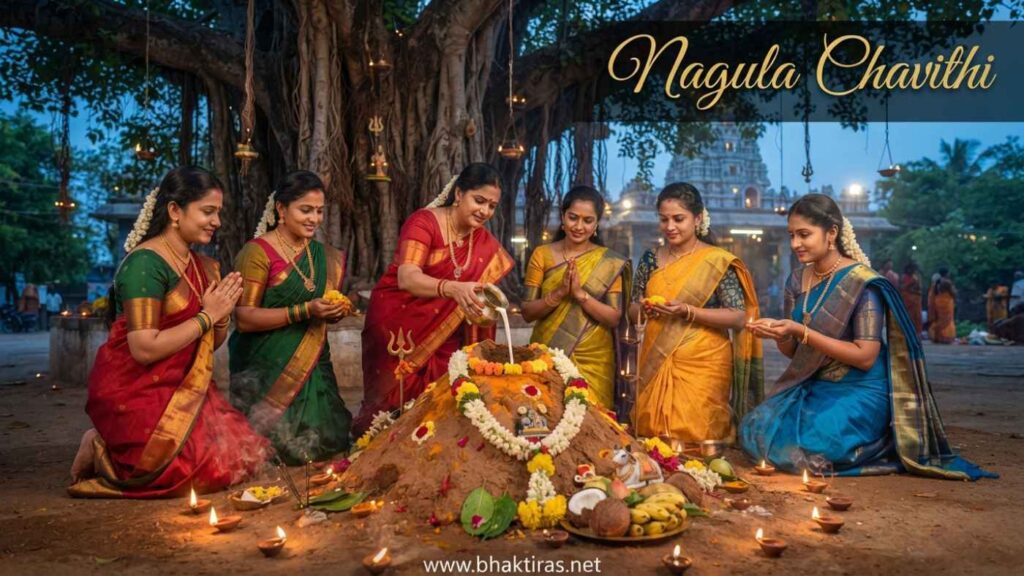
Nagula Chavithi is the principal serpent-worship day for Telugu Hindus, kept on the fourth lunar day of the waxing fortnight of Kartika – the fourth day after Deepavali. Across Andhra Pradesh and Telangana, families rise early, visit an anthill, a snake mound or a Subrahmanya temple, and offer milk, turmeric, eggs and sweet chimili to the Naga Devatas. Many keep a strict fast until the afternoon puja. The day is especially observed by parents praying for children and by those seeking relief from Naga or Rahu-Ketu dosha in their horoscope.
Nagula Chavithi 2026-2028: Dates & Calendar
Nagula Chavithi 2026 is on 13 November. Because it follows the lunar Kartika month, the Gregorian date shifts each year, usually landing in late October or November, four days after Diwali.
| Year | Date | Day | Notes |
|---|---|---|---|
| 2026 | 13 November | Friday | Next occurrence |
| 2027 | 2 November | Tuesday | Kartika Shukla Chaturthi |
| 2028 | 21 October | Saturday | Kartika Shukla Chaturthi |
The fast is broken only after the afternoon puja to the Naga Devatas. As the fourth day of the bright Kartika fortnight, Nagula Chavithi sits within the wider Kartika Masam observances that follow Diwali.
Why Nagula Chavithi Is Celebrated
Nagula Chavithi is kept to honour the Naga Devatas, the serpent deities, and to seek their blessing for healthy children, family welfare and freedom from snake-related afflictions in the horoscope.
Blessing for children
The day is closely tied to progeny and the wellbeing of one’s offspring. Mothers and parents-to-be observe the fast and feed the anthill, praying that the serpent deities guard their children through the coming year.
Relief from Naga dosha
In Telugu astrology, an afflicted position of the lunar nodes Rahu and Ketu, or a Sarpa (Naga) dosha, is believed to block marriage, childbirth and prosperity. Worship on Nagula Chavithi is one of the recommended remedies to ease these effects.
Serpents as guardians
Snakes hold a revered place in Hindu tradition, from Vasuki around Shiva’s neck to Adishesha who bears Vishnu. Feeding and honouring them on this day expresses gratitude and asks for protection rather than harm from the natural world.
Link with Kartika and Diwali
Falling four days after Deepavali in the sacred month of Kartika, Nagula Chavithi extends the season of light and merit-making. It is regarded as a spiritually potent time to offer worship and keep vows.
Deities & Figures Worshipped
The focus of Nagula Chavithi is the Naga Devatas, the serpent deities, often approached through the anthill they are believed to inhabit and through Lord Subrahmanya, who is closely linked with serpent worship.
Naga Devatas
The serpent gods are the central deities of the day. Devotees visit an anthill or a temple naga stone and pour milk, place turmeric and offer sweets, treating the mound as the living home of the Nagas.
Subrahmanya (Kartikeya)
Lord Subrahmanya is strongly associated with serpents, and many families do their Nagula Chavithi puja at a Subrahmanya temple. His shrines see large gatherings on the day.
Shiva
Shiva, who wears the serpent Vasuki as an ornament, is honoured in the wider Kartika observances. His connection with snakes reinforces the reverence shown to the Nagas on this day.
Key Rituals, Step by Step
The observance is simple but disciplined, centred on an early fast, a visit to a serpent mound or temple, and offerings of milk and turmeric.
- Rise early and bathe. Devotees wake before dawn, take a purifying bath and wear clean clothes before beginning the day’s fast.
- Keep the fast. Many observe a strict fast, often without even water, until the daytime puja is completed. Others keep a lighter fast with fruit and milk.
- Visit an anthill or temple. Families go to a nearby anthill, a snake mound, or a Subrahmanya temple where a naga stone is worshipped.
- Offer milk and turmeric. Cow’s milk is poured into or beside the mound, along with turmeric, kumkum, flowers and sometimes eggs, inviting the Naga Devatas to accept the offering.
- Present chimili and chalimidi. Sweet preparations of jaggery, sesame and rice flour – chimili and chalimidi – are offered and later shared as prasad.
- Light lamps and pray. Devotees light lamps, recite naga prayers and ask for children, family welfare and relief from Naga or Rahu-Ketu dosha.
- Break the fast. After the afternoon puja is complete, the family breaks the fast together and distributes the prasad to relatives and neighbours.
Special Foods of Nagula Chavithi
The day’s foods are simple, jaggery-sweetened preparations offered first to the Naga Devatas and then shared as prasad after the fast.
Chimili
A firm sweet of roasted sesame and jaggery, often shaped into small balls or bars. It is a signature Nagula Chavithi offering and travels well as prasad.
Chalimidi
A soft mix of raw rice flour with jaggery and grated coconut or cardamom, prepared without cooking. It is placed before the naga mound as a cooling, uncooked offering.
Milk and turmeric
Fresh cow’s milk is central to the puja, poured for the serpent deities along with turmeric water. Milk symbolises purity and the wish for a gentle, protective response from the Nagas.
Fruit and coconut
Bananas, other seasonal fruit and broken coconut are offered during the puja and eaten to break the fast, keeping the day’s food light and satvik.
Regional Names & Variations
Nagula Chavithi is chiefly a Telugu observance, though serpent worship in Kartika takes different forms across neighbouring regions.
Andhra Pradesh & Telangana
This is the heartland of Nagula Chavithi, where it is the main naga-worship day of the year. Anthills, village naga stones and Subrahmanya temples such as those in the Krishna and Guntur belts draw large crowds.
Karnataka border areas
In parts of Karnataka adjoining the Telugu districts, families keep a similar Kartika serpent worship, offering milk at naga banas and temple serpent stones.
Distinction from Nag Panchami
Nagula Chavithi in Kartika is distinct from Nag Panchami, the Shravana serpent festival kept widely in northern and western India. For most Telugu households, Nagula Chavithi is the principal naga day rather than Nag Panchami.
Nagula Chavithi Do's and Don'ts
A few simple guidelines help keep the observance respectful and safe.
Do
- Wake early, bathe and begin the day with a clean mind and clothes.
- Offer milk, turmeric and sweets at the anthill or naga stone with devotion.
- Keep the fast sincerely and break it only after the afternoon puja.
- Share the chimili and chalimidi prasad with family and neighbours.
- Pray with a calm heart for children, health and family welfare.
Avoid
- Do not harm, capture or disturb any living snake in the name of worship.
- Do not dig into or damage the anthill; make offerings gently at its mouth.
- Avoid non-vegetarian food and alcohol on the fasting day.
- Do not waste milk carelessly; pour only what is needed for the offering.
- Avoid quarrels and harsh speech, keeping the observance peaceful.
Frequently Asked Questions
When is Nagula Chavithi in 2026?
Nagula Chavithi 2026 falls on Friday, 13 November 2026. It is observed on Kartika Shukla Chaturthi, the fourth lunar day of the bright fortnight of Kartika, which is the fourth day after Deepavali.
When is Nagula Chavithi in 2027 and 2028?
Nagula Chavithi is on Tuesday, 2 November 2027 and on Saturday, 21 October 2028. The date moves each year because it follows the lunar Kartika month, usually falling in late October or November.
Why is Nagula Chavithi celebrated?
Nagula Chavithi is celebrated to honour the Naga Devatas, the serpent deities, and to seek their blessing for children, family welfare and protection. It is also observed as a remedy for Naga dosha and afflictions of Rahu and Ketu in the horoscope.
Which deity is worshipped on Nagula Chavithi?
The Naga Devatas, the serpent gods, are the main deities worshipped on Nagula Chavithi. Many families do their puja at anthills or at Subrahmanya temples, as Lord Subrahmanya is closely linked with serpent worship.
How is Nagula Chavithi different from Nag Panchami?
Nagula Chavithi is a Telugu serpent-worship day kept in the month of Kartika, four days after Diwali, while Nag Panchami is a serpent festival kept in the month of Shravana, mainly in north and west India. For most Telugu households, Nagula Chavithi is the principal naga day of the year.
What offerings are made on Nagula Chavithi?
On Nagula Chavithi, devotees offer milk, turmeric, kumkum, flowers and sometimes eggs at an anthill or naga stone. Sweet preparations of jaggery and sesame called chimili and chalimidi are also offered and then shared as prasad.
Who observes the Nagula Chavithi fast?
The Nagula Chavithi fast is observed mainly by women and parents seeking the wellbeing of their children, and by those wanting relief from Naga or Rahu-Ketu dosha. Devotees typically fast until the afternoon puja and break it after the offerings are complete.
Where is Nagula Chavithi mainly celebrated?
Nagula Chavithi is mainly celebrated in Andhra Pradesh and Telangana, with some observance in the adjoining Telugu-speaking parts of Karnataka. Anthills, village naga stones and Subrahmanya temples are the focus of worship.
May the Naga Devatas bless your home with health and protection this Kartika. Nagula Chavithi Subhakankshalu!