
Aja Ekadashi 2026 – Fast, Katha and Parana Timings
अजा एकादशी
When is Aja Ekadashi in 2026?
Aja Ekadashi falls on Monday, 7 September 2026. It is the eleventh lunar day (Ekadashi) of the dark fortnight in the month of Bhadrapada, kept as a day-long fast dedicated to Lord Vishnu. Devotees stay awake through the night, recite the Aja Ekadashi katha and break the fast (parana) the next morning within the prescribed window.
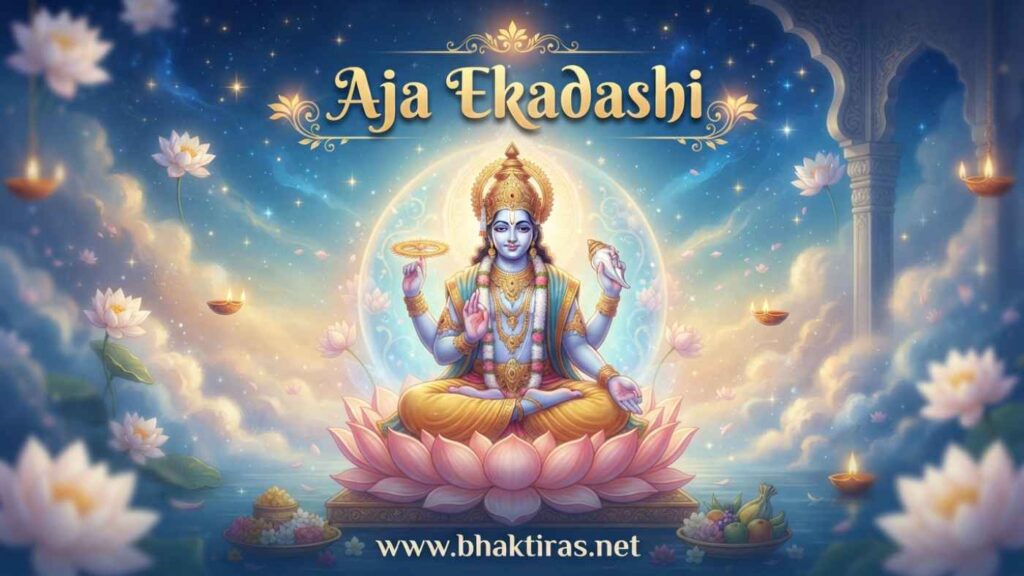
Aja Ekadashi is the Ekadashi that falls in the dark fortnight (Krishna Paksha) of Bhadrapada, the month that straddles late August and September. Like every Ekadashi, it is a fasting day set aside for Lord Vishnu, but this one carries its own story: the tale of King Harishchandra, who is said to have recovered his lost kingdom, wife and son through the merit earned by keeping this vrat. Devotees fast, offer tulsi leaves to Vishnu, keep a night vigil and read the katha before breaking the fast the following morning.
Aja Ekadashi 2026-2028: Dates & Calendar
The next Aja Ekadashi is on Monday, 7 September 2026. The date shifts each year because it is fixed to the lunar tithi (the eleventh day of the waning moon in Bhadrapada), not to the Gregorian calendar.
| Year | Fasting Date | Day | Notes |
|---|---|---|---|
| 2026 | 7 September | Monday | Next occurrence |
| 2027 | 28 August | Saturday | Tithi spans 27-28 August |
| 2028 | 16 August | Wednesday | Bhadrapada Krishna Ekadashi |
In the Purnimanta calendar followed across much of North India this Ekadashi is counted under Bhadrapada; in the Amanta calendar used in the south and west the same tithi falls in the month of Shravana. The fasting day is the same regardless of which name the calendar gives the month.
Why Aja Ekadashi Is Observed
Aja Ekadashi is observed to seek Lord Vishnu’s grace, clear the weight of past wrongs and, by tradition, restore what has been lost. Its merit is illustrated through the well-known story of King Harishchandra.
The story of King Harishchandra
The scriptures tie this Ekadashi to Harishchandra, a king famed for never breaking his word. Having given away his kingdom and even sold his wife and son to keep a vow, he was reduced to working at a cremation ground. On a sage’s advice he kept the Aja Ekadashi fast, and the merit of that observance is said to have reunited his family and returned his throne.
A day for Vishnu
Ekadashi is Vishnu’s day, and fasting on it is regarded as one of the simplest and most rewarding acts of devotion. Aja Ekadashi is described in the Brahmavaivarta Purana as removing accumulated sins and easing suffering when kept with faith.
Discipline of body and mind
The fast is as much an inner exercise as a ritual. Abstaining from grains and pulses, keeping a night vigil and turning the mind to Vishnu are meant to steady the senses. The reward promised in the texts is spiritual, not just material.
Deities & Figures Worshipped
Aja Ekadashi is dedicated to Lord Vishnu, worshipped in his gentle, preserving aspect. The tulsi plant, dear to Vishnu, is central to the day’s offerings.
Lord Vishnu
Vishnu is the focus of every Ekadashi fast. On Aja Ekadashi devotees worship him with tulsi leaves, flowers, incense and a lamp, often before an image of Vishnu or his forms such as Narayana or Krishna.
Tulsi
The tulsi (holy basil) plant is honoured alongside Vishnu. Fresh tulsi leaves are placed at his feet, and many households water and circle the tulsi plant as part of the day’s worship.
Key Rituals, Step by Step
The vrat runs from sunrise on Ekadashi to the parana on the following morning. The core steps are simple and centre on fasting, worship and the katha.
- Sankalp and bath. Rise early, bathe and take a vow (sankalp) to keep the fast for Lord Vishnu.
- Set up the worship. Clean the puja space and place an image or idol of Vishnu, with a lamp, incense and fresh flowers.
- Offer tulsi. Present tulsi leaves, sandal paste and flowers to Vishnu, and recite his names or the Vishnu Sahasranama.
- Keep the fast. Observe a nirjala or phalahar fast through the day, avoiding grains, rice, pulses and beans as tradition prescribes.
- Read the katha. Recite or listen to the Aja Ekadashi vrat katha, the story of King Harishchandra, in the evening.
- Night vigil (jagran). Stay awake through the night in remembrance of Vishnu, singing bhajans or reciting his name.
- Parana the next morning. Break the fast on Dwadashi, after sunrise and within the prescribed window, ideally after offering food to a Brahmin or the needy.
What Is Eaten on Aja Ekadashi
Grains, rice, pulses and beans are set aside for the day. Those who keep a phalahar fast eat only fruit, milk and permitted non-grain foods until parana.
Fruits and milk
Fresh and dried fruits, along with milk, curd and buttermilk, form the main sustenance for anyone not keeping a waterless fast.
Sabudana and singhare
Sabudana (tapioca) khichdi and dishes made from singhare (water chestnut) or kuttu (buckwheat) flour are common vrat foods, along with boiled potatoes seasoned with rock salt (sendha namak).
Parana meal
The fast is broken on Dwadashi morning, traditionally with a simple satvik meal that includes grains once again, often shared with others as part of the day’s charity.
Aja Ekadashi Do's and Don'ts
A few simple observances keep the vrat in line with tradition.
Do
- Bathe early and take a clear sankalp before beginning the fast.
- Worship Vishnu with tulsi leaves, a lamp and flowers.
- Read or listen to the Aja Ekadashi katha of King Harishchandra.
- Keep the night vigil with bhajans and Vishnu’s name.
- Break the fast at parana time on Dwadashi, ideally after offering food in charity.
Avoid
- Do not eat rice, grains, pulses or beans during the fast.
- Do not break the fast before the parana window opens on Dwadashi.
- Avoid onion, garlic and non-vegetarian food.
- Do not pluck tulsi leaves on the Ekadashi day itself; gather them the day before.
- Avoid anger, gossip and untruth, which are held to undo the fast’s merit.
Frequently Asked Questions
When is Aja Ekadashi in 2026?
Aja Ekadashi in 2026 falls on Monday, 7 September. It is the Ekadashi of the dark fortnight (Krishna Paksha) of Bhadrapada, and the fast is broken at parana time on the following morning.
When is Aja Ekadashi in 2027 and 2028?
Aja Ekadashi is on Saturday, 28 August 2027 and on Wednesday, 16 August 2028. The date changes each year because it is fixed to the lunar tithi rather than the Gregorian calendar.
Why is Aja Ekadashi celebrated?
Aja Ekadashi is observed to earn the grace of Lord Vishnu and to clear the weight of past sins. It is linked to the story of King Harishchandra, who is said to have regained his lost kingdom and family through the merit of this fast.
Which god is worshipped on Aja Ekadashi?
Lord Vishnu is worshipped on Aja Ekadashi, as on every Ekadashi. Devotees offer him tulsi leaves, flowers, incense and a lamp, and recite his names through the day.
What can you eat on Aja Ekadashi?
Grains, rice, pulses and beans are avoided on Aja Ekadashi. Those not keeping a waterless fast may eat fruit, milk, sabudana, and dishes made from buckwheat or water-chestnut flour with rock salt until the fast is broken.
What is the katha of Aja Ekadashi?
The Aja Ekadashi katha tells of King Harishchandra, who lost his kingdom, wife and son after honouring a vow and was reduced to menial work. On a sage’s guidance he kept the Aja Ekadashi fast, and its merit restored his family and throne.
How is the Aja Ekadashi fast broken?
The Aja Ekadashi fast is broken at parana, on Dwadashi (the twelfth lunar day) morning after sunrise and within the prescribed window. Devotees often offer food in charity or to a Brahmin before eating themselves.
Which month does Aja Ekadashi fall in?
Aja Ekadashi falls in the Krishna Paksha of Bhadrapada in the Purnimanta calendar used across North India. In the Amanta calendar of the south and west the same tithi is counted under Shravana, but the fasting day is identical.
May the fast of Aja Ekadashi bring you the calm and grace it promised King Harishchandra. Jai Shri Hari.